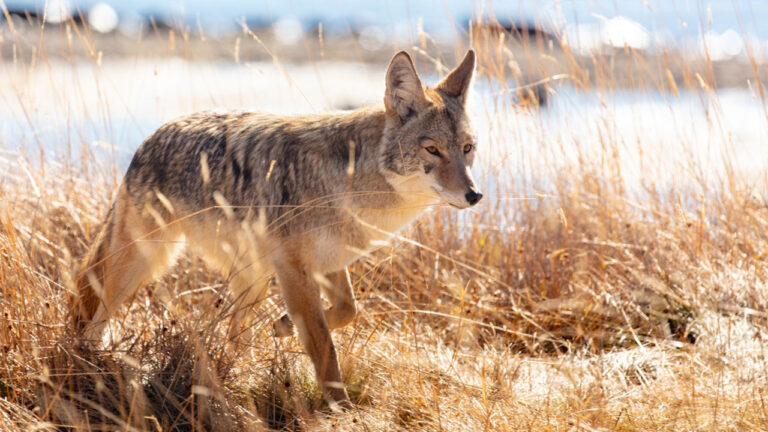
A coyote does not need to make a scene to let you know it has been around. Most of the time, it does the opposite. It slips through quiet, checks for food, looks for cover, studies the habits of pets and people, and leaves behind small clues that are easy to miss until they start piling up. That is why night-time coyote activity catches so many homeowners off guard. By the time somebody gets a good look at one in the yard, the animal may have already been working that same route for days or weeks. Wildlife guidance consistently points to the same kinds of evidence: tracks, scat, vocalizations, trails, and signs that the yard is offering food or shelter.
The bigger problem is not always the single sighting. It is the pattern behind it. A coyote that cuts across the yard once is one thing. A coyote that keeps circling at night is usually learning the property, checking attractants, and deciding whether it is worth returning. Yards become more appealing when they offer garbage, pet food, fallen fruit, bird-seed spill, prey animals, or unsecured pets. That is when the warning signs start to matter a lot more.
You keep hearing yips, barks, or howling after dark
One of the most obvious signs is also one people shrug off too easily. Coyotes are often heard more than seen, especially at night. University of Florida guidance says signs of a coyote in a landscape include vocalizations such as howls, yips, and barks, and a recent municipal management guide likewise lists hearing coyote calls or howling as a basic observation sign. That does not mean every distant yip came from your fence line, but repeated night-time calling close to the neighborhood is a good sign coyotes are actively using the area.
The pattern matters here. A one-off burst of noise somewhere down the drainage may not mean much. But if the sounds keep coming from the same direction, especially near greenbelts, alleys, creek lines, golf-course edges, or open lots behind homes, it often means coyotes are traveling those same routes regularly. Once they get comfortable moving there at night, the jump from “nearby” to “working around your yard” gets a lot smaller.
Tracks keep showing up where dogs or people should not be leaving them
Tracks are one of the clearest signs, especially in soft dirt, flowerbeds, muddy fence lines, or dust near gates and side yards. Florida notes that coyote tracks are generally more narrow and elongated than domesticated dog tracks, and wildlife damage guidance from USDA APHIS recommends looking for tracks as part of identifying coyote presence. If you keep finding lean, dog-like prints showing up along the same edge of the yard, near a gap in the fence, or around a side gate, that is a strong hint something has been making repeat passes after dark.
A lot of people misread these as neighborhood dog traffic, which is understandable. The bigger tell is where the tracks are and how they repeat. Coyotes often move with purpose. So when tracks appear along fence lines, under low spots, beside sheds, or through the same narrow corridor more than once, it starts looking less like a random visitor and more like an animal using a routine path.
You are finding scat in the same spots over and over
Scat is another classic sign people hate dealing with but should not ignore. Florida lists scat among the common signs of coyotes in a landscape, and USDA guidance includes scat as part of the evidence used to identify coyote activity. If droppings keep turning up near a fence corner, along a path, beside a driveway edge, or near a trail entrance, that usually means the animal is not simply crossing once and vanishing. It is revisiting ground it knows.
What makes this important is repetition. One pile is unpleasant. Several appearing over time in the same general part of the property can mean the yard sits on a route the coyote is comfortable using. That is especially worth noting if the yard borders open space, brush, a drainage line, or any strip of cover that allows a predator to move without much attention.
Your pets are suddenly acting uneasy in one part of the yard
Pets often notice a coyote before you do. They may freeze, stare into the dark, refuse to go into one corner, sniff hard along a fence, or start barking toward the same patch of yard night after night. That does not prove a coyote by itself, but it lines up with the other signs in a hurry. Coyotes are common around neighborhoods that offer food and shelter, and agencies repeatedly warn that pets can become part of the attraction or part of the risk when coyotes begin using residential spaces.
This is one of those clues people tend to laugh off until something else confirms it. But a dog that keeps reacting to the same fence run, gate opening, or brushy corner may be telling you an animal has been checking that exact area repeatedly. When pet behavior changes line up with tracks, sounds, or missing food, it is worth taking seriously.
Food keeps disappearing or getting messed with overnight
Coyotes are opportunists, and multiple wildlife sources warn that they take advantage of garbage, pet food, fallen fruit, bird-seed spill, compost, and even the prey animals drawn in by those things. If trash is getting scattered, bowls are mysteriously emptied, fruit disappears faster than expected, or the ground below feeders looks worked over every morning, your yard may already be functioning like a night stop for a coyote.
This is where many yard problems start. The coyote may come in for rodents under the feeder, then learn there is pet food on the porch, then notice the small dog comes out on the same schedule every evening. The first warning sign is often not the animal itself. It is the evidence that something has been feeding comfortably after dark and finding reasons to return.
There is a worn path along the fence line or through cover
Coyotes like efficient travel routes. Florida specifically notes trails as a sign of coyote presence in a landscape. If you start noticing a narrow worn path through grass, under shrubs, along a side yard, or beside the back fence where there should not really be one, that can be a quiet sign that animals are moving there regularly at night.
This is especially common where a yard connects to drainage ditches, easements, brushy lots, creek bottoms, or neighborhood green space. Coyotes do not need much room to slip through. Once they find a route that feels hidden and easy, they tend to reuse it. A worn line through cover is not proof on its own, but alongside tracks or scat it starts telling a pretty clear story.
Small pets are getting too much attention from the dark
One of the biggest red flags is when coyotes start showing interest in pets. UC guidance says coyotes in suburban areas prey on house cats and small dogs, while several agencies stress keeping pets indoors or closely supervised because neighborhoods can teach coyotes that small animals are easy targets. If your cat suddenly refuses to go out, your small dog is getting watched from the fence line, or you notice movement just outside the yard whenever pets are let out, that is not something to brush off.
A coyote circling at night is not always there for garbage alone. Sometimes it is checking routines. When do the pets come out? Which gate stays open? Which section of fence is easiest to test? Those are the kinds of patterns that turn a general wildlife presence into a real yard problem.
The yard has turned into exactly what a coyote wants
Sometimes the biggest warning sign is that the property itself makes too much sense for a coyote. Food is left outside. The compost is easy to get into. Bird feeders are drawing prey. Fallen fruit is rotting under trees. There is brush or cover along the fence. Pet doors stay open at night. Agencies across states keep repeating that coyotes are attracted to neighborhoods because of these exact conditions, and that reducing attractants is one of the main ways to stop them from becoming comfortable around homes.
That is the part that matters most. A coyote has likely been circling your yard at night when the clues keep stacking up and the yard is rewarding the behavior. The tracks, sounds, scat, trails, pet reactions, and missing food all point in the same direction: the animal is not wandering blindly. It is learning the place. And once a coyote decides your yard is easy, quiet, and profitable, it usually does not stop on its own.
Like The Avid Outdoorsman’s content? Be sure to follow us.
Here’s more from us: