Photo credit: Ringo Chiu/Shutterstock.com
Australia is about to test how far you can push gun control in a country that already transformed its laws once before. As you watch the new national buyback take shape, you are seeing the most ambitious attempt since the 1990s to pull thousands of weapons out of circulation and reset the rules of civilian firearm ownership.
The move is not just a policy tweak, it is a response to a fresh trauma layered over an older national scar. You are being asked to weigh how a country that once held itself up as a model on gun reform now confronts the reality of more guns, new threats, and a public that expects government to act decisively.
The shock that forced Australia’s hand
You cannot understand the scale of this buyback without starting at Bondi, where a gun attack at the country’s most famous shoreline turned a summer evening into a crime scene. The shooting at Bondi jolted Australians precisely because it unfolded at the country’s most iconic beach, a place that symbolises leisure and safety. Within days, the federal government was under intense pressure to show that the system which had long been praised for preventing mass shootings could still protect crowded public spaces from a lone gunman.
Less than a week after the Bondi Beach attack, Australia announced plans for a new buyback focused on newly banned and illegal firearms, signalling that the response would go beyond symbolic gestures. For you as a citizen or observer, the speed of that decision is part of the story: it shows a political system that still treats gun violence as a solvable policy problem rather than an unavoidable fact of life.
From Port Arthur to Bondi, a painful continuum
If you are old enough to remember the 1990s, the language around this buyback will sound familiar. The Albanese Labor Government is explicitly framing the new National Gun Buyback Scheme as the largest effort since the Port Arthur massacre, nearly 30 years ago. That earlier tragedy, in which a lone gunman killed dozens of people in Tasmania, led to sweeping national restrictions on semi automatic weapons and a landmark program that removed hundreds of thousands of guns from private hands.
Today, the government is again invoking the memory of Port Arthur to argue that the country cannot wait for another catastrophe before tightening the rules. Official statements on the Port Arthur tragedy stress that the new Scheme is designed to match that earlier moment in ambition, not just in rhetoric. For you, that continuity matters, because it shows that gun policy in Australia is being written as a long narrative, with Bondi seen as the latest chapter in a story that began with one of the worst mass shootings in modern history.
Inside the new National Gun Buyback Scheme
When you look closely at the design of the new National Gun Buyback Scheme, you see a deliberate attempt to share both power and cost. The Government has committed to introduce legislation to support Scheme funding and to meet the costs on a 50:50 basis with the states and territories. That 50 split is not just an accounting detail, it is a political signal that Canberra expects every jurisdiction to own the outcome, from the number of guns collected to the way owners are compensated.
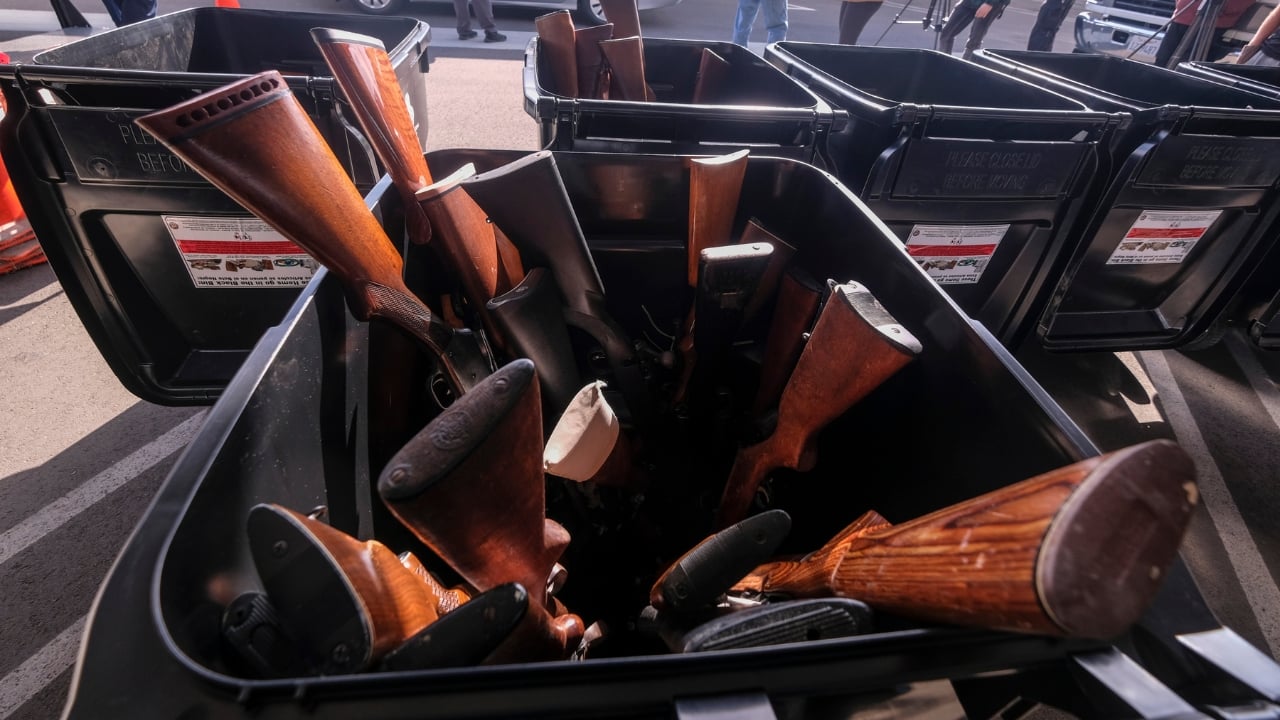
For you as a potential participant, the mechanics will feel familiar if you remember the 1996 program. States and territories will again be responsible for collecting and processing surrendered weapons, with the national government providing the money that reimburses owners who hand in firearms that have been newly prohibited. Explanatory material notes that, Matching the 1996 buyback scheme, the program is structured so that you do not have to be an Australian citizen to surrender a weapon, a detail that matters in a country with a large migrant workforce and international students who may legally possess firearms under local rules.
What the prime minister is asking you to accept
The political case for the buyback is being driven personally by Prime Minister Anthony Albanese, and you are very much the audience he is trying to persuade. In public remarks, Speaking to media on Friday, Prime Minister Anthony Albanese said there are now more than 4 million firearms in Austra, a figure that undercuts the popular belief that the country solved its gun problem in the 1990s. He has argued that the new Scheme is not just about confiscation, but about giving police better access to criminal intelligence and closing loopholes that allow dangerous weapons to circulate.
In a separate appearance, Australia PM Albanese linked the Bondi Beach attack to a broader warning that Australia now has more guns than it did when its worst ever mass shooting took place. For you, his message is blunt: the country’s reputation as a world leader on gun control will not protect you if the number and lethality of weapons quietly climbs back toward pre reform levels, and the only way to reverse that trend is to pay owners to surrender firearms that no longer fit within the law.
How the scheme will actually work on the ground
Once the legislation is in place, the experience for you as a gun owner will be shaped less by Canberra and more by your local authorities. Video briefings on how Albanese unveils the largest gun buyback since the Port Arthur massacre emphasise that state and territory police will manage the buyback process, from setting up collection points to verifying that each surrendered firearm is covered by the new bans. You can expect a mix of permanent stations at police facilities and temporary drop off events, mirroring the logistics used in the 1990s.
Policy summaries explain that, Thu 18 Dec is being used as a reference point for defining which models are considered newly banned and illegal firearms, a technical detail that will determine whether your gun is eligible for compensation or must simply be surrendered. The same briefings note that the federal government has promised clear guidance on valuation so that you know in advance what you will be paid, a crucial factor in whether owners decide to cooperate or risk holding on to weapons that could expose them to criminal charges.
Public opinion: why politicians feel they have cover
If you are wondering why such a sweeping policy is moving so quickly, the answer lies in the mood of the electorate. A new poll finds national backing for tougher rules in the wake of the Bondi attack, with respondents signalling that they want governments to tighten gun licensing laws before Christmas. For elected leaders, that kind of data is a green light, especially when it shows support not just in inner city electorates but across suburban and regional areas where firearm ownership is more common.
Another survey of Australians overwhelmingly supporting stronger gun laws following Bondi attack reinforces the sense that you, along with most of your neighbours, are prepared to accept stricter controls if they are framed as a direct response to a specific act of violence. That consensus does not erase opposition from some shooters and rural communities, but it does mean that the political risk of pushing the largest buyback since the 1990s is far lower than it would be in a more divided climate.
The critics: security, radicalisation and missed priorities
Even if you support the principle of the buyback, you will hear arguments that it is not targeting the real problem. Analysts quoted in coverage of Bondi warn that All that time and effort and political capital could be spent combating radicalisation of individuals, rather than focusing on hardware that may not have been obtained legally in the first place. One expert noted that the Bondi gunman had owned a recreational hunting licence, a reminder that the threat can come from people who look, on paper, like responsible participants in the system.
For you, these critiques raise a hard question about opportunity cost. If governments pour money into compensating owners for banned weapons, that is money not spent on intelligence, mental health services, or online monitoring aimed at catching would be attackers earlier. The government’s answer is that the buyback is part of a broader package that includes better access to criminal intelligence and closer scrutiny of licence holders, but the tension between symbolic action and targeted prevention will remain a live debate as the Scheme rolls out.
How this compares with the 1996 model
To judge whether the new program is likely to work, you will inevitably compare it with the 1996 buyback that followed Port Arthur. Official descriptions stress that the current Scheme is In short designed to reimburse gun owners who hand in newly banned weapons, just as the earlier program did, and that it relies on the same basic bargain: you give up a firearm that is no longer legal, and the state pays you fair market value. That continuity is meant to reassure you that the government is not experimenting with untested tools, but rather returning to a model that has already been shown to reduce the stock of high risk guns.
At the same time, explanatory notes highlight that the new Scheme is Matching the 1996 buyback scheme in its national scope while adapting to a more complex market that includes online sales and a larger pool of licensed owners. For you, that means the administrative burden may be heavier, with more paperwork and verification steps, but it also suggests that authorities have learned from past experience about how to prevent fraud, track surrendered weapons, and ensure that the same gun is not compensated twice.
What success will look like, and what comes next
Ultimately, the test of this buyback will not be the number of press conferences or the size of the budget, but whether you feel safer in the places that Bondi has come to symbolise: open, crowded, and impossible to fully secure. Political editor Tom has noted that officials are already being asked whether any realistic gun law could have prevented the carnage at Bondi Beach, a question that will hang over the Scheme as it unfolds. If another high profile shooting occurs despite the new restrictions, you can expect critics to argue that the focus on buybacks was misplaced.
For now, the government is betting that a combination of tighter licensing, better intelligence, and the removal of newly banned weapons will bend the risk curve in your favour. Official communications from the Main navigation pages About the PM and the Albanese Labor Government present the National Gun Buyback Scheme as a central plank of a broader public safety agenda. Whether you see it as overdue maintenance on a system that had begun to fray, or as an overreach that diverts attention from deeper causes of violence, the decision to launch the biggest buyback since the 1990s will shape how you think about guns, rights, and security in Australia for years to come.
Like The Avid Outdoorsman’s content? Be sure to follow us.
Here’s more from us: