Photo credit: Hegshot87/YouTube
We may earn revenue from products featured on this page through affiliate links.
Concealed carry isn’t hard because guns are complicated. It’s hard because real life is messy. You’re sitting, driving, bending, carrying groceries, chasing kids, sweating through shirts, wearing jackets one week and a thin tee the next, and trying to stay normal while carrying a tool that can absolutely ruin your life if you get sloppy. Most carry mistakes are routine mistakes, not tactical mistakes. They’re bad habits, bad setup choices, and people treating carry like a vibe instead of a system. If you fix the common stuff, carry gets safer, more comfortable, and more effective without turning into a hobby you have to manage every day.
Carrying inconsistently because your gun is too big, too uncomfortable, or too annoying
The first mistake is owning a “carry gun” you don’t actually carry. People buy a pistol that’s heavy, prints, digs into them when they sit, or feels like a brick after eight hours, and then they only carry it when it’s convenient. That’s not carry—that’s occasional wearing of a gun. If you’re honest, the gun that stays home most days is the gun that won’t be there on your worst day. The fix is picking a setup you can live with on normal days. Comfort matters because comfort drives consistency. That doesn’t mean choosing the smallest gun possible and hoping you can shoot it. It means choosing a gun you can shoot well and still keep on you when you’re driving, working, or moving around all day. A compact that conceals well and shoots cleanly beats a micro that’s easy to hide but hard to hit with, and it beats a full-size you “plan” to carry but leave behind half the week.
Cheap holsters and collapsing holsters that turn reholstering into a risk
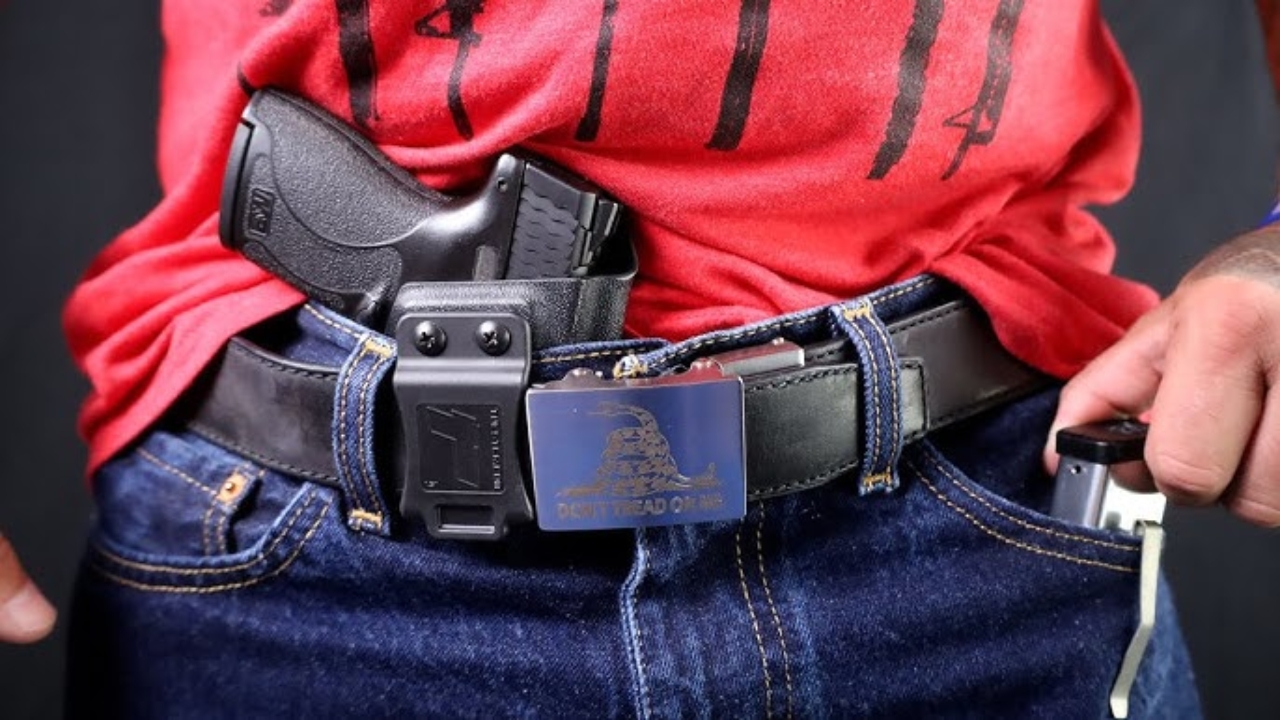
Bad holsters create unsafe carry, period. Soft holsters collapse, shift, and can let clothing, drawstrings, or jacket cords work their way into the trigger guard. Universal holsters “fit” a lot of guns poorly, which means they don’t retain consistently and the gun doesn’t sit in the same place every time. That leads to sloppy draws and sloppy reholsters, and that’s where accidents happen. The fix is a rigid holster made for your exact gun that fully covers the trigger guard and stays open when the gun is out. If you want a proven style a lot of everyday carriers stick with because it’s stable and comfortable, the CrossBreed MiniTuck IWB holster is a solid example and is sold through Bass Pro. The brand matters less than the principle: rigid, consistent, exact fit, and safe trigger coverage. If your holster collapses, your carry is unsafe no matter how confident you feel.
Using a flimsy belt and wondering why everything shifts, sags, and prints
A lot of people blame their gun for being uncomfortable when the belt is the real culprit. A soft dress belt folds under a pistol and holster, which makes the grip tip outward, increases printing, and causes constant shifting as you move. That shifting leads to constant adjusting, and constant adjusting is how people get noticed and how carry becomes miserable. The fix is a belt built to support a holstered handgun. A stiff belt keeps the gun tucked and stable, improves concealment, and makes the draw consistent because the gun is in the same place at the same angle all day. Bass Pro sells the Cabela’s Gun Belt, designed specifically to support a holstered handgun with a stiff 1.75-inch setup and a durable buckle system. You don’t need to look tactical. You need your gear to hold the gun still. A good holster on a bad belt is still a bad system.
Treating admin handling like it’s harmless and creating preventable mistakes
Most negligent discharges don’t happen when someone is defending their life. They happen during admin handling: loading, unloading, “just checking,” moving the gun from the holster to the nightstand, putting it back on, or showing it to someone. New carriers handle their guns too much because they’re still mentally fixated on the gun. The more you handle a loaded firearm, the more chances you create for a mistake. The fix is reducing unnecessary handling. Stop unloading and reloading every day “to be safe.” That habit increases handling events and increases risk. Carry the gun, store it securely when needed, and leave it alone. If you have to take the gun off, put it into a safe container, not into a random drawer or car console. The safest carriers are usually the ones who touch their carry gun the least.
Reholstering fast instead of reholstering safe
This is one of the biggest “experienced vs. ego” indicators. People practice drawing fast and then reholster like it’s part of the speed run. Reholstering is where clothing gets inside the holster, where fingers slip, and where a loaded gun is pointed at your own body at close range. It should be slow. It should be deliberate. If you need to look the gun into the holster, do it. If something feels wrong, stop and fix it. There is zero prize for a fast reholster. The fix is building a habit: draw with purpose, reholster with caution. If that feels “uncool,” remind yourself that shooting yourself while putting your gun away is one of the dumbest possible endings to a carry story, and it happens more than people think.
Carrying chamber-empty because it feels safer, without training the reality of that choice
Some people carry with an empty chamber because it feels like a safety layer. The problem is that it adds a step that you may not be able to perform under stress, especially one-handed. If you’re in a fight, holding a child, injured, or trying to create distance, you may not have both hands free to rack a slide cleanly. That’s why this choice is not a moral choice—it’s a training choice. If you carry chamber-empty, you need to practice drawing and chambering in realistic ways, including one-handed methods, because otherwise you’ve built your carry plan around a step you might not be able to execute. If you carry chambered, your safety comes from holster quality, trigger discipline, and minimizing admin handling. Either choice can be made responsibly. The irresponsible version is carrying chamber-empty and pretending you’ll “figure it out” if you ever need it.
Not proving your carry ammo runs in your gun and magazines
A shocking number of people load a premium defensive round and never fire it. They assume because it’s a famous brand, it will run. That’s guessing. Guns are sometimes picky, magazines vary, and bullet profiles affect feeding. The fix is testing your exact carry ammo through your exact carry magazines. You don’t need to shoot hundreds of rounds of expensive defensive ammo, but you do need enough to confirm function, lock-back, and point of impact. If you carry spare mags, test those too. Carry is about reliability. If your carry load doesn’t run, you don’t have a defensive system—you have an optimistic theory.
Failing to practice the draw and pretending range time equals carry competence
Shooting at a static range is not the same as drawing from concealment under stress. The draw is a skill. Clearing a garment is a skill. Establishing a firing grip on the draw is a skill. Presenting the gun without fishing for it is a skill. And doing all of that safely is a bigger skill than most people want to admit. The fix is dry practice done safely and consistently. Five minutes a few days a week builds competence faster than one big range trip every couple months. Work garment clearing, grip, presentation, and a slow controlled reholster. Then confirm it live when you can, ideally with a reputable instructor or a range that allows draw work. You don’t need to be a competition shooter. You need to be competent at the specific action concealed carry requires: one accurate hit quickly, safely, from concealment.
The carry system that works is boring, consistent, and disciplined
The carriers who do this for years without drama usually have the same habits: one consistent gun and position, a real holster and belt, minimal handling, safe reholstering, proven ammo, and steady practice. They aren’t constantly changing gear. They aren’t arguing online. They aren’t making carrying their personality. They’re just carrying. If you want concealed carry to actually work for you, stop chasing perfect products and start building boring habits. A good holster helps. The habits are what keep you safe and effective.
Like The Avid Outdoorsman’s content? Subscribe to our newsletter so you never miss an article.
Here’s more from us: