Photo credit: chaneyswiney/shutterstock.com
A rattlesnake that is about to stand its ground usually is not “coming after you.” It is reacting like a defensive animal that thinks the distance has gotten too tight. National Park Service guidance on venomous snakes says rattlesnakes generally try to warn threats away by shaking the tail before biting, and CDC guidance says most snakes strike only when they feel threatened. That is the key frame for reading the moment correctly. The danger usually builds when people misread a defensive snake as an aggressive one, keep edging closer, or reach into cover without realizing the snake has already decided it is not backing off.
It coils up instead of trying to leave
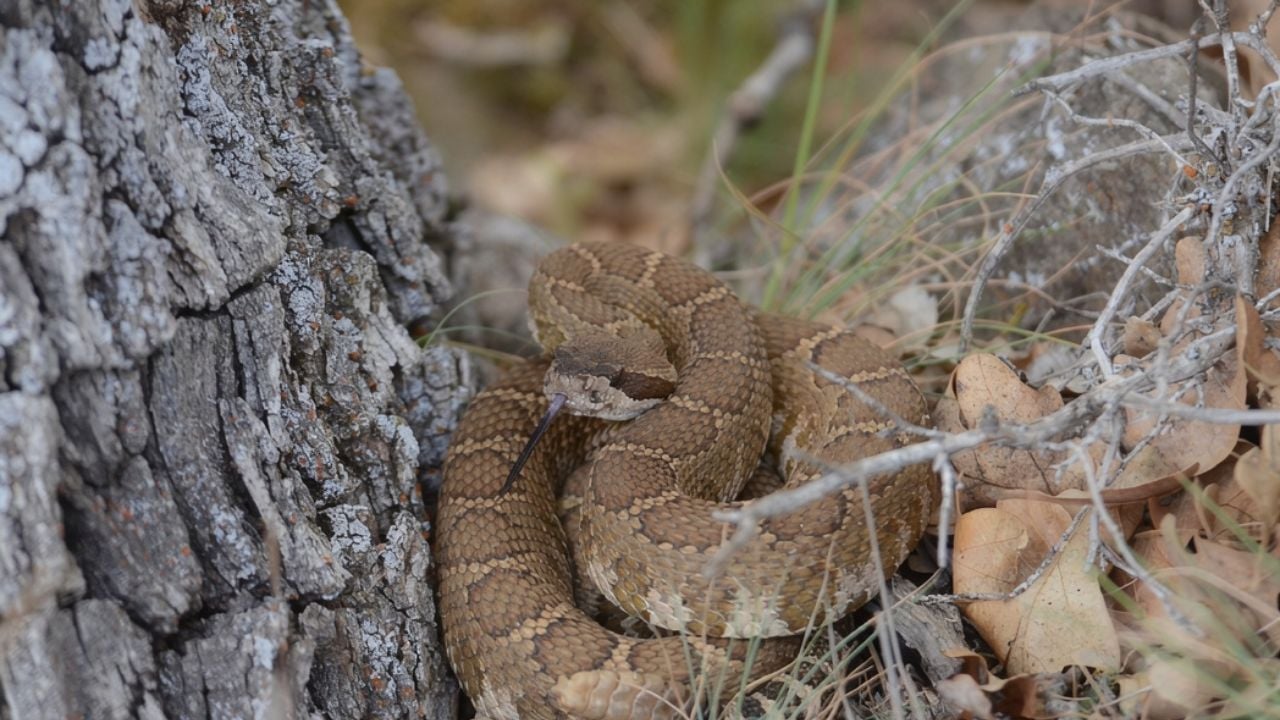
One of the clearest signs is when the snake stops slipping away and starts gathering itself. National Park Service guidance on snake behavior notes that rattlesnakes use warnings before a bite, and CDC worker guidance says to avoid places like piles of wood, rocks, tall grass, and brush where snakes may be hiding. When a rattlesnake chooses a defensive posture instead of continuing to retreat into that cover, that usually means it feels boxed in or pressed too closely. At that point, the encounter has shifted from “snake avoiding you” to “snake preparing to defend its space.”
The rattling starts, especially when you keep closing distance
The obvious warning sign is the rattle itself, but the important part is what it means. Big Thicket National Preserve says rattlesnakes generally try to warn predators away by shaking their tail before biting someone, and describes that behavior as part of their defensive nature rather than aggression. So if you hear rattling and the snake is not moving off, that is a strong sign it has decided the warning phase is necessary. The wrong move then is to test how close is “too close,” try to get a better photo, or assume the sound is all bluff.
It is holding the good cover instead of abandoning it
Rattlesnakes often use the same kinds of places people step into casually: wood piles, fallen logs, brush piles, rock edges, and leaf litter. Texas Parks and Wildlife says snakes are attracted to loose rock piles, large brush piles, hollow dead logs, and leaf-littered areas, while CDC says to avoid climbing on rocks or piles of wood where a snake may be hiding. So if you bump into a rattlesnake near that kind of cover and it stays right there instead of disappearing, that is another sign it may be ready to hold its ground rather than yield it.
The head and body angle suddenly look more deliberate
The warning is not always just the tail. A snake that suddenly looks “set” is often telling you something. Even non-rattlesnakes like gopher snakes mimic a strike posture by coiling and flattening their heads when threatened, according to Dinosaur National Monument, which is a good reminder that this kind of body language is widely understood in snake defense. In a rattlesnake, that same tightened, prepared posture is a sign the animal is no longer just hoping you walk by without noticing it. It is now prepared for the possibility that you will not.
You are in warm weather, low light, or the wrong kind of ground
Sometimes the sign is really the situation. CDC says snakes tend to be most active at dawn and dusk and in warm weather, and also warns people to stay away from tall grass, piles of leaves, rocks, and wood piles when possible. That means a rattlesnake encounter in those conditions deserves a quicker, more cautious read than a random open-ground sighting in broad daylight. If you are moving through warm, low-light, brushy ground and suddenly hear or see one, assume the snake may be more willing to stand its ground because you are already in the kind of setting where close-range surprises happen fast.
You are about to step over or reach into something
A lot of rattlesnake problems happen because the person is the one making the final move into the danger zone. CDC safety guidance says to use a stick or rake to check dark areas before putting in a hand, foot, or other body part, and says not to climb on rocks or piles of wood where a snake may be hiding. That matters because one of the strongest signs a rattlesnake is about to stand its ground is that you are forcing the moment yourself by stepping over a log, grabbing brush, or reaching where you cannot see. The snake may already be there, already coiled, and already out of room to retreat.
What to do when the signs are there
If the snake is coiled, warning, and not yielding space, the safest answer is simple: stop, create distance, and give it room. CDC says not to try to handle any snake and to avoid likely hiding places, while NPS guidance on rattlesnakes makes clear that the warning behavior is there before a bite. That means the best move is not to push the situation farther. It is to back out slowly, keep other people and pets away, and let the snake keep the patch of ground it is trying to defend.
That is really the whole pattern. A rattlesnake about to stand its ground usually gives clues first: it stops retreating, coils up, warns audibly, stays tight to cover, and reacts like an animal that thinks the line has already been crossed. The mistake people make is reading that as attitude instead of defense. Most of the time, the snake is not trying to start something. It is telling you pretty clearly that it has run out of interest in backing up.
Like The Avid Outdoorsman’s content? Subscribe to our newsletter so you never miss an article.
Here’s more from us: