Photo credit: Emre Ateşoğlu/Pexels.com
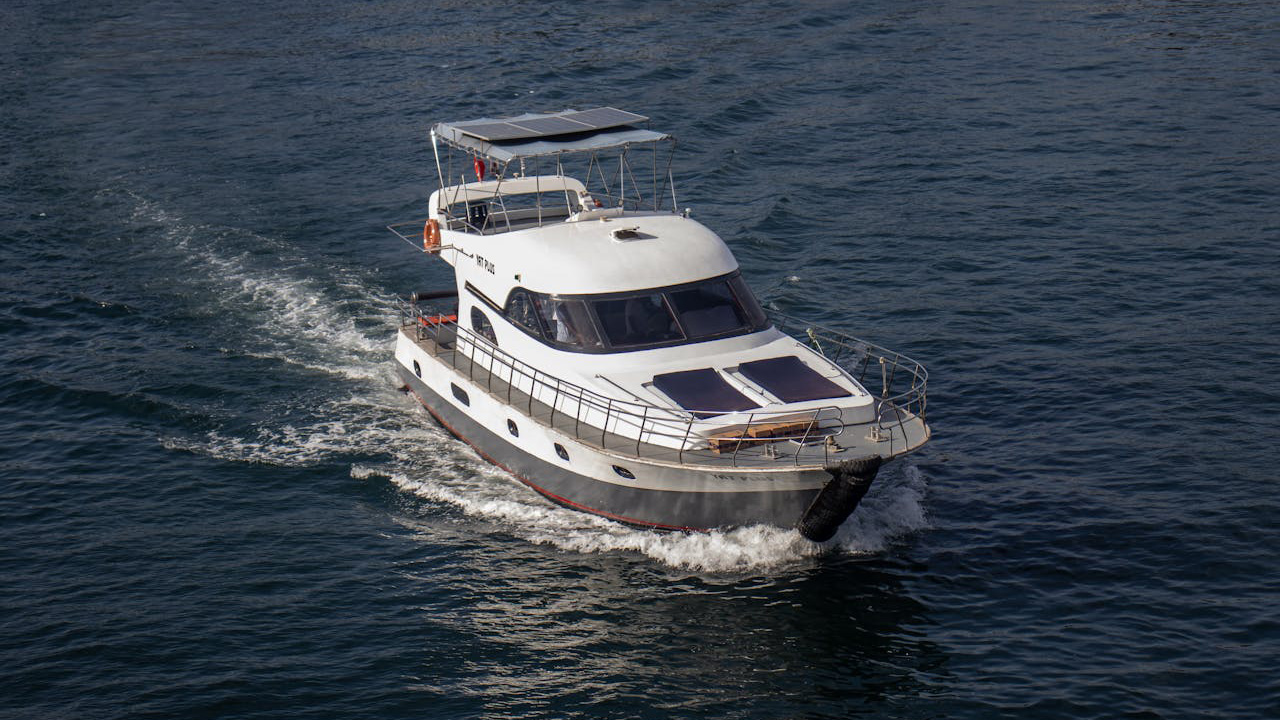
This is one of those boating stories where the water looks wide open, everybody should have plenty of room, and somehow two grown men still end up acting like the lake belongs to whoever gets angriest first.
In a Reddit post, a user shared a tense boating confrontation and asked how others would have handled it from a concealed-carry standpoint. The situation centered on a video showing a charter captain who apparently got angry enough during a dispute that he stepped off his own boat and boarded another man’s boat.
That one move changed the whole feel of the encounter.
Arguments happen on the water. People cut each other off. Somebody throws a wake where they shouldn’t. Somebody gets too close to a fishing spot. Somebody thinks another boat is in the wrong place. Most of the time, everyone yells a little, gestures too much, and eventually motors away. It’s dumb, but it ends.
But climbing onto another person’s boat is different.
A boat is not just a floating cooler with a steering wheel. When someone boards without permission, especially during an argument, there is nowhere for the other person to back up. You can’t exactly walk across the yard, step behind a truck, or head inside the house and lock the door. You’re on the water, in a tight space, with a stranger who already decided yelling from his own boat wasn’t enough.
That was the part that had Reddit fired up.
The original poster said he felt pretty confident that if someone aggressively boarded his boat during a heated confrontation, he would have drawn his gun. He wasn’t saying he would automatically fire. The question was more about the line between yelling, trespass, and a threat serious enough to justify showing a weapon.
It’s not hard to understand why that question got people talking. Boats make normal confrontations feel more trapped. There are kids, spouses, fishing gear, coolers, dogs, rods, hooks, wet decks, engines, and usually very little room to maneuver. Add one angry stranger stepping into that space, and a person’s brain is going to start calculating danger fast.
The trouble is, that calculation can get messy.
From one angle, the captain boarding the boat looked like a clear escalation. He left his own vessel and entered someone else’s. That is aggressive, especially if the other boater had not invited him aboard. If the captain was yelling, closing distance, or acting threatening, plenty of people would feel boxed in.
From another angle, drawing a firearm on a boat in the middle of an argument could turn a bad situation into a life-altering one in seconds. A gun doesn’t make the water calmer. It raises the stakes for everyone standing there. If the other guy backs down, maybe the moment ends. If he panics, lunges, grabs, or has a weapon of his own, now the entire boat becomes a dangerous little arena with no good exits.
That is why the thread wasn’t just about bravado. It turned into a real debate over restraint, distance, legal risk, and what “reasonable fear” might look like when someone comes aboard without permission.
The original poster seemed to be thinking through that exact problem. He wasn’t asking if yelling at someone on the water is annoying. Of course it is. He was asking what happens when the person stops yelling from over there and physically crosses into your space.
That’s where a lot of outdoorsmen and boaters get uncomfortable, because most of us understand that once someone crosses that line, you don’t always know what’s next. Maybe he just wants to puff his chest and run his mouth. Maybe he wants to shove somebody. Maybe he’s drunk. Maybe he’s carrying something. Maybe he’s got buddies nearby. Maybe he’s used to bullying people and expects them to freeze.
And maybe he’s just an idiot who made one very bad choice.
The hard part is that you don’t get to know which one it is until the moment is already moving.
In a calmer world, the answer would be easy: don’t board another person’s boat during a confrontation. Stay on your own boat, keep your distance, call law enforcement or the game warden if there’s a real problem, and let everybody cool off. But people don’t always act that way when they’re mad, embarrassed, or trying to look in charge.
That’s what made the story useful for a concealed-carry discussion. The best time to think about a situation like that is before you’re standing on a wet deck with an angry stranger closing the distance.
The post didn’t read like a guy looking for an excuse to pull a gun. It read like someone trying to figure out where the line is before a boating argument becomes something worse. And based on the comments, plenty of people had strong feelings about where that line should be.
Commenters were split, but the more careful voices kept coming back to the same point: drawing a gun is a massive step, even when the other person is clearly out of line.
Some people said they absolutely would have drawn if a stranger boarded their boat during an argument. To them, that was the moment the situation stopped being a verbal dispute and became a physical intrusion. Several compared it to someone forcing their way into a vehicle. You’re in a confined space, you can’t easily retreat, and you have no idea what the person plans to do once he’s close.
Others were more cautious. They said the captain boarding the boat was wrong, but wrong does not automatically equal deadly threat. A person might be trespassing, yelling, or acting like a fool without creating the kind of immediate danger that justifies pulling a firearm. Those commenters warned that drawing too early could make the carrier look like the aggressor, especially if the other man was unarmed and had not physically attacked anyone.
A few people focused on commands and distance. Their advice was to get loud before things got worse: tell the person to get off the boat, keep your hands visible, move family behind you if possible, and create as much space as the boat allows. If the person keeps advancing after that, the situation becomes more serious.
There was also a lot of talk about pepper spray, radios, cameras, and calling authorities. Some commenters said a firearm should not be the only tool a boater has for conflict. A can of spray, a working phone, a marine radio, and someone recording video can all matter when a situation is tense but not clearly deadly yet.
Several commenters pointed out that laws vary wildly depending on the state, the waterway, and the exact facts. A boat may feel like private space, but the legal standard for using or displaying a firearm still matters. One person said that even if you are morally right to feel threatened, you still have to explain your actions later to law enforcement, prosecutors, and maybe a jury.
Others said the simplest lesson was aimed at the captain: do not board another person’s boat unless someone is in danger or you have been invited. Nothing good comes from stepping into another man’s vessel during a heated argument. It looks aggressive, it traps the other person, and it gives him every reason to think the argument is about to become physical.
That was the part most people agreed on. The firearm debate had gray areas, but the boarding itself was a terrible decision. The captain could have stayed back, documented the issue, and called the proper authorities if he truly believed something needed to be handled.
Instead, he crossed the gap.
And on the water, that gap matters. Once somebody leaves his own boat and steps onto yours angry, the whole day changes. The fish, the weather, the outing, all of it takes a back seat to one question nobody wants to answer in real time: how far is this guy willing to take it?