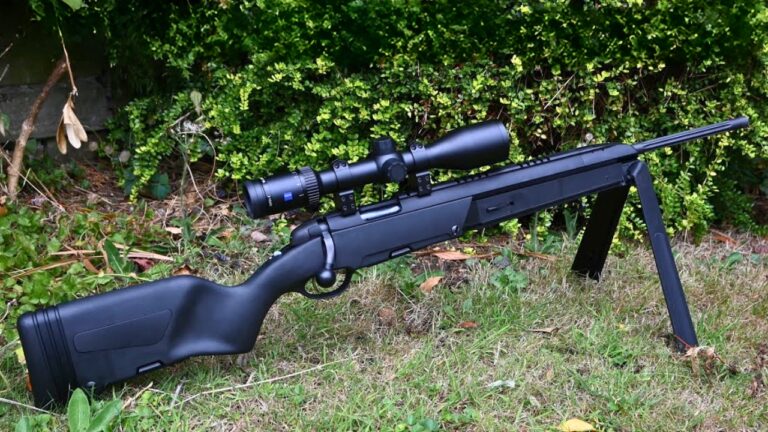
Henry’s new Mini Bolt Youth G2 doesn’t look wildly different from the original on the rack, but the one real change they made actually matters when a kid is behind the trigger. The rifle is still a simple, single-shot .22 built for small shooters. The big difference is in how you load it, and that sounds minor until you’ve watched a new shooter fumble with tiny cartridges and a stiff chamber. Henry finally tweaked the design in the spot that slows kids down the most, and it’s a real quality-of-life upgrade.
The Mini Bolt G2’s new loading ramp
The headline change on the G2 Mini Bolt is an integrated loading ramp that guides the cartridge into the chamber. On the old version, you had to poke the .22 round straight into the chamber mouth, which is awkward for small hands and cold fingers. Now you can just drop the cartridge onto the feed ramp and close the bolt. For a youth rifle, that’s huge. Less fumbling means more focus on muzzle discipline, sight picture, and trigger press instead of wrestling with ammo. The rifle still runs .22 LR in a single-shot setup, so nothing changes in terms of safety—just the part that used to frustrate everybody.
Same kid-friendly dimensions, easier to live with
Henry didn’t mess with the dimensions that already worked. The Mini Bolt G2 keeps the 30.25″ overall length, 16.25″ barrel, and 11.5″ length of pull, plus the 3.25-lb weight that makes it easy for kids to hold without getting worn out. That consistency matters if you’re upgrading from an older Mini Bolt or you’re following a training plan that already fits the gun. The change is all in usability: loading is faster, the action feel is familiar, and nothing “grows” on the shooter before they’re ready. It stays a true youth rifle instead of creeping into awkward in-between territory.
Sights and optics options that make training simpler
The G2 keeps the same sight setup: open notch rear and post front with fiber-optic inserts, which are easier for kids to pick up in mixed light than plain black irons. If your plan is to mirror the optics they’ll use later, Henry sells a cantilever scope mount that clamps on and gives you room for a compact scope or dot. That lets you start them on irons and then move to glass without needing a different rifle. Nothing about the new loading ramp changes point of impact or the way it groups, so you aren’t constantly re-zeroing around a mechanical redesign.
Safety features that still force deliberate use
Henry kept the dual-safety setup: a manual thumb safety on the receiver and a firing pin that has to be manually cocked before each shot. That means the rifle stays “on safe” by design even if someone rushes the bolt. For a beginner, that extra step between loading and firing is a teaching tool, not a nuisance. You can build a rhythm—load, close, cock, check surroundings, then take the shot. The new loading ramp doesn’t change any of that discipline. It just cuts down on the fiddly part that steals focus from the process you’re trying to ingrain.
Why this small change actually matters in the field
If you’ve ever tried to run a youth single-shot with gloves on, at a bench that’s a little too tall, you already know why the ramp matters. Every dropped round, every failed attempt to poke the case into the chamber, adds frustration and breaks concentration. The G2’s ramp lowers that friction without making the rifle any more “advanced” than it needs to be. Kids can get back on target faster, and you spend less time leaning over the stock to “fix it for them.” For a lot of families, that difference determines whether the rifle feels fun to use or gets left in the safe after the first trip.
Like The Avid Outdoorsman’s content? Be sure to follow us.
Here’s more from us: