Image Credit: TRACT Optics
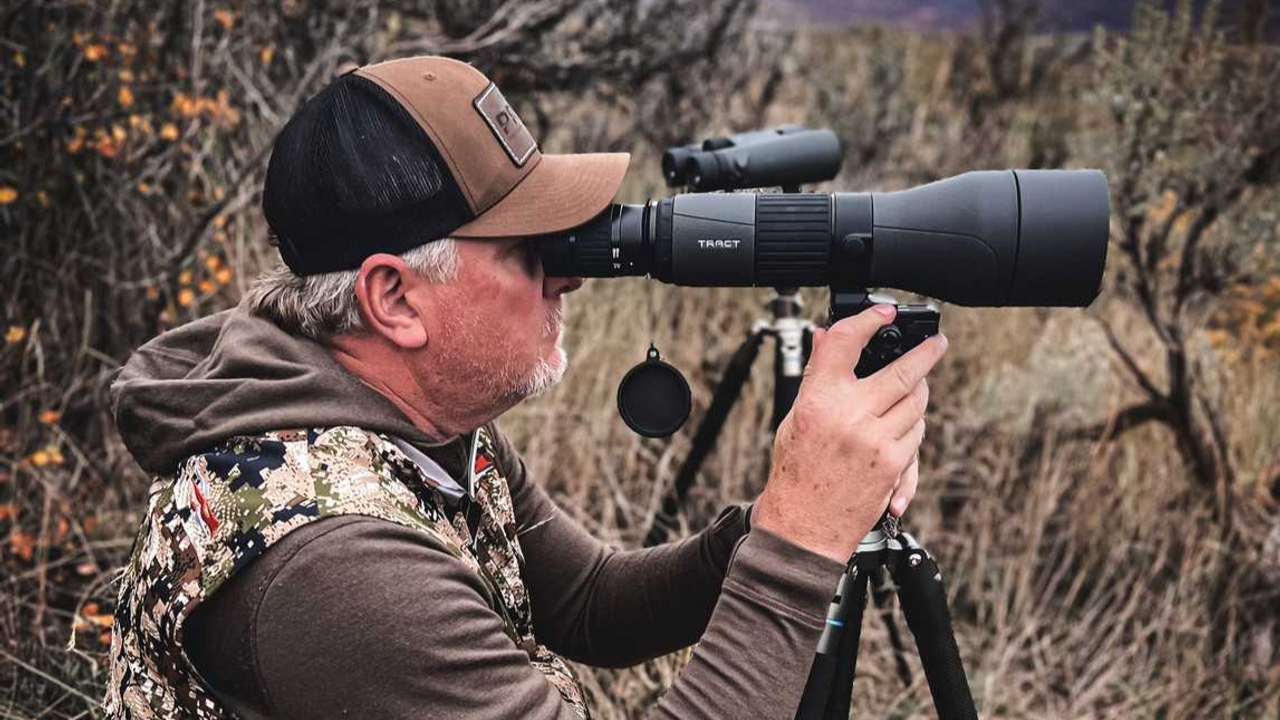
If you’re still relying on just binoculars in the field, you’re missing a big piece of the puzzle. A spotting scope isn’t just for long-range shooters or Western hunts—it’s one of the most useful tools a hunter can carry, no matter where you’re hunting.
I’ve used spotters on everything from elk in open country to whitetail across cut fields. They let you see more, move less, and make better decisions. If you’re serious about getting eyes on animals without blowing your cover, a spotting scope earns its place fast.
You’ll Spot Game from Way Farther Out

A spotting scope gives you serious range. We’re talking way beyond what your binos can handle. You can glass ridgelines, open fields, and deep cuts without burning energy hiking just to “see what’s over there.”
That kind of reach saves time and keeps you from blowing out an area too early. If you’ve ever bumped a buck while hiking to glass, you already know the value of staying put and letting your optics do the walking.
You Can Judge Animals More Accurately

It’s one thing to spot movement. It’s another to know what you’re looking at. A spotting scope lets you pick out details—antler points, body size, age—without having to move in close and risk spooking your target.
This matters a lot when you’re chasing legal bucks or trying to be selective. It also helps you avoid wasting a stalk on something that looked better than it was. With a good spotter, you’re making smarter calls from a distance.
You’ll Cover More Ground Without Moving an Inch

A lot of guys think more walking equals more hunting. But if you’ve got good glass and a solid vantage point, a spotting scope lets you scan huge areas from one spot. You’re not wasting energy or blowing your scent all over the place.
Sit tight, glass methodically, and let the game show up. It’s a different kind of hunting—more patient, more calculated—but it pays off. Especially in big country, a spotter becomes your most efficient tool.
It’s a Game Changer in Open Country

If you hunt mule deer, elk, or pronghorn in open terrain, a spotting scope isn’t optional—it’s essential. Those animals don’t hang out in the trees. You need to find them from a long way off and plan your approach before they ever know you’re there.
A spotter gives you that edge. You’re able to scout more effectively and set up stalks that actually work. In big western landscapes, it’s the difference between guessing and knowing.
You Can Scout Without Disturbing the Area

Scouting with a spotting scope means less pressure on the land. You’re not tromping through bedding areas or leaving your scent all over the place. Instead, you’re posted up on a hill, watching quietly from a distance.
That keeps the animals relaxed, and it keeps your hunting area intact. The less they know you’re there, the better your odds. It’s not just about seeing more—it’s about being seen less.
It Helps You Learn Animal Behavior

When you’ve got time and a spotting scope, you start to notice patterns—where animals bed, how they move, what trails they use. You’re not just watching; you’re learning. That kind of intel stacks up fast and gives you a serious leg up.
Knowing what a deer or elk is about to do is a whole lot more valuable than knowing where it was. A spotter helps you get ahead of the game, literally.
It Makes Group Hunting More Effective

If you’re hunting with a buddy or a team, a spotting scope keeps everyone on the same page. One guy can glass while the other gets into position. You’ve got eyes on the animal the whole time, which makes for safer and smarter communication.
It also helps when you’re guiding someone in—being able to give accurate directions from a high perch makes the whole setup way more efficient. It’s a solid tool for keeping the whole crew dialed in.
It’s a Better Tool for Tracking Wounded Game

When an animal’s hit and takes off into thick cover or across open terrain, a spotting scope can help you keep eyes on it longer. You might catch where it beds down or where it disappears, giving you a better idea of where to start tracking.
Every second matters in that situation. The more visual info you can get before moving in, the better your odds of a clean recovery. A spotter buys you time and clarity when things get stressful.
It Works Year-Round, Not Just During Hunting Season

A spotting scope isn’t something that sits in the gear bin for 11 months. You can use it all year—off-season scouting, shed hunting, even just checking trail crossings from a distance. It’s a tool that keeps paying off.
The more you use it, the more it sharpens your glassing skills too. You get better at spotting movement, picking out shapes, and reading terrain. That kind of experience carries over into every hunt.
*This article was developed with AI-powered tools and has been carefully reviewed by our editors.