
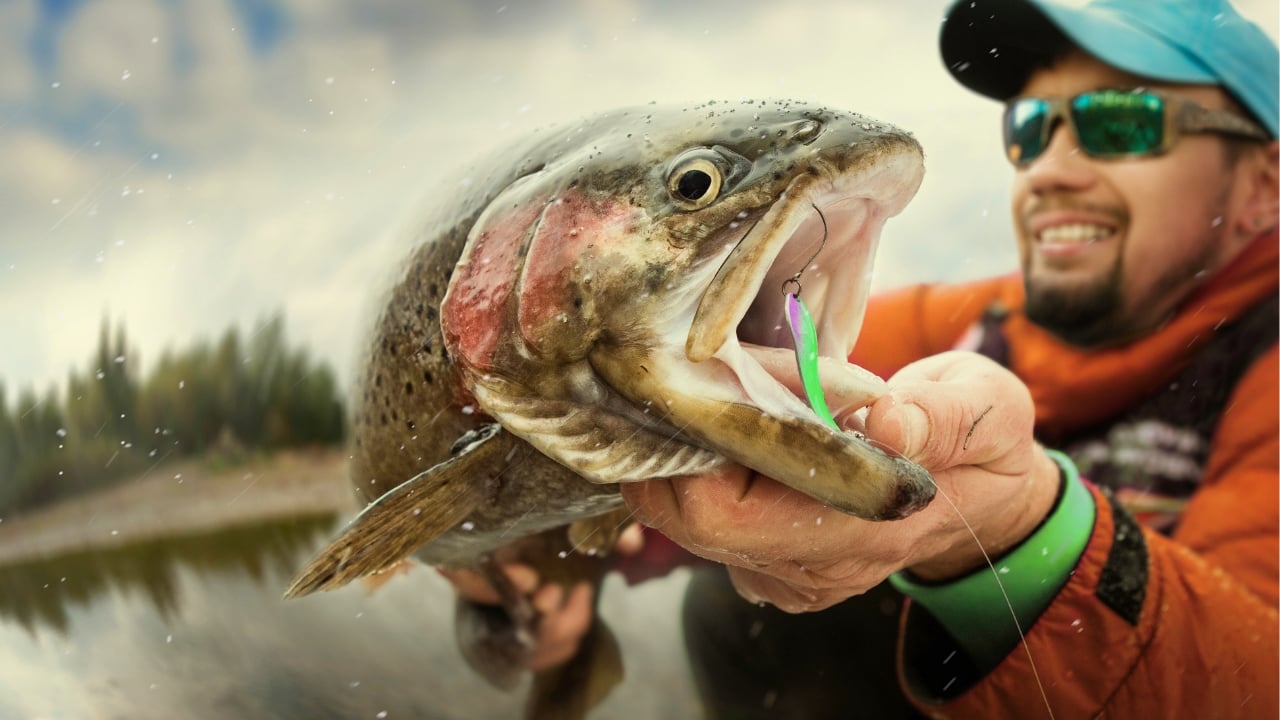
Photo credit: Rocksweeper/Shutterstock.com
When you’re fishing clear water, trout can see everything—and I mean everything. That includes your line, your shadow, and that awkward cast that splashes down like a rock. But the good news is, with the right approach, clear water can actually work in your favor. Trout rely heavily on sight, so if you’re stealthy and smart, you’ll get their attention in all the right ways. Here are ten tried-and-true techniques that help put more trout in the net when the water’s crystal clear.
Use Light Line and Small Tackle

Trout in clear water are spooky, especially when they see thick line flashing in the sun. Switching to 2-4 lb fluorocarbon makes a big difference. It’s nearly invisible underwater and still holds up well.
Smaller hooks and lures also help. Oversized gear just looks out of place. The more natural your setup looks, the better chance you’ve got at convincing a trout to bite.
Keep a Low Profile

If you can see the trout, they can definitely see you. Avoid standing tall or casting shadows over the water. Stay crouched, use trees or bushes as cover, and approach the bank slowly.
It’s not just about hiding—it’s about being part of the background. Movement along the bank can ruin your chances before your first cast.
Match the Hatch

Clear water gives trout a perfect view of what’s floating by. If you’re using a fly or lure that doesn’t look like what they’re actually feeding on, they’ll ignore it.
Watch the water for bugs or baitfish and choose something that matches size and color. It doesn’t have to be exact, but close counts in this game.
Cast Upstream and Drift Naturally

When you cast upstream and let your bait drift down with the current, it looks more like the real thing. Trout tend to face upstream, waiting for food to come to them.
This method keeps your line behind the bait, which also helps with stealth. It’s a great way to get a reaction from fish that aren’t actively hunting.
Use Longer Leaders

Short leaders can spook trout, especially in clear water. A longer leader—think 9 to 12 feet—lets your fly or bait move more naturally without the fish noticing the line.
It also gives you more room to stay back from the water. The less visible you and your setup are, the better your chances.
Downsize Your Lures

Big, flashy lures might work in muddy water, but they can turn trout off when things are clear. Go with smaller spoons, spinners, or soft plastics that look like local forage.
Natural colors work best—nothing too bright or unnatural. You want something that blends in but still gets noticed by a sharp-eyed trout.
Fish During Low Light Hours

Early morning and late evening are your best friends when the water’s clear. Trout feel more secure when the light is low, and they’re more likely to feed aggressively.
Cloudy days work too. Basically, anytime the sun’s not beaming straight into the stream, you’ve got a better shot at fooling wary fish.
Stay Mobile and Cover Water

If you’re not getting bites after a few solid casts, don’t stand in one spot too long. Clear water trout can see your bait from a distance, so if they’re not taking it, it’s time to move.
Keep working different sections and angles. Covering more water gives you more opportunities, especially when the fish are holding tight to certain features.
Focus on Structure and Shade

In clear water, trout love to tuck into places that offer some cover—think rocks, undercut banks, or shaded pools. That’s where they feel safe and still have access to food.
Target these spots with accurate casts and a quiet approach. Even a small shadow line can hold a big trout on a sunny day.
Be Patient and Observe
Sometimes the best move is to stop and watch. Look for feeding behavior, surface activity, or fish movement before you even cast.
Patience pays off in clear water. A single well-placed cast is better than a dozen rushed ones. Take your time, make it count, and the results will follow.
*This article was developed with AI-powered tools and has been carefully reviewed by our editors.


