Photo credit: Michael Vi/shutterstock.com
Coyotes do not usually get bold everywhere at once. They get bold in places where the risk stays low and the reward stays high. That is the pattern wildlife researchers and animal-control guidance keep pointing back to. Urban Coyote Research says human behavior is often at the root of coyote conflicts, and the Humane Society’s management guidance says food attractants, habitat conditions, and repeated access to human spaces can push coyotes toward more conflict-prone behavior. So when people say coyotes are “getting bolder,” what they often mean is that coyotes have learned certain places are easy to use.
Neighborhood edges and greenbelts
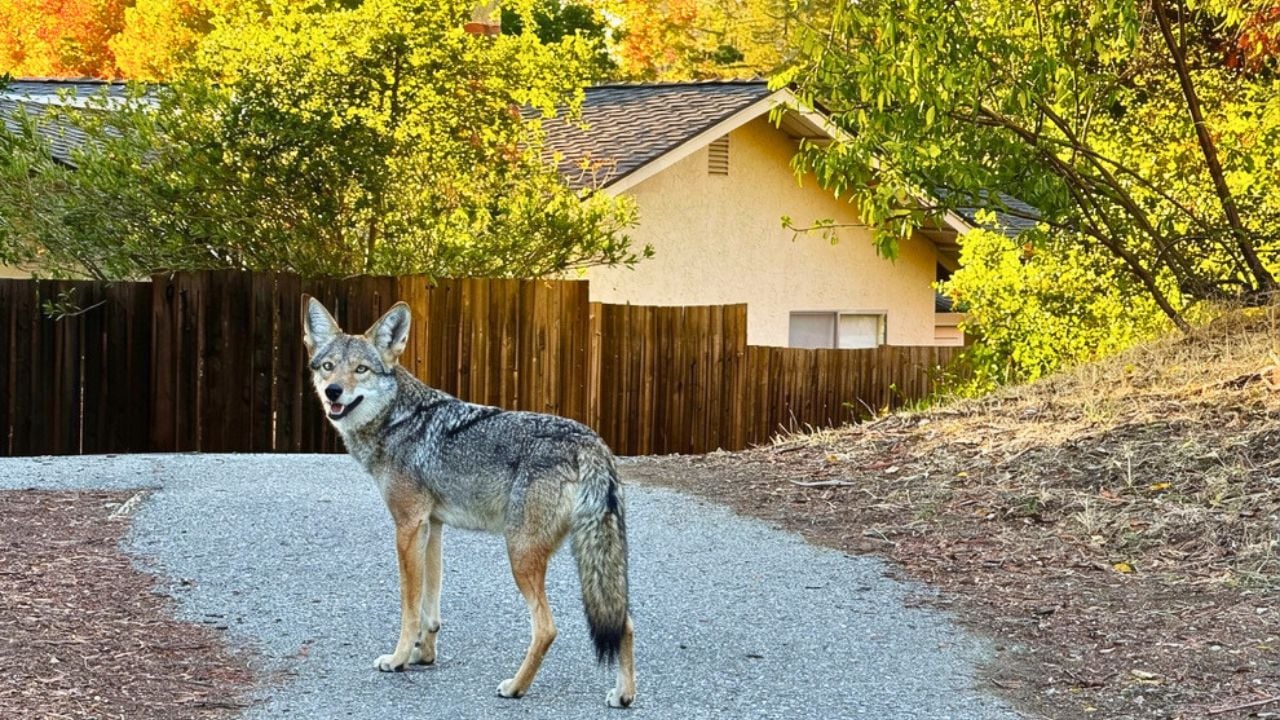
One of the biggest trouble spots is the edge where neighborhoods meet brush, creek bottoms, drainage corridors, or strips of unmanaged vegetation. Those areas give coyotes exactly what they want: cover, travel lanes, and a relatively easy way to slip in and out of human spaces without being fully exposed. Urban Coyote Research’s community guidance focuses heavily on how coyotes use developed landscapes, and it warns that conflicts often trace back to the same kinds of places where wildlife movement and human routines overlap.
That is why greenbelts and brushy neighborhood edges matter so much. People treat them like harmless buffers or walking-space scenery, but for coyotes they can function like highways. A coyote that would look exposed crossing an open yard can stay much more comfortable moving through those narrow hidden routes right up against houses, dog-walking paths, and backyard fences.
Backyards with easy food and water
Coyotes get a whole lot bolder where they keep getting rewarded. The Humane Society says preventive practices such as reducing food attractants, modifying habitat, and changing human behavior are central to reducing coyote conflict. Urban Coyote Research says community-level efforts matter because one neighbor’s actions can undermine everybody else if attractants stay available.
That means the “bold coyote problem” often shows up first in the yards that make life easiest. Pet food, water bowls, unsecured trash, fallen fruit, wildlife feeding, and unattended small pets all change how a coyote reads a place. It stops looking like risky human territory and starts looking like a dependable stop. Once that happens often enough, coyotes begin acting less like pass-through wildlife and more like they belong there.
Parks, school-adjacent open spaces, and walking trails
People are often surprised to hear that coyotes can get comfortable in parks and trail systems, but those areas check a lot of boxes. They often have brush, prey, low nighttime disturbance, and predictable human movement patterns. Urban Coyote Research’s materials are built around urban and suburban coyote conflict, and the underlying point is clear: boldness grows where coyotes can repeatedly use human-dominated landscapes without much consequence.
That is why coyotes seen near trails or open-space paths are not always just “lost wildlife.” Sometimes they are using those places routinely because the paths connect cover, neighborhoods, and food-rich edges. If the same coyote keeps showing up near dog walkers, joggers, or path entrances, that is often a sign the area has become normalized for it.
Golf courses, retention ponds, and watered landscapes
Coyotes also get comfortable in spots that stay green, watered, and full of prey even when surrounding areas are more exposed or dry. While the broad management guidance does not always name every landscape type one by one, the same principles apply: places with water, rabbits, rodents, birds, and cover tend to become attractive, and low-pressure manicured spaces can still function like habitat when they are bordered by brush or drainage. That is a straightforward inference from the attractant and habitat guidance in Humane Society and Urban Coyote Research materials.
In practical terms, golf-course edges, detention ponds, creek corridors, and irrigated common areas can become coyote comfort zones because they give the animal food, water, and movement cover while still sitting close to neighborhoods. People may think of those places as too developed to matter, but coyotes often read them very differently.
Rural homesites and ranchette country
Coyotes do not only get bold in suburbs. They also get comfortable around scattered rural homes, barns, sheds, chicken areas, and small-acreage properties where pets, feed, rodents, and poultry are all concentrated close together. The same conflict logic applies there too: if a coyote can move through with little pressure and find easy food, it will start treating the place as routine. Humane Society guidance frames this as a management issue driven by attractants and human behavior, not just the presence of coyotes alone.
That is why some of the boldest coyote behavior shows up in places people least expect it. A coyote crossing a huge pasture may stay wary. That same animal slipping around a dog pen, compost pile, feed shed, or chicken run on a lightly disturbed rural property may act much more casual if it has been getting away with it.
Anywhere the whole neighborhood sends mixed signals
One of the strongest points in Urban Coyote Research’s community guidance is that individual action is limited if neighbors keep doing the opposite. That matters because boldness often grows fastest in places where some people are careful and others keep leaving rewards out. A coyote does not need every house on the block to be easy. It only needs enough inconsistency to make the area worth working.
That is why the places where coyotes are getting bolder are often not just one yard or one park. They are clusters of human spaces where attractants, cover, and weak deterrence overlap. The pattern is less about a fearless super-coyote and more about an animal learning that certain developed places are still safe to use.
What these places have in common
The common thread is simple: cover, access, food, water, and not enough pushback. That is what turns ordinary human spaces into places coyotes start using too confidently. The Humane Society’s plan and Urban Coyote Research both point back to prevention, attractant control, and coordinated community response because those are the things that change the equation before the behavior gets worse.
So the places where coyotes are getting bolder than most people realize are usually not mysterious at all. They are the places that quietly make life easier for a coyote: neighborhood edges, greenbelts, watered open spaces, easy backyards, rural pet-and-feed zones, and anywhere people have made the risk low and the reward predictable.
Like The Avid Outdoorsman’s content? Subscribe to our newsletter so you never miss an article.
Here’s more from us: