Photo credit: WHO_TEE_WHO/YouTube
Some calibers carry a lot of swagger at the gun counter or on the internet, but when you sit down and look at the energy numbers, the punch doesn’t always match the bark. Case size, bullet diameter, and recoil can fool you into thinking a round hits harder than it actually does. But once you pull up the charts and look at foot-pounds of energy, some of these cartridges start looking more like pop guns. That doesn’t mean they’re useless—but it does mean you shouldn’t be fooled by looks, noise, or hype. Here are the calibers that act like they’ve got muscle, until the numbers call their bluff.
.30 Carbine

If all you did was look at the M1 Carbine and its military history, you’d think the .30 Carbine was a powerhouse. It’s got a rifle’s profile and makes plenty of noise, but energy-wise, it’s more in line with a hot handgun round. Most .30 Carbine loads push a 110-grain bullet around 1,900 fps, giving you roughly 880 ft-lbs of energy.
That’s more than a .357 Magnum, sure, but it’s far from traditional rifle power. Many assume it’s a deer-capable round, but once you compare it to something like a .243 or even a .223, it falls short. It’s fine for plinking or small critters, but it’s not nearly as thumpy as it sounds.
.45 Colt (standard pressure)

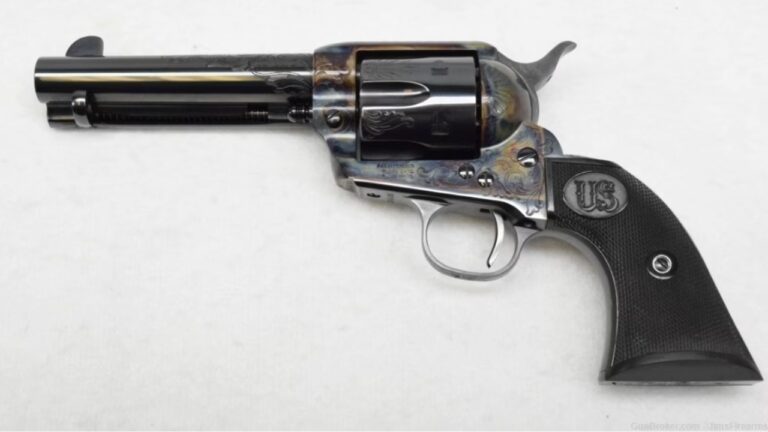
The .45 Colt has that big-bore, Old West reputation, and it definitely looks intimidating in the cylinder. But unless you’re running it in a modern revolver with hot handloads, the standard pressure stuff is pretty mild. Most factory cowboy loads hover around 250 grains at 800 fps, which barely breaks 350 ft-lbs of energy.
It’s accurate and pleasant to shoot, but energy-wise, it’s lagging behind even a 9mm. Now, if you’re handloading for a Ruger or a lever gun, that’s a different story. But off-the-shelf ammo gives you a big bullet that looks impressive but hits like a medium-strength push.
.22 Magnum

People love to hype the .22 Magnum as the next best thing to a centerfire round, but when you dig into the numbers, it’s still a rimfire with modest energy. Most 40-grain loads clock in around 1,800 fps from a rifle, giving you about 290 ft-lbs—less from a revolver or short barrel.
It sounds sharp, spits fire, and penetrates well for its size. But it’s not delivering anything close to centerfire rifle energy. It’s more punch than .22 LR, sure, but it’s still a long way from the kind of power you’d expect based on its bark. Great for varmints and pests—not so much for anything bigger.
.38 Special +P

There’s always been a debate about whether .38 Special +P is enough for self-defense. And while it’s a step up from standard .38, it’s not a dramatic leap. You’re usually looking at 125-grain bullets around 950 fps, which works out to roughly 250 ft-lbs of energy.
It’s manageable and shoots soft, but energy-wise, it doesn’t hold a candle to modern 9mm loads that regularly hit 350–400 ft-lbs. It’ll do the job in close quarters, but if you were thinking +P turned your revolver into a hand cannon, the chart says otherwise. The numbers aren’t terrible—they’re just not as high as many folks assume.
5.7x28mm

The 5.7x28mm has a slick reputation and punches through things better than most handgun rounds thanks to its speed. But energy-wise, it often lands in the same neighborhood as a .22 Magnum or .22 Hornet. Typical 40-grain loads hover around 1,700–2,000 fps, delivering roughly 250–300 ft-lbs.
That’s not bad for a handgun, but it’s far from magnum territory. It does its job with velocity, not weight, and that tradeoff matters. It shines in certain roles—like armor-penetrating loads for military or law enforcement—but for energy on target, it’s more like a fast jab than a heavy punch.
.410 Bore (slug)

Plenty of folks like the idea of a .410 slug as a defensive or hunting tool, especially in lightweight firearms. But the numbers tell a more modest story. A typical 1/4-ounce slug (around 109 grains) at 1,800 fps produces just under 800 ft-lbs of energy.
That’s not nothing, but it’s well below a 20-gauge or .30-30. And if you’re running a short-barreled .410 like a Taurus Judge or Shockwave, those numbers drop even further. It kicks light and handles well, but for all its shotgun image, the .410 slug doesn’t bring much more energy than a hot .357 load.
.32 H&R Magnum

The .32 H&R Magnum got attention for being a nice middle ground between .22s and .38s. But it never really lived up to the “magnum” part of the name. Most loads push an 85–100 grain bullet at around 1,100 fps, landing you in the 200–250 ft-lb range.
That’s usable for target shooting or small-game work, but not something you’d want to rely on for stopping power in serious situations. It’s pleasant to shoot and fun to reload for, but if you’re buying it for raw energy, there are better options that cost the same and do more.
.25 ACP

This one shouldn’t surprise anyone, but it’s still worth pointing out. The .25 ACP has long been carried in pocket pistols, and it often feels like it’s doing more than a .22 because of the centerfire primer and slightly heavier bullet. But most loads push a 50-grain bullet around 750 fps, which gives you a little over 60 ft-lbs of energy.
That’s well below .22 LR and nowhere near adequate for anything beyond last-ditch self-defense. It’s better than nothing—but only barely. The energy chart confirms what most shooters already suspect: .25 ACP looks like a real caliber, but it hits like a sneeze.
.17 HMR

The .17 HMR is a varmint hunter’s dream when it comes to flat shooting and accuracy. But energy-wise, it’s not bringing anything you can’t already get from a decent .22 Magnum. Most 17-grain bullets zip along at 2,500+ fps, which sounds impressive, but only nets you about 250 ft-lbs of energy.
That’s great for small game, but misleading if you think velocity always equals power. It fragments fast and drops critters cleanly, but if you were expecting rifle-caliber energy just because the thing screams, the numbers will bring you back down to earth.
.32 ACP

The .32 ACP has history behind it and still shows up in concealed carry circles now and then. It’s soft-shooting and easy to control, but the energy numbers are consistently underwhelming. Most 71-grain FMJ loads fly at 900 fps, giving you about 130 ft-lbs on a good day.
It performs better than .25 ACP, sure, but that’s not saying much. If you’re banking on it for anything more than very close self-defense, you’re asking a lot from a pretty light hitter. It functions, it feeds, and it has its place—but energy isn’t one of its strengths.
.300 Blackout (subsonic)

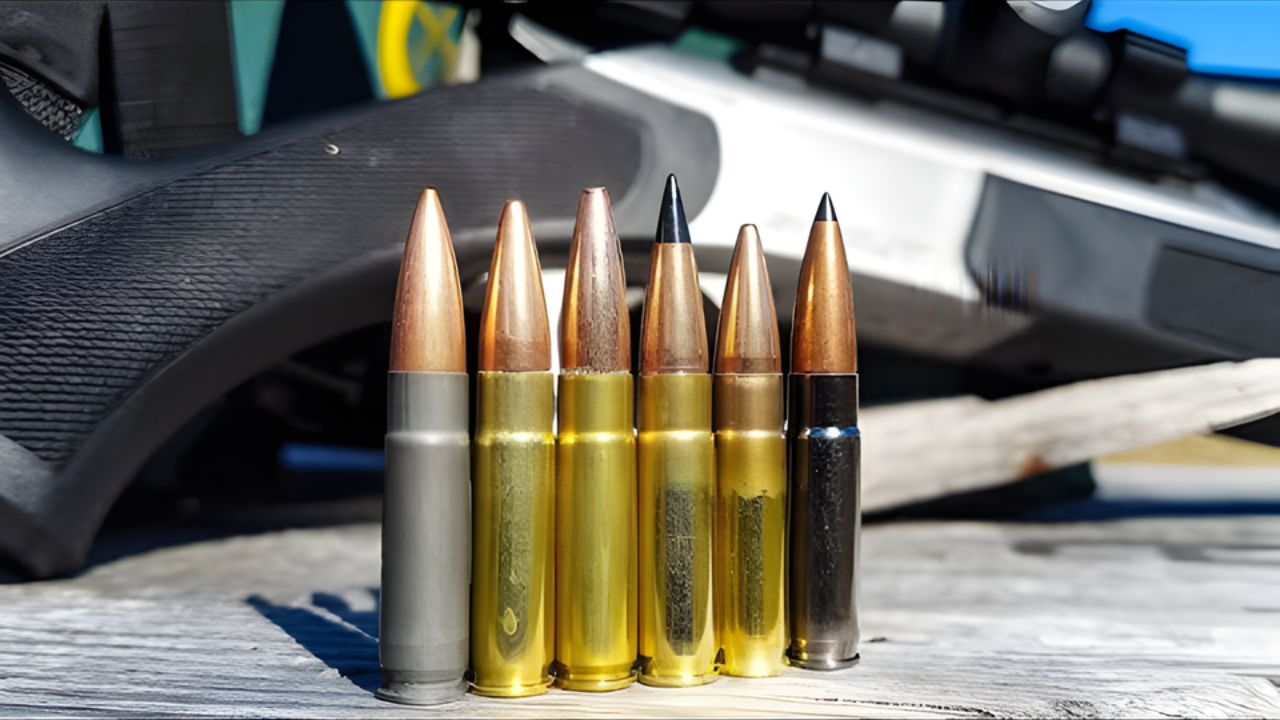
Subsonic .300 Blackout is quiet and pairs beautifully with suppressors, but it gives up a lot in terms of terminal energy. A 220-grain bullet at 1,000 fps sounds hefty, but it only delivers around 500 ft-lbs. That’s barely above .357 Magnum territory.
It’s a great round when suppressed stealth is your goal, but you have to understand the tradeoff. Subsonic .300 BLK is more like a big pistol round than a rifle cartridge. Supersonic loads change the game, but if you’re running heavy subsonics, you’re sacrificing power for silence in a big way.
7.62x25mm Tokarev

The 7.62x25mm looks like it should hit like a freight train—high velocity, bottlenecked case, and tons of muzzle flash. And it is fast, often pushing 85–90 grain bullets at over 1,400 fps. But even then, you’re looking at roughly 350 ft-lbs of energy—decent, but not mind-blowing.
It overpenetrates, cracks like a whip, and delivers flat trajectory at close range, but the actual impact energy isn’t that much better than modern 9mm +P. It’s a cool round with unique history, but in terms of raw power, the energy chart keeps expectations in check.
Like The Avid Outdoorsman’s content? Be sure to follow us.
Here’s more from us:
The worst deer rifles money can buy
Sidearms That Belong in the Safe — Not Your Belt
*This article was developed with AI-powered tools and has been carefully reviewed by our editors.