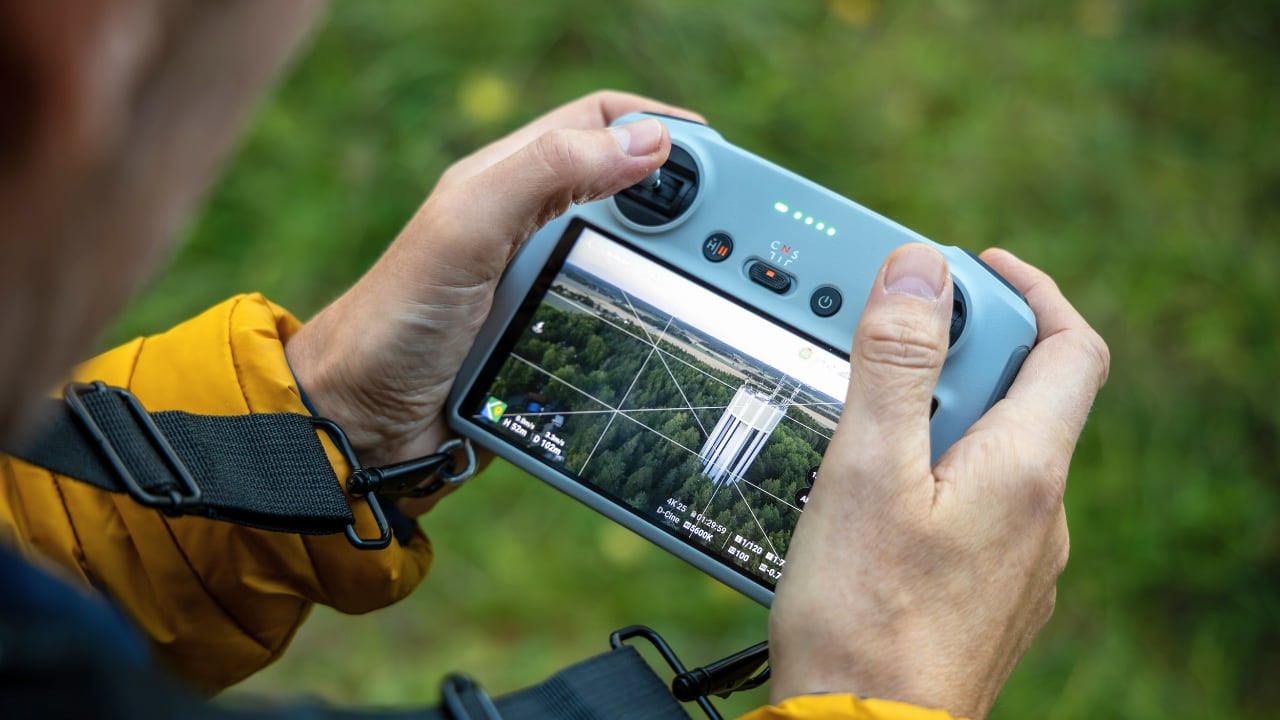
Photo credit: Schager/Shutterstock.com
Deer season has always been a test of patience, skill, and judgment, but the tools you carry into the woods are changing faster than the rulebooks. As regulators scramble to keep up with drones, artificial intelligence, and electric bikes, Illinois is emerging as the clearest sign that your favorite gadgets are no longer living in a legal gray zone. If you hunt, fish, or even just scout with tech, you are now part of a policy fight that is tightening around the country, with Illinois firing a warning shot that other states are already watching.
Illinois is turning tech from gray area to bright red line
You are used to thinking about deer season in terms of tags, zones, and shooting hours, but in Illinois the more urgent question is what is in your pack and on your phone. State regulators have started spelling out that certain devices are not just frowned on, they are flatly illegal when you step into the field. That shift, from vague “fair chase” language to explicit bans, is what makes Illinois a bellwether for how aggressively technology will be policed in the seasons ahead.
In a recent reminder aimed at hunters heading into firearm and archery seasons, the Illinois Department of Natural Resources made it clear that using drones to locate or recover animals, relying on artificial intelligence to interpret regulations, or deploying e-bikes as motorized vehicles in restricted areas can lead to citations, fines, and even forfeiture of the gear you used. The agency’s message, delivered as hunters prepared for the second firearm weekend, stressed that the use of unmanned aircraft, AI tools, and electric bicycles in the field can trigger forfeiture of unlawfully used equipment, a consequence that instantly raises the stakes for anyone who has treated these devices as harmless add‑ons.
Drones, e-bikes, and AI: the new front line in the deer woods
From your perspective, drones, e-bikes, and AI apps might feel like simple upgrades to how you scout, travel, and plan a hunt. Illinois regulators see something different: a cluster of tools that can erase the traditional limits of human endurance and knowledge, tilting the odds so far that the hunt itself starts to look more like a search‑and‑destroy mission. That is why these three categories are being singled out together, even though they work in very different ways.
Officials with the Illinois Department of Natural Resources have warned that using unmanned aircraft to locate game, riding e-bikes where motorized vehicles are prohibited, or leaning on AI tools to interpret rules is not allowed and can result in your equipment being seized and potentially forfeited. In their words, these technologies are treated as “unlawfully used equipment” when they help you take or recover wildlife in violation of the Wildlife Code, and the agency has been explicit that drones, e-bikes, and AI use are prohibited for hunting. For you, that means the same quadcopter you fly over your farm or the pedal‑assist bike you ride to work can become contraband the moment you use it to gain an edge on a whitetail.
Why Illinois is spelling it out in black and white
If you have hunted long enough, you know that most rulebooks used to assume a basic level of common sense about what counted as fair chase. Illinois is moving away from that assumption and toward detailed, written guidance because the technology is now too complex, and too powerful, to leave to interpretation. Regulators are trying to close the gap between what you can buy off the shelf and what the Wildlife Code ever imagined.
In a formal notice out of SPRINGFIELD, IDNR urged you to be “mindful of technology use in the field,” listing drones, artificial intelligence, and e-bikes as specific examples that can violate the Wildlife Code when used to take or recover animals. The agency’s own document explains that these devices are covered by existing prohibitions on using aircraft, motorized vehicles, or electronic aids to hunt, and it frames the reminder as part of a broader effort to keep hunting within ethical and legal bounds. When IDNR tells you in writing that these tools can trigger enforcement under the Wildlife Code, and does so in an official SPRINGFIELD technology reminder, it is signaling that “I did not know” will not be a persuasive defense.
AI is not your game warden, and Illinois wants you to remember that
On your phone, AI chat tools can feel like a shortcut to everything, from recipes to ballistics tables, so it is natural to ask them how many shells you can carry or whether a drone is legal for recovery. Illinois is warning you that this instinct can get you in trouble. The state’s wildlife managers are seeing enough hunters lean on AI for legal advice that they are now calling it out by name as a risk.
In guidance aimed at deer hunters, IDNR has cautioned that “AI tools often return inaccurate” interpretations of hunting rules and that you should instead rely on the official Hunting and Trapping Digest and the state’s own wildlife code. The agency is not just worried about bad information in the abstract, it is telling you that if you act on an AI‑generated answer that contradicts the digest, you are still responsible for the violation. That is why the reminder explicitly links artificial intelligence to the need to read the Hunting and Trapping Digest, a signal that your safest move is to treat AI as a planning aid at home, not as a rulebook in your pocket.
Your deer tag now comes with a digital fine print
When you buy a deer permit, you probably think of it as a simple license to be in the woods with a bow or a firearm. Illinois is using that moment to hand you a much more detailed set of expectations about how you behave, including how you use technology. The state is effectively turning your tag into a contract that assumes you have read, and will follow, a growing list of tech‑specific rules.
The official insert for the 2025 archery season spells this out in plain language, telling you that “Your deer permit entitles you to participate in the privilege of deer hunting” and then urging, “Please review this information to ensure that you” comply with all reporting and regulatory requirements. That document does not just cover harvest reporting, it also reinforces that you are responsible for knowing the restrictions that apply to your equipment and methods. By framing the permit as a privilege and pairing “Your” and “Please” in the same sentence, the state is reminding you that the right to hunt is conditional on following the detailed guidance in the 2025 archery deer harvest reporting insert, including the parts that govern how you use modern gear.
Fishing tech is next on the chopping block
If you think this crackdown will stay confined to deer stands and duck blinds, Illinois fisheries staff are already proving you wrong. The same logic that treats drones and AI as unfair advantages on land is now being applied to the water, where forward‑facing sonar and other high‑end electronics are reshaping how you find and catch fish. For you as an angler, that means the sonar screen on your console is starting to look a lot like the drone in your truck bed.
According to reporting by Ralph Loos, Illinois fisheries staff are examining how the use of forward‑facing sonar affects fish populations and angler success, and they are weighing whether new restrictions are needed. The concern is that this technology lets you track individual fish in real time, dramatically increasing your ability to target and catch them, which can undermine management goals if not checked. When a state biologist tells Ralph Loos that Illinois is studying whether to join a broader movement to restrict forward‑facing sonar, it is a clear sign that the same fairness and sustainability arguments driving deer‑season tech rules are already spilling over into your boat.
Lawmakers are testing how far to go with drones and the Wildlife Code
While IDNR is tightening rules through guidance and enforcement, legislators in Springfield are probing the opposite direction, asking whether some tech could be legalized under strict conditions. For you, that creates a confusing picture in which the agency that writes the digest is warning you away from drones, while some lawmakers are drafting bills that would carve out exceptions. The result is a live debate over how the Wildlife Code should treat unmanned aircraft in the long term.
One proposal, identified in the Introduced Session as IL HB2740, would amend the Wildlife Code to allow hunters to use unmanned aerial vehicles for certain wildlife‑related activities, including recovery, under defined limits. The bill’s summary explains that it would authorize drones for specific purposes while still prohibiting their use to locate or harass animals before a shot, a distinction that tries to balance humane recovery with fair chase. For you, the existence of IL HB2740 in the Introduced Session is a reminder that the law is not settled, and that what is banned in the field today could be reshaped by the next round of legislative bargaining.
Other states are already drawing even harder lines
Illinois may be the clearest current example of a state warning you about tech in deer season, but it is not acting in isolation. Around the country, wildlife agencies and governors are starting to treat certain tactics as so corrosive to the idea of sport that they are willing to ban them outright. If you hunt across state lines, you are going to feel these differences in your gear choices and in the way wardens interpret your setup.
In one recent case, State officials moved to ban residents from using controversial hunting tactics that they said “Undermines” ethical standards by removing the sporting element from the chase. The reporting describes how these tactics, which relied heavily on technology to stack the odds in the hunter’s favor, were singled out as incompatible with fair chase and were shut down despite pushback from some in the community. When a governor’s office backs a rule that says a method “Undermines” ethics and strips away the sporting element, as detailed in State officials’ ban on controversial tactics, it sends a message that your favorite gadget is only one executive order away from being treated the same way.
How you can stay legal when the rules keep shifting
For you as a hunter, the practical challenge is not just understanding why states are nervous about tech, it is staying on the right side of rules that are evolving every season. The safest approach is to treat official digests and agency websites as your primary sources, and to assume that if a device feels like it erases a natural limitation, it is either already regulated or about to be. That mindset helps you avoid the trap of assuming that what is sold in a sporting goods aisle is automatically legal in the field.
Illinois is making that easier in some ways by consolidating season dates, zone lines, and method‑of‑take rules in a single place, and by updating those materials as new tech questions arise. For example, the agency has published future waterfowl season dates and zone lines and directed you to check the digest or the Hunt Illinois website for the final word on what is allowed. The same pattern is emerging in deer season, where IDNR uses its digests and online updates to clarify how drones, e-bikes, and AI fit into existing law. When you see the agency telling you that Season dates and zone lines are locked in but that you still need to consult the digest or Hunt Illinois for details, it is a cue to build a habit of checking those official channels before you pack a drone, an e‑bike, or an AI‑driven app for your next trip.
Illinois as a warning shot for your own hunting future
When you step back from the specific bans and bills, Illinois looks less like an outlier and more like an early test case for how far regulators will go to keep technology from rewriting the meaning of a hunt. The state is not banning innovation outright, but it is drawing a sharper line between tools that help you participate and tools that, in the eyes of regulators, do too much of the work for you. If you ignore that distinction, you risk not only fines and seized gear but also a slow erosion of public support for the seasons you care about.
The pattern is clear: IDNR is warning you about drones, e-bikes, and AI in the deer woods, fisheries staff are scrutinizing forward‑facing sonar, lawmakers are experimenting with narrow drone exceptions in the Wildlife Code, and other states are already banning tactics they say “Undermines” ethics. You can treat that as a patchwork of local quirks, or you can read it as a national trajectory in which your gear choices are going to be judged as closely as your shot placement. If you want deer season to remain a privilege that “Your” permit unlocks rather than a battleground over gadgets, the Illinois experience suggests you should start thinking about technology not just as what helps you fill a tag, but as what keeps the hunt itself defensible in the eyes of the people writing the rules.
Like The Avid Outdoorsman’s content? Be sure to follow us.
Here’s more from us: