Photo credit: The Avid Outdoorsman
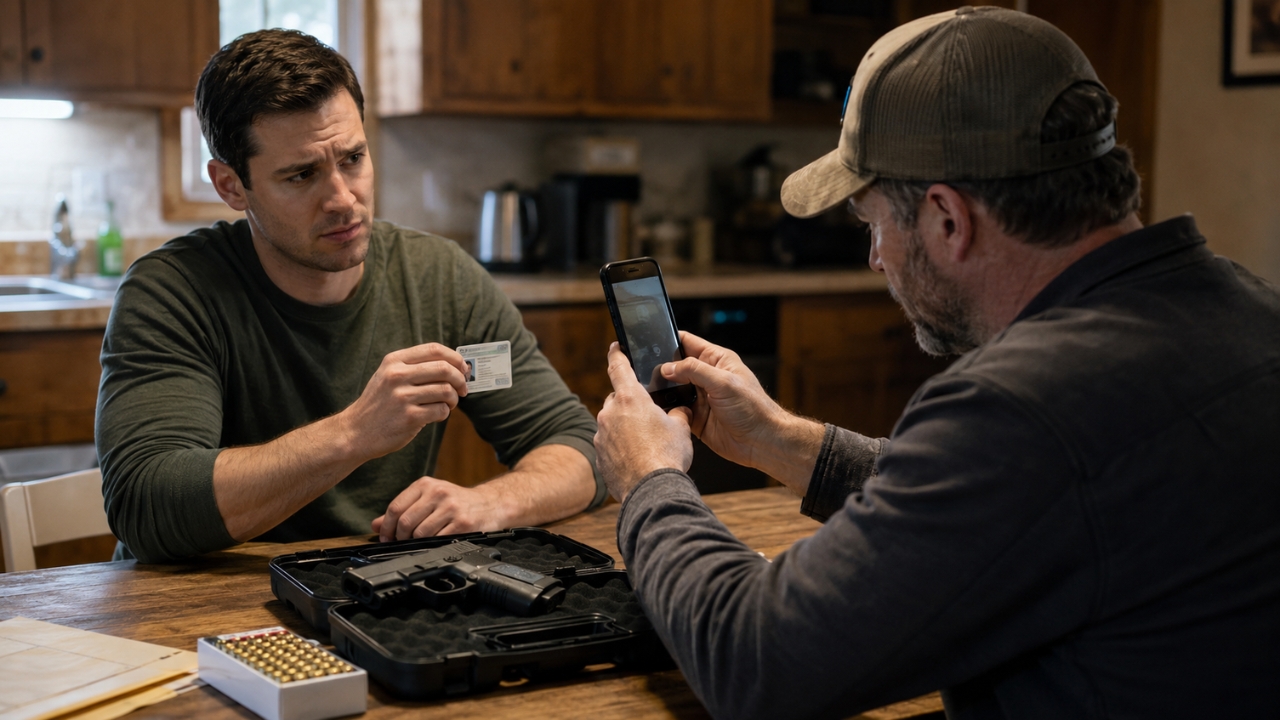
A gun buyer in Reddit’s r/guns brought up the kind of private-sale question that sounds small until you realize how much it asks people to trust a stranger. He said he was looking at buying a firearm in a face-to-face sale and wanted to know how much identification a seller should be allowed to keep. The concern was not about flashing an ID long enough for the seller to verify he was a resident or old enough to buy. The problem was the idea of the seller photographing it, keeping a permanent copy, and walking away with the buyer’s address and personal information sitting on a phone. In the original Reddit thread, he laid out the question and asked where the reasonable line really is: https://www.reddit.com/r/guns/comments/oneubv/how_much_id_should_i_let_a_seller_keep_in_a/. (reddit.com)
From the way he framed it, he was not trying to dodge the basics of a legal private sale. He seemed to understand why a seller might want some reassurance that he was dealing with an in-state buyer and not handing a gun to someone who obviously should not be getting one. What bothered him was the idea that a seller would need to keep a record beyond that moment, especially a full photograph of the ID. That changes the whole tone of the interaction. Once somebody wants a permanent copy, it stops feeling like a quick check and starts feeling like you are handing over a piece of your identity to a stranger whose storage habits, motives, and judgment you do not know.
That distinction is where the thread really came alive. A lot of people in the comments had no issue with showing an ID briefly. In their minds, that was just part of making sure the transaction stayed inside the rules. But keeping a photo was another matter entirely. One reply said that if someone only wanted to inspect the ID and confirm that the buyer was a resident, that was fine. Taking a picture was not. Another commenter said flatly that a photo was a deal-breaker because there was no good reason to give a stranger a copy of your license that could later be lost, hacked, or misused. The moment the seller asks to keep the information, the buyer is no longer only deciding whether the gun is worth the price. He is deciding whether the deal is worth the privacy risk.
A different set of commenters went the other way and said the whole point of checking ID is to protect the seller. Some of them argued that if a seller is going to risk a private transfer, keeping some kind of record may be the only thing that makes him comfortable doing it at all. In that line of thinking, the buyer’s discomfort is understandable, but the seller’s concern is not crazy either. A firearm sale is not the same as selling a pair of boots out of the trunk. A lot of people in that thread were clearly thinking about the “what if” questions that linger after the deal is done. What if the gun gets used in a crime later? What if law enforcement traces it? What if the seller has nothing but a first name and a cash memory to point back to? Those worries shaped the discussion almost as much as the privacy side did.
That is what made the thread more than just a yes-or-no argument. It was not only about whether the buyer was being too cautious or the seller was being too nosy. It was really about how much trust private gun sales now require from two people who often do not know each other at all. The buyer worries about identity theft, leaked addresses, and a phone full of personal data that he cannot control once the picture is taken. The seller worries about handing over a firearm and later having no paper trail if anything ugly happens. Both sides are thinking defensively. They are just defending against different futures.
A few commenters tried to bridge that gap with compromises. Some said they would allow an ID to be viewed but not photographed. Others said they might cover part of the address or license number if the seller only needed to verify state residency and age. A few suggested the most obvious escape hatch: if either side is uncomfortable with how much information is being exchanged, just pay the transfer fee and run the sale through an FFL. That advice came up more than once because it solves the core tension in a cleaner way than arguing in a parking lot about who gets to keep a picture of what. If you cannot agree on what counts as reasonable verification, a licensed transfer turns the entire problem into a paperwork issue instead of a trust issue between strangers.
Still, the comments showed how different gun owners’ comfort levels really are. Some people said they would never sell privately without documenting the buyer in some way. Others said the second somebody asked to photograph their ID, the sale would be dead. One commenter essentially said that if a seller wants a permanent record of the buyer, that may be understandable for his peace of mind, but the buyer has every right to walk because there is no undo button once that photo is taken. That was probably the clearest divide in the whole thread. The debate was not really over whether caution is smart. The debate was over whose caution gets priority once the expectations conflict.
There was also a more practical undercurrent to the buyer’s concern that many people seemed to understand immediately. A driver’s license is not just a quick proof of age. It is a bundle of useful information. Home address, full legal name, license number, sometimes enough detail to make future scams a lot easier if it ends up in the wrong hands. That is why photographing it feels different from glancing at it. The first is a momentary check. The second creates a lasting copy. In a world where people already worry about fraud and stolen identities, it is not hard to see why a buyer might decide that a gun he wanted is no longer worth the long tail of risk that comes with that photo.
The thread never really produced one universal answer, which is probably the most honest outcome it could have had. The legal environment, the state rules, the risk tolerance of each person, and the specific way the deal is set up all shape what people think is acceptable. But the post did make one thing very clear: private gun sales start getting uncomfortable fast when one side moves from “show me” to “let me keep a copy.” That is the point where a routine check turns into something more permanent, and once it does, both people have to decide whether the sale is still worth it.
That is really where this one lands. A man wanted to know how much of his ID a seller should be allowed to keep, and the answers exposed how fragile private-sale trust really is. For some people, a quick look is enough. For others, nothing short of a full transfer record feels safe. And in the middle of all of it is the buyer standing there, trying to decide whether the gun in front of him is worth giving a stranger a permanent piece of his identity to take home.