Photo credit: The Avid Outdoorsman
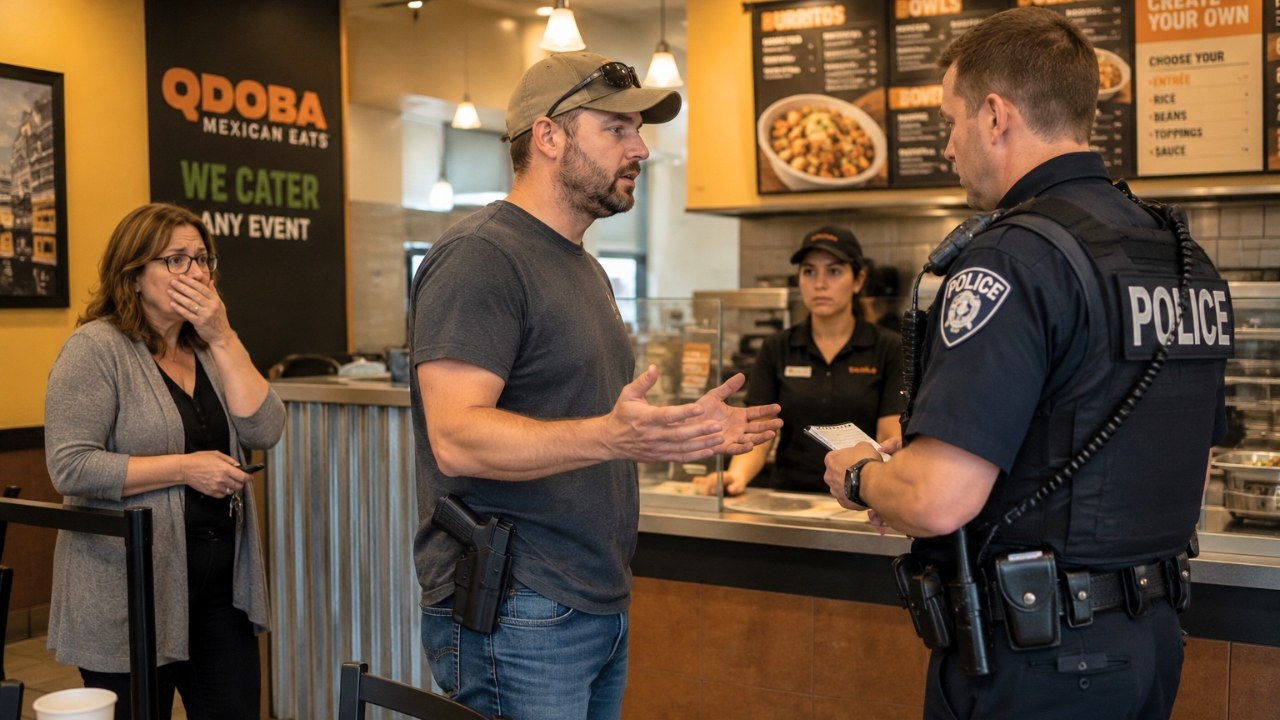
A concealed carrier in Reddit’s r/CCW described the kind of public encounter that a lot of armed civilians think about before it ever happens: somebody notices the gun, gets nervous, and law enforcement gets involved before you even finish your meal. In his post, he said he was eating at Qdoba when a woman saw that he was carrying and called police. What followed, according to him, was his first real encounter with law enforcement as a permit holder, and it happened over lunch in front of strangers who had no idea what had brought the officers there. The original Reddit thread is here: https://www.reddit.com/r/CCW/comments/7qstlj/first_leo_encounter_il_lady_calls_the_police_at/. (reddit.com)
The story begins in the most ordinary possible way. He was not in a parking lot at night. He was not at a gun store, a range, or somewhere people expect firearms to exist. He was at a chain restaurant in the middle of a normal meal. That matters because it shapes how everyone else in the room would have experienced it. To him, carrying may have felt like part of his normal routine. To the woman who noticed, it was apparently alarming enough to justify calling police right then and there. That gap between those two mindsets is where the whole encounter lived.
From the way he told it, the police response itself was not chaotic, but it was still tense because of what it represented. Once officers are approaching you in a restaurant because another customer reported a gun, the situation stops being theoretical immediately. Even if you know you are legal, even if you know your permit is valid, even if you have done everything right, you still have to sit there and wait for the conversation that follows. The law may be on your side, but the social reality is still that someone in the room thought your mere presence with a firearm was serious enough to bring police into the middle of lunch.
That is part of what makes a story like this different from the more obviously reckless ones. No one dropped a pistol. No one pointed a gun. No one negligently discharged anything. The issue was simply that someone saw the carrier and reacted hard. That kind of story lives in the awkward space between legal carry and public discomfort. The carrier is not doing anything criminal, but the people around him do not all know the law, do not all trust armed strangers, and do not all react calmly when they realize someone nearby may have a pistol.
The comments in threads like this usually split along familiar lines. Some people focus on the mechanics of the police interaction itself: whether the carrier notified, how the officers approached, whether they were professional, and whether the permit holder handled the conversation smoothly. Others focus on the larger social point, which is that concealed carry stops being concealed the second someone spots it, and then the carrier becomes responsible not only for the gun, but for whatever reaction other people have to it. That second part is what makes stories like this linger. A lot of permit holders spend time thinking about holsters, calibers, printing, and legal rules. Fewer think deeply about what happens when a random person in line for burritos decides your gun is now the center of her afternoon.
From the post, it is clear the law-enforcement part stuck with him because it was his first real encounter of that kind. First encounters matter. They become the benchmark people compare everything else against later. A calm traffic stop is one thing. Being approached because another citizen has already framed you as a problem is another. Even if the officers are perfectly professional, the carrier is still walking into the conversation knowing that someone nearby believed police needed to intervene because of him. That changes the emotional temperature of the interaction.
The restaurant setting makes that even more uncomfortable. Lunch spots are crowded, bright, noisy, and full of people pretending not to stare when something unusual happens. If officers walk in and approach a table, the people around them notice. The carrier notices them noticing. The woman who made the call may still be there. Staff may be watching from behind the counter. Even if the encounter ends in thirty seconds with a polite nod and no issue, the social air in the room has already changed. That is part of the hidden cost of being “made” in public. The legal outcome may be fine, but the moment itself still puts the carrier on display in a way concealed carry is designed to avoid.
A lot of commenters on stories like this tend to circle back to the same practical questions. Was he printing? Did his shirt ride up? Was he open carrying in a place where that was legal but likely to alarm people anyway? Did the woman see a grip, a clip, or just assume? Those questions matter because every detail changes how other carriers read the story. If the firearm was accidentally exposed, the lesson leans toward concealment discipline. If it was visible on purpose and legal, the lesson leans more toward understanding that legality and social comfort are not the same thing. Either way, the result is the same once police are called: the gun has stopped being private.
The short section of commenters who usually offer the most useful perspective tend to focus on demeanor. Stay calm. Keep your hands visible. Do not turn a nervous citizen’s overreaction into a real problem by acting irritated or clever when officers arrive. That kind of advice sounds boring, but it matters because the carrier in a restaurant has already lost the advantage of invisibility. What remains is control over his own behavior. In most stories like this, that is the only thing still fully in his hands. The woman who called already made her decision. The officers are already walking over. The carrier’s job, fair or unfair, is to make sure the scene gets smaller instead of bigger.
There is also an unavoidable reality hanging over the story that a lot of gun owners understand but do not always say out loud: a permit does not guarantee social acceptance. The law can say one thing, and the person two tables over can still decide your gun means danger. That does not make her legally right. It does not make the carrier wrong. It just means real-world carry includes other people’s fear whether you think it should or not. Stories like this make that point more clearly than any abstract debate ever could, because they show what the collision actually looks like when it happens in public.
The post seems to have mattered to the original poster because the encounter was not a hypothetical anymore after that. He had now experienced the exact thing many carriers imagine: a stranger spots the gun, law enforcement arrives, and a normal meal becomes a public event built around something he was carrying quietly until someone else decided it should not stay quiet. That kind of memory tends to stay with people because it changes how they think about the rest of their routine. Every shirt choice, every bend at the waist, every question of whether something is printing too much suddenly feels a little more consequential once you have already had police show up over lunch.
That is where the story lands. A man went to Qdoba carrying legally, a woman noticed, and police were called. The encounter may have been calm, but it still forced him into the exact situation concealed carry is supposed to prevent: becoming visibly, publicly, and officially “the guy with the gun” in the middle of an ordinary day.