Photo credit: The Avid Outdoorsman
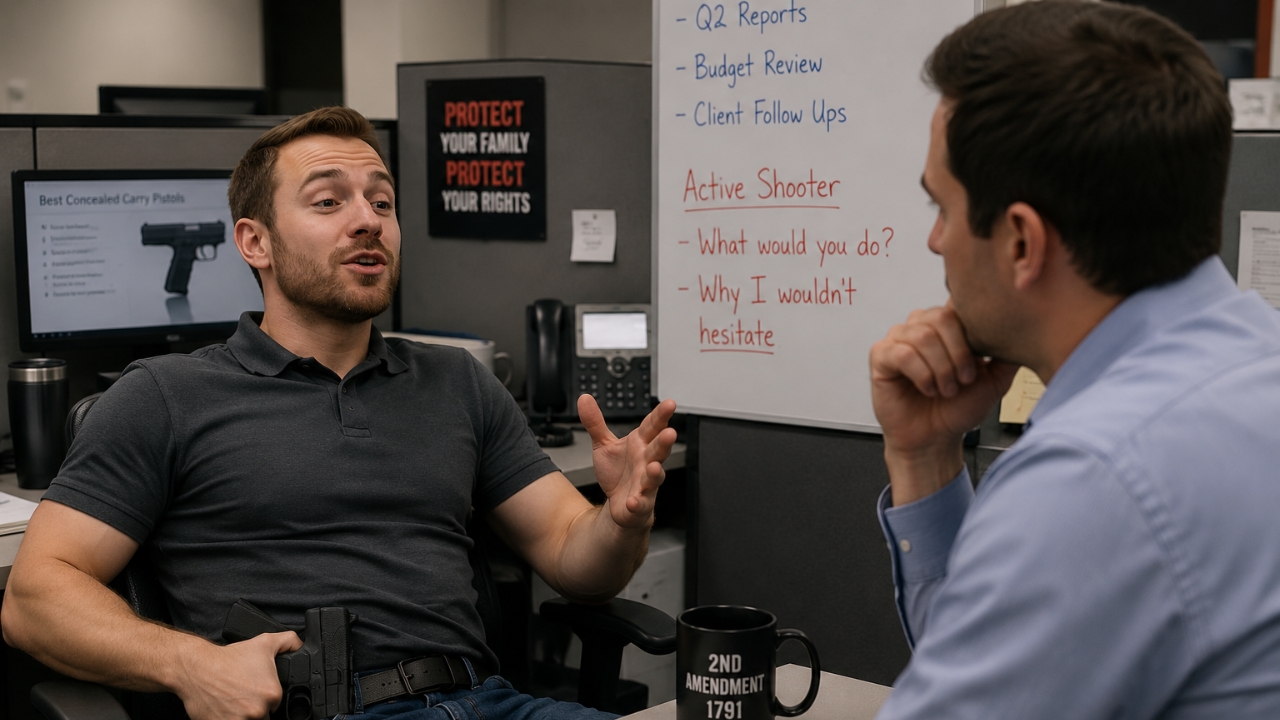
A Reddit user in r/CCW described the kind of workplace gun talk that stops sounding like ordinary carry conversation and starts sounding like a warning sign. In the post, he said a coworker kept talking about his concealed-carry pistol in a way that went well beyond normal “I carry too” chatter. According to the account, the man did not just mention that he was armed or talk about training, laws, or gear. He kept steering the conversation toward using the gun, toward what he would do in different situations, and toward the kind of imagined confrontation that made the original poster wonder whether this guy was carrying for protection or carrying because he liked the fantasy of needing it. The original Reddit thread is here: https://www.reddit.com/r/CCW/comments/7z39ys/what_do_i_do_if_a_coworker_brags_about_his/. (reddit.com)
From the way he wrote it, this was not a one-time awkward remark that everybody could laugh off and forget. It sounded more repetitive than that, more like a pattern. The coworker kept bringing it up, kept talking like carrying a gun made him more important than everyone else in the room, and kept sounding a little too eager to place himself in a scenario where he might get to use it. That is the detail that really hangs over the whole post. Most serious carriers know there is a huge difference between being prepared for violence and being attracted to the idea of it. The original poster clearly felt that line was getting crossed, and the fact that it was happening in a workplace only made it harder to ignore.
That kind of conversation is uncomfortable for a reason. A coworker bragging about concealed carry is one thing. Plenty of gun owners can be loud, annoying, or overeager without actually being dangerous. But once the bragging turns into recurring talk about what it would be like to draw, shoot, or finally have a reason to use the gun, the tone shifts. The weapon stops being a responsibility in the background and starts becoming part of a performance. In a workplace, that is the sort of thing people do not forget, because nobody around him agreed to be part of someone else’s armed daydreaming.
The replies in the thread reflected that discomfort almost immediately. A lot of commenters did not treat the coworker like a harmless blowhard. They treated him like the exact kind of person who gives responsible carriers a bad name. Some said that truly serious concealed carriers almost never talk this way, and that the more a person seems excited about the prospect of using a firearm, the less they sound like someone who should be carrying one in the first place. Others said the original poster needed to trust his instincts. If the guy’s talk was alarming enough to make someone stop and ask strangers online what to do, then it was already beyond ordinary locker-room swagger.
A few comments went further and focused on the practical side of what a person can actually do in that situation. Some told the poster to document specific statements if they continued, especially if the coworker ever moved from broad macho talk into explicit threats or specific workplace scenarios. Others said management or HR might need to know, not because carrying itself was the issue, but because a person repeatedly fantasizing aloud about using a gun at work can become a serious liability problem very quickly. That kind of advice shows how readers were interpreting the situation. They were not only irritated by the guy. They were thinking about the moment when irritating talk becomes a real safety concern.
There was also a strong current in the thread from experienced carriers who seemed genuinely disgusted by the mindset. Their point was not complicated: carrying a gun is supposed to make you calmer, less interested in escalation, and more aware of how badly things can go. A person who keeps fantasizing about the moment he might “get to” use it has the whole thing backwards. The gun is not supposed to make normal conflict feel exciting. It is supposed to make the carrier more conscious of how much there is to lose if judgment fails. That is why so many replies treated the coworker’s talk as more than cringe. To them, it suggested a man whose emotional relationship to carrying was already tilted in the wrong direction.
The workplace setting made all of that harder to brush off. If this were a stranger at a gun counter or some loud guy at a barbecue, it would still be annoying, but easier to avoid. At work, people get stuck with each other. They share routines, stress, deadlines, and small irritations day after day. A coworker who keeps romanticizing his concealed pistol does not stay abstract for very long in that environment. He becomes the guy you picture during every argument, every bad day, every weird mood swing, every shut-door meeting, and every moment where tempers run hot. That is part of what gave the original poster’s concern some weight. He was not wondering about a random internet personality. He was thinking about a man he had to continue being around.
Some commenters tried to make a distinction between someone who talks too much and someone who is actually dangerous, and that is probably fair as far as it goes. There are people who posture because they want attention, not because they are genuinely on the edge of violence. But even those replies usually circled back to the same caution: once gun talk in the workplace starts sounding like fantasy fulfillment instead of responsibility, people around that person are not wrong to get uneasy. The burden is not on everyone else to pretend the conversation sounds normal when it clearly does not.
That discomfort is really the center of the story. The original poster was not asking how to win an argument with an anti-gun coworker or whether concealed carry is a good idea in the abstract. He was asking what to do about a person who seemed too pleased with the idea of one day drawing the gun he carried. That is a much uglier question, because it has less to do with law and more to do with temperament. A permit, a holster, and a handgun can all be perfectly legal. That does not make the person wearing them emotionally suited to the responsibility.
By the end of the thread, the strongest message in the comments was not really about reporting, confronting, or ignoring him. It was about recognizing the mindset for what it was. People who carry responsibly do not usually sound eager. They sound cautious. They sound boring. They sound like people who hope the gun never matters. The coworker in this story sounded like the opposite of that, and that is why the original poster left the conversation more alarmed than reassured. Once a man starts talking like concealed carry is part of a fantasy life instead of a last-resort tool, everyone around him has to decide whether they are hearing empty swagger or the kind of warning they will wish they had taken more seriously.