Photo credit: J.J. Gouin/Shutterstock.com
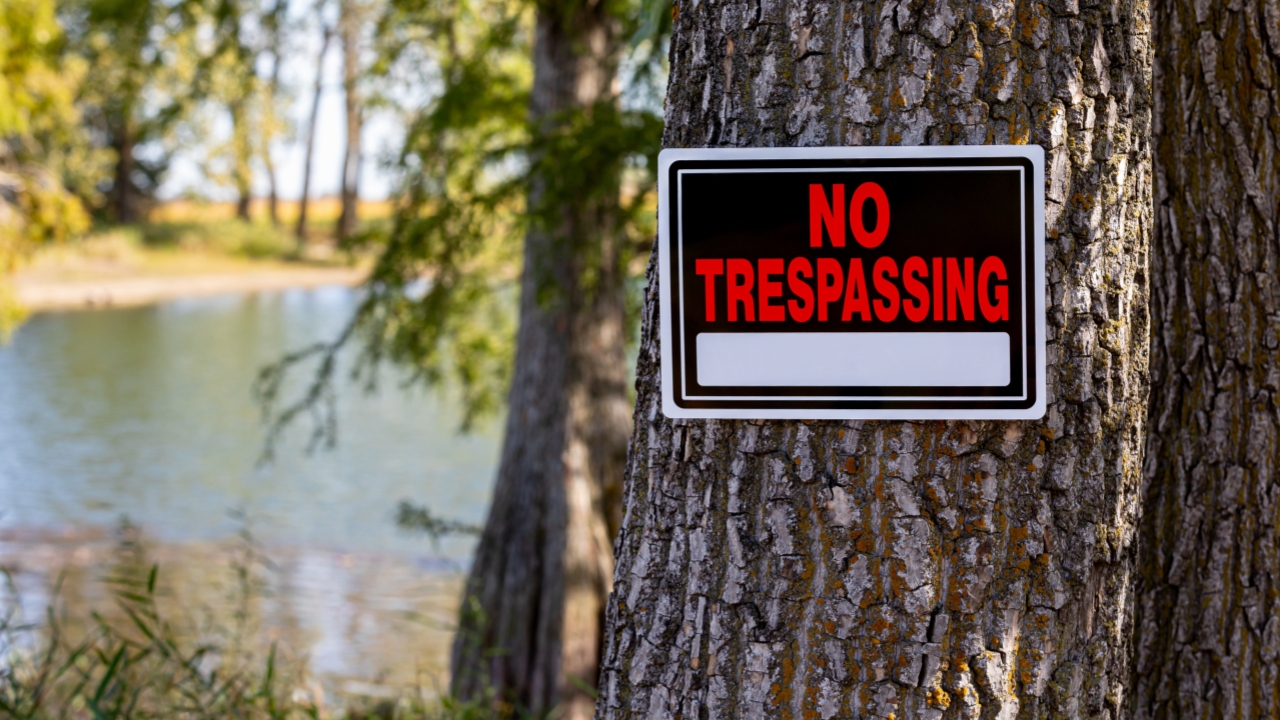
A “No Trespassing” sign should be enough. In a perfect world, a person would see it, understand the boundary, and turn around without making it someone else’s problem. But anyone who owns, leases, or manages hunting property knows signs only stop the people who were already willing to respect the line. The ones who don’t care will step around them, tear them down, pretend they never saw them, or claim the sign didn’t apply to where they crossed.
That does not mean signs are useless. They matter. They warn honest people, strengthen your position, and make excuses harder to sell. But signs by themselves will not protect a property if access is easy, boundaries are confusing, neighbors are loose with permission, or trespassers know nobody is watching. If you keep having people cross your hunting land even with signs up, it’s time to look beyond the sign and figure out what is making the property easy to enter.
Some people ignore signs because they think no one will know
A sign only works if the person cares about being told no. Plenty of trespassers count on the fact that nobody is standing at the back fence, old logging road, creek crossing, or pasture gate when they slip through. If they think they can get in, hunt, ride, scout, or retrieve game without being seen, the sign becomes more of a suggestion in their mind.
That is where documentation matters. Trail cameras, gate cameras, written records, marked access points, and occasional boundary checks make it harder for someone to act invisible. You do not have to patrol your land like a prison yard, but you do need enough oversight that repeat trespassers understand they may be seen, documented, and reported.
Signs disappear faster than landowners realize
A landowner may think a place is posted because signs were hung before last season. Then months pass. Wind bends one. A tree falls on another. Cattle rub a post loose. Someone steals one off the back gate. A sign gets peppered with birdshot until nobody can read it. By the time hunting season rolls around, the property may not be marked nearly as well as the owner thinks.
Walk the boundary before the season starts and check every likely entry point. Don’t just drive the road frontage and call it good. Look at creek crossings, old trails, fence gaps, back corners, field edges, and anywhere an ATV or hunter could slip in. Replace signs that are faded, hidden, damaged, or gone. A missing sign is not always an innocent accident, but it still needs to be fixed.
Signs need to be where people actually enter
Posting the driveway is not enough if people are entering from the opposite side. A lot of trespassers never come near the main gate. They come from neighboring land, public road ditches, old logging roads, creek beds, powerline cuts, or gaps in a fence. If the sign is not near the place they cross, they will use that as an excuse.
Think like someone trying to get in without being noticed. Where would they park? Where would they step over? Where would they ride in? Where is the fence low, broken, or hidden? That is where signs need to be. A clear sign at the actual crossing point is much harder to ignore than one nailed to a post half a mile away.
Confusing boundaries weaken the warning
Some properties are easy to understand. A locked gate, good fence, and clean signs make the message clear. Others are messy. Old fences don’t match property lines. Creeks shift. Neighboring timber blends together. Trails cross back and forth. In those places, a few signs may not be enough to make the boundary obvious.
If people keep claiming they didn’t know, look at whether the line is actually clear from their side. You may need more signs, better markings, repaired fencing, or a conversation with neighboring landowners. If your state allows purple paint markings, that may help when used correctly. The point is to remove confusion before it becomes an argument.
A sign does not replace a locked gate
If an old road leads straight into your property and the gate is open, some people will treat that like an invitation no matter how many signs are nearby. They may know better, but easy access makes bad behavior more tempting. A sign tells people not to enter. A closed, locked gate makes entering harder.
Gates, chains, cables, fence repairs, and physical barriers can do what signs cannot. They slow people down and make the decision to trespass more deliberate. If someone has to cut a lock, climb a gate, drive around a barrier, or cross a clearly posted fence, it becomes much harder for them to claim it was a mistake.
Neighbor permission can muddy the water
Sometimes the problem is not the sign. It is the person next door telling people the wrong thing. A neighbor, lease member, relative, or old hunting buddy may say, “Nobody cares if you cut through there,” or “We’ve always crossed that back corner.” Then someone walks past your sign thinking they have some kind of informal permission.
That needs to be handled directly. Talk to the neighboring landowner or lease manager if you suspect bad information is being passed around. Keep it calm, but make it clear that nobody has permission to grant access to your property except you or the proper decision-maker. Signs help, but they won’t fix a neighbor who keeps sending people across your line.
Repeat trespassers need consequences, not more signs
If someone crosses once and claims confusion, better posting may solve it. If the same person keeps crossing after warnings, signs are no longer the issue. At that point, you are dealing with a person who knows the rule and has decided to ignore it.
That is when documentation and enforcement matter. Save trail camera photos, vehicle descriptions, dates, times, and entry points. Call the game warden if hunting is involved. Call the sheriff’s office or local law enforcement for repeated trespass, damage, threats, or theft. Do not keep hanging more signs and hoping the person suddenly develops respect for them. A repeat problem usually needs a firmer response.
Signs can’t stop people chasing game
One common excuse is that a deer, hog, dog, or other animal crossed the line. Hunters may think that gives them permission to follow. In many places, they still need landowner permission before entering private property to recover game, and the details depend on state law. A sign at the boundary does not always stop someone who is excited, frustrated, or worried about losing an animal.
That is why it helps to have a clear recovery policy before the season starts. Talk to neighbors when possible. Decide what you will allow and under what conditions. Some landowners will help recover game if asked. Others want no one crossing without direct permission. Either way, make the expectation clear. “I was tracking a deer” should not become a free pass to ignore posted land.
Cameras can show whether signs are working
Trail cameras are not only for deer. They can tell you where people are entering, how often they cross, what time they come through, and whether they are passing signs. A camera near a gate, trail, or back corner can help you understand whether the issue is confusion or intentional trespass.
Placement matters. Aim cameras at your own access points and avoid creating unnecessary privacy problems. Try to capture useful details like vehicles, ATVs, direction of travel, faces, or repeated movement. If you can show someone walking past a clear sign or entering through a posted gate, that gives you much stronger footing than simply saying, “They had to know.”
Worn trails invite people in
A visible path can make trespassing feel normal to people who are looking for an excuse. If there’s an old trail, ATV track, logging road, or footpath leading onto your land, people may assume it is commonly used. Even if signs are posted, a well-worn route can send a mixed message.
Close or mark those routes where you can. Block old roads with gates, cables, logs, or fencing if legal and safe. Let unused trails grow up. Post signs at the beginning of the path, not halfway down it. If you leave an obvious route open year after year, people are going to keep using it, especially if it connects to better hunting ground.
Your own guests can undermine your signs
Signs don’t mean much if your guests ignore them or invite people without asking. A buddy who brings another hunter, a family member who says someone can cross, or a lease member who gets loose with access can create problems that look like trespassing from the outside and permission from the inside.
Set clear rules for everyone who has access. No guests without approval. No crossing boundaries. No giving permission to neighbors. No retrieving game without following the property rules. Put it in writing if needed. A property stays easier to manage when the people allowed there are not accidentally creating loopholes for everyone else.
Good signs are part of a bigger system
The best-protected hunting properties do not rely on signs alone. They combine clear posting, locked access, known boundaries, regular checks, cameras where needed, neighbor communication, and fast follow-up when someone crosses the line. None of that has to be dramatic. It just has to be consistent.
Trespassers look for weak spots. Confusing corners, open gates, missing signs, quiet back roads, absentee landowners, and loose permission all make a place easier to enter. Fix those weak spots, and the signs start working better because they are backed by a real system.
Make the boundary impossible to misunderstand
Warning signs are important, but they are not magic. They work best when the boundary is clear, the access points are controlled, and the landowner follows through when someone ignores them. A sign nailed to a tree cannot stop a determined trespasser by itself.
If people keep crossing your hunting property, don’t assume more signs alone will fix it. Check where they’re entering, whether the signs are visible, whether the gate is secure, whether neighbors are muddying the message, and whether repeat offenders are facing any real consequence. Clear signs are the start. Consistent follow-through is what makes them matter.
Like The Avid Outdoorsman’s content? Be sure to follow us.
Here’s more from us: