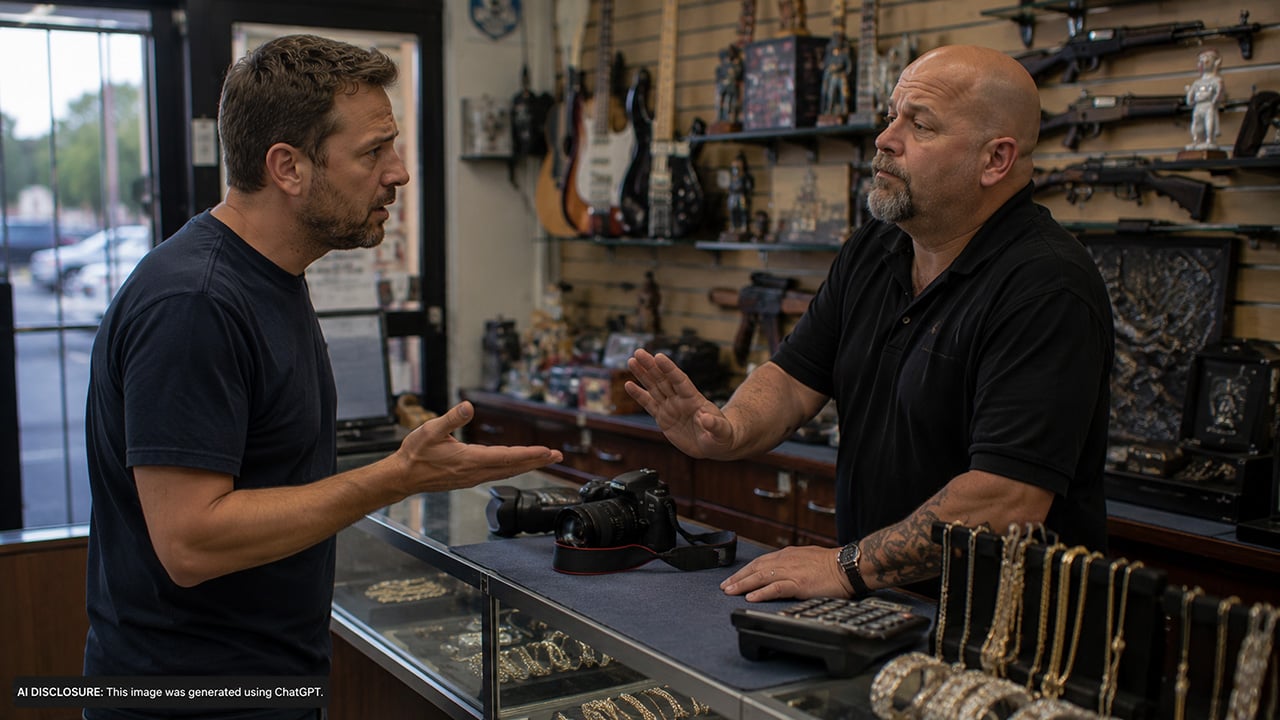
Photo credit: AI-generated image created using ChatGPT. Illustrative only
Four months after an Xbox One was stolen out of a home in Ohio, the owner got the kind of phone call most folks don’t expect: police said they’d found it at a nearby pawn shop. He’d done one smart thing early—recorded the serial number and filed a report—so when it surfaced again, it didn’t just look like a similar console. It matched.
That’s where the relief ended. In the original post, the owner explained that the pawn shop told him they weren’t going to “eat the cost” of what they paid for the Xbox. If he wanted it back, they wanted $140. The police, meanwhile, reportedly suggested he consider paying just to keep the peace, because pawn shop relationships can be rough when law enforcement is trying to work cases.
A good serial number turned into real leverage
In the outdoors world, we talk a lot about “mark your gear” and “document your stuff,” especially with trail cameras, generators, chainsaws, and firearms. This situation is the same lesson, just with a game console. Having the serial number meant the stolen property could be positively identified when it showed up again.
And it did show up. Police placed a hold on the Xbox while they worked on convicting the person who pawned it. That hold matters because it signals the item isn’t just sitting on a shelf like any other used gadget—it’s tied to an active theft report.
When the pawn shop found out it was stolen, they wanted the owner to pay
The pawn shop’s position was blunt: they didn’t want to lose what they paid for the stolen property, and they wanted the rightful owner to reimburse them. The owner felt that was backwards and called it out for what it looked like—getting forced to pay a second time for something already stolen once.
From a common-sense standpoint, you can understand why it burns. If you lock your truck, record the VIN, and still get it stolen, you don’t expect to “buy it back” from the first lot it ends up at. The owner’s assumption was that taking in stolen goods is a known risk of that business model.
The police “keep the peace” angle didn’t sit right
The part that really raised the temperature was that the police reportedly encouraged him to appease the pawn shop by paying. Not because it was fair, but because pawn shop–police relations are often touchy, and officers still needed cooperation to make cases.
That’s a real-world dynamic a lot of rural folks recognize. Sometimes the local reality isn’t a neat TV script. People who run businesses, people who enforce laws, and people who get caught in the middle all have their own incentives—none of which fix the fact that the victim is being asked to cough up more money.
It also shows why staying calm matters. Once you start arguing across a counter, you can turn a recoverable property issue into a “trespassed from the store” issue or worse. Even if you’re right, blowing up rarely helps you get your stuff back.
The hold helped, but it didn’t automatically hand it back
The owner noted there was a hold on the Xbox while police tried to convict the seller. That suggests investigators saw enough to treat it as evidence connected to the theft report, not a routine “used item” transaction.
But a hold doesn’t always mean immediate return to the victim, especially if it’s being used to build a case. And if the person who pawned it isn’t convicted, the owner worried the pawn shop would use that as a reason to keep the property unless forced by a court.
This is where folks get blindsided: the criminal case and the property dispute don’t always move at the same speed, and they don’t always resolve the same way. The state can try to punish the thief, while you’re still stuck fighting to get your own property back.
Why this matters to hunters and landowners, not just gamers
Swap “Xbox” for a trail cam, a bow, a high-end optic, or even a chainsaw, and the same headache shows up. Stolen property often gets sold quick, sometimes to secondhand shops, sometimes to private buyers, sometimes online. Once it changes hands, the victim can end up dealing with a party who claims they paid in good faith and doesn’t want to take the hit.
That’s why documentation is more than busywork. Serial numbers, photos, receipts, and a timely police report are the difference between “that looks like mine” and “that is mine.” If you’ve ever had a stand stolen off public land or had a tailgate lifted out of a driveway, you already know how fast these things disappear.
It’s also a reminder to treat your high-dollar gear like you treat firearms: keep a list. In a safe place. Not just in your head.
The practical options looked messy: pay, push back, or get a court involved
The owner felt “almost positive” he could make the pawn shop take the loss, but he didn’t know how to handle it in a civil way. That’s the hard part: being right doesn’t always come with a clean, quick path to resolution.
On the table were a few paths, none perfect. He could pay the $140 and get the item back fast, even if it felt like rewarding the wrong party. He could refuse and push for return through proper channels, knowing that could take time and might require court involvement. Or he could lean on law enforcement’s process and hope the case against the seller moved forward in a way that forced the pawn shop’s hand.
Whatever direction a person chooses in a situation like this, the best move is usually the least exciting one: keep everything documented, communicate in writing when possible, and avoid turning it into a personal feud with a shop owner behind a counter. You’re trying to recover property, not win a shouting match.
At the end of the day, this Ohio theft recovery wasn’t a feel-good “found it and took it home” story. It was the more common kind—the kind where your property is located, but getting it back turns into another fight. And for anyone who owns expensive gear, the takeaway is plain: write down serial numbers now, because you don’t get a second chance after it’s gone.
Like The Avid Outdoorsman’s content? Subscribe to our newsletter so you never miss an article.
Here’s more from us: