Photo credit: The Avid Outdoorsman
The hunter was doing exactly what you are supposed to do.
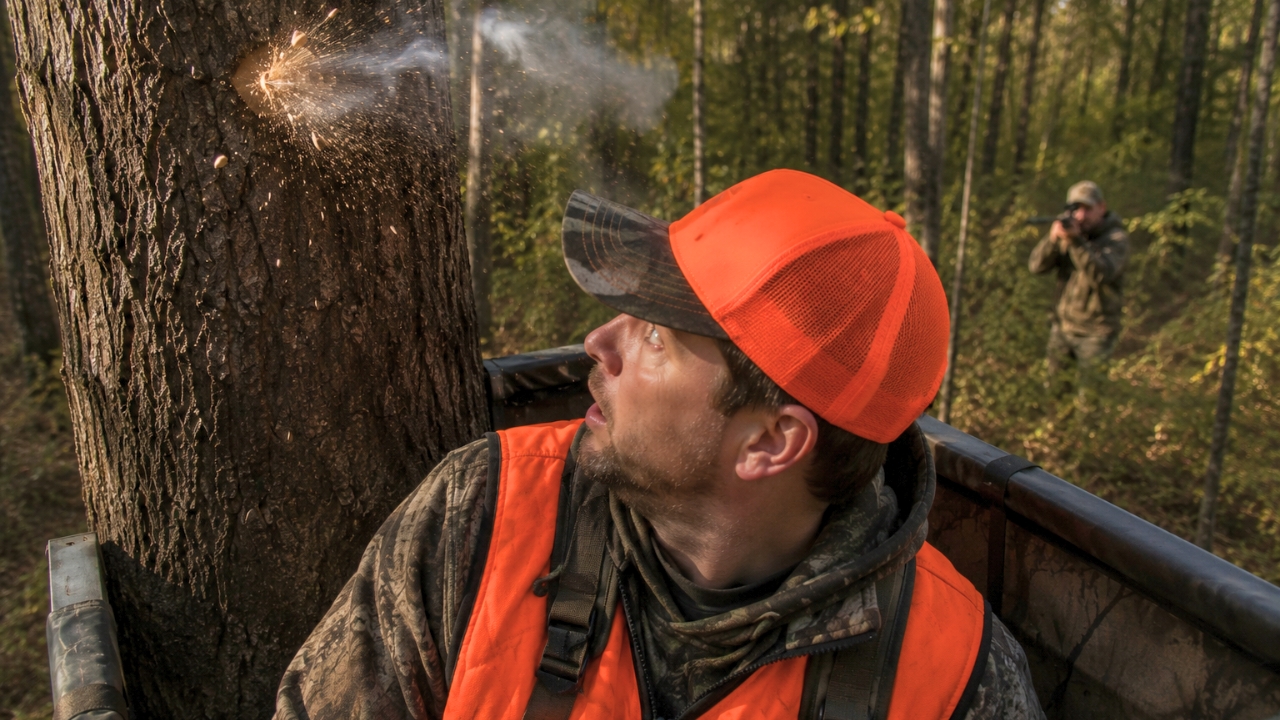
He was wearing blaze orange. He was moving through the woods during hunting season. He was not trying to hide from other people. In fact, the whole point of blaze orange is to make sure nobody can miss you.
Then a .22 round hit the tree above his head.
The story came up in a Reddit post where hunters were talking about walking to and from stands in low light and how careful people need to be. One commenter shared a close call that is exactly the kind of thing that makes hunters feel sick to their stomach.
He said he was wearing orange when a .22 round struck a tree about two feet above his head.
That is already bad enough. A bullet hitting a tree near you is not a “whoops” moment. It is not a little mistake. It is a terrifying reminder that someone pulled a trigger without being absolutely sure where that round was going.
But then the hunter looked and saw something that made it worse.
The shooter was looking at him through the scope.
That detail is the part that really takes the air out of the room. This was not a round fired from somewhere far away where the shooter had no idea anyone was there. According to the hunter, after the shot, he saw the other person looking at him through the optic. So now he had to process two things at once: a bullet had just hit the tree above him, and the person with the rifle was still glassing him like he was trying to figure out what he had almost shot.
That is nightmare fuel for anyone who hunts.
A .22 may not sound as dramatic to some people as a deer rifle, but that does not make it harmless. A .22 can absolutely kill or seriously injure someone. It is still a bullet. It still leaves a muzzle at dangerous speed. It still requires the same basic gun safety rules every shooter should know before they ever step into the woods.
And one of those rules is painfully simple: do not point a gun at anything you are not willing to destroy.
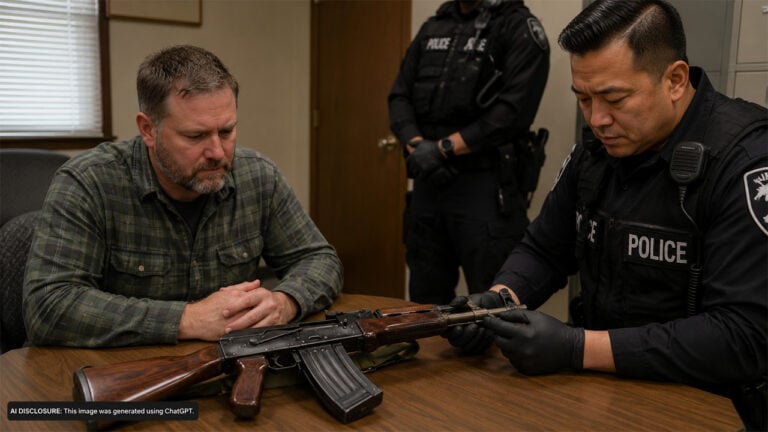
Looking through a rifle scope at a person is not “checking things out.” It is pointing a firearm at them. That is one of those habits that drives responsible hunters crazy, because there is no excuse for it. Binoculars exist. Spotting scopes exist. Your eyes exist. A rifle scope is attached to a weapon, and using it to identify a person is reckless.
The hunter’s story hit the exact fear behind so many safety reminders. It is not only about wearing orange. It is not only about walking carefully. It is not only about staying visible. All of that helps, but none of it saves you from someone who is careless enough to shoot near movement or use his scope like binoculars.
That is why the close call feels so maddening. The hunter had done his part. He had made himself visible. He was not sneaking through the timber in full camo during low light trying to surprise everyone. He was wearing the color hunters wear because it screams, “Human being right here.”
And still, a bullet hit the tree above him.
That makes a person rethink everything. You start wondering what the shooter thought he saw. Did he mistake the hunter for game? Did he shoot at sound? Did he shoot at movement? Did he fire at a squirrel or some other small animal without noticing the person beyond it? Did he know someone was there and shoot anyway?
None of the answers are good.
The part about the scope almost makes it worse than the shot itself. If the shooter was looking through the optic after the round hit, then he had a clear enough line of sight to recognize what he was looking at. And if he could see a hunter in blaze orange after the shot, he should have been able to identify the area before the shot.
That is the kind of thing that sticks with people for years. You can hear the crack, see bark or wood chips, feel your body lock up, and then realize the person who did it is still looking at you through a rifle. At that point, the hunt is over. You are not thinking about deer, squirrels, rabbits, or anything else. You are thinking about how close you just came to being shot by somebody who should not have been pulling a trigger.
There is also a helpless feeling in that moment. What do you do? Yell? Duck? Wave? Get behind a tree? Move away slowly? Call the game warden? Walk toward the shooter? Every option feels wrong when the person already sent a round your way.
Most hunters would probably leave. And nobody could blame them.
Because once you know someone nearby is handling a firearm that carelessly, the woods stop feeling like the woods. They feel like a place where your safety depends on a stranger’s judgment, and that stranger has already shown you his judgment is bad.
What Commenters Said
The thread had a lot of hunters talking about walking in and out safely, especially in the dark or near first light. But the .22 story landed hard because it showed the limit of doing everything right.
Several commenters said blaze orange helps, but it cannot fix stupid. That was the basic mood. You can wear the right gear, carry a light, announce yourself, and still run into someone who shoots before thinking. Good safety habits reduce risk. They do not erase other people’s bad decisions.
A lot of hunters brought up the rifle-scope issue. Many said they were taught early that you never use a scope to identify something unless you are already willing to point a loaded gun at it. If you need to look closer, use binoculars. If you do not have binoculars, do not aim a rifle at a mystery shape just to figure it out.
Others talked about how low light makes everything riskier. Walking to a stand before sunrise or leaving after sunset can put hunters in the woods when shapes are harder to read and people are jumpier. That is when lights, orange, and clear communication matter even more. But again, none of that excuses firing at something you have not positively identified.
Some commenters said a shot that close should be reported. Their reasoning was simple: if someone is careless enough to hit a tree above another hunter’s head, that person may do it again. A game warden or local law enforcement may not be able to prove everything without more information, but a report at least creates a record.
A few people shared their own close calls, including rounds snapping through trees, hunters shooting across trails, and people firing toward movement. Those stories all had the same uncomfortable lesson: the scariest thing in the woods is not always an animal. Sometimes it is another person with a gun and no patience.
There was also some discussion about public land and crowded areas. Some hunters said they avoid certain places during firearm season because they do not trust who else might be out there. Others said they try to get deeper, hunt weekdays, or stay away from easy-access spots where inexperienced or careless hunters may pile in.
But the main reaction was disbelief that the shooter looked at him through the scope afterward. To responsible gun owners, that is almost as bad as the shot. It shows the person either did not know or did not care about one of the most basic safety rules.
For the hunter in orange, the whole point was painfully clear. Wearing blaze orange should make you easier to see. It should not make you a bright target for someone who is using a rifle scope like a pair of binoculars.