Photo credit: USFWSmidwest, Public Domain/Wiki Commons
A Pennsylvania man said he first found the tree stand earlier in the year, and from the start, it felt wrong.
The stand was attached to a tree near his property. In his Reddit post, he said he took it down because it had been placed on private land. At the time, that may have felt like the end of it. Someone had put up a hunting stand where it should not have been, and he removed it.
Then deer season got closer.
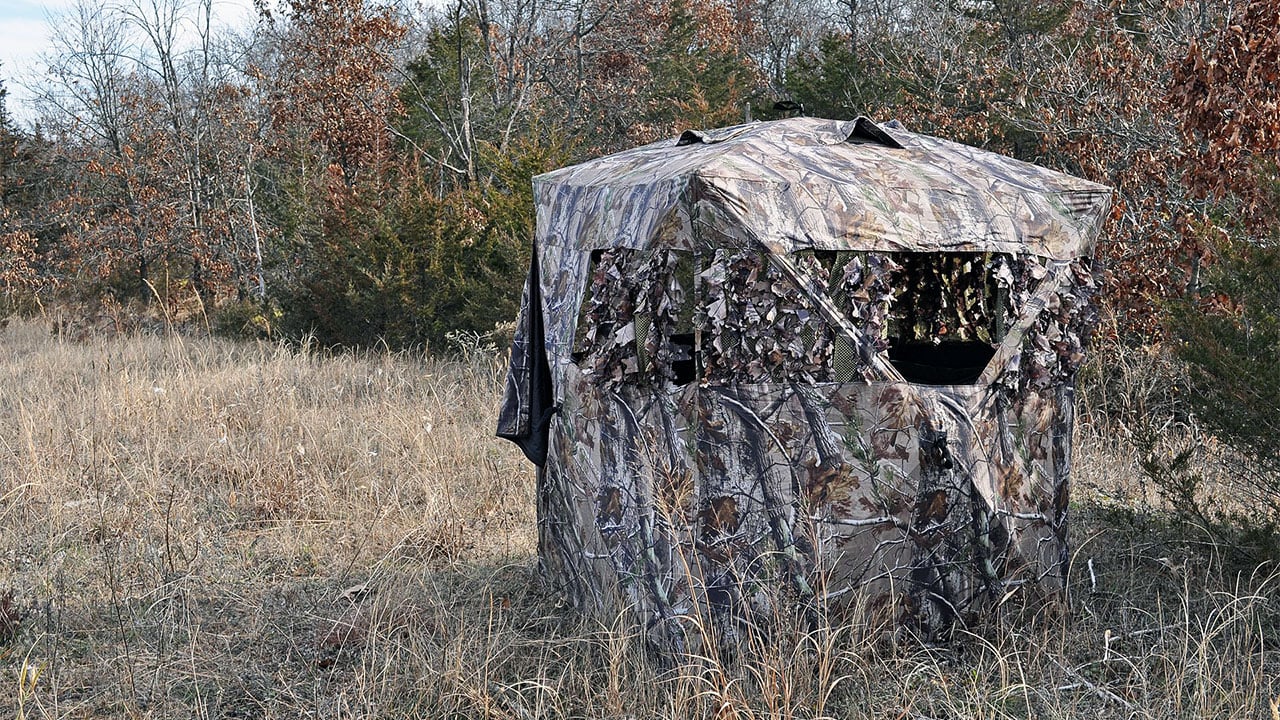
That is when he found something else: a hunting blind.
The blind was not on his land, but the way it was positioned made him uneasy. According to the post, it was set up on the neighbor’s property and faced toward his land. That raised the question he brought to Reddit: could somebody legally set up a hunting blind facing his property, and what could he do about it?
That is where the situation got complicated. A hunter can generally set up on land where he has permission. A blind facing toward a neighboring property is not automatically illegal by itself. The real issue is what happens when shots are fired, where the bullets or slugs could travel, and whether the hunter crosses the line to retrieve deer or shoots onto land where he has no permission.
The poster’s concern made sense. Nobody wants to look across the line and see a blind aimed in their direction, especially if they have a home, family, pets, livestock, or normal activity on their side. Even if the hunter intends to shoot only on his side, the visual alone can make the neighbor feel like his land has become the backdrop to someone else’s deer season.
He also had the earlier tree stand in mind. This was not his first concern about hunting activity near the line. He had already found and removed a stand, and now there was a blind facing his property. That made it feel less like one odd setup and more like a pattern of hunting pressure right at the boundary.
The question was not only legal. It was practical. Could he call someone? Should he speak to the neighbor? Should he post his own land more clearly? Was the blind itself enough to prove anyone was doing something wrong?
Commenters were careful with that distinction. A blind on the neighbor’s property is the neighbor’s business unless the hunter is firing across the line, shooting too close to a dwelling, violating a safety zone, trespassing to retrieve game, or otherwise breaking state hunting laws.
Pennsylvania’s safety-zone rules came up in the replies. Several people told him to look into whether the blind was within a regulated distance of an occupied structure. In many states, hunters cannot discharge firearms within certain distances of homes, barns, schools, playgrounds, or other occupied buildings without permission from the occupants. The exact rules matter, and the commenters pushed him to check them instead of assuming the blind’s direction was enough.
That was probably the key point. Feeling uncomfortable and having a legal violation are not always the same thing. The blind could be rude, risky, or badly placed without automatically being illegal. But if it was too close to his house or if shots would cross his property, then he had a much stronger reason to call the game commission.
A few commenters also asked whether the blind actually faced his home or just his land. That matters because rural properties can be large. A blind pointed toward a wooded corner is different from a blind pointed toward someone’s porch. The post did not lay out every distance, but the man was concerned enough to ask what his options were.
The earlier tree stand added another legal wrinkle. If the stand had belonged to someone else, taking it down might have been understandable but still potentially messy depending on where it was and whose land it was on. Commenters were more focused on the blind, but the first incident showed how quickly a property-line hunting dispute can turn into questions about who can remove what.
The safest path was to document the blind, confirm property lines, check the distance from any occupied structures, and call the Pennsylvania Game Commission if he believed a safety-zone or trespass issue existed. If the blind was legal but uncomfortable, then a calm conversation with the neighbor might be the only practical first step.
That kind of conversation can be awkward. No one wants to walk over and sound like they are accusing a neighbor of being reckless before a shot is ever fired. But waiting until a deer is shot across the line, a wounded animal runs onto your property, or a bullet travels where it should not is worse.
The man’s concern was pretty simple: he did not want hunters using the edge of his land like part of their setup. Even if the blind sat just outside his boundary, he wanted to know where his rights started and where the neighbor’s hunting rights ended.
Commenters mostly told him that a blind facing his property was not automatically illegal. If the blind was on land where the hunter had permission, the direction alone might not be enough to make anyone move it.
Several people told him to check Pennsylvania’s safety-zone rules. If the blind was too close to an occupied home, barn, or other protected structure, that could matter a lot. A few said the state game commission would be the right agency to call if he believed the setup violated those rules.
Others said he should post his property clearly and be ready to report any trespass. If a deer was shot and crossed onto his land, the hunter generally should not come retrieve it without permission. If someone crossed the line without asking, that would be a separate issue.
Some commenters suggested a calm conversation with the neighbor. If the blind was legal but pointed in a way that made him uncomfortable, explaining the concern might solve it before the season turned tense.
A few people also warned him to avoid touching any more hunting equipment unless it was clearly on his property and he had checked what local law allowed. Removing a stand may feel justified, but damaging or keeping someone else’s gear can create a separate problem.
The practical advice was to verify the line, verify the distances, document the setup, and involve the game commission if there was a real safety or trespass concern.