Photo credit: Dodro, CC BY 4.0/Wiki Commons
A hunter in Reddit’s r/Hunting described the kind of discovery that can turn a quiet piece of ground into a problem the second you realize somebody else has already been using it. In his post, he said there was a trail camera sitting on his property, an empty farmstead, and he was certain it was not his. He also said he had already checked with neighbors and acquaintances and none of them claimed it. That left him staring at a camera on his own land and wondering what he was really looking at: an honest mistake, a trespasser scouting his place, or somebody who figured empty ground meant open ground. You can read the original thread here: https://www.reddit.com/r/Hunting/comments/pe74gd/someone_put_a_trail_cam_on_my_property_with_out/.
He did not come to Reddit with some big dramatic speech. He came with a practical question that a lot of landowners would ask in the same position. Should he remove the camera? Should he pull the card and see what was on it? Should he leave it alone and let the person come back for it? The fact that he asked it that way is part of what makes the situation feel real. He was not posting after some giant confrontation at the fence line. He was in that in-between stage where something felt wrong, but he still had to decide whether to handle it calmly, aggressively, or through the game warden.
The update is what sharpened the whole story. After hearing all the guesses and jokes and hard-line advice from commenters, he said he contacted his local game warden. According to the update he added to the post, the warden told him placing the camera there was illegal and that he had every right to take it down. The warden also reportedly told him that what happened after that was up to him, whether that meant leaving a note, destroying the camera, or doing something else with it. More than that, the warden offered to place another camera nearby and monitor the location himself. That changed the whole tone of the thread. It was no longer only a bunch of hunters swapping opinions. The local officer had apparently made it clear that the camera never should have been there in the first place.
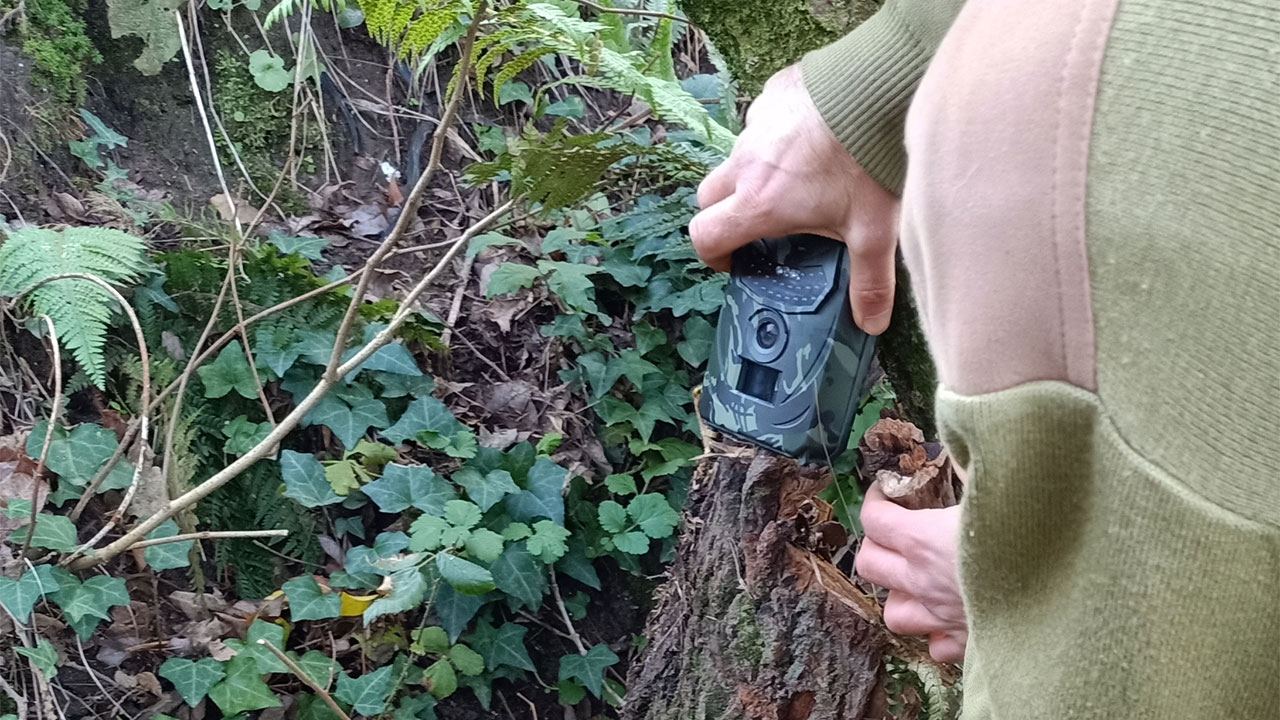
That update also tells you why the original post got so much reaction. A trail camera is not like a stray boot print or a truck parked wrong for a few minutes. Somebody had to carry that thing in, strap it to a tree, point it where they wanted it, and walk away planning to come back. That means time, intention, and a level of comfort with being on land they did not own. When you put a camera on someone else’s property, you are not only passing through. You are setting up surveillance on ground that is not yours and assuming you will have the freedom to keep checking it. That is exactly the kind of detail that gets under landowners’ skin.
The comments broke in a few different directions, but a lot of them revolved around the same basic idea: take the camera down and leave the owner one chance to explain. One of the earliest replies suggested removing the camera and leaving a name and phone number in its place, reasoning that there could still be some small chance it was an honest mistake or a leftover assumption from a previous owner. Another commenter shared a story of accidentally placing a stand and camera about 50 yards onto neighboring land because of a bad property map, then said the landowner left a note with his number and the whole thing ended peacefully. That line of thinking treated the camera less like instant proof of malice and more like something that still deserved one civil chance to be sorted out.
But plenty of other people in the thread were not nearly that patient. Some flatly said the camera was now his. Others said to put up a second, hidden camera and wait for the owner to come back so he could catch them in the act. One reply said the best move was to take the camera, leave a note, and then have the trespasser formally warned if they showed up to claim it. Another advised putting a clear private-property sign in front of the camera so the next images on the card would send the message without much ambiguity. The tone there was pretty familiar for hunting-property threads: people get tired of hearing “maybe it was an accident” once the setup starts looking deliberate.
There was also a practical streak running through the discussion. Several commenters urged the landowner to make sure the property was clearly posted and to think about whether the area might be unmarked enough that somebody had convinced themselves it was fair game. One person asked whether the property was very rural and easy to confuse with nearby public or unmarked land. Another said the best route was calling the game warden first and not touching the camera until the authorities had weighed in. That advice turned out to be the closest to what actually happened, because the poster did exactly that and came back with an answer from the warden that cut through all the guessing.
Some of the replies, as Reddit tends to do, went off into jokes about staging creepy photos, putting on a show for whoever checked the memory card, or using the trail cam to mess with the owner. Those comments were funny in the way hunting-forum comments often are, but the more serious replies kept circling the same tension. A camera on your property is not only an object. It is evidence that somebody thinks they can use your land quietly and return later without permission. Once that happens, the question is not only what to do with the device. The bigger question is whether the person who set it there has also been walking your ground, scouting your deer, or treating your place like an extension of their own hunting area.
That is probably the part that makes this situation different from a lot of smaller trespass complaints. A man can step over a line once and still claim confusion. A camera is harder to explain away. It is premeditated. It is there to gather information over time. It assumes repeated access. If you are the landowner, that changes how you look at the whole property after you find it. You start wondering what else has been watched, how often someone has been there, and whether this one camera is only the one you happened to notice.
The game warden’s reported offer to put up another camera and monitor the location himself is maybe the most telling detail of all. It suggests he took the situation seriously enough to treat it as more than a minor misunderstanding. If the owner of that trail cam came back expecting to keep doing what he had been doing, he could end up walking back into a much clearer answer than a missing camera. That possibility is part of what makes the whole story linger. The landowner found out the first camera should not have been there. The next question was whether the person who placed it would be bold enough to return and prove exactly what they were doing all along.