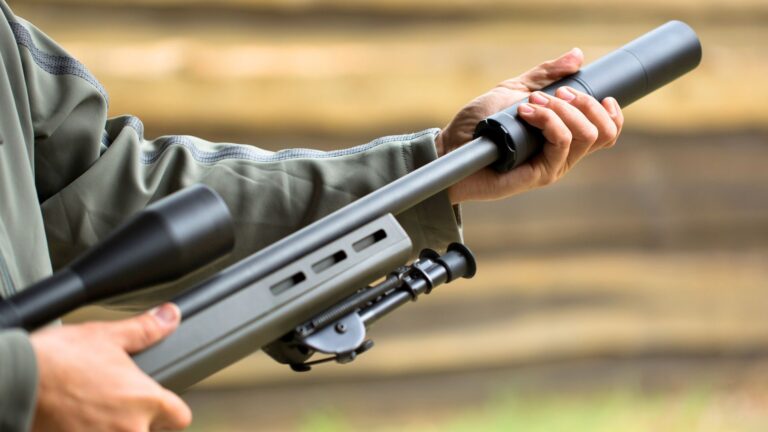
Brush country has its own rules. Shots come fast, visibility’s tight, and there’s no room for long barrels or bulky gear. Some rifles that shine in open country fall flat here — they’re too long, too loud, or too sensitive to the dings and dust that come with hunting tight cover. Brush guns need to be quick to shoulder, steady at close range, and able to handle abuse without losing zero. Unfortunately, a lot of popular rifles miss that mark entirely. Whether it’s an oversized magnum, a range rifle masquerading as a hunting gun, or a finicky long-range setup that can’t handle a cedar limb, these are the rifles that don’t belong in brush country. You can try to make them work, but by the end of the hunt, you’ll know they were never meant to live in the thick stuff.
Remington 700 Sendero

The Remington 700 Sendero is a precision machine — but not a brush rifle. Its 26-inch barrel and heavy stock make it perfect for long, steady shots in open terrain. In tight cover, it’s an absolute headache. You’ll catch that long muzzle on every limb and fence post between you and the deer. The Sendero’s weight also works against you when you’re trying to shoulder fast for a close-range shot.
Even if you manage to line up a target through the brush, the Sendero’s precision build doesn’t help when you’re taking quick, offhand shots. It’s made for prone or bench work, not fast handling. Hunters who’ve tried carrying one through oak flats or mesquite thickets don’t usually do it twice. It’s a fantastic rifle — in the wrong place. The Sendero belongs on a ridgeline or prairie, not in the brush where every inch of barrel feels like punishment.
Ruger Precision Rifle

The Ruger Precision Rifle is a marvel for target shooters but a disaster in thick brush. It’s bulky, heavy, and full of protruding parts that snag on everything. Between the folding stock, extended magazines, and chassis rails, it’s about as streamlined as a toolbox. You can’t swing it quickly, and trying to maneuver through tangled cover feels like carrying a tripod made of steel.
Even if you can get it into position, its weight and balance make offhand shots nearly impossible. The RPR excels in wide-open shooting lanes where you can take your time. In the woods, time’s a luxury you don’t have. The rifle’s precision is wasted at 50 yards, and its handling will test your patience. It’s a great gun for paper and steel, but when branches are slapping your face and you need a fast shot, it’s the last rifle you’ll want to carry.
Browning X-Bolt Long Range

The Browning X-Bolt Long Range is a joy to shoot on open ground but miserable in the brush. With its long barrel, oversized stock, and extended bolt handle, it’s designed for distance — not tight cover. Every step through thick timber feels like a wrestling match between your rifle and every branch in sight.
The gun’s balance favors stability over speed, which means it’s slow to shoulder when that whitetail steps out at 40 yards. The long barrel also makes quick movement awkward, especially if you’re crawling under limbs or trying to shoot from a kneel. Its precision is undeniable, but in brush country, precision takes a back seat to agility. The X-Bolt Long Range belongs on open ridges and bean fields, not in cedar tangles where seconds matter. It’s a fine rifle for long-range work, but it has no business in a thicket.
Weatherby Mark V Accumark

The Weatherby Mark V Accumark is one of the best long-range hunting rifles ever made — but it’s all wrong for brush country. The 26-inch barrel, thick stock, and stainless build make it front-heavy and awkward to carry through cover. It’s a rifle that rewards patience and punishes movement, which makes it a poor fit where every step requires weaving through branches.
The Accumark’s high-velocity cartridges also don’t do well when twigs and grass come into play. A .257 or .300 Weatherby is devastating at distance but unpredictable when deflected by light cover. You’ll lose speed, accuracy, and confidence fast. Add in the rifle’s overall bulk, and you’ve got a setup that belongs in the plains, not the pines. The Accumark is a masterpiece in the wrong habitat — the kind of rifle that makes you wish you’d brought something shorter, lighter, and simpler.
Savage 110 Long Range Hunter

The Savage 110 Long Range Hunter was built for stability, not speed. It’s a long, heavy rifle designed for prone shooting and long-range accuracy — two things that don’t exist in the brush. The adjustable stock and large barrel contour add weight, and the balance point sits too far forward for quick handling.
You’ll fight it every time you move through cover. It catches on limbs, it’s slow to mount, and it’s far too big to swing freely in tight quarters. Brush country hunting is all about quick shots and compact setups, and the 110 Long Range Hunter is the opposite of that. It’s reliable and accurate, sure, but it’s made for wide-open spaces, not thickets. When you’re pushing through saplings and vines, you’ll wish you’d left this rifle back at the range — where it actually belongs.
Tikka T3x Varmint

The Tikka T3x Varmint is smooth, accurate, and deadly precise — but it’s not meant for tight quarters. Its heavy barrel and wide forend make it feel more like a bench gun than a hunting rifle. In the brush, it’s awkward, slow, and frustrating to maneuver. You’ll catch the barrel on every branch and curse the weight long before you see game.
It’s built for shooting prairie dogs, coyotes, and targets at long distances. That’s great on open ground, but when visibility is measured in yards, not hundreds of yards, that precision setup becomes a liability. The weight and balance make quick follow-up shots clumsy, and the long barrel doesn’t forgive tight angles. It’s a rifle that performs flawlessly in its element — but in brush country, it’s like bringing a bass boat to a beaver pond. You can make it work, but it won’t feel right.
Browning BAR Safari

The Browning BAR Safari is smooth, accurate, and beautifully made, but it’s a heavy semi-auto that feels out of place in thick woods. The polished wood, long barrel, and front-heavy balance make it tough to swing or carry for long distances. It’s reliable, yes — but it’s slow in the brush and too pretty for the abuse.
The BAR’s semi-auto system adds bulk and weight, and the glossy finish is a magnet for scratches and glare. Quick shots through cover often mean one-handed carries and fast mounts, and this rifle wasn’t built for that. It shines in open country or box blinds, not cedar jungles or oak flats. It’s a rifle that performs beautifully in the wrong setting — a smooth operator that gets tripped up the moment branches start closing in. The Browning BAR Safari is many things, but a brush gun isn’t one of them.
Christensen Arms Ridgeline (early models)

The Christensen Arms Ridgeline looks like a perfect brush rifle — light, modern, and weather-resistant. But early versions had problems that made them unreliable in tough conditions. The carbon-fiber stock and barrel saved weight but sometimes caused point-of-impact shifts when temperatures changed or pressure was applied. That’s bad news when you’re bumping through heavy cover.
A rifle that loses zero from a sling or cold morning isn’t something you want in the brush. Add in the sharp muzzle brakes often found on these rifles, and you’re asking for a hearing test after every shot in tight country. The Ridgeline is fantastic when it works, but the early models proved that lightweight doesn’t always mean durable. In a place where guns take abuse from every branch, that kind of sensitivity doesn’t belong. It’s a great mountain rifle, not a brush one.
Ruger No. 1 in Magnum Calibers

The Ruger No. 1 is compact in length but heavy and slow to reload — two reasons it struggles in the brush. A single-shot design demands precision and patience, neither of which pair well with fast, close-range encounters. Miss that first shot, and your follow-up window closes before you can even grab another round.
The magnum chamberings make it even less practical. The recoil is sharp, the report is deafening, and every miss feels like a cannon blast in a tunnel. While it’s beautifully built, the No. 1 is a rifle that demands too much focus for a setting that offers none. It excels in open terrain where you can set up and take deliberate shots. In brush country, where the action happens in seconds, it’s more stress than advantage. It’s one of those rifles you admire but don’t reach for when things get tight.
Remington 7400

The Remington 7400 might have a following, but in the brush it’s far from ideal. The semi-auto system adds weight without improving handling, and its long action makes it awkward in tight spaces. The gun’s wood stock and finish are prone to scratches and moisture swelling, both of which are constant problems in thick cover.
Accuracy fades fast when the gun gets dirty, and reliability can be questionable in rough environments. It’s not a rifle you can drop in the mud and trust afterward. The 7400 is fine in a blind or short-range setup, but when you’re moving through heavy brush and need quick, clean shots, it feels clunky and dated. It was built for stationary hunters, not mobile ones. If you’ve ever fought to keep a rifle untangled in a thicket, you already know — this isn’t the one to bring.
Weatherby Vanguard Weatherguard

The Weatherby Vanguard Weatherguard is a great all-weather rifle, but its length and weight make it a poor choice for dense cover. The 24-inch barrel sticks out too far, and the overall balance feels sluggish when you need to move fast. In brush, every extra inch becomes a problem.
While it’s durable and accurate, the Vanguard is designed more for open terrain and long sightlines. It’s too front-heavy for fast target acquisition, and its bulky profile catches on branches and briars easily. Hunters who love it for the plains often learn fast that it’s overbuilt for the woods. It’ll never quit on you mechanically, but carrying it through tight country will make you wish you’d gone shorter and handier. It’s reliable, sure — but reliability doesn’t help when you can’t get the rifle into position quickly enough.
Savage Impulse Big Game

The Savage Impulse Big Game is a clever design with its straight-pull action, but it’s not made for tight brush. The bulky receiver, long barrel, and heavy stock all combine into a rifle that feels awkward in confined spaces. It’s smooth, but that doesn’t matter much when you can’t swing it freely.
The straight-pull action adds width and complexity, making the gun snag more easily on brush and gear. It’s great from a stand or open setup but too cumbersome for quick, instinctive shots. You’ll appreciate the engineering when you’re on flat ground, but in the thick stuff, it’s one more rifle that fights you every step of the way. The Impulse Big Game proves that not every “modern innovation” works in every environment. In the brush, simplicity wins — and this rifle is anything but simple.
Bergara B-14 HMR

The Bergara B-14 HMR is one of the most accurate factory rifles available, but it’s built for range work, not running through briars. The heavy barrel, long stock, and adjustable cheekpiece make it slow-handling and awkward in the woods. It’s perfect for precise, long-distance shots — the exact opposite of brush hunting.
Its weight wears you down fast, and the adjustable stock’s edges catch on every limb. It’s comfortable on a bench but miserable in motion. When you’re hunting in thick cover, you want something you can shoulder instantly and swing without thinking. The HMR makes you fight for every movement. It’s a stellar rifle in the right place, but thick brush isn’t it. Bring it into the woods once, and you’ll immediately understand why it’s happier on a shooting mat than in a thicket.
Winchester Model 70 Extreme Weather SS

The Winchester Model 70 Extreme Weather SS is built tough for harsh conditions, but it’s long, heavy, and not made for quick handling. The stainless barrel and composite stock make it nearly indestructible — and that’s the problem. It’s a tank in a world where agility matters more than armor.
You’ll appreciate its durability when the rain hits, but its weight and length make it slow and tiring to carry through thick cover. The muzzle-heavy design doesn’t help either; it’s hard to swing fast or keep steady at awkward angles. The Model 70 Extreme Weather shines in open terrain where you can take your time. In brush country, it’s a reminder that “tough” doesn’t always mean “practical.” It’ll survive the hunt better than you will.
Like The Avid Outdoorsman’s content? Be sure to follow us.
Here’s more from us:
The worst deer rifles money can buy
Sidearms That Belong in the Safe — Not Your Belt
*This article was developed with AI-powered tools and has been carefully reviewed by our editors.