Photo credit: The Avid Outdoorsman
The landowner had already done the part people always tell you to do.
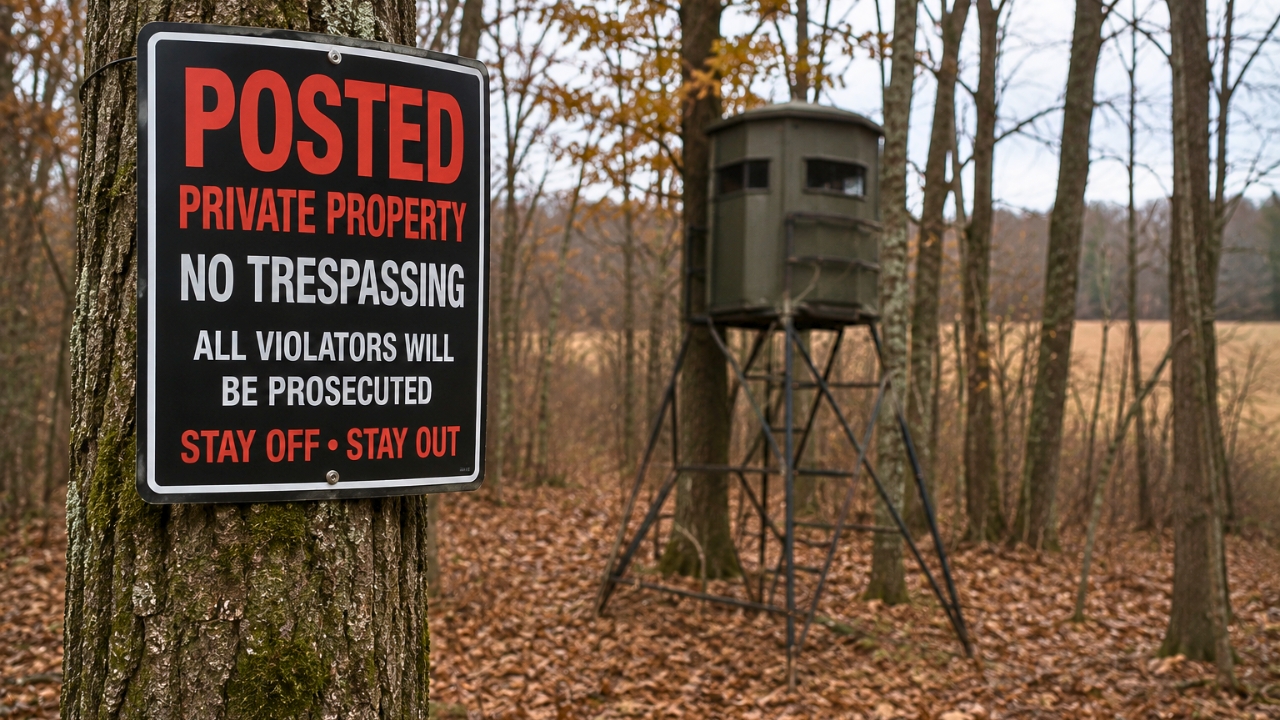
He posted the property.
That should make things simple enough. If land is posted, you do not walk in and hunt it without permission. You do not hang stands. You do not treat the woods like an open lease. You definitely do not start setting up as if the owner somehow forgot he owns it.
But posted signs only work on people willing to respect them.
In a Reddit post, the landowner said he found tree stands on his posted property and wanted to know what to do. That is already frustrating on its own. A stand means someone came in, picked a tree, carried equipment onto the land, and planned to hunt there.
That is not usually a wrong turn.
A person can accidentally cross a boundary while walking. Maybe a map app is off. Maybe a fence line is confusing. Maybe someone is tracking a deer and makes a bad call. But hauling in a stand takes more intention than that. It means somebody had enough time and confidence to set up on land that did not belong to him.
And that raises the obvious question: how long has this been going on?
The owner may have found the stands that day, but the people who put them there may have been using the property for weeks, months, or seasons. They may have scouted it. They may have put cameras out. They may have hunted it already. They may have walked past posted signs enough times that they no longer even cared.
That is the part that makes landowners so angry. The stand is not just metal or straps in a tree. It is proof that someone else has been treating your land like his spot.
But commenters brought up a warning that made the situation even uglier: bait.
Several people said the landowner needed to be careful because trespassers could plant bait near those stands, then call the game warden and try to get him in trouble. That sounds twisted, but it is exactly the kind of thing landowners worry about once they realize someone has already crossed the line.
If bait is illegal or restricted in that area, the landowner could suddenly be dealing with a problem he did not create. A pile of corn, mineral, salt, apples, or other attractant near an unauthorized stand could make the property look suspicious, especially if a warden walks in before the owner can explain what happened.
Even if the truth is on the owner’s side, nobody wants to be standing there saying, “That’s not mine,” while illegal bait sits on his property.
That is why the advice got serious fast. Do not simply yank the stands and call it done. Document everything first. Take photos. Mark locations. Photograph posted signs. Look for bait, cameras, trails, boot tracks, vehicle access, cut limbs, flagging tape, or anything that shows the setup was not yours. Then call the game warden before the trespasser has a chance to twist the story.
That may feel like overkill, but once hunting violations get involved, proof matters.
A landowner who finds stands on posted land is already dealing with a violation of trust. The last thing he needs is to be blamed for whatever the trespasser did around those stands. If someone baited illegally, shot over the line, wounded deer, or hunted without permission, the owner needs a record that he found the setup and reported it.
There is also a safety issue. Unauthorized stands mean unknown hunters. Unknown hunters mean the owner does not know who may be sitting in the woods with a weapon, when they are coming in, or which direction they are shooting. If the owner has family, livestock, workers, or invited hunters on the property, that becomes a real concern.
A stand is not passive once hunting season starts. It means a person may show up before daylight, climb in, and expect to shoot.
That is why the owner had to think beyond just removing the equipment. If he pulls the stands down, the trespasser may come back angry. If he leaves them, the trespasser may keep hunting. If he destroys them, he may create a property-damage argument. If he does nothing, the problem may grow.
The cleanest answer is usually the least satisfying: document, call the warden, and let the evidence build.
The landowner may eventually be able to remove the stands, but the smarter move is making sure the situation is recorded first. If the trespasser shows back up, the owner wants cameras waiting. If the person calls authorities claiming his stand was stolen or damaged, the owner wants proof that the stand was on posted private property. If bait is found, the owner wants a clear timeline showing he reported the unauthorized setup as soon as he found it.
That is how you protect yourself when someone else’s bad behavior lands on your land.
For the landowner, finding the stands was probably aggravating enough. But the Reddit warning made the stakes bigger. This was not only about a trespasser trying to hunt without permission. It was about what else that trespasser might have done, and whether the owner could end up cleaning up the legal mess afterward.
Commenters were firm: take photos before touching anything.
Several people told the landowner to document the stands exactly where they were found. Pictures from multiple angles, GPS locations, nearby posted signs, access trails, and any bait or cameras nearby could all matter later. A few said the stands might be evidence, especially if a game warden gets involved.
The bait warning came up because hunters know how quickly a property can get dragged into trouble. If baiting is illegal or restricted in that state, a trespasser could create a violation on land he does not own. Commenters said the landowner needed to look carefully around the stands and report anything suspicious right away.
A lot of people recommended calling the game warden instead of handling it alone. Unauthorized stands on posted property are tied directly to hunting enforcement, and wardens may know how to catch whoever comes back. They may also advise whether the owner should leave the stands in place temporarily or remove them.
Others suggested putting cameras on the stands to catch the person returning. Not obvious cameras right next to them, but hidden cameras watching the approach. If the trespasser comes back to hunt, check the stand, or retrieve gear, the landowner may finally get a face.
Some commenters joked that the landowner had just gained free stands, but the more cautious replies pushed back. Keeping them immediately might feel satisfying, but the better move is to build a record first. Once authorities are involved, the owner can handle the equipment without looking like he simply stole someone else’s property.
The main advice was simple: assume the stands are part of a bigger pattern until proven otherwise. Someone willing to hang stands on posted land may also be willing to bait, poach, steal cameras, or lie when caught. The landowner needed proof before the trespasser got a chance to write the story for him.