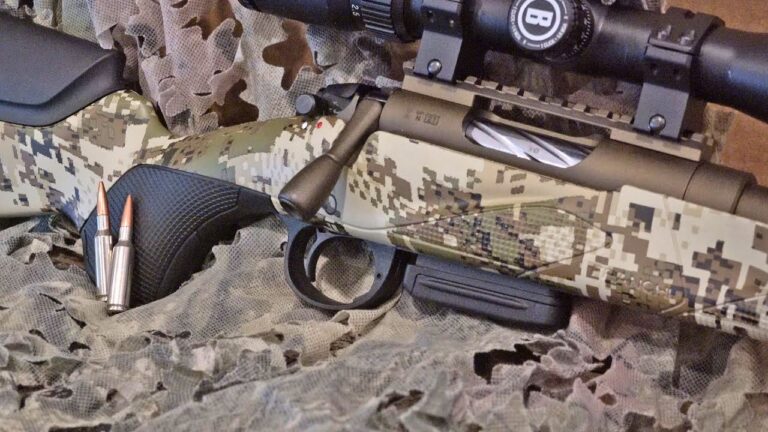
Some rifles challenge you from the second you pull the trigger, not because you can’t shoot, but because the recoil turns every follow-up shot into a wrestling match. Heavy cartridges paired with lightweight stocks or poor ergonomics can wreck your groups before you even settle in. You try to control them, but the muzzle lift, flinch, and shot anticipation stack up fast.
These rifles teach you quickly that accuracy isn’t only about barrel quality or good ammo—sometimes the biggest obstacle is the energy pushing back at you harder than any shooter wants to admit.
Ruger No. 1 in .458 Win Mag

The Ruger No. 1 is a classic, but chambering it in .458 Win Mag pushes the platform to its limit. The rifle’s light weight and compact design make recoil abrupt, and the single-shot layout gives you no buffer from the force. Even experienced shooters struggle to keep the gun anchored during longer sessions.
Accuracy often falls apart after the first round because the recoil interrupts rhythm and builds flinch quickly. The cartridge hits hard, but the platform doesn’t offer the stability needed to manage that punch. Unless you’re extremely disciplined behind the gun, groups open fast and stay that way.
Marlin 1895 GBL in .45-70 +P

The 1895 GBL is a favorite among big-bore fans, but when you run hot .45-70 loads, the recoil can be overwhelming. The lever-action layout places recoil impulse directly into your shoulder, and the shorter barrel increases muzzle rise. Even shooters with solid technique notice accuracy slipping under heavier loads.
The rifle shoots well with moderate ammunition, but once you push performance, control becomes much harder. Quick follow-ups turn into recovery drills, and consistency disappears. If you don’t stay disciplined, every shot feels slightly different, which shows up immediately on paper or steel.
Tikka T3 Lite in .300 Win Mag

The Tikka T3 Lite is known for accuracy, but chamber it in .300 Win Mag and the recoil becomes a real obstacle. The featherweight stock magnifies every ounce of kick, making the rifle difficult to settle between shots. Even shooters with strong fundamentals struggle to maintain tight groups over longer strings.
The rifle shines when carried in steep terrain, but on the bench its recoil can wear you down fast. As fatigue sets in, flinch and inconsistent shoulder pressure show up on the target. It’s a perfect example of a great rifle paired with a cartridge that overwhelms the platform.
Browning BLR in .450 Marlin

The BLR handles traditional cartridges well, but chambered in .450 Marlin, the recoil becomes fierce. The combination of a lever-action stock and a powerful round means the shooter absorbs more energy than the rifle does. This makes it difficult to maintain consistent cheek weld and body position.
Accuracy is possible at close ranges, but past 100 yards, groups often spread simply because the recoil interrupts good form. Even moderate practice sessions can leave you fatigued, which only makes precision harder. The rifle is capable, but the recoil limits what most shooters can realistically achieve.
Savage 110 Brush Hunter in .375 Ruger

The 110 Brush Hunter is compact and maneuverable, but in .375 Ruger, recoil becomes a major factor in accuracy. The short barrel increases muzzle jump, and the rifle’s lighter build doesn’t help absorb the cartridge’s punch. Shooters often find themselves fighting to keep the rifle level from shot to shot.
While the action itself is accurate, the recoil-induced flinch shows up fast, especially during load testing. Even shooters familiar with heavy calibers find groups expanding after extended sessions. It’s a rifle that performs best in hunting scenarios—not long strings on the bench.
Winchester Model 70 Alaskan in .416 Rem Mag

The Model 70 Alaskan has pedigree, but the .416 Rem Mag generates serious recoil that can shake even experienced shooters. The cartridge produces high velocity and heavy bullet weight, creating a recoil pulse that feels both sharp and sustained. Managing that consistently is a tall order.
What makes accuracy difficult is how quickly fatigue sets in. After a few rounds, most shooters start anticipating recoil, which opens groups dramatically. The rifle is built for dangerous-game scenarios, not precision shooting at extended distances. It punishes mistakes instantly and rewards only perfect form.
Mossberg Patriot in .338 Win Mag

The Mossberg Patriot is lightweight and affordable, but that works against it in .338 Win Mag. The recoil feels abrupt, driving the stock hard into your shoulder and causing noticeable muzzle rise. Getting back on target requires more effort than many shooters expect.
During sight-in or load testing, recoil fatigue builds quickly, affecting trigger control and follow-through. Even slight inconsistencies become exaggerated, and group sizes reflect that. The cartridge deserves a heavier, more controlled platform, but the Patriot’s weight makes it challenging to shoot with any precision over time.
Ruger American Predator in .350 Legend (hot loads)

The .350 Legend is mild in most rifles, but hot handloads in a very lightweight platform like the Ruger American Predator can create more recoil than expected. The synthetic stock flexes slightly, and the recoil pulse becomes uneven, which affects accuracy.
The Predator’s ergonomics work great for mild cartridges, but when you push the Legend to its limits, the rifle becomes harder to settle. Shots begin to string as recoil disrupts shoulder pressure and grip. It’s not painful, but it’s inconsistent—and that inconsistency shows up immediately on the target.
CVA Scout in .450 Bushmaster

The CVA Scout’s single-shot simplicity is appealing, but with .450 Bushmaster, recoil becomes a major hurdle. The rifle’s minimal weight and straight grip make the kick feel even sharper. Controlling muzzle rise is often the shooter’s biggest challenge.
Accuracy is possible, but only if you take long breaks between shots to reset your form. The rifle isn’t built for extended range sessions, and the recoil makes quick load development nearly impossible. It’s a practical hunting tool but a tough platform for precision-focused shooters.
Remington 700 SPS in .300 RUM

The .300 RUM pushes power to the extreme, and in the lightweight SPS platform, recoil becomes punishing. Even seasoned shooters feel their form deteriorate quickly. The recoil pulse is long and forceful, making follow-through difficult to maintain.
Accuracy can be excellent in heavier rifles, but the SPS stock isn’t built to absorb such intense energy. As recoil fatigue builds, shots begin drifting unpredictably. For hunters who only fire a few rounds a year, it’s manageable. For anyone testing loads, it’s a grueling experience.
Henry Single Shot in .45-70 Government (heavy charges)

The Henry Single Shot is beautifully simple, but it offers very little recoil mitigation when running heavy .45-70 loads. The straight stock channels recoil directly to your shoulder, and with stout ammunition, the experience becomes genuinely difficult to control.
Accuracy falls apart when fatigue creeps in, and this rifle makes that happen quickly. Maintaining solid cheek weld and consistent shoulder pressure becomes a challenge after just a few shots. It’s a rifle that works best with mild to moderate loads—not the heavy hitters many people instinctively reach for.
Weatherby Vanguard Series 2 in .338-06

The .338-06 is powerful, but not many rifles balance it properly, and the Vanguard Series 2 is right on the edge. The recoil is not punishing, but it’s disruptive enough to make consistency tough. The lightweight stock accentuates muzzle rise and magnifies small mistakes.
Shooters often report good groups early in a session, only to see them widen as fatigue sets in. The cartridge deserves a heavier, more stable rifle, but in this platform, it becomes difficult to control. It’s great for hunting but limiting for fine-tuned accuracy work.
Thompson Center Encore Pro Hunter in .460 S&W

The Encore Pro Hunter can chamber big calibers, but the .460 S&W is simply too much for the lightweight frame. The recoil is abrupt and forceful, making quick recovery nearly impossible. Even strong shooters find accuracy declining as anticipation builds.
The platform’s modularity is appealing, but matching it with such a powerful round creates more challenges than benefits. On paper it sounds impressive, but on the bench it becomes a fight to maintain fundamentals. Groups rarely stay consistent through an entire session.
Savage Axis II in .30-06 Springfield (lightweight version)

The Axis II shoots well with milder loads, but heavy .30-06 rounds expose the limitations of a featherweight stock. Recoil becomes jumpy rather than smooth, making precise follow-through tougher than expected. Even small changes in shoulder pressure or grip affect point of impact.
Shooters who choose heavy bullets often notice accuracy slipping as recoil interrupts their rhythm. The rifle still works well for hunting, but long sessions reveal how much its light build can work against precision. It’s a classic example of cartridge and rifle weight being mismatched.
Howa 1500 Super Lite in 7mm Rem Mag

The Super Lite is great on long hikes, but pairing it with 7mm Rem Mag creates recoil that’s difficult to manage. The rifle’s light frame exaggerates the cartridge’s punch, and muzzle rise becomes a steady obstacle. Even experienced shooters can lose consistency after just a few groups.
The action is capable of excellent accuracy, but the recoil undermines the platform’s potential. As concentration fades and fatigue develops, shots start drifting off target. It’s a rifle designed for carrying, not for high-volume practice—and the accuracy reflects that.
Like The Avid Outdoorsman’s content? Be sure to follow us.
Here’s more from us: