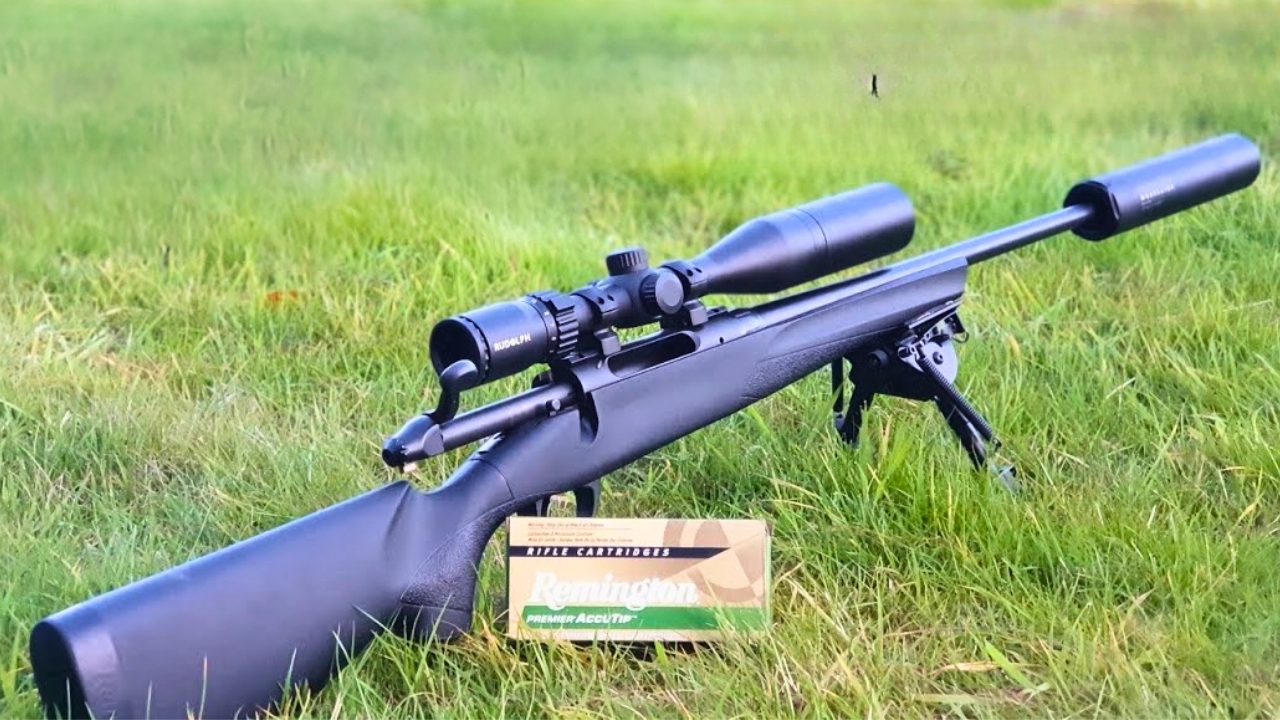
Photo credit: Baileys shooting and country wear/YouTube
Some rifles struggle to hold alignment no matter how careful you are. You torque the rings properly, you use good bases, you double-check everything—and still, something shifts after a dozen rounds or a single bump in the truck. It’s rarely the optic itself. More often it’s the stock, the bedding, or the action flexing under recoil.
When a rifle won’t stay consistent, you end up chasing zero instead of building confidence. These rifles have reputations for wandering point of impact, and if you’ve ever fought with one, you know exactly how frustrating it can be.
Savage Axis II (budget synthetic models)
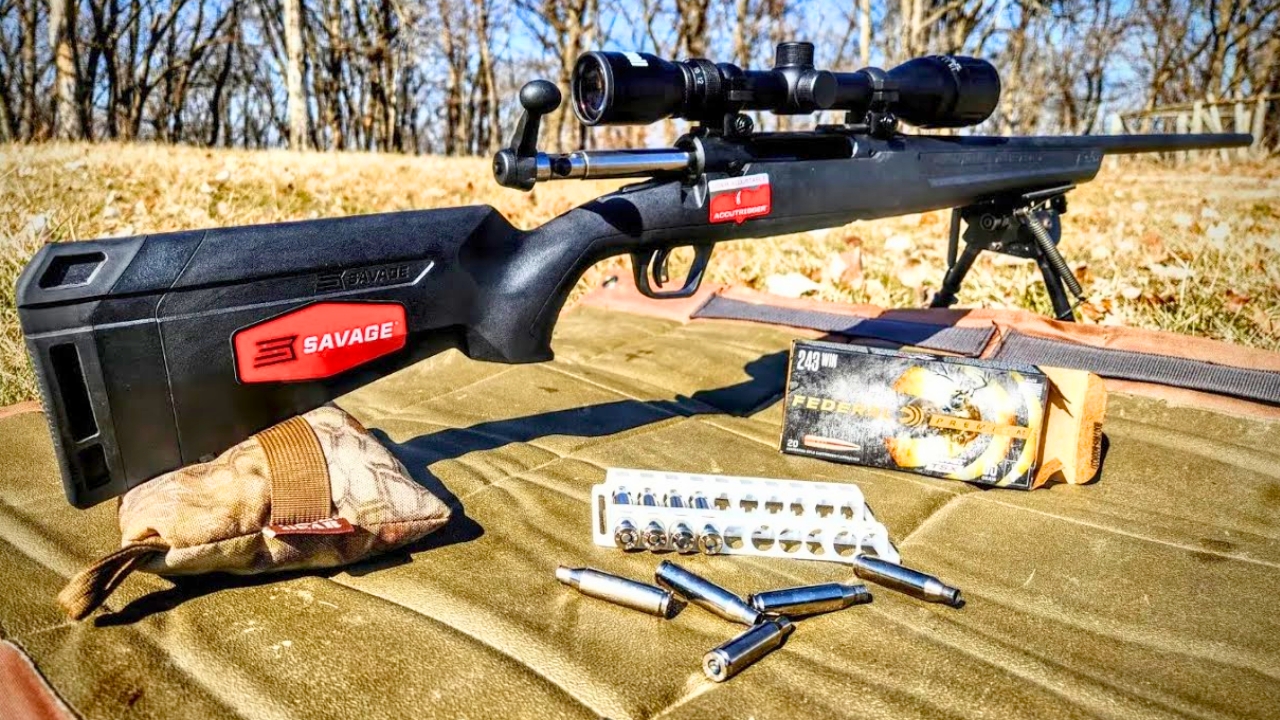
The Savage Axis II shoots well for its price, but the lighter synthetic stocks are known to flex under recoil. That flex can shift pressure points on the barrel, moving your point of impact from group to group. You can torque the scope rings perfectly and still find the rifle printing two inches away from where it should.
The platform performs better with upgraded stocks, but in its factory form, alignment issues tend to show up faster than you’d like. Even minor bumps during transport can nudge the thin fore-end enough to change consistency. It’s a workable rifle, but staying zeroed isn’t always automatic.
Ruger American Ranch (short-barrel variants)

The Ruger American Ranch is compact and handy, but the lightweight stock and bedding system don’t always handle repeated impacts well. After a few range trips, some shooters notice the rifle shifting zero, especially with heavier-recoiling calibers. The barrel nut system is solid, but the synthetic stock can introduce instability.
Short barrels also add more abrupt recoil, which can magnify alignment issues. A good optic helps, but even then, the rifle may wander unless the stock is reinforced. With some aftermarket upgrades, the rifle stabilizes, but in its bare form, it’s one of the more sensitive rifles to field bumps.
CVA Cascade (early runs)

The CVA Cascade brought budget precision features to a wider crowd, but early models had stocks that weren’t as rigid as they needed to be. This caused the rifle to shift zero after recoil cycles or when resting the fore-end on different surfaces. You’d get a tight group one day and a completely different point of impact the next.
Plenty of shooters upgraded the stock to fix the issue, but factory rifles could be unpredictable under repeated use. The action itself is strong—alignment struggles usually came from inconsistent stock pressure and bedding contact. Once addressed, the rifle settled down, but out of the box, it could drift faster than expected.
Remington 770

The Remington 770 has long been known for alignment challenges due to its inexpensive stock and imprecise bedding. Even with a well-mounted optic, the rifle can shift point of impact after recoil or mild transport bumps. The hollow stock amplifies vibration, which often shows up directly on the target.
The action and barrel aren’t inherently inaccurate, but the instability in the platform creates wandering groups that are hard to correct. Some shooters try to bed the action or stiffen the stock, but many find that the zero still drifts. It’s a rifle that asks for more effort than it gives back.
Winchester XPR (lightweight composite versions)

The Winchester XPR action is strong, but the lightweight composite stocks can create inconsistencies during recoil. Pressure points form and disappear depending on how the fore-end is supported, and that affects alignment even with quality optics. You may see clean groups one day and puzzling flyers the next.
The rifle runs smoothly and cycles well, but staying zeroed becomes the challenge in harsher field conditions. A stronger stock solves most of the issues, which tells you exactly where the problem lies. In its factory form, though, alignment can shift faster than most shooters expect from a modern rifle.
Mossberg Patriot (synthetic stock models)

The Mossberg Patriot offers surprising accuracy for its cost, but the thin fore-end on synthetic-stock versions can be sensitive to pressure. Even slight bipod loads or changes in grip can alter the point of impact. Add recoil into the equation, and the rifle may walk its zero over time.
It’s not that the components are weak—it’s simply a platform built to hit a price point. The bedding blocks don’t always keep the action firmly anchored, and consistency drifts as a result. A stock upgrade makes a big difference, but factory rifles often struggle to maintain alignment long-term.
Thompson Center Venture

The Venture earned praise for accuracy, but many shooters noticed its zero shifting after moderate recoil cycles. The synthetic stock had enough flex to cause slight barrel contact changes, and those tiny changes showed up clearly downrange. Even with careful handling, the rifle could drift unpredictably.
The action itself is capable, and some rifles stayed aligned better than others, but the inconsistency was well-known among owners. Once the stock was replaced or bedded properly, the rifle performed much more reliably. In factory trim, though, alignment moved faster than most shooters preferred.
Weatherby Vanguard Synthetic (older trims)

Early synthetic-stock Vanguards had rigidity issues that caused wandering point of impact. The action and barrel were excellent, but the fore-end could bow or twist slightly under sling tension or recoil. That was enough to shift groups, especially when shooting from improvised rests.
Shooters often loved how the rifle handled and cycled but grew frustrated with the wandering zero. Later versions improved the stock stiffness, but the older models developed a reputation for needing reinforcement. Without it, alignment issues showed up sooner than you’d expect from an otherwise reliable rifle.
Marlin X7 (synthetic models)

The Marlin X7 is a surprisingly accurate rifle, but the synthetic stock on many versions had noticeable flex. That flex introduced inconsistencies when using bipods or tight sling tension, leading to small but frustrating point-of-impact shifts. Over time, recoil only made those changes more pronounced.
The action and barrel combination was underrated, but the platform needed better stock support to shine. Many owners upgraded or bedded the rifle to fix the drifting zero. Until then, it remained a rifle that could lose alignment faster than its performance suggested it should.
H&R Handi-Rifle

The break-action simplicity of the Handi-Rifle is appealing, but its design inherently struggles with repeatable alignment. Small inconsistencies in how the action locks up can shift the point of impact from session to session. Even with careful cleaning and handling, alignment isn’t perfectly repeatable.
The rifle is accurate enough for hunting, but long-range or precision work exposes its limitations quickly. Even mild recoil can alter how the action seats on closing. It’s a fun rifle, but its alignment stability depends entirely on near-perfect lockup every time, which isn’t guaranteed.
Savage 11 Trophy Hunter XP

The Trophy Hunter XP package rifles are convenient, but the factory stocks don’t always hold alignment well under recoil. Bedding surfaces shift slightly, and the flexible fore-end makes the barrel contact unpredictable when the rifle is supported in different ways. Groups often drift as a result.
The rifle improves dramatically with stock bedding or a replacement, showing the action and barrel are capable of precision. But in factory form, shooters often end up chasing zero more than they’d like. Consistency becomes a challenge unless the rifle is handled gently and shot from stable supports.
Ruger M77 Mark II Ultralight

The Ultralight version of the M77 Mark II carries beautifully, but its featherweight build works against alignment stability. Recoil feels sharper, stock movement becomes more noticeable, and point-of-impact shifts appear quicker than on heavier rifles. Even small changes in grip or support affect accuracy.
The controlled-round-feed action is excellent, but the rifle isn’t as forgiving as heavier M77 variants. It rewards perfect technique and punishes inconsistency. In the field it’s fine for a single cold-shot scenario, but for repeated shooting, alignment tends to drift faster than expected.
Remington 783

The Remington 783 improved on the 770, but some models still struggle with maintaining alignment due to flexible synthetic stocks. The action sits well enough, but the fore-end can twist under bipod load or sling tension. Over time, recoil works that weakness into visible zero drift.
Many shooters report great groups early in a range session, followed by unpredictable shifts. The rifle responds well to bedding or stiffening, proving the core is solid. But if you leave it stock, you may find yourself adjusting your scope more often than you’d prefer.
Howa 1500 Lightweight Series

Howa actions are known for strength, but the lightweight synthetic-stock models tend to wander under recoil. The thin fore-end can shift slightly, altering barrel harmonics and moving the point of impact. It’s subtle, but noticeable when shooting beyond 100 yards or running multiple groups.
Shooters who upgrade the stock or add bedding see the rifle transform into a stable performer. The factory configuration, however, can be sensitive to how the rifle is supported, making long-term alignment tricky. It’s accurate—just not consistently aligned unless tuned.
Browning AB3 Composite

The Browning AB3 shoots well, but its composite stock can lead to alignment challenges in rough use. Flex near the barrel channel and inconsistent bedding contact often show up as drifting point-of-impact. The rifle still groups well, but the zero tends to move faster than you’d expect from a Browning.
Once you reinforce the stock, the AB3 becomes a dependable shooter. Until then, recoil and field bumps expose the weaknesses in the factory setup. For hunters who shoot only a few rounds a season, it’s fine. For anyone tuning loads, the drifting alignment becomes hard to ignore.
Like The Avid Outdoorsman’s content? Be sure to follow us.
Here’s more from us: