
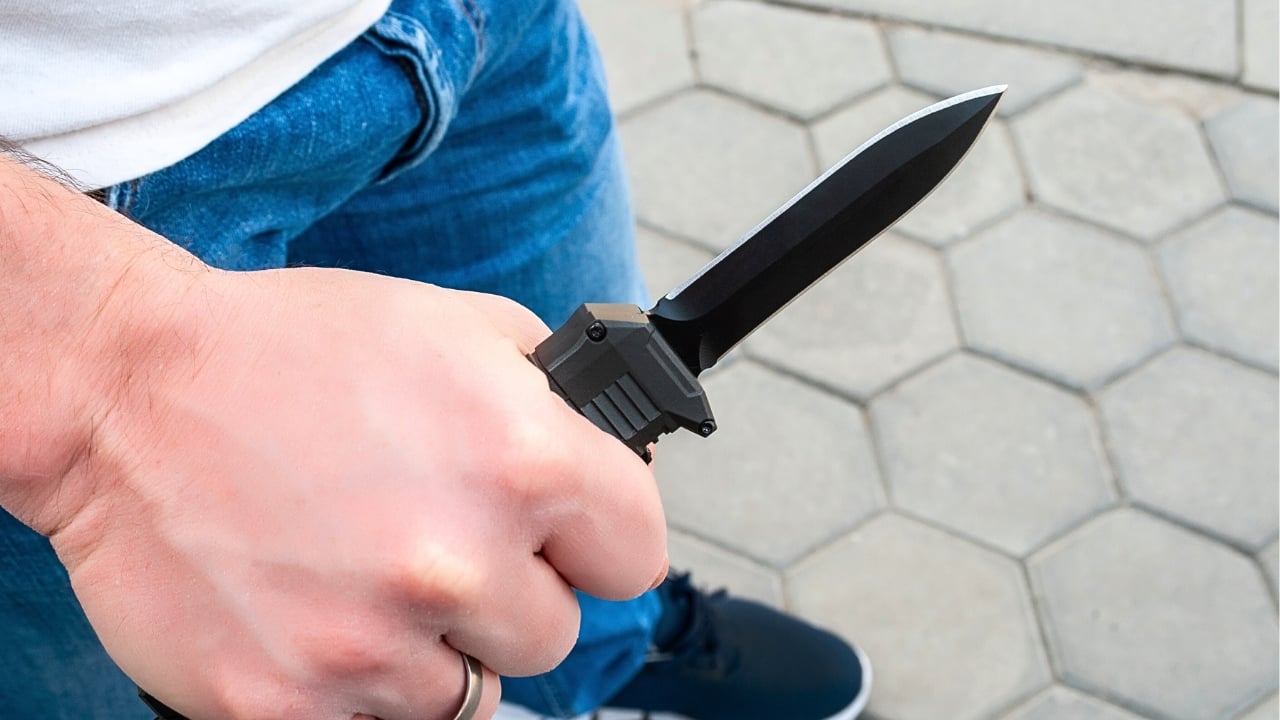
Photo credit: Bykfa/Shutterstock.com
You live in a country where a pocketknife can be a basic tool in one town and a fast track to a misdemeanor in the next ZIP code. The line between “concealed” and “open” carry for knives is not only blurry, it is redrawn every time you cross a city limit sign, and the stakes range from a simple confiscation to criminal charges. Understanding how those rules shift, and why, is the only way to carry a blade confidently instead of gambling on local fine print.
Why knife carry rules feel so inconsistent
When you clip a folding knife to your pocket, you probably think in broad categories: legal or illegal, concealed or visible. Lawmakers do not think that way. They slice the issue into layers, from blade length and opening mechanism to where the knife sits on your body and whether anyone else can see it. That is why a knife that is perfectly lawful on your belt in one county can become a problem if you tuck it under a shirt in the next, even though nothing about the blade itself has changed.
The inconsistency is not an accident, it is the product of overlapping authority. State legislatures write general criminal codes, but cities and counties often claim power to add their own public safety rules on top. Some states have tried to rein in that patchwork by passing specific knife law “preemption” statutes, while others leave local governments wide latitude. Until you understand which model your state follows, you are effectively guessing every time you drive from one jurisdiction to another with a knife in your pocket.
What “preemption” actually means for your knife
If you want to know whether the rules really change by ZIP code, you have to start with preemption. In the knife context, preemption is a legal rule that says state law controls and local ordinances are wiped out. When a state adopts knife law preemption, it is telling cities and counties that they cannot create their own knife bans or carry restrictions that go beyond what the legislature has already written. That single decision can turn a confusing map of local rules into one statewide standard you can actually memorize.
Advocacy groups have pushed for knife law preemption precisely because it eliminates the risk that you become a test case just for crossing an invisible boundary. One national policy overview explains that when a state enacts knife-law preemption, it is trying to prevent a patchwork of local regulations that trap hunters, anglers, and everyday carriers who travel between jurisdictions. Without that kind of statewide rule, you are left to research every city council’s code or hope that the knife on your belt is treated the same way in the next town as it is in your own.
How full preemption differs from partial preemption
Not all preemption is created equal. Some states adopt full preemption, which means local governments are barred from regulating knives at all, whether the issue is ownership, open carry, or concealed carry. In those states, if the legislature says a 3.5 inch folding knife is legal to carry, then it is legal everywhere in the state, from the biggest city to the smallest township. You still have to follow statewide restrictions, such as bans in schools or courthouses, but you do not have to worry about a city council quietly adding its own twist.
Other states opt for partial preemption, which sounds reassuring until you read the fine print. Pennsylvania is a clear example, because its own guidance describes “State Preemption and Local Ordinances Pennsylvania” as having “PARTIAL” and “PREEMPTION” in capital letters. That label matters. Under that framework, the state regulates most aspects of knife law, but local governments can still impose certain carry restrictions beyond state law, especially on where and how you carry in public spaces. As one overview of Pennsylvania knife laws explains, partial preemption leaves room for municipalities to add their own rules on top of the state code, which is exactly how the same knife can be treated differently in neighboring ZIP codes.
Why local ordinances still matter even in preemption states
Even in states that advertise preemption, you cannot assume every local rule is off the table. Some preemption statutes are narrowly written, covering only certain types of knives or specific aspects of regulation, such as sales or possession, while leaving carry methods to local discretion. Others carve out exceptions for “home rule” cities, transit systems, or special districts, which then use that authority to regulate knives in parks, buses, or government buildings. The result is that you may still face different expectations about what counts as concealed or open carry depending on where you stand.
Security professionals who track these laws point out that preemption is a term of art, not a magic word. One detailed breakdown of knife laws by state notes that “Preemption” means the state government nullifies all knife laws made by cities and counties, and then adds, “Therefore, when you travel from one city to another, the knife laws remain the same.” That “Therefore” is doing a lot of work. It only holds if your state has actually adopted full preemption without exceptions. If your legislature has left any gaps, local ordinances can still define what kind of carry is acceptable on a city bus or inside a municipal building, even if the knife itself is legal statewide.
How “concealed” and “open” carry are defined on the ground
Once you know who is allowed to write the rules, the next problem is what those rules actually say. States and cities do not always agree on what counts as “concealed” versus “open” carry for a knife. Some codes treat a knife as openly carried if any part of it, such as a pocket clip, is visible to ordinary observation. Others insist that the entire knife, including the handle and sheath, must be in plain view to qualify as open carry. That difference can turn a common practice, like clipping a folding knife inside your jeans pocket, into a legal gray area.
Concealment definitions also vary in how they handle intent. A few jurisdictions focus on whether you meant to hide the knife, while many simply look at whether a reasonable person could see it without special effort. That means a blade tucked under a shirt, even if it is on a belt, is often treated as concealed, while the same knife worn outside the shirt is considered openly carried. Because those lines are drawn in local codes and state statutes, and because preemption may or may not apply, you can end up with one city treating a clipped pocketknife as open carry and another calling it concealed carry that requires a permit or is banned outright.
ZIP code risk: crossing city limits with the same knife
The practical effect of all this legal architecture is that your risk profile changes every time you cross a jurisdictional line. Imagine you live in a state with partial preemption, where the legislature has legalized most common folding knives but allows cities to regulate carry in public spaces. In your hometown, the city council might have decided not to add any extra restrictions, so you routinely carry a 3 inch assisted opener clipped to your pocket. Drive thirty minutes into a larger city for a concert, and you may find that local ordinances classify assisted openers as prohibited weapons in certain venues, or treat any knife in a pocket as concealed, regardless of clip visibility.
That kind of ZIP code lottery is not hypothetical, it is exactly what preemption debates are about. Where full preemption is in place, you can at least rely on a single statewide definition of what is allowed, even if that definition is strict. Where partial preemption or no preemption exists, local governments can and do respond to local concerns, such as a spike in youth violence or complaints about knives on public transit, by tightening carry rules. If you are not tracking those changes, you may only discover the difference when an officer or security guard tells you that your everyday carry is not welcome in this particular part of the map.
Practical steps to stay legal when you carry a knife
Given how fragmented the rules are, the only realistic strategy is to treat knife carry like any other regulated activity and build a routine around compliance. Start at the state level by reading the criminal code sections on weapons and any specific knife statutes, paying close attention to definitions of “dangerous knife,” “deadly weapon,” or similar terms. Then look for any mention of preemption, which will tell you whether cities and counties are allowed to add their own restrictions. If your state has partial or no preemption, you should assume that major cities and transit agencies have their own rules and check those codes before you travel.
On the ground, you can reduce your exposure by choosing conservative carry methods. If your state treats a visible belt sheath as clearly open carry, while pocket carry is ambiguous, you may decide that a small fixed blade on your belt is safer legally than a larger folder hidden under a jacket. You can also standardize on blade lengths and designs that are comfortably within legal limits instead of pushing right up to the maximum allowed size. Finally, treat sensitive locations like airports, schools, courthouses, and stadiums as knife-free zones unless you have explicit confirmation that a particular type of tool is allowed, because those venues often operate under their own security policies on top of whatever the law says.
Why knife carriers watch legislation as closely as gear reviews
If you carry a knife daily, the legal landscape matters as much as steel type or lock strength. Legislative sessions can change your status overnight, either by expanding preemption and wiping out restrictive local ordinances or by adding new categories of prohibited knives and carry methods. Advocacy groups that pushed for firearm preemption have increasingly turned their attention to blades, arguing that hunters, anglers, tradespeople, and other lawful carriers should not need a law degree to cross a county line with a pocketknife. When those efforts succeed, you may see a state move from partial to full preemption, instantly simplifying your planning.
The reverse is also possible. A high profile incident involving a knife can prompt lawmakers to revisit definitions of “dangerous” or “deadly” weapons, or to carve out new zones where knives are banned regardless of preemption, such as public transit systems or government buildings. Because those changes are written in the same dense language as the original statutes, you often will not hear about them unless you follow legislative trackers or organizations that specialize in knife law. For someone who carries every day, staying informed about those shifts is not a hobby, it is a form of risk management that keeps your routine from colliding with a rule you did not know existed.
The bottom line: carry habits that survive ZIP code changes
When you step back from the legal jargon, the pattern is clear. The more your carry habits rely on aggressive interpretations of what might be allowed, the more vulnerable you are to the quirks of local law. If you favor modest blade lengths, conventional designs, and carry methods that are plainly visible and unthreatening, you give yourself a wider safety margin across jurisdictions. That does not guarantee immunity from a strict ordinance, but it reduces the odds that a routine traffic stop or bag check turns into a legal headache.
Ultimately, the rule that changes by ZIP code is not just about knives, it is about how American law divides power between statehouses and city halls. Until every state adopts clear, comprehensive preemption, or every local government harmonizes its codes, you will be navigating a patchwork. The most reliable tools you can carry are not only the blade in your pocket, but also a working knowledge of your state’s preemption status, a habit of checking local ordinances before you travel, and a willingness to adjust your gear so that your everyday carry looks as lawful as it actually is.
Like The Avid Outdoorsman’s content? Be sure to follow us.
Here’s more from us:


