Photo credit: Lucas Pezeta/Pexels.com
A lot of dog behavior starts out looking minor enough that nobody feels any urgency about it. A little extra scratching. A strange habit of pacing before bed. Jumping on guests. Guarding one toy a little too hard. Pulling on the leash in a way that is annoying but manageable. Most people tell themselves they will deal with it later if it gets worse. The problem is that later usually shows up faster than expected. A habit that seemed small in the beginning can quietly turn into a real issue once it gets repeated enough, reinforced enough, or tied to something bigger going on underneath.
That is what makes dog habits tricky. They rarely announce themselves as serious problems on day one. They show up in manageable doses. You laugh it off, work around it, or assume it is part of the dog’s personality. Then one day the scratching has turned into hot spots, the leash pulling has turned into shoulder strain, or the mild possessiveness over treats has turned into a dog that stiffens and growls when somebody gets too close. The shift feels sudden, but most of the time it was building the whole time. Small habits matter because repetition gives them weight, and dogs are very good at turning repeated behavior into routine.
Constant scratching is not always a harmless little itch
People tend to downplay scratching because dogs scratch sometimes. That part is normal. The mistake is assuming repeated scratching always stays in that harmless category. A dog that keeps going after the same areas day after day may be dealing with allergies, skin irritation, parasites, dry skin, or even stress-related behavior. What starts as a quick leg kick near the collar can turn into chewing, raw skin, hair loss, and infections if the reason underneath it never gets handled.
The problem is that scratching becomes background noise in a lot of homes. You hear it, glance over, and move on because it is not dramatic. But a dog that cannot leave its skin alone is not doing something meaningless. It is responding to discomfort. The longer that goes on, the more likely the skin gets damaged and the harder the cycle becomes to interrupt. That is why scratching feels small right up until you are looking at a dog that suddenly needs treatment for a problem that has clearly been building for weeks.
Pulling on the leash gets expensive in a hurry
A dog that pulls a little on walks often seems more inconvenient than serious. People shrug and call the dog excited, strong, or full of energy. At first, that may be all it looks like. But leash pulling has a way of becoming more than a bad habit once the dog gets bigger, more confident, or more practiced at it. A dog that learns it can drag you toward smells, people, dogs, or squirrels usually keeps doing exactly that, and the behavior gets harder to undo once it has been paying off for months.
That is where the “small” part disappears. Suddenly walks are tense instead of enjoyable. A shoulder gets yanked. Somebody falls. The dog starts reacting harder because it is always hitting the end of the leash already wound up. What felt like a manageable little manners issue turns into a daily frustration that affects exercise, safety, and control. Pulling rarely improves by itself. It usually improves only when somebody decides the habit matters before the dog fully learns that dragging a human around works.
Jumping on people gets less cute over time
Few dog habits get excused more than jumping. When dogs are young or friendly, people laugh, pet them anyway, and call it affection. The problem is that dogs do not sort those moments into “acceptable because I was small” and “unacceptable because I am now seventy pounds and hitting people in the chest.” They only learn whether the behavior works. If it earns attention, touch, noise, or engagement, it tends to stick. That is why a habit that felt harmless at first can suddenly become a real issue around guests, older relatives, children, or anyone unsteady on their feet.
Jumping also tends to show up hardest when arousal is already high. Somebody comes through the door, excitement spikes, and the dog goes straight to a behavior it knows well. In calmer moments, it may seem manageable. In the real-world moments that matter, it stops feeling small. One muddy launch onto a visitor in nice clothes is annoying. A hard jump that knocks down a child or scares somebody who already fears dogs is different. The habit does not change overnight. The context around it does.
Resource guarding often starts quietly
A lot of people miss the early signs of resource guarding because the dog is not biting or causing a scene. It may only freeze a little over a chew, eat faster when someone passes by, hover over a toy, or give a hard look when another pet gets too close. Those moments are easy to dismiss because they seem minor and may not happen often. But guarding behavior usually gets more serious when the dog keeps feeling like it has to protect access to something valuable. The earlier signs are the warning, not the whole problem.
That is why this habit can feel like it came out of nowhere when it finally escalates. In reality, the dog may have been communicating discomfort for a while through stiff posture, side-eye, hovering, or tension around food and objects. People often laugh it off because the dog is “being possessive” in a way that sounds almost funny. It stops being funny when a dog starts growling at a family member, snapping at another pet, or reacting hard during a situation that used to pass without much notice.
Paw licking can turn into a full-time problem
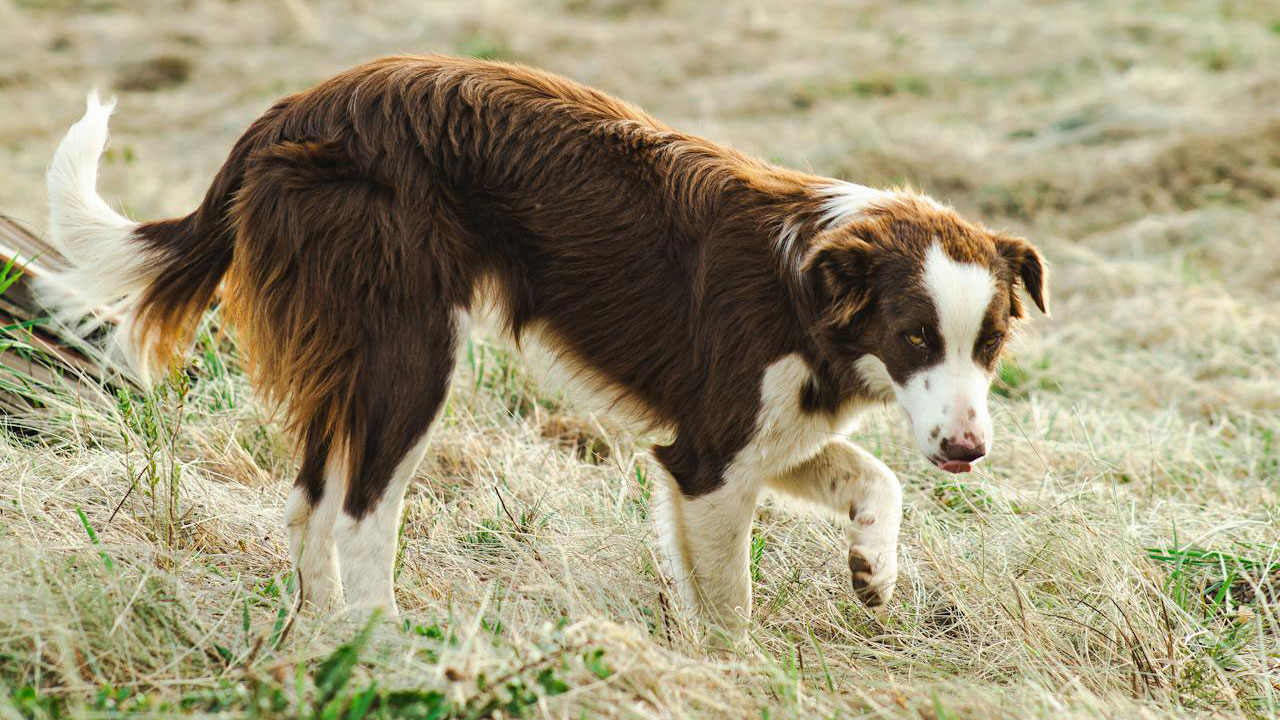
A little paw licking is easy to ignore because it seems like ordinary dog fussing. But dogs that keep licking the same paws over and over are often dealing with allergies, irritation, pain, boredom, or anxiety. The habit matters because licking does not stay neutral for long. Saliva, friction, and repeated attention can turn minor irritation into inflamed skin, staining, swelling, and infection. Once that happens, the dog may keep licking because the area now genuinely hurts or itches even more than it did before.
What makes this habit deceptive is how quiet it is. The dog is not barking or breaking things. It is lying there looking mostly calm, only working at its paws again and again. That makes it easy to put off. Then suddenly the paws are red, the fur is worn down, and the dog cannot settle without going right back to them. The behavior felt small because it was repetitive and low-key. But low-key does not mean harmless, and dogs can do a lot of damage to themselves with a habit people barely notice at first.
Barking at everything becomes a lifestyle fast
A dog that barks at the mail carrier, a squirrel, or the doorbell may not seem like much of a concern early on. Plenty of people write it off as normal dog behavior. The problem comes when barking becomes the dog’s default response to every movement, sound, visitor, car door, or passing dog. Once that pattern settles in, the dog starts living in a higher state of alertness than it should, and the household starts arranging itself around not setting the dog off. That is when a noisy little quirk turns into an exhausting routine.
The dog usually does not get there all at once. It gets there because barking works in small ways. The person at the door goes away. The squirrel leaves the fence. The household responds. Over time, the dog builds a bigger and bigger habit around that success. People tend to notice only when they are embarrassed, annoyed, or getting complaints. But by then the barking is no longer one little thing. It is a full pattern of overreaction the dog has rehearsed enough to make automatic.
Following you everywhere can cross into dependency
A dog shadowing you from room to room often looks sweet, and sometimes it is. But when that habit grows stronger, it can tip into something more fragile than affection. A dog that cannot settle alone, panics when a door closes, or constantly tracks your movement may be leaning too hard on your presence to feel secure. That sort of dependency often builds gradually, especially when routine changes, stress, aging, boredom, or reinforced closeness all pile together.
The reason this matters is that people usually do not question it until separation becomes a problem. Then suddenly the dog is whining when you shower, clawing at the door when you leave, or refusing to rest unless it is pressed against your leg. The behavior did not feel serious because it looked loving. But love and insecurity can look similar in a dog if you only notice the closeness and not the dog’s ability to cope when that closeness is unavailable. Small attachment habits can turn into big lifestyle problems when independence disappears.
Restlessness at night usually grows for a reason
A dog wandering the house at bedtime, getting up repeatedly, pacing, or struggling to settle can be easy to excuse at first. Maybe it napped too much. Maybe it wants one more trip outside. Maybe it is having an off night. But when restlessness starts repeating, it often points to something worth paying attention to. Pain, digestive trouble, anxiety, age-related confusion, noise sensitivity, or unmet exercise needs can all show up in those quiet nighttime hours before they are obvious anywhere else.
That is why the habit feels small until it suddenly affects the whole house. One restless night is a blip. Ongoing pacing at midnight changes sleep, patience, and quality of life for everybody involved. It also usually means the dog is not comfortable enough to relax the way it used to. People often realize too late that the nighttime issue was their clearest early clue. They were waiting for something louder or more dramatic, while the dog had already been showing them the change through a simple inability to settle.
Small habits become big when they keep getting rehearsed
That is really the bigger truth with dog behavior. A habit that gets repeated does not stay in its original size. It usually gets more practiced, more automatic, and more tied into daily life. That is true whether the behavior comes from excitement, stress, discomfort, boredom, or learned success. Dogs get good at whatever they do often. That includes the things people are hoping will somehow fade on their own. Most of the time, they do not fade. They either hold steady or get stronger.
The good news is that noticing a small habit early gives you options. It is much easier to address scratching before the skin breaks down, leash pulling before walks become a battle, guarding before it escalates, and clinginess before it turns into panic. The key is not to overreact to every little thing. It is to stop assuming repeated behavior stays little forever. With dogs, the habits that matter most are often the ones people lived beside for months before finally realizing they had grown into something much harder to ignore.
Like The Avid Outdoorsman’s content? Subscribe to our newsletter so you never miss an article.
Here’s more from us: