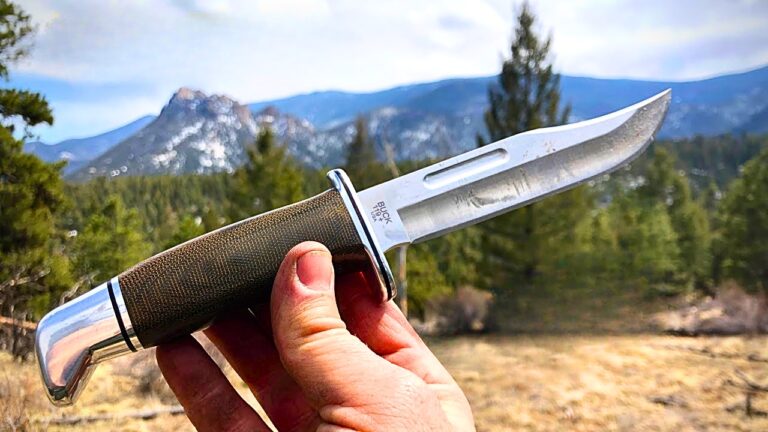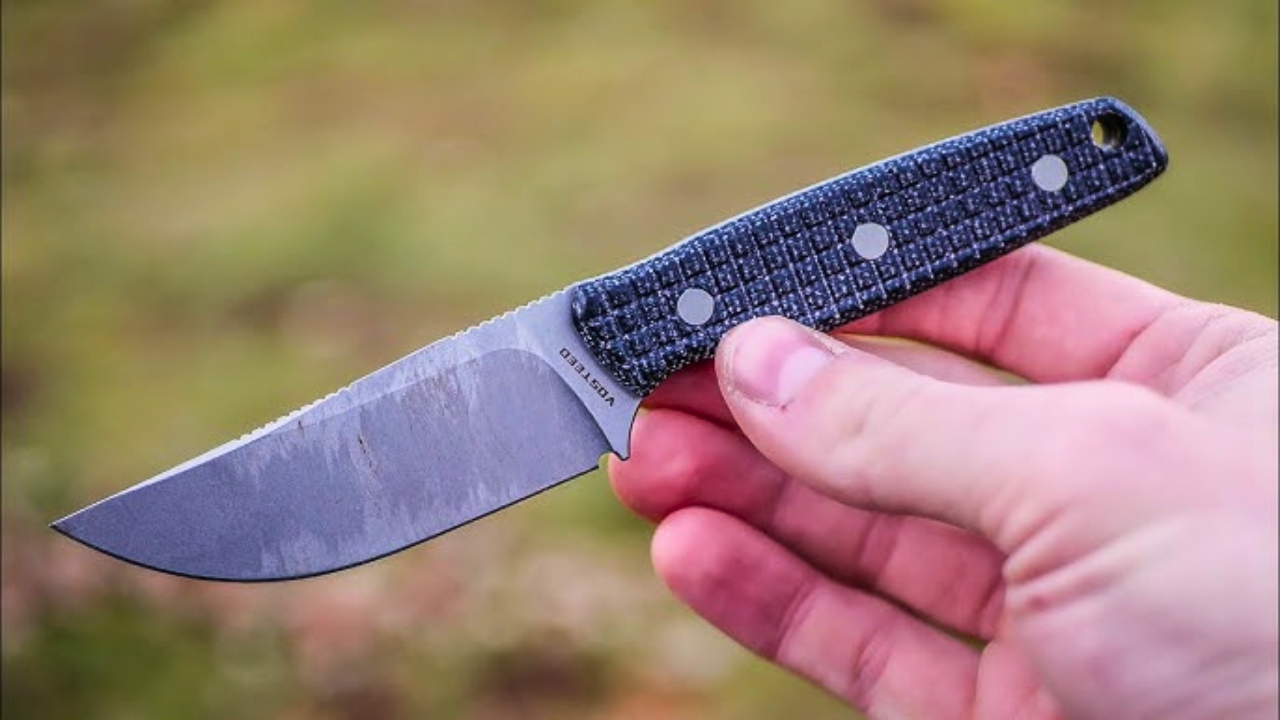
Photo credit: ZSB EDC/YouTube
Knife rules used to be something you worried about only when you bought a new blade. Now, with more states rewriting statutes and tightening definitions, you have to think about them every time you pack for a hunt. If you want to carry the knives you actually need in the field without guessing what is legal, you have to understand how game laws, weapon codes, and local ordinances fit together.
That means looking beyond broad advice and drilling into how your state classifies different blades, what changes have arrived in the latest season, and how those rules shift the moment you leave the trailhead and walk into town. When you do that work up front, you can focus on your tag and your shot placement instead of worrying about a traffic stop on the way home.
How states are quietly rewriting knife rules for hunters
Across the country, knife law updates are increasingly tied to hunting seasons, with legislatures and wildlife agencies revisiting what counts as a tool and what is treated as a weapon. You are seeing more detailed definitions of blade length, locking mechanisms, and opening systems, because lawmakers want to distinguish between a field dressing knife and something they view as a combat-style blade. The result is that a knife you have carried for years may now fall into a different category, even if it looks exactly the same in your pack.
Recent guidance aimed at hunters explains that the “big picture” is how states classify your Knife based on style and use, not just on whether it has a sharp edge. Those classifications drive whether you can carry a particular blade openly on your belt, tuck it into a pocket, or keep it only at camp, and they can change from one season to the next as statutes are amended. When you see a state highlight a Dec update to its weapon code, that is a signal that you should reread the section on knives before you head for the trailhead, because the new language may affect what you can legally carry during your hunt.
Why the same knife can be legal in the field but risky in town
One of the most confusing realities for hunters is that the legality of a knife often depends on where you are standing. Wildlife regulations might allow a fixed blade of any length while you are actively hunting, because game agencies recognize that you need a sturdy tool for dressing and quartering. The moment you drive into a nearby town for fuel or groceries, however, that same blade can be treated as a prohibited weapon if local ordinances cap length or restrict open carry in public spaces.
Legal analysts have emphasized that even when the style of knife is allowed for hunting, you can run into trouble when you head into town if you forget to adjust how you carry it. One detailed update on knife law for hunters notes that state codes often carve out exceptions for active hunting or fishing, but those exceptions do not follow you into restaurants, gas stations, or school parking lots that may sit along your route. That is why you should treat the drive home as part of your legal planning, not an afterthought, and secure any large fixed blades or aggressive-looking folders in your gear rather than on your belt before you leave the woods.
Understanding how states classify blades you use in the field
To make sense of what you can carry, you need to understand how your state labels the blades you already own. Many codes separate knives into categories such as fixed blade, folding knife, automatic or switchblade, assisted opener, and “dirk or dagger,” and each label carries its own rules. For a hunter, the most common tools are fixed blades for field dressing, compact folders for camp chores, and sometimes a larger survival-style knife for processing wood or clearing brush.
Legal guidance aimed at hunters explains that the Big issue is not just whether a knife is sharp, but whether the law treats it as a utility tool or as a weapon by design. Some states, for example, treat any double edged blade as a “dirk or dagger,” which can trigger stricter limits on concealed carry even if you only use it to break down an elk. Others focus on whether the blade locks, how it opens, or whether it is disguised as something else. Before you assume your favorite hunting knife is safe to carry, you should match its features to the exact categories listed in your state’s code so you know which rules apply.
Blade length, locking mechanisms, and the details that matter
Once you know how your state labels different knives, the next step is to pay attention to the small design details that can flip a blade from legal to restricted. Blade length is the most obvious, and many weapon codes draw bright lines at specific measurements such as 3 inches, 3.5 inches, or 4 inches. If your hunting knife sits right on that edge, a game warden or police officer may measure it differently than you do, so it is smart to give yourself a margin of safety rather than riding the line.
Locking mechanisms and opening systems matter just as much. A folding knife that locks open can be treated more strictly than a simple slipjoint, and an assisted opener that uses a spring to help deploy the blade may be regulated like an automatic knife in some jurisdictions. Legal commentary on knife rules for hunters stresses that states are increasingly explicit about what counts as a “switchblade” or “automatic,” and those definitions can capture modern hunting folders that were not on lawmakers’ radar a decade ago. When you shop for a new blade, you should read the product description with your state’s definitions in mind, not just its performance claims.
California as a case study in complex hunting knife rules
California is a useful example of how complicated knife law can become for hunters who move between backcountry and town. The state’s weapon code draws sharp distinctions between Legal Types of Knives in California, spelling out which designs are allowed, which are restricted, and how you can carry them. Not all knives are created equal in the eyes of the law, and the code makes that clear by treating certain blades as everyday tools while labeling others as inherently dangerous weapons.
One detailed guide to California’s rules explains that Not all knives are treated the same because Certain types of knives are singled out for special restrictions, especially when it comes to concealment. In California, concealed carry of knives is tightly regulated, and the law pays close attention to whether a blade is fixed, whether it is double edged, and whether it is hidden on your person. For a hunter, that means a sheath knife on your belt may be acceptable as part of your gear in the field, but tucking the same knife under a jacket or into a boot when you walk into a town store can cross the line into illegal concealed carry.
Concealed carry versus open carry when you are hunting
Across states, the difference between concealed carry and open carry is one of the biggest traps for hunters who assume that a legal knife is always legal in the same way. Open carry usually means the knife is visible on your belt or pack, and many jurisdictions are more tolerant of that when you are clearly engaged in hunting or camping. Concealed carry, by contrast, covers knives hidden in pockets, waistbands, or under clothing, and weapon codes often treat that as a more serious matter because officers cannot see what you are carrying.
California’s rules illustrate how strict some states can be about this distinction. One analysis of the state’s weapon code notes that concealed carry of knives is heavily restricted, especially for blades that are fixed, locking, or double edged, while open carry on your belt may be permitted when the knife is part of your gear. For hunters, that means you should think carefully about how you wear your knife when you leave the trail, and consider moving any larger blades from your person to your pack if you are driving through urban areas or stopping in places with tighter local ordinances.
Planning your kit so you are legal from trailhead to tailgate
To avoid legal surprises, you should plan your hunting kit with the entire trip in mind, not just the hours you spend in the stand or on the ridge. Start by listing the knives you actually need for your style of hunting, then check each one against your state’s definitions and length limits. If a particular blade is close to a legal threshold or falls into a gray area, consider whether a slightly smaller or simpler design would do the same job without the legal risk.
It also helps to think in layers. You might carry a primary fixed blade on your belt while you are in the field, a compact folding knife in your pocket for camp chores, and a larger processing knife stored in your truck with your game bags and cooler. Legal guidance for hunters suggests that treating some knives as part of your transported gear rather than as everyday carry can keep you on the right side of weapon codes, especially when you pass through towns with stricter rules. By separating what you wear from what you transport, you reduce the chance that a routine stop will turn into a discussion about why you have a large, tactical-looking blade on your person.
How to adjust when you cross state lines for a hunt
If you travel for out of state hunts, you cannot assume that your home state’s knife rules will follow you. Each jurisdiction sets its own definitions, length limits, and carry rules, and they do not always line up. A folding knife that is treated as a simple tool in one state may be labeled as a prohibited switchblade in another if the law there uses a different test for what counts as automatic or assisted opening.
Before you cross a border with a truck full of gear, you should read the weapon code and hunting regulations for your destination, paying special attention to how they classify knives used for field dressing and camp chores. Some states provide explicit exceptions for hunters and anglers, while others fold all knives into a general weapons section with no special carve outs. Legal commentary on knife law updates for hunters underscores that you are responsible for knowing the rules where you are, not where you came from, so it is worth building a travel kit of blades that are conservative in length and design and unlikely to trigger special restrictions in any state you visit.
Practical steps to stay compliant without overthinking every blade
Staying on the right side of knife law does not have to turn every gear decision into a legal seminar. You can simplify your choices by favoring straightforward designs, such as single edged fixed blades and non assisted folders with moderate blade lengths, that tend to fit comfortably within most state rules. When you do want something more specialized, like a large survival knife or a fast opening folder, treat it as a tool you use in specific contexts rather than as a constant companion on your belt.
Several legal guides aimed at hunters recommend building a short checklist you run through before each season: confirm any recent statutory changes, verify that your primary knives fit within current length and design limits, and decide how you will carry them in the field versus in town. One detailed overview of California knife laws notes that as part of your gear, a knife may be treated differently than when it is hidden on your person, which is a useful principle to apply more broadly. If you treat visibility, context, and clear separation between field tools and everyday carry as your guiding rules, you can carry what you need for a clean, ethical hunt without guessing where the legal line sits.
Like The Avid Outdoorsman’s content? Be sure to follow us.
Here’s more from us: