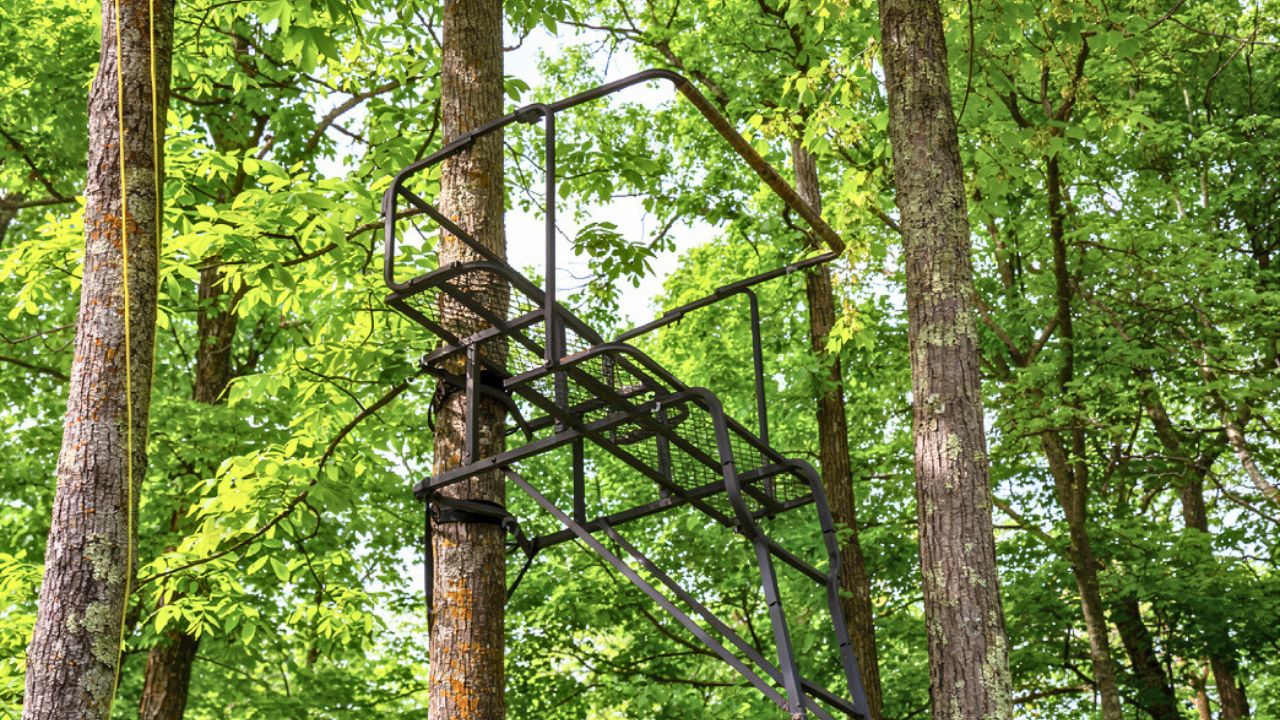
Photo credit: William Hager/Shutterstock.com
Finding a tree stand on your land that you did not put there is rarely a one-off mistake. A stand takes time to hang, and most people do not go through that effort unless they plan to come back. That means someone likely crossed onto your property without permission and got comfortable enough to set up. At that point, the issue is not just the stand. It is unauthorized use of your land. New York’s DEC makes it clear that hunters do not have the right to enter private property without permission, and that applies whether land is posted or not.
Start by documenting everything before you touch it
Before you move the stand, take clear photos of exactly how and where it is set up. Get wide shots showing its position on your property, then close-ups of straps, the platform, seat, climbing sticks, and anything that could identify who owns it. If there are nearby tracks, a worn path, cut fence, or tire marks, document those too. It may feel like overkill, but this is what gives you leverage if you need to involve a game warden or sheriff later.
Texas game wardens regularly investigate trespass complaints tied to hunting activity on private land, and having a clear record of what you found makes those conversations a lot easier. If this turns into a repeat issue, that documentation becomes even more valuable.
Treat the stand like evidence, not a freebie
It is tempting to pull the stand down right away and call it yours now. That usually is not the smartest move. If you suspect trespassing or illegal hunting, reach out to your local game warden or law enforcement and ask how they want you to handle it. In some cases, they may want to see it in place or guide you on removing it properly.
Texas Parks and Wildlife guidance is clear that entering private property without permission is a violation, and gear left behind can be tied directly to that kind of case. Handling it carefully protects you if the situation escalates.
Look beyond the stand and find the weak spots
A tree stand usually means the person has been in more than once. Take a little time to check how they likely got in. Look at gates, fence lines, creek crossings, and old lanes that are easy to slip through. If they found a quiet way in once, they or someone else will probably use it again.
This is where a lot of landowners realize the stand is just the first visible sign. You might also find trail cameras, bait, or other setups nearby. New York DEC points out that landowners can post property or restrict activities like hunting, and clear boundaries help prevent these problems before they start.
Then make it harder for it to happen again
Once you deal with the stand, focus on prevention. Mark your boundaries clearly based on your state’s rules. In Texas, that can include signage, fencing, or purple paint to give notice against trespass. Tighten up entry points, fix damaged fence, and consider putting your own cameras on likely access routes.
Most repeat problems happen because the property is easy to enter and hard to monitor. When that changes, the behavior usually changes too.
Keep the response simple and controlled
The smartest way to handle a tree stand that is not yours is to stay calm, document it, and deal with it in a way you can back up later. The stand itself is frustrating, but it is usually just the clue. The real issue is someone treating your land like it was open to use.
Handle it clean, tighten your property up, and you are a lot less likely to deal with the same situation again next season.
Like The Avid Outdoorsman’s content? Subscribe to our newsletter so you never miss an article.
Here’s more from us: