Photo credit: Dmitri T/Shutterstock.com
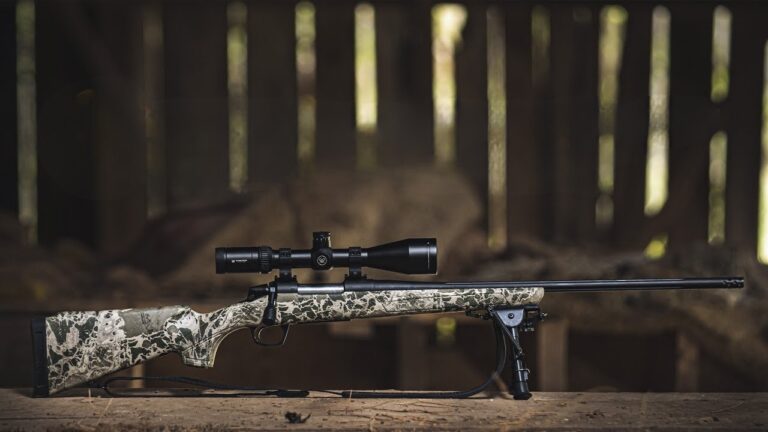
Rifle and ammunition accuracy claims are usually built around controlled testing that does not resemble hunting. The rifle is shot from a stable rest, the barrel is clean and cool, wind is minimal, and the shooter has time to refine technique between shots. In the field, the shooter is cold, breathing hard, shooting off an awkward rest, and trying to place a first-round hit under time pressure. The gap between those two realities is where “sub-MOA rifles” miss animals, and it is why accuracy marketing often creates false confidence rather than real capability.
Bench groups don’t measure the first-shot problem
Most hunting outcomes are decided by a single cold-bore shot, yet many accuracy claims are built on three- or five-shot groups after the shooter has already settled in and the rifle has warmed slightly. A rifle can print tight groups after it stabilizes and still throw its first shot due to bedding stress, barrel contact, inconsistent action screw torque, or a shooter’s cold-bore routine being inconsistent. In practical terms, the field question is not “does it shoot a tiny cluster on the third group.” It is “where does the first shot land when the rifle has been riding in a cold truck, carried for hours, and then fired once.” That is a different test, and the only way to answer it is to track cold-bore impact across multiple days, not to rely on a single range session where the rifle has already been handled and warmed.
Field positions and support change the recoil cycle and point of impact
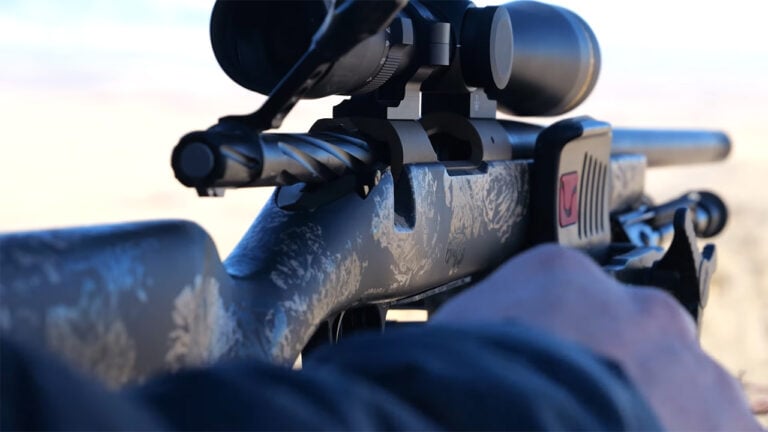
Even a perfectly zeroed rifle can shift point of impact when the support method changes. Shooting off a bipod loads the stock and can flex light fore-ends. Shooting off a pack changes how the rifle recoils. Sling tension can pull the barrel or stock on some setups. Resting a barrel on a hard surface can change harmonics and shift impact. None of these issues show up when a rifle is fired from a stable bench with consistent contact points, and that is why “range accurate” rifles can be field-inconsistent. Hunters often interpret this as nerves or “bad luck,” but it is predictable physics. If you want field accuracy, you must practice from the same kinds of rests you will actually use and confirm where the rifle prints when pressure, angle, and support are imperfect.
Wind, time pressure, and imperfect ranging are the real accuracy killers

At distance, the biggest errors are rarely mechanical. They are judgment errors. A two- or three-mph wind misread can move a bullet several inches at 300 yards with many hunting loads, and that turns a good-looking group into a gut shot. Range estimation and time pressure compound the problem. A hunter who has minutes on a bench has seconds in the field, and the ability to build a stable position and execute a clean trigger press is not guaranteed. This is why rifle claims that focus on tiny groups often mislead new hunters. Group size tells you the rifle’s potential. It does not tell you what happens when the shooter is rushed, breathing hard, and trying to solve wind and stability at the same time. Field performance is a full system test, and accuracy marketing only measures a fraction of that system.
The practical test that actually predicts hunting performance
Hunters who want reliable field performance should test like hunters, not like marketers. That means firing cold-bore shots on different days, using hunting ammo, from realistic positions, and recording impacts honestly. It also means confirming that the rifle stays zeroed after travel and after normal bumps, and that the shooter can make hits from kneeling, sitting, and off a pack at the distances they claim are “easy.” A simple discipline—one cold-bore shot at 100 yards at the start of several range trips—reveals more about field reliability than any single tight group fired after twenty warm-up rounds. Field accuracy is not a mystical skill and it is not a marketing number. It is repeatable performance under imperfect conditions, and it has to be verified that way.
Like The Avid Outdoorsman’s content? Be sure to follow us.
Here’s more from us: