Photo credit: Security and Investigations Leadership Channel/YouTube
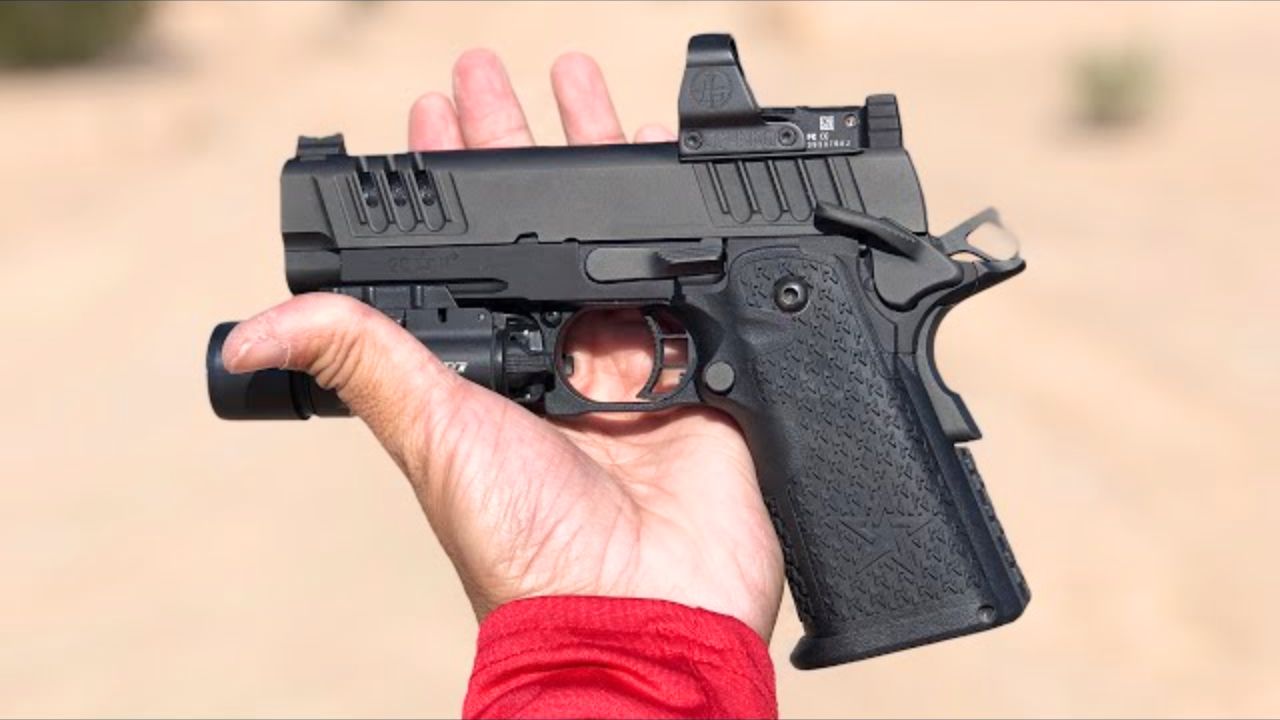
The Staccato C2 has a reputation that follows it everywhere. People talk about groups, smooth triggers, “shoots like a dream,” and how it makes them feel like a better shooter the minute they pick it up. A lot of that is fair. It’s a nice-shooting pistol, and the platform can absolutely deliver when you do your part. But what gets brushed under the rug—especially by guys who are proud of owning one—is the part that matters if you’re actually carrying it daily: concealment. Not “it fits in my waistband when I wear a hoodie” concealment. Real-world concealment when you’re in regular clothes, moving around all day, bending, sitting, getting in and out of a truck, and trying not to look like you’re smuggling a brick.
That’s the disconnect you see with C2 owners. The accuracy conversation is easy because it feels objective, it feels impressive, and it’s fun to talk about. Concealment is personal, and it forces you to admit tradeoffs. It forces you to talk about grip length, thickness, holster selection, belt stiffness, wardrobe changes, and the boring reality that “carryable” and “comfortable” aren’t the same thing. If you’re buying a C2 as a carry gun, you need to be honest about why you’re buying it and what problem you’re trying to solve, because the concealment side is where most people get humbled.
Accuracy is the easy flex because it’s mostly true
The Staccato C2 tends to shoot well for a lot of people, and that’s not magic. A good trigger, a solid barrel/lockup, a heavier gun than most micro-compacts, and a grip that lets you control recoil all push things in your favor. Even a decent shooter will usually print tighter groups with a C2 than with a tiny polymer carry gun, especially at speed. That makes it feel like a “better” pistol in the most obvious way—hits come easier, and your confidence jumps. That’s why accuracy becomes the main story. It’s the part you notice on day one, and it’s the part that makes you feel like you made a smart purchase.
But accuracy at the range is a controlled environment. You’re standing in good light, wearing what you want, drawing how you want, and you’re not trying to keep the gun hidden from the people around you. The minute you make it a daily carry gun, the performance conversation has to include how you actually live. The C2 can be accurate and still be a pain to conceal for your body type, your climate, and your normal clothing. Both can be true at the same time, and the guys who only talk about accuracy are usually dodging the practical side because it’s less flattering.
Concealment is where the C2 starts making demands
Concealment isn’t a single “yes or no.” It’s a stack of small factors that either work together or fight you all day. The C2 is not a micro-compact. It has more grip than the tiny guns people buy specifically to disappear under a t-shirt, and grip is the part that prints first. Barrel length can actually help in some holster setups because it stabilizes the gun, but grip length is what shows itself when you bend over, twist, or reach. The C2’s thickness and overall shape also matter. You can carry it, sure, but the gun will ask more from your holster, belt, and positioning than a thinner, smaller pistol would.
This is where people start “solving” concealment with wardrobe changes and pretending that’s not part of the cost. If you have to dress around the gun every day, that’s fine—lots of people do it—but you should admit it. Bigger guns also demand better support. A flimsy belt and a cheap holster will make the C2 feel heavier, shift more, and print more. When you see someone complaining that the C2 “doesn’t conceal,” a lot of the time you’re really seeing a weak holster system and a carry position that doesn’t match their body. The gun is part of it, but the system is the bigger issue, and that’s the part people don’t like to talk about because it’s not as cool as posting groups.
Comfort is not the same thing as concealment
A lot of C2 owners talk about comfort like it proves concealment. “It’s comfortable on me” doesn’t mean it’s hidden, and “it hides well under my hoodie” doesn’t mean it hides in July in a t-shirt. Comfort is about pressure points, weight distribution, and how the gun feels when you sit. Concealment is about what other people can see and what you can get away with in normal life without adjusting your posture like a robot. The C2 can be comfortable in a good rig and still be obvious in certain clothes. It can also be concealed well while still being annoying when you drive or sit for long periods. Those are separate problems with separate solutions.
This is also where people start lying to themselves about printing. Most people don’t notice minor printing, but you don’t get to decide who notices. The guy at the gas station doesn’t matter. The coworker who’s been around guns does. The wrong person noticing at the wrong time is the whole reason concealment matters. If you carry a C2 and it prints more than you want, you can fix a lot with holster angle, ride height, and belt stiffness, but you can’t shrink the grip. The gun is the gun. That’s why concealment becomes the honest conversation that some owners avoid, because it forces you to deal with limitations instead of bragging rights.
The C2 shines when you actually train with it, not when you just own it
The part that does justify the C2 as a carry gun for some people is that it can be easier to shoot well under pressure. If you actually train—draws, reloads, shooting on the move, shooting in awkward positions—the gun’s shootability can translate into better outcomes. That’s the real argument: not “my groups are tight,” but “I can deliver fast, repeatable hits with this setup when my heart rate is up.” If the C2 helps you do that, and you can conceal it consistently without playing dress-up every day, then it can make sense as a serious carry gun.
The problem is a lot of people buy it as a status gun and then carry it like a trophy. They don’t shoot it enough to justify the platform, and they don’t build a concealment system that matches it. They end up with the worst of both worlds: a heavier gun that prints more, with no meaningful skill advantage because they don’t train. That’s when concealment becomes the excuse. “It’s too big to carry” becomes the story, when the truth is they didn’t commit to the system or the practice needed to make that kind of gun worth carrying.
What matters is whether your daily life can support the gun
If you’re honest, the concealment question comes down to your day-to-day life. What do you wear most days? Are you in and out of a vehicle all day? Are you bending, lifting, chasing kids, working in tight spaces, or sitting at a desk? Do you live in a hot climate where light clothing is normal? The C2 can be a great carry gun in some lifestyles and a constant compromise in others. Neither answer is a moral victory. It’s just reality. The gun doesn’t care about your ego, and neither does the world you have to hide it in.
If you want the Staccato C2 to be a real carry gun and not a range flex, you have to treat concealment like part of the purchase. Holster choice, belt choice, carry position, and clothing aren’t optional add-ons. They’re the whole deal. The C2 will reward you if you build the system around it and you actually shoot it enough to use its advantages. If you don’t, you’ll keep talking about accuracy because it’s the one part that still feels good when concealment is quietly bugging you every time you leave the house.
Like The Avid Outdoorsman’s content? Subscribe to our newsletter so you never miss an article.
Here’s more from us: