
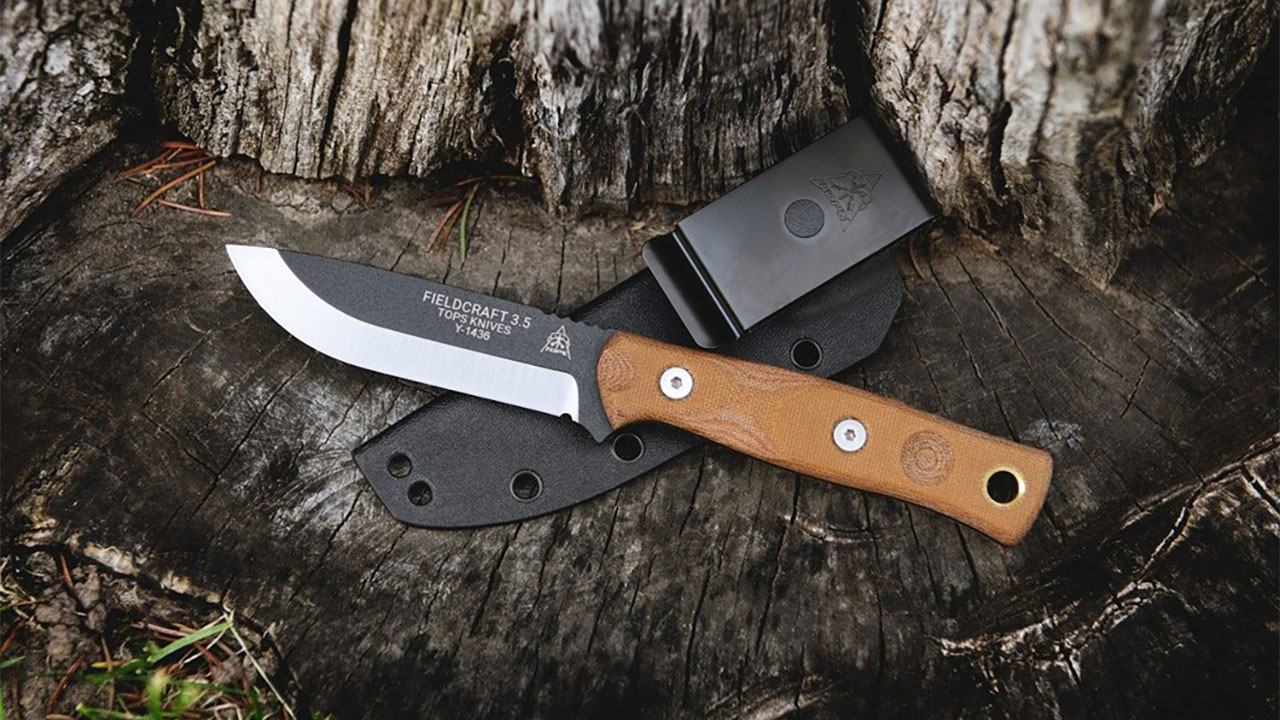
Photo credit: TOPS Knives
A hunting knife can look great in photos and still become a pain the second you actually carry it in the field. That usually shows up in the little things people do not think about at checkout: sharp jimping that starts chewing at glove material, exposed corners on the handle that keep rubbing hot spots into your hand, or a sheath that catches on backpack straps, jackets, bino harnesses, or seat edges every time you move. None of that sounds dramatic, but after a long day in the woods, it starts mattering a whole lot more than flashy blade steel talk.
That is really what this list is about. Not just knives that cut well, but knives that carry clean, draw clean, and ride without acting like they are trying to fight the rest of your gear. I leaned toward models with smoother handle shapes, more controlled texture, and sheath setups that stay close instead of hanging out and grabbing everything around them. A lot of these are not the loudest knives on the market, and that is part of the point. When you are trying to move quietly and work efficiently, boring in the right ways is a good thing. Benchmade’s hunt line, for example, leans heavily into compact fixed blades and purpose-built sheath carry, while Buck still puts out several classic hunting models with straightforward leather or polyester sheath setups that are easier to live with than a lot of bulky modern rigs.
Benchmade Hidden Canyon Hunter

The Hidden Canyon Hunter makes a lot of sense for somebody who is tired of oversized field knives hanging up on every layer and strap around them. Benchmade describes it as a small-framed hunt fixed blade designed for precision cutting, and that compact profile is a huge part of why it carries so cleanly. It is not trying to be a giant do-everything sharpened pry bar. It stays tight, it stays light, and it does not bring a bunch of extra handle bulk that wants to rub or snag when you bend, climb, or crawl.
It also helps that Benchmade has long offered this pattern with light sheath options, including Kydex and leather in older catalog specs, which fits the whole idea of keeping carry simple and close. In real use, that matters because a compact knife with a controlled sheath footprint is usually much easier on jackets, gloves, and pack straps than a larger handle with aggressive contouring. This is the kind of knife that feels like it was built for hunters who actually move a lot instead of hunters who mostly admire gear at camp.
Buck 119 Special

The Buck 119 is old-school in a way that still works. Buck says it has been a favorite of hunters and outdoorsmen since 1942, and part of that staying power is the fact that the design does not overcomplicate anything. The handle is traditional, smooth in the hand, and not covered in sharp machining or overly aggressive texture. That matters more than people think when you are wearing gloves and drawing the knife in and out multiple times over a long day.
The leather sheath is another reason it belongs here. Buck’s replacement sheath page describes it as a rugged sheath with a snap closure, and the 119 setup has stayed popular partly because it rides in a familiar, no-nonsense way. You are not dealing with a bunch of extra hardware or odd protrusions that keep tagging brush or catching on your pack belt. The 119 is not the most compact knife on this list, but it is one of the cleanest carrying larger hunting knives if you like classic belt carry and want something that does not behave like tactical luggage.
ESEE-3
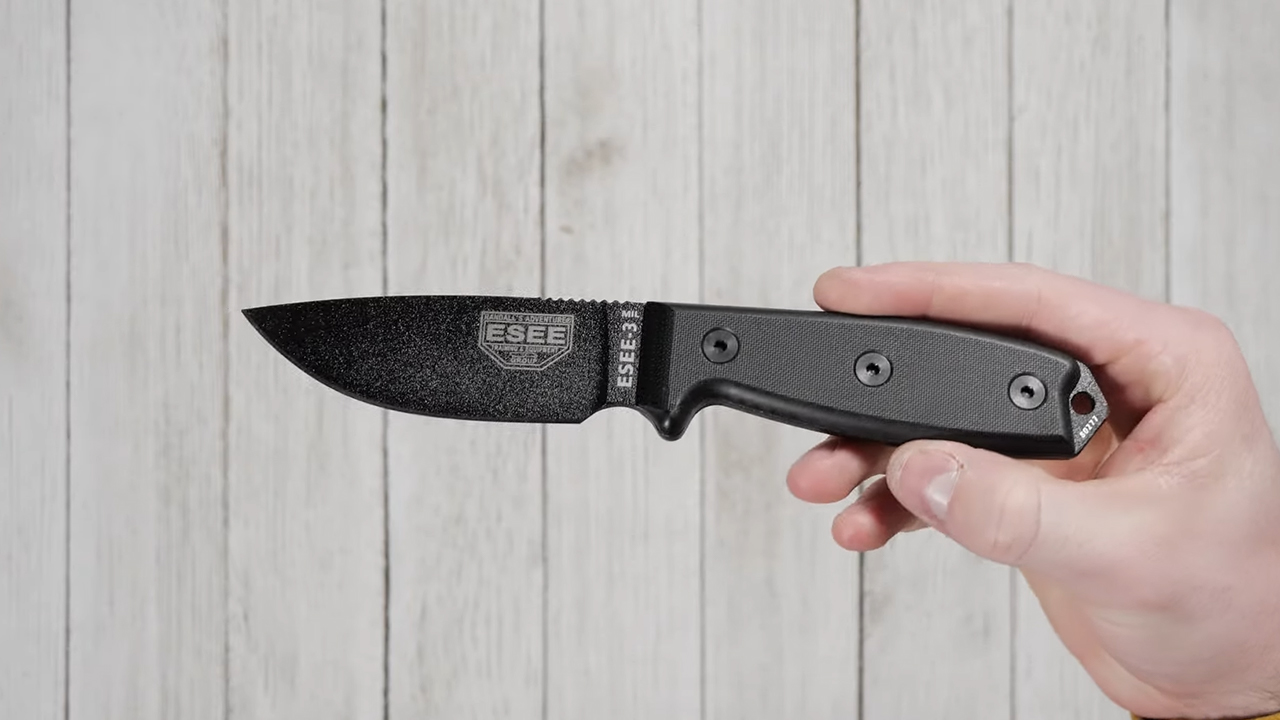
The ESEE-3 is a good pick for hunters who want a tougher field knife without jumping straight to something overly bulky or rough-edged. ESEE lists the knife-only weight at 5.2 ounces, with Micarta or G10 handles and a molded sheath with clip plate. That tells you a lot right away. It is not ultralight, but it is still trim enough to carry without feeling like a brick, and the sheath setup is built to stay organized rather than flop around.
Where the ESEE-3 works for this list is in the overall balance. The scales are grippy enough to control, but they do not have the kind of wild, abrasive texture that starts eating glove fingertips over time. The molded sheath also keeps the package tighter and more predictable than some oversized nylon rigs. It is still a harder-use knife than some of the more purely hunting-focused models here, but it avoids a lot of the usual problems that come with “hard-use” branding. It feels more controlled than aggressive, and that is a good trade in the field.
Morakniv Companion
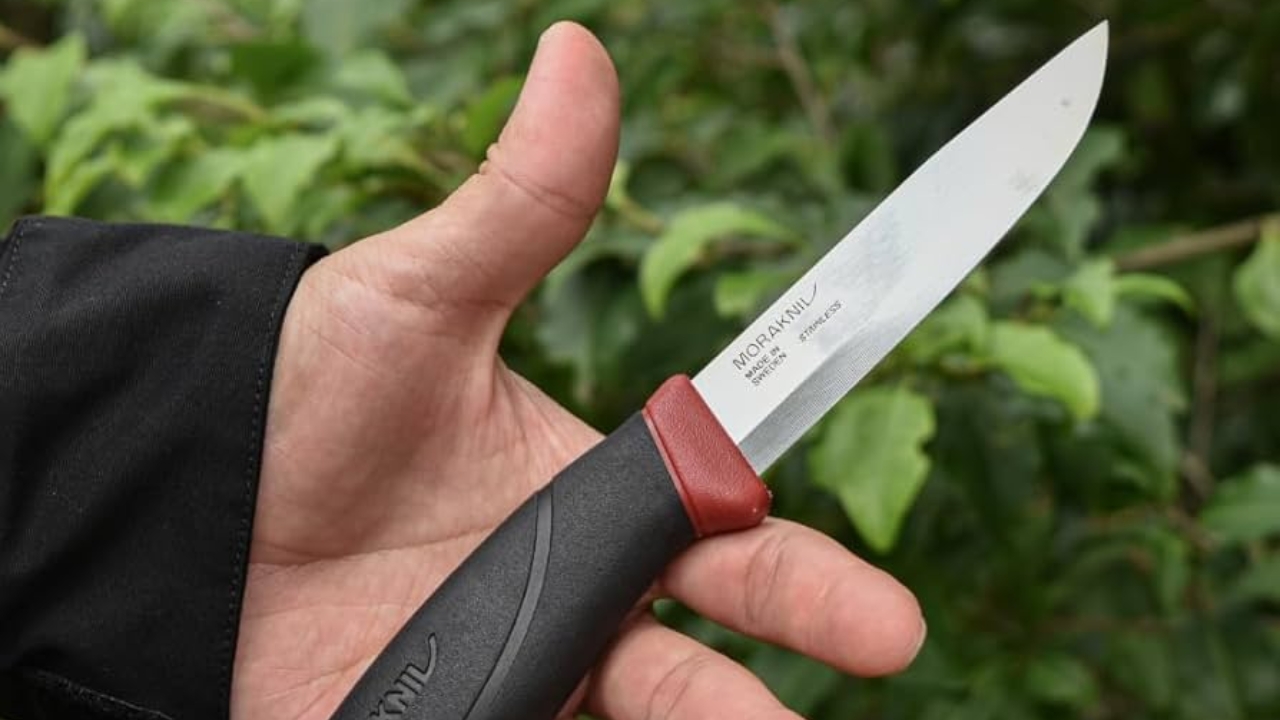
The Morakniv Companion stays popular for a reason. Morakniv lists the Companion with a TPE handle, finger guard, and included sheath, and that TPE grip material is one of the biggest reasons it works so well for hunters who hate rough-feeling handles. It gives you hold without that sandpapery, glove-chewing feel some “grippy” knives seem proud of.
It is also one of the easiest knives on this list to carry without noticing much. The sheath is simple, light, and not loaded down with extra bulk. That simplicity helps a lot when you are slipping through brush or wearing other belt gear. There just is not much there to catch. This is not a premium flex knife. It is a practical one. And sometimes practical is exactly what keeps a knife from becoming annoying by midmorning.
Benchmade Saddle Mountain Skinner
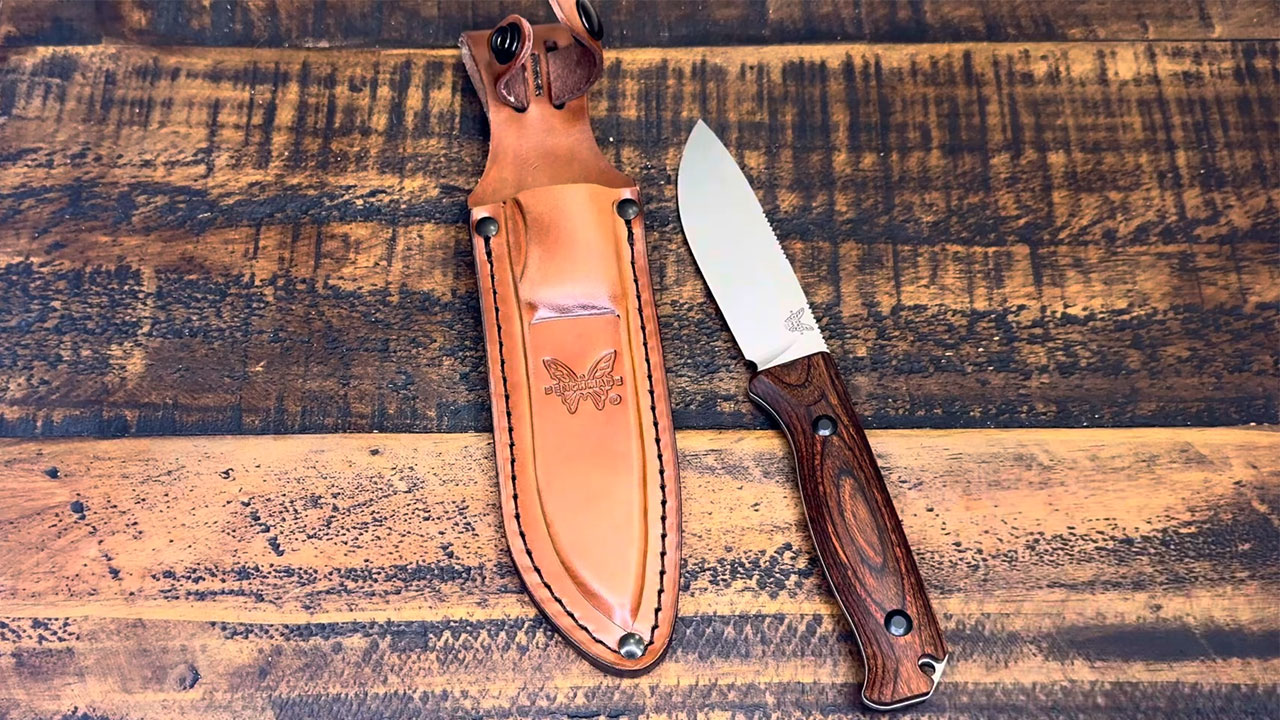
The Saddle Mountain Skinner is one of those knives that feels purpose-built instead of general-purpose with a hunting label slapped on it. Benchmade’s hunt collection says this model is built for dedicated skinning work, with an exaggerated belly for separating hide from muscle cleanly. That purpose-specific design usually translates into a cleaner overall package because the knife is not trying to be ten different things at once.
Benchmade has also described it as delivering comfort, grip, and precision in demanding conditions, and older Benchmade catalog material notes Kydex sheath options with multiple carry positions. That matters for this list because the knife rides more like a serious field tool than a chunky survival blade. It is big enough to do real work, but it does not carry like an anchor, and the sheath setup keeps it better contained than a lot of broad-bellied hunting knives that start snagging the second you add a pack waistbelt or jacket hem.
Cold Steel Master Hunter
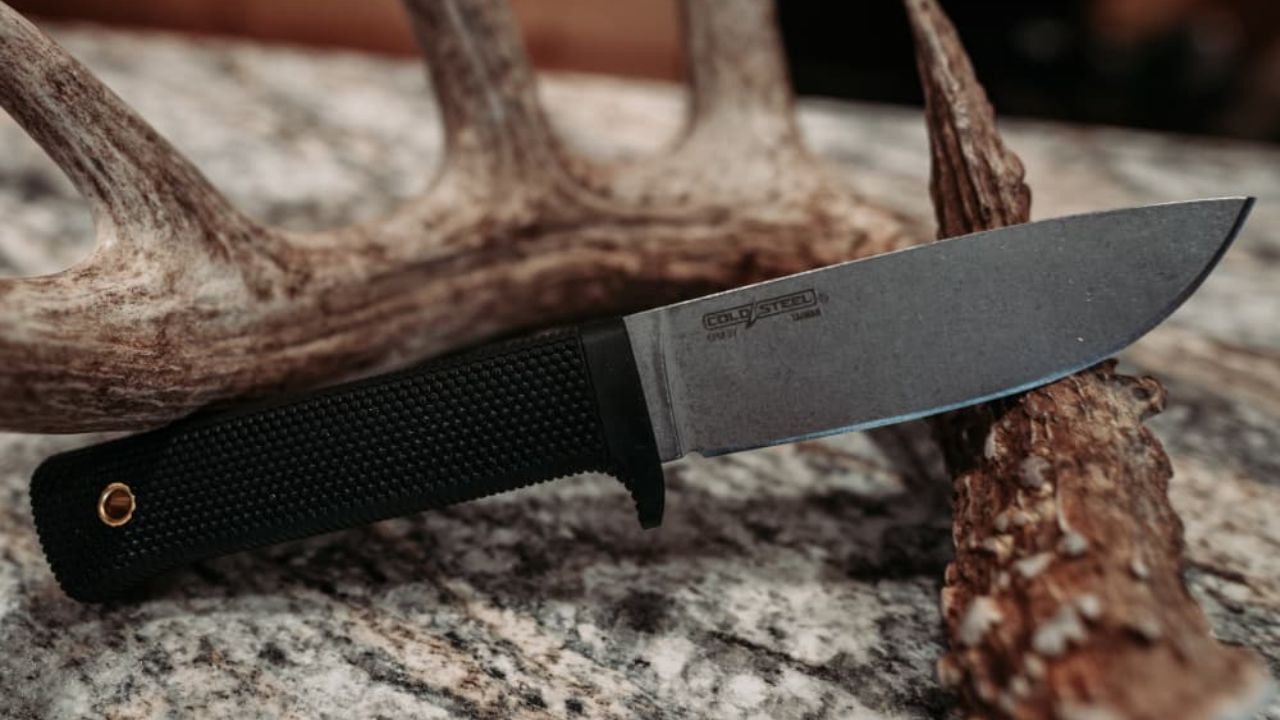
The Master Hunter has enough blade and enough handle to feel like a serious work knife, but the reason it fits here is that Cold Steel has kept the carry side pretty controlled. The company says the knife comes with a Secure-Ex sheath that accommodates a wide range of belts, packs, or rigs. That is useful because versatility in the sheath usually means you can set it up tighter to your body instead of wearing it in some awkward way that keeps hooking everything you own.
This knife is not tiny and it is not trying to be. But it also does not have the kind of exaggerated tactical nonsense that makes some larger knives miserable around gloves and soft gear. If you want something with real presence that still rides in a predictable way, the Master Hunter makes a lot of sense. It feels like a hunting knife first, not a showpiece first and a field tool second.
Outdoor Edge RazorLite
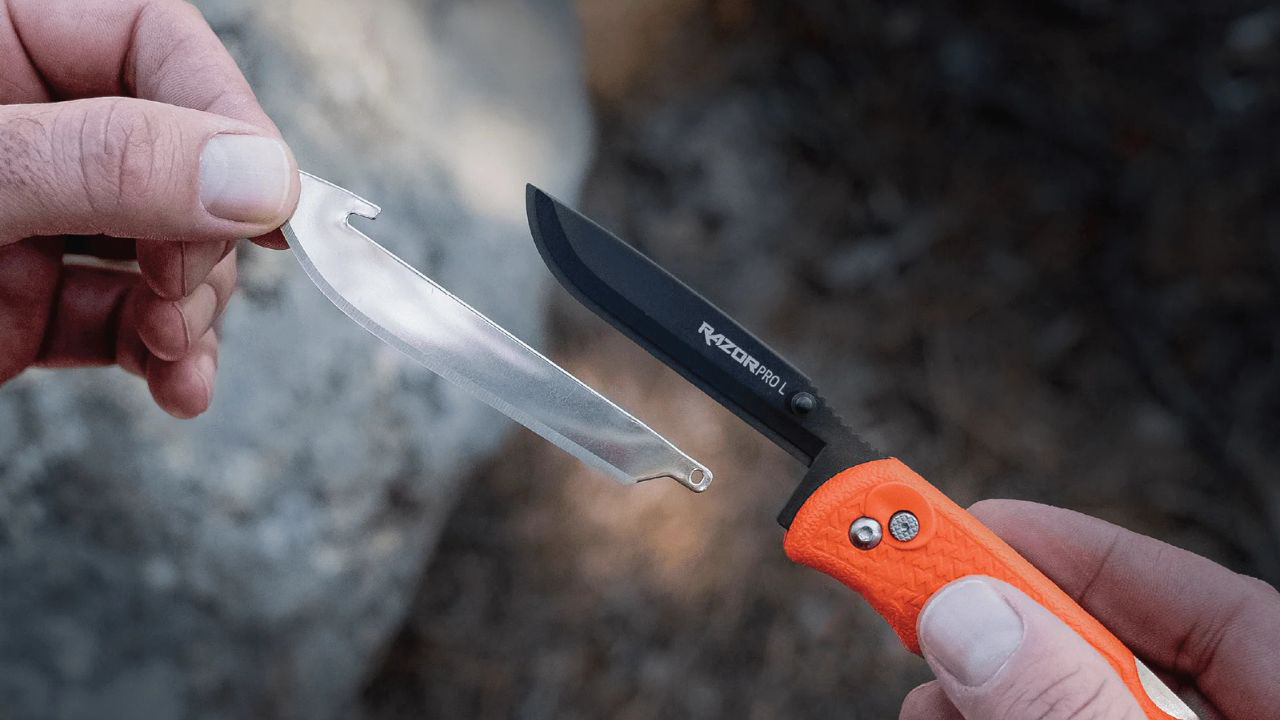
The RazorLite earns a spot here because Outdoor Edge clearly built it for hunters who care about grip and field practicality more than image. The company describes it with an ergonomic non-slip TPR handle and a durable nylon belt sheath with blade storage. It also notes that the handle is meant to stay secure even when wet, which matters a lot during actual game processing.
That handle setup is a big reason it is easier on gloves than a lot of knives that go overboard on coarse texturing. TPR gives traction without acting like a file. The sheath is not as minimal as a simple slip sheath, but it is still a hunting-oriented package rather than some awkward oversized rig. If you like replaceable-blade convenience but hate the flimsy, toy-like feeling some replaceable systems have, this one lands in a better spot. It feels like it was designed by somebody who actually understood bloody hands, cold weather, and the fact that belt carry needs to stay out of the way.
Buck Selkirk
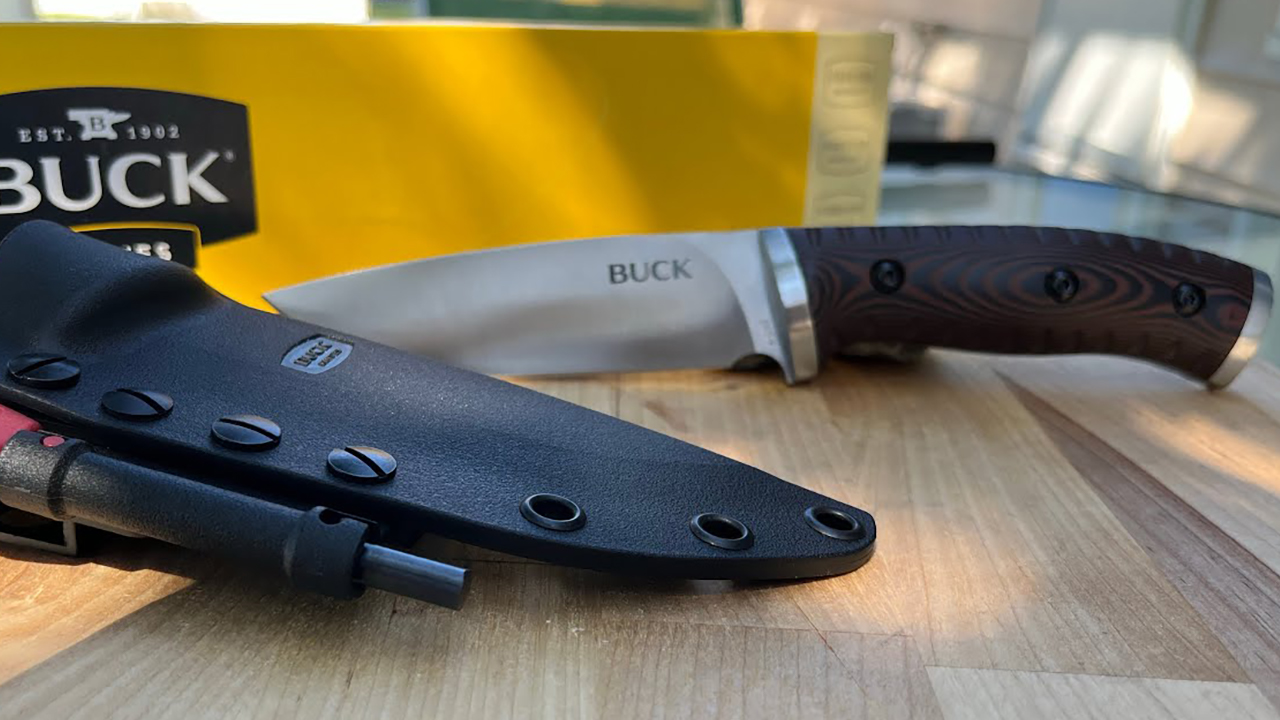
The Selkirk sits a little closer to the survival side of the hunting world, but Buck still keeps enough control in the package for it to work here. Buck describes the Small Selkirk as a quick-access trail knife with a Micarta handle and included sheath. That “quick-access” part matters, because knives that draw clean usually also carry cleaner than the ones that require a bunch of extra adjustment every time you reach for them.
What helps the Selkirk is that Buck generally avoids the jagged, overstyled handle approach that tears up gloves faster than people expect. Even when the design gets a little more outdoorsy, it still feels like a knife meant to be carried by normal people rather than built to impress somebody online. If you want a knife that feels more robust than a pure skinner but does not immediately turn into a snag magnet, the Selkirk is a fair middle-ground option.
Benchmade Steep Country
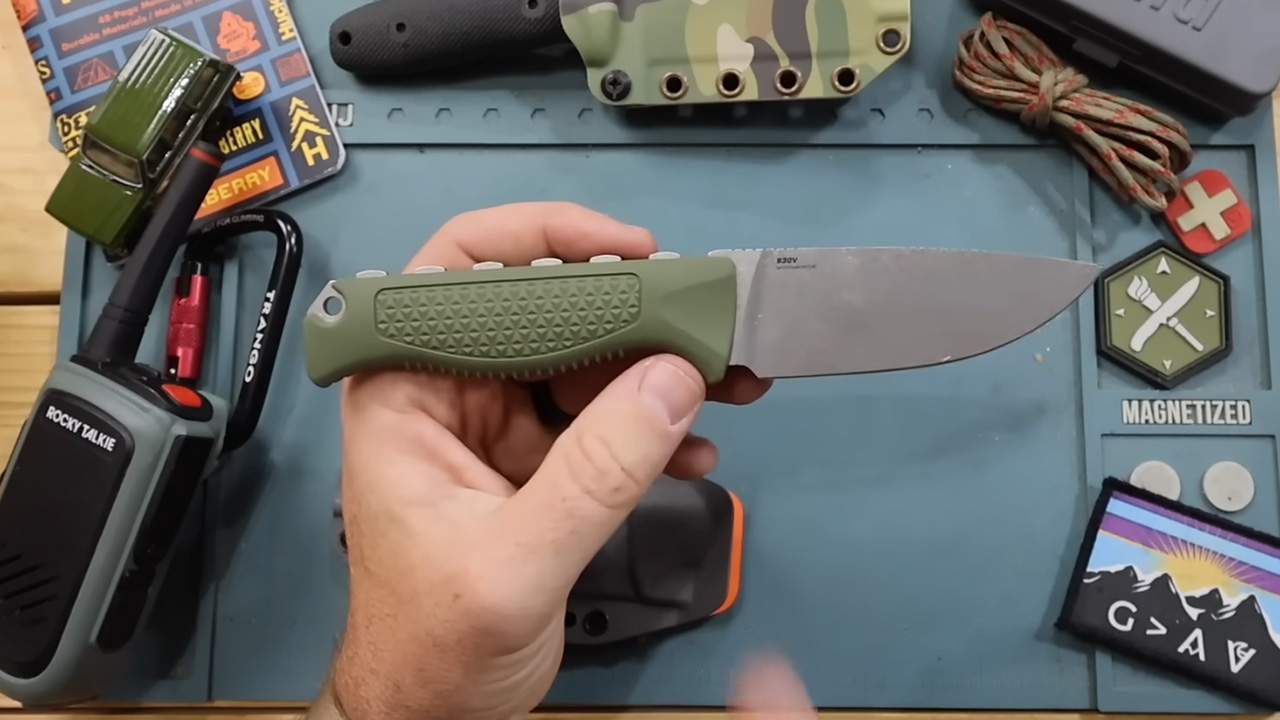
The Steep Country is one of the more underrated carry-friendly hunting knives in this lane. Benchmade lists the knife at 2.95 ounces with a Boltaron sheath weighing another 1.2 ounces, and that kind of light package makes a difference fast when you are already carrying bino harnesses, layers, calls, tags, and the rest of the usual hunting junk. Light knives tend to move less, print less, and snag less if the sheath is done right.
Benchmade also describes the Steep Country as handling all-purpose field dressing and big-game processing from first incision to quartering. That tells you it was designed to work without needing a giant, bulky handle profile. In practice, it rides like a knife that was built to go with the rest of your setup instead of fight it. If a lot of your frustration comes from heavy knives dragging or catching on clothing at bad moments, this one makes a strong case for lighter, cleaner carry.
Buck 113 Ranger Skinner
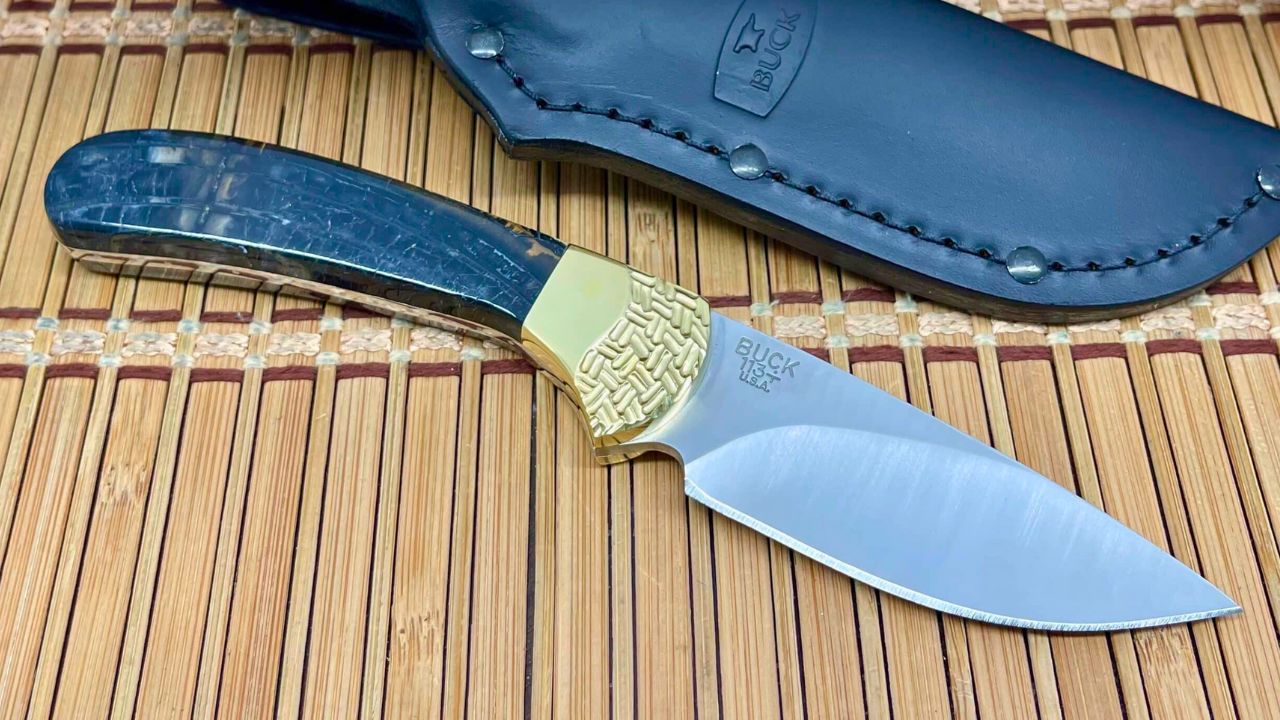
The 113 Ranger Skinner is one of Buck’s cleaner, more user-friendly hunting patterns. Buck describes it as having a classic look and an ergonomic handle that fills the need for a sturdy, versatile skinning blade. The 2024 dealer catalog also lists it with a black heavy-duty polyester sheath. That combination is why it fits this article so well. Ergonomic usually means fewer bad pressure points, and a simple polyester sheath usually means less bulk and less decorative nonsense hanging off your belt.
Buck also specifically says on its hunting page that the 113 is one tough blade that can handle field dressing, skinning, and butchering. That all-in-one role is helpful if you want to carry one knife without also strapping half a knife roll to yourself. It is compact enough to stay civilized on the belt, but still shaped for actual hunting use. That makes it easier to live with than bigger knives that might process well but feel clumsy every other minute of the day.
TOPS Fieldcraft by Brothers of Bushcraft
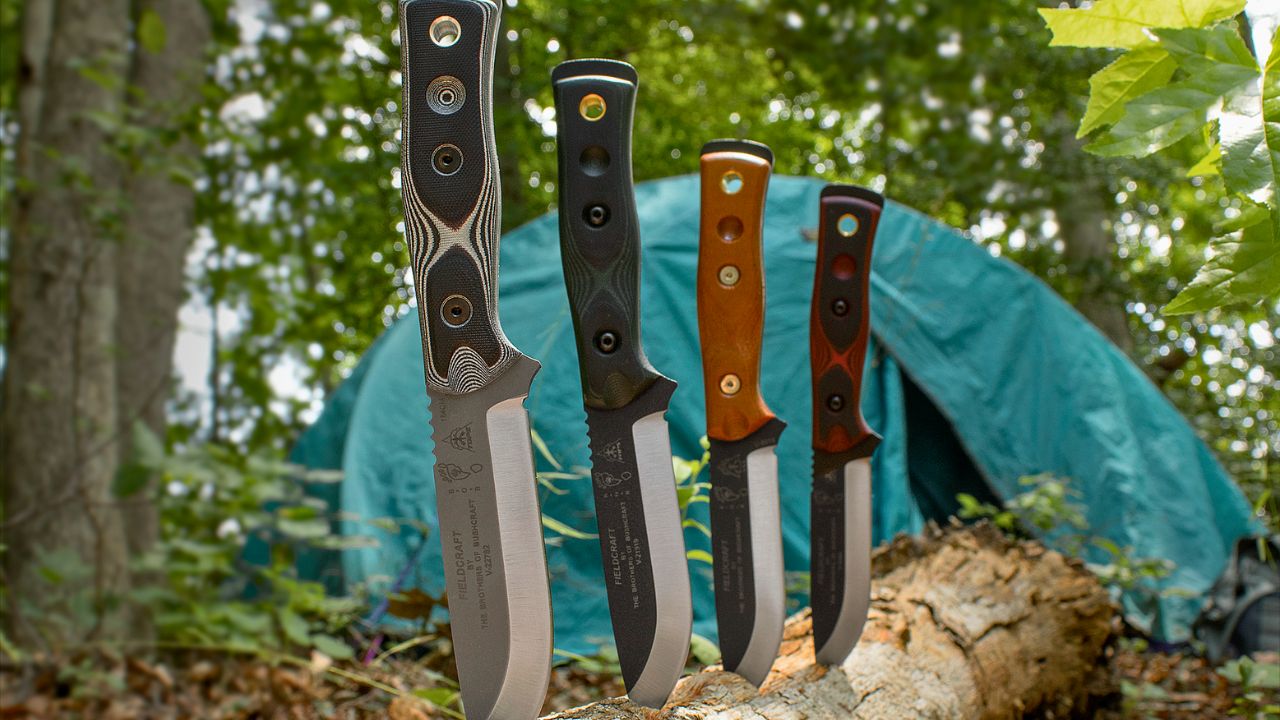
The full-size Fieldcraft is more woods knife than pure hunting knife, but it still belongs in this conversation because the carry setup is more controlled than a lot of knives its size. TOPS lists it with a Kydex sheath and rotating spring-steel clip, plus canvas Micarta handle scales. That matters because Micarta usually gives you a stable grip without the plasticky bite some rougher synthetic textures can have, and a Kydex sheath with a decent clip can ride much tighter than floppy nylon.
This is not the knife I would call the slickest or smallest option here. It has more size and more presence than that. But if you like carrying a stronger all-around field blade, the Fieldcraft at least avoids some of the junky carry habits that plague big fixed blades. It can still work around hunting gear without feeling like it wants to bully every zipper and strap it passes.
Morakniv Companion HeavyDuty

The Companion HeavyDuty deserves its own mention because it improves the control side without turning harsh. Morakniv says the extra-large molded handle uses a soft friction grip made of TPE rubber and includes a finger guard, while the polymer sheath includes a practical belt clip. That is pretty much the exact language you want to see for this topic. Soft friction grip is a whole lot easier on gloves than sharp milling, and a simple polymer sheath clip keeps the package from becoming overcomplicated.
This knife is especially good for hunters who like a little more grip security but hate the way some “high traction” handles start abrading glove palms and fingertips over time. The HeavyDuty still locks into the hand, but it feels more forgiving. And because the sheath stays so simple, the whole thing keeps riding like a tool instead of a project.
ESEE-3HM
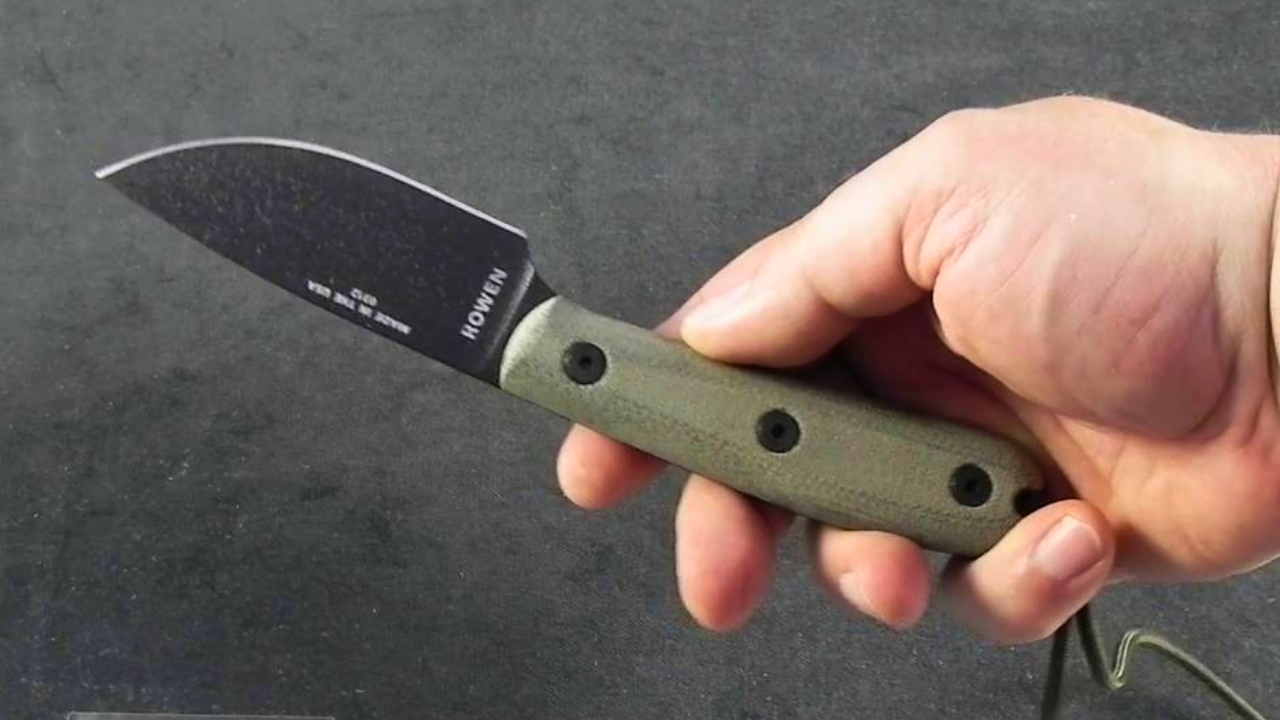
The ESEE-3HM is a smarter pick than the standard ESEE-3 if your main concern is comfort around extended cutting and gear carry. ESEE lists this version with canvas Micarta handles and either a leather pouch or Kydex sheath. That matters because the HM version was built with a different, more hand-filling handle profile than the flatter standard version. In plain English, it feels a little more natural in long use and a little less like a slab-sided work knife.
That makes it easier on gloves and easier on your hand when you are working through hide and joints without wanting sharp corners digging back at you. The leather pouch option also gives it a cleaner traditional carry if you prefer something that rides closer and quieter. This is one of those cases where a small handle-shape change can make a knife much easier to live with in the field.
TOPS Idaho Field Knife
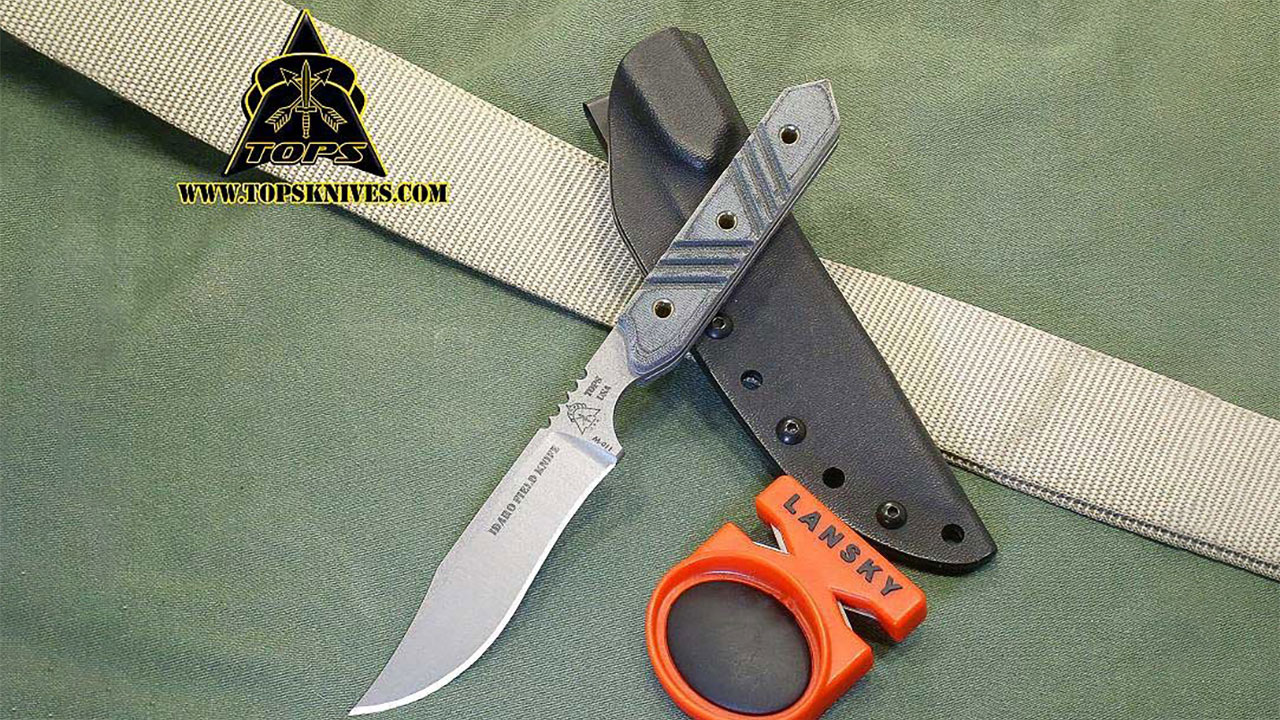
The Idaho Field Knife is one of the more practical, no-drama entries here. TOPS lists it at 3.7 ounces with black linen Micarta handle scales and a black Kydex sheath with a rotating spring-steel clip. That is a pretty friendly formula for hunters who want a compact knife that will not beat up the rest of their setup.
Because it is lighter and trimmer than a lot of larger fixed blades, it has less tendency to swing, print, or catch when you are climbing or moving through tighter brush. The Micarta also gives you a good grip surface without going overboard. It feels more like a clean-carry field knife than a knife trying to cosplay as a breaching tool. For hunters who value carry comfort almost as much as cutting ability, that is a pretty good lane to be in.
TOPS Fieldcraft 3.5
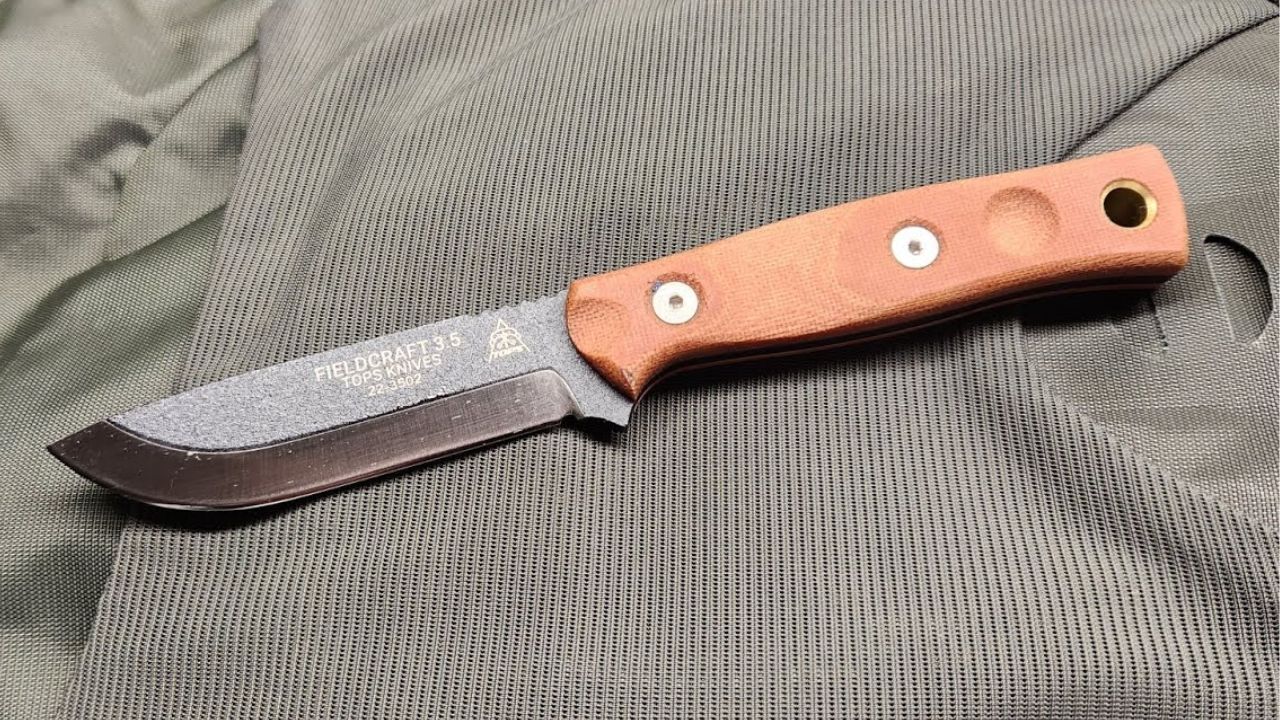
The Fieldcraft 3.5 is a nice answer for someone who likes the Fieldcraft idea but wants less knife hanging off them all day. TOPS lists it at 5.5 ounces, with tan canvas Micarta scales and a black Kydex sheath with rotating spring-steel clip. Compared to the full-size version, that tighter overall package makes it easier to carry around other gear without the knife becoming one more thing you constantly have to manage.
That shorter length and restrained sheath setup make a big difference in real use. Knives do not have to be huge to be annoying. They just have to stick out in the wrong place. The Fieldcraft 3.5 trims that down enough that it works better for hunters who spend a lot of time sitting, climbing, crawling, or running a fuller beltline. It still feels like a serious field knife, but it does not carry like one that is trying to dominate the whole system.
Like The Avid Outdoorsman’s content? Subscribe to our newsletter so you never miss an article.
Here’s more from us:


