Photo credit: seeetz/Unsplash.com
The new carrier learned fast that carrying a gun is not only about the gun.
It is about everything else life throws at the setup.
Walking around with a holstered pistol is one thing. Sitting in a car is another. Bending, reaching, carrying groceries, chasing kids, wearing different shirts, and using a public bathroom all expose little problems you may not think about until you are already dealing with them.
That is exactly where his question came from.
In a Reddit post, a new carrier asked for an easier way to go to the bathroom while carrying. He said he normally used an appendix carry setup, but when he went to sit down, he had to take the whole holster and pistol off.
That may sound like a small inconvenience, but it creates a serious problem.
Once the gun comes off, it has to go somewhere.
And “somewhere” is where a lot of bad carry stories start.
A public restroom is one of the worst places to set a firearm down. The back of the toilet, the toilet paper holder, the floor, the little shelf, the coat hook, the top of the dispenser — all of those places can become the spot where someone forgets a loaded gun. Even if you remember it, the gun is no longer attached to you. It can fall. It can be seen under the stall. It can be knocked over. It can be left behind if someone gets distracted.
That is not a rare fear either. Carriers have left guns in bathrooms at restaurants, stores, gas stations, offices, and public buildings. Some realize it immediately and recover them. Some do not. Sometimes an employee finds it. Sometimes a customer does. Sometimes a kid could have.
That is why bathroom routines matter so much.
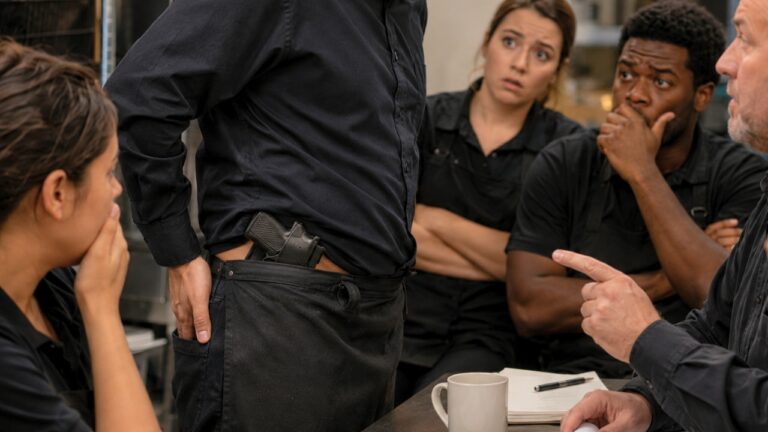
The new carrier’s problem was pretty normal. Appendix carry can be comfortable and easy to conceal for many people, but the bathroom creates awkward geometry. The holster sits right where the belt loosens. Pants come down. The gun wants to flop forward or pull the waistband. If the holster is not managed well, it can feel easier to just remove everything.
But easier is not always safer.
The better answer is usually building a routine where the gun stays holstered and stays connected to the carrier’s clothing. Some people keep the belt buckled loosely above the knees. Some lower the pants only as far as needed. Some fold the holstered gun into the pants so it stays hidden and supported. Some use a stiff belt and a holster setup that does not tip or dump the firearm when seated.
The exact method can vary, but the principle is the same: do not place the gun somewhere you can walk away from.
That is the part new carriers sometimes learn the hard way. The carry setup has to work during boring, private, awkward parts of life too. If your system only works while standing upright in front of the mirror, it is not fully tested yet. It needs to survive sitting, driving, bathroom breaks, clothing shifts, and all the little movements that happen during a normal day.
That does not mean the new carrier was doing anything foolish by asking. Honestly, asking is the smart move. It is much better to admit the routine feels awkward and get advice before the mistake happens. Plenty of people carry for years and still have weak bathroom habits because they never really thought through the process.
The post opened up exactly the kind of conversation new carriers need: how to keep the gun controlled without overhandling it.
Overhandling is the hidden danger here. Every time a person removes the holster, places the gun somewhere, picks it back up, adjusts it, and reattaches it, there are more chances for something to go wrong. A finger ends up near the trigger. Clothing catches. The holster shifts. The gun slips. Someone in the next stall sees it. The whole routine gets messier than it needs to be.
A carry gun should be boring. Bathroom trips should not turn it into a loose object.
There is also the concealment issue. If the holstered gun drops below the stall divider, someone next door may see it. If it thumps onto the floor, people may hear it. If the carrier is fighting with the belt and holster for too long, he may draw attention without meaning to. The more practiced and controlled the routine is, the less likely any of that becomes.
The new carrier was really asking a bigger question than he may have realized.
Is my setup practical for daily life?
That question matters. A holster that is comfortable but hard to manage safely may need changing. A belt that collapses during bathroom breaks may need upgrading. A carry position that forces constant removal may not be the right fit. Carrying is personal, but it still has to meet a basic test: can you keep the firearm secure and under control all day?
For this carrier, the public bathroom problem was the first clue that his setup needed more thought.
That is not embarrassing. That is part of learning. Better to figure it out from a Reddit thread than from a loaded pistol sitting forgotten on a toilet paper dispenser.
Commenters mostly reassured him that bathroom carry is awkward for almost everyone at first, but they were firm about one thing: do not set the gun down somewhere you can forget it.
Several people said they keep the gun holstered and attached to the belt. They loosen the belt, lower their pants only as much as needed, and keep enough tension that the holster does not flop around. The goal is to keep the firearm controlled without removing it from the system.
Others suggested adjusting how far the pants are lowered. Dropping them all the way to the ankles can make the holster visible under the stall and harder to control. Keeping them higher, around the knees, can help keep the gun hidden and supported.
A lot of commenters said the holster and belt matter. A flimsy belt or loose holster makes bathroom carry much harder. A stronger belt and more secure holster can keep the gun from tipping, sliding, or needing to be removed.
Some also warned against placing the pistol on the toilet tank, paper dispenser, floor, or hook. That may feel convenient in the moment, but it creates the exact situation that leads people to leave guns behind in public bathrooms.
The main advice was simple: build one routine and use it every time. Keep the gun attached, keep it holstered, and do not let a bathroom break become the moment your carry setup stops being safe.