Photo credit: gmsjs90/Pixabay.com
The carrier probably thought the gun was hidden well enough.
That is the trap with concealed carry. Once you get used to it, the setup starts feeling normal. The holster is there. The shirt covers it. You move through the day without anyone saying anything, and after enough quiet hours, it is easy to assume nobody knows.
Then somebody bumps it.
In a Reddit thread, concealed carriers were talking about whether people ever accidentally touch or bump into their firearm. One story involved a loose carry setup getting brushed by a coworker’s hand, which is the kind of small moment that can make a person suddenly rethink how concealed the whole thing really is.
Because concealed does not always mean invisible.
And invisible does not always mean untouchable.
The carrier’s situation hit on something people do not always consider before carrying around others. It is not enough for the gun to be covered while standing still. The setup has to survive people moving close, brushing past, reaching around, bumping into you, hugging, squeezing through hallways, leaning into a vehicle, working around counters, or standing shoulder to shoulder in a tight space.
Workplaces are especially bad for that.
Coworkers do not always keep polite personal-space distance. They reach across you. They squeeze behind you. They bump into your side while carrying boxes. They tap your shoulder, lean into a desk, or accidentally brush your waist while grabbing something nearby. None of that is unusual. Most of the time, it means nothing.
But when you are carrying, a casual bump can feel like a spotlight.
That is what makes it so awkward. If a coworker’s hand hits your gun, even briefly, you have a decision to make in about half a second. Do you move away and act normal? Do you adjust your shirt? Do you explain? Do you hope they thought it was a phone, tool, belt buckle, or weird pocket item? Do you freeze because any reaction might confirm what they felt?
That tiny moment can feel huge.
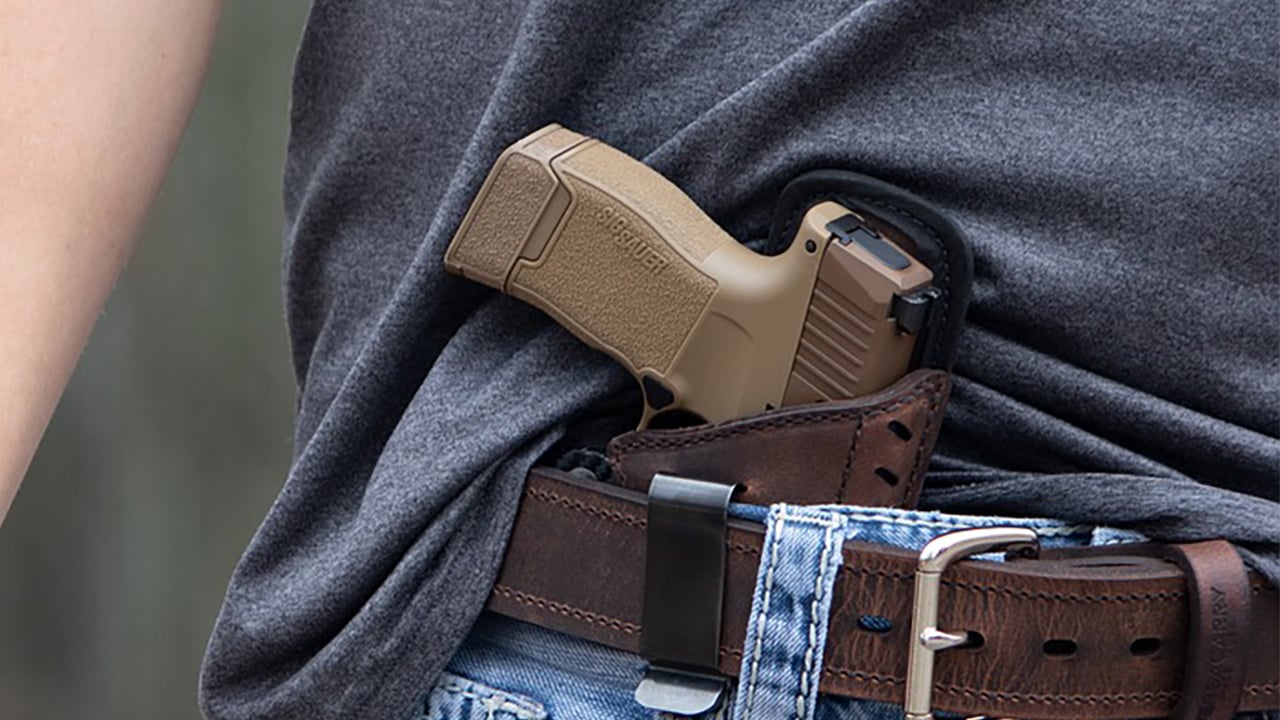
A lot of carriers think about printing visually, but touch can give things away too. A gun has a hard shape. A holster has edges. A spare magazine feels different from a wallet or phone. If someone bumps into it at the wrong angle, they may not know exactly what it is, but they may know it is something. And if they already suspect a person carries, that suspicion can turn into certainty fast.
The “loose gun” part matters too.
A firearm should not be shifting around where a random bump can move it, expose it, or knock it out of place. The holster should retain the gun. The belt should hold the holster. The cover garment should not snag every time somebody brushes past. If the setup feels like it needs constant guarding, the setup probably needs work.
There is also a safety angle. A properly holstered firearm should have the trigger covered and should not be dangerous simply because someone bumps into it. But “not immediately dangerous” is not the same as “acceptable.” If a coworker can easily hit or feel it during normal movement, the carry method may not be secure or discreet enough for that environment.
At work, that can have consequences.
A coworker who notices may say nothing. Or they may ask. Or they may tell a supervisor. Or they may get uncomfortable and complain. The carrier does not get to choose the reaction. One person’s casual bump can become the moment the whole workplace finds out.
That is why carry at work or around close-contact environments requires more than a basic holster. It requires thinking through how people actually move around you. Appendix carry may keep the gun more protected in some situations, but it can still print or poke if the setup is wrong. Strong-side carry may feel comfortable, but it can be more vulnerable to side bumps, hugs, and people squeezing past. Pocket carry can look low-key, but a loose gun or poorly shaped pocket can create its own problems.
Every method has tradeoffs.
The key is knowing them before the coworker’s hand finds out for you.
The story is not dramatic in the way a dropped gun or negligent discharge is dramatic. Nobody was hurt. No shot was fired. The gun did not hit the floor. But it is exactly the kind of small, embarrassing carry moment that teaches a practical lesson. Concealment has to work in the real world, not just in the mirror.
If you spend your whole day worried that someone might bump your side and discover the gun, the setup is not giving you much peace of mind.
A concealed firearm should stay controlled, covered, and boring. If a coworker’s hand brushes it and suddenly your stomach drops, that is the signal to rethink placement, retention, clothing, or whether carrying in that environment makes sense at all.
The gun may have been covered.
But for one awkward second, it was not hidden enough.
Commenters mostly treated the issue as a reminder that concealment has more than one failure point.
Several people said accidental bumps do happen, especially in workplaces, crowded stores, churches, family gatherings, and anywhere people stand close together. A lot of carriers have had someone brush against a holster and then spent the next few minutes wondering if the person realized what it was.
Others said the setup should not feel loose or vulnerable. A good holster and belt should keep the firearm stable enough that a normal bump does not shift it, expose it, or make the carrier panic. If the gun moves around too much, the gear needs changing.
Some commenters also pointed out that people often assume hard objects on the belt are phones, tools, medical devices, multitools, or work gear. A bump does not always mean the person knows it is a gun. Reacting dramatically can make the situation worse by drawing attention.
A lot of the practical advice came down to awareness and clothing. Keep the gun where it is less likely to be brushed by others, wear cover garments that do not ride up easily, and avoid setups that require constant adjustment.
The main lesson was simple: concealed carry has to stay concealed under normal human contact, not just normal walking. If everyday bumps make the gun obvious, the setup needs another look.