
Photo credit: Bushcraft Canada
If a knife feels amazing on cardboard but turns into a butter knife halfway through a deer, that’s usually steel + heat treat + edge geometry catching up with you. Hide and hair are abrasive. Cartilage and connective tissue aren’t “hard,” but they’re tough and stringy, and they punish edges that are too thin, too soft, or ground wrong. The knives that hold up in real field work tend to share the same traits: proven steels (or proven heat treats), sensible edge angles, and handles you can keep control of when things get slick.
This list isn’t “the sharpest out of the box.” It’s knives that keep cutting when you’re past the easy part—when you’re splitting the hide line, trimming around joints, and doing the stuff that makes cheap steel tap out early.
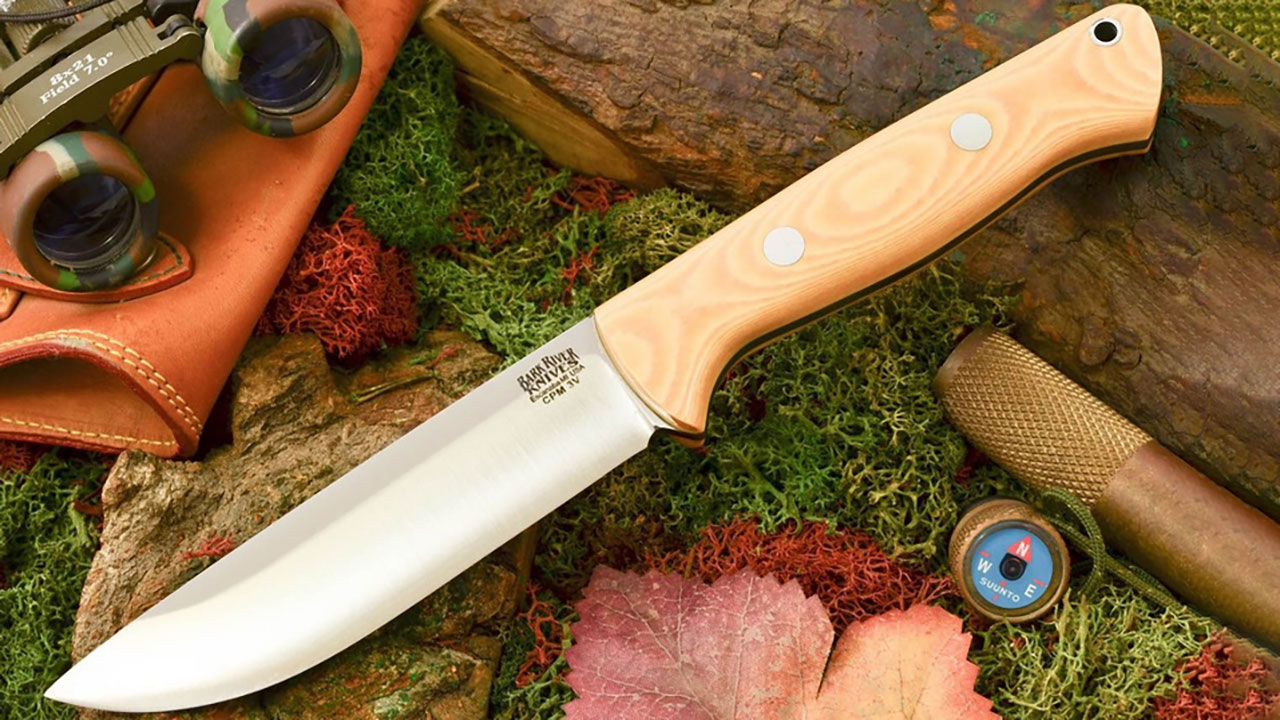
Bark River Bravo 1.25 (CPM-3V)

3V is one of those steels that earns trust when you’re doing ugly work. It isn’t a “mirror edge” showpiece steel. It’s a “keep cutting even after you’ve hit hair, dirt, and cartilage” kind of steel—especially when the maker knows heat treat. The Bravo 1.25 also tends to have a geometry that works for real slicing, not just thick wedge cutting, and that helps edge retention as much as the steel does.
The other reason it holds up is handle comfort. When your hand stays stable, you don’t torque the edge or do weird angles that chip or roll it. This is a knife you can take through multiple animals if you aren’t abusing it, and it won’t make you feel like you’re constantly chasing sharpness.
Bradford Guardian 3 (CPM-M4 or MagnaCut)

This is a “real use” fixed blade that doesn’t pretend it’s something else. In M4, you get excellent edge stability and bite that hangs on when you’re cutting abrasive stuff like hide and hair. In MagnaCut, you get a blend that’s more corrosion-friendly while still holding a working edge way longer than the common budget steels. Either way, the knife is sized for control, which helps you keep a consistent edge angle and not beat up your apex.
Where it shines is that you can use it hard without feeling like you’re carrying a big brick. When you’re tired and your hands are wet, smaller, controllable knives stay sharper longer because you’re not prying and twisting out of frustration. That’s the real-world truth.
Benchmade Steep Country (S30V)

S30V gets talked about so much that people forget why it became popular: it holds a solid working edge in real cutting, and it resists that fast “edge goes dull in 20 minutes” problem you see with softer steels. The Steep Country’s blade shape and size are built for controlled cuts, and the handle keeps you from slipping forward when you’re working around ribs and inside the cavity.
Is S30V the longest-lasting steel on earth? No. But in a practical hunting knife, it’s dependable. If you touch it up correctly and don’t treat it like a hatchet, it keeps cutting through the annoying stuff—hair, hide, gristle—without turning into a dull wedge right when you need it most.
Buck 119 Special (420HC, Buck heat treat)

People clown on 420HC until they use a Buck that’s heat treated well. Buck’s 420HC has a reputation for a reason: it sharpens fast and holds a usable working edge longer than most folks expect, especially at hunting tasks where you want controlled slicing rather than “let me chop everything.” The 119’s size is also practical—enough blade to work, not so much that you’re constantly overcutting.
The big advantage in the field is maintenance. When you do finally feel it losing bite, you can bring it back quickly with a basic stone or even a pocket sharpener. That matters when you’re processing animals, not posting steel charts online. “Stays sharp” sometimes means “stays in the game and is easy to refresh.”
ESEE 4 (1095, tough heat treat, thicker edge)

ESEE isn’t selling you magic steel. They’re selling you toughness and reliability. A properly treated 1095 edge, kept at a sensible angle, holds up better than people think through hide and cartilage because it’s stable and predictable. The ESEE 4 tends to be a little thicker behind the edge than a pure slicer, but that can be a benefit when you hit tougher connective tissue and don’t want the edge chipping out.
The tradeoff is corrosion. If you’re the type to toss a bloody knife in a pack and forget it for a day, 1095 will remind you. But if you wipe it down and you want a knife that keeps cutting without feeling delicate, the ESEE 4 is one of the most reliable “working edges” you can carry.
Spyderco Bow River (8Cr13MoV, great geometry)

This one surprises people because the steel isn’t “fancy,” but geometry is a cheat code. The Bow River slices. It doesn’t wedge. When a knife cuts efficiently, you’re not forcing it, and that means less edge damage and less rolling. Through hide and hair, a slicey profile can keep a working edge longer than a thick, overbuilt blade with “better steel.”
You’ll still need to touch it up sooner than premium steels, but it stays sharp enough longer than you’d expect because it isn’t fighting the material. If you’re processing game and you want clean cuts without overworking your hand, this is one of those knives that performs better than its price tag suggests.
Fallkniven F1 (laminated VG10)

Fallkniven’s laminated VG10 has been proven in rough use for years, and the big benefit for hunting is a stable, hard edge that keeps bite when hair and hide are chewing on it. The convex-style edge many Fallkniven knives run can also give you a nice balance: strong enough to resist damage, still slicey enough to keep moving through tissue without tearing.
It’s also a knife that doesn’t feel fragile. When you’re trimming around joints or you hit cartilage, you want an edge that doesn’t microchip into a rough mess. The F1 tends to stay “clean cutting” for a long stretch, and when it needs a touch-up, it responds well if you’re using the right sharpening approach.
Cold Steel Master Hunter (VG-10 San Mai or similar variants)

The Master Hunter has been a go-to for guys who actually cut animals because it’s comfortable and it’s built for slicing. When you pair that with a steel setup like San Mai/VG-10 style constructions, you get an edge that stays usable longer than a lot of “tactical” knives that look tougher but cut worse. The handle comfort also matters because it keeps your grip consistent—less hand fatigue, less sloppy angles.
This is one of those knives that’s not trying to be trendy. It’s trying to be effective. In hunting work, effectiveness is edge retention plus control. If you can keep the knife moving with steady pressure, you’ll get more work out of the edge before you ever think about sharpening.
Havalon Piranta (replaceable blades)

If the goal is “stay sharp through hide, hair, cartilage,” replaceable blades are a blunt-force solution: they stay sharp because you swap them. And there’s nothing wrong with that if you’re honest about what it is. The Piranta’s scalpel blades are ridiculously sharp, and because they’re thin, they slice hair and hide without requiring force. Less force = fewer slips and cleaner cuts.
The limitation is durability. You’re not twisting through joints or doing heavy camp tasks. But for field dressing, skinning, and precision trimming, this is one of the easiest ways to keep a scary-sharp edge the whole time. Bring extra blades, use common sense, and it flat works.
Outdoor Edge RazorLite (replaceable blades, sturdier handle)

Same idea as Havalon, but with a handle that a lot of hunters find easier to control when hands are cold or wet. The RazorLite keeps you cutting clean because the edge stays fresh, and the blade system is made around hunting tasks—opening, skinning, trimming. If you’ve ever tried to “push through” with a dull knife, you already know why this matters: dull knives make messes and mistakes.
The trick is using it like a cutter, not a pry tool. Keep a couple spare blades and a safe method for swaps. If you want the simplest answer to “how do I stay sharp all the way through,” replaceable blades are hard to beat.
Benchmade Hidden Canyon Hunter (S30V)

This knife has the right size and ergonomics for long cutting sessions, and that helps edge retention because you stay in control. S30V in this format gives you a dependable working edge through abrasive hide and hair, and the short blade makes it easier to avoid deep stabs that wreck your rhythm and damage the edge. It’s a “do a lot of cuts with good control” knife.
It’s also easy to carry, which means you’re more likely to actually have it on you when it’s time to work. A “great” knife left in the truck doesn’t help. If you want a compact fixed blade that doesn’t quit early, this is one of the better mainstream options.
TOPS Fieldcraft (1095 with robust edge)

TOPS knives tend to come with a more robust edge and a heat treat built for toughness, and that matters when cartilage and connective tissue are in the mix. A thin, brittle edge can chip and turn into a saw. A tougher edge can keep cutting with less drama, even if it isn’t the longest-lasting “paper slicing” edge on the planet.
This is a knife for people who actually use knives hard and accept that sometimes you trade a little slicing performance for an edge that doesn’t fall apart. If you’re dressing bigger animals and you want a knife that won’t make you baby it, this one stays in the fight.
Mora Companion HD (carbon or stainless options)

A Mora isn’t fancy, but it cuts like a real tool, and the HD versions tend to be sturdier. The edge geometry is the secret sauce here. It bites and slices, and because it’s not thick behind the edge, you’re not forcing it through hide. When you’re not forcing a knife, it stays sharp longer. That’s just how it works in the field.
The other advantage is how easy it is to refresh. If you feel it losing bite, you can touch it up fast and keep going. Mora steel won’t win internet steel wars, but in practical hunting use, it’s a reliable cutter that doesn’t punish your hands or your patience.
Buck 110 Folding Hunter (420HC, proven working edge)

This is another “don’t overthink it” option. A Buck 110 with Buck’s heat treat will stay sharp enough through hide and cartilage to get real work done, and it’s easy to bring back when it starts to fade. The lockup is solid, the handle is comfortable, and the blade shape is workable for field dressing.
The caution is cleaning. It’s a folder, so it’s not as easy to rinse and wipe as a fixed blade. But purely on “does it keep cutting” and “can I touch it up quickly,” the 110 is still a dependable tool. Plenty of animals have been dressed with one long before anybody cared what steel chart it scored on.
LionSteel M4 (M390, great heat treat reputation)

M390 is a strong performer for edge retention when the maker nails heat treat, and LionSteel has a good reputation for fit and finish and consistent builds. For hunting work, M390 can keep a working edge a long time through abrasive cutting because it resists that quick dulling you see with softer steels. It’s especially nice if you’re the type who hates stopping to sharpen mid-process.
The key is not taking the edge too thin. A super-thin, super-hard edge can microchip when you hit cartilage the wrong way. Keep a sensible working edge, and M390 will stay sharp in the ways that matter: it keeps slicing and doesn’t turn into a rolled mess halfway through.
Like The Avid Outdoorsman’s content? Subscribe to our newsletter so you never miss an article.
Here’s more from us:


