
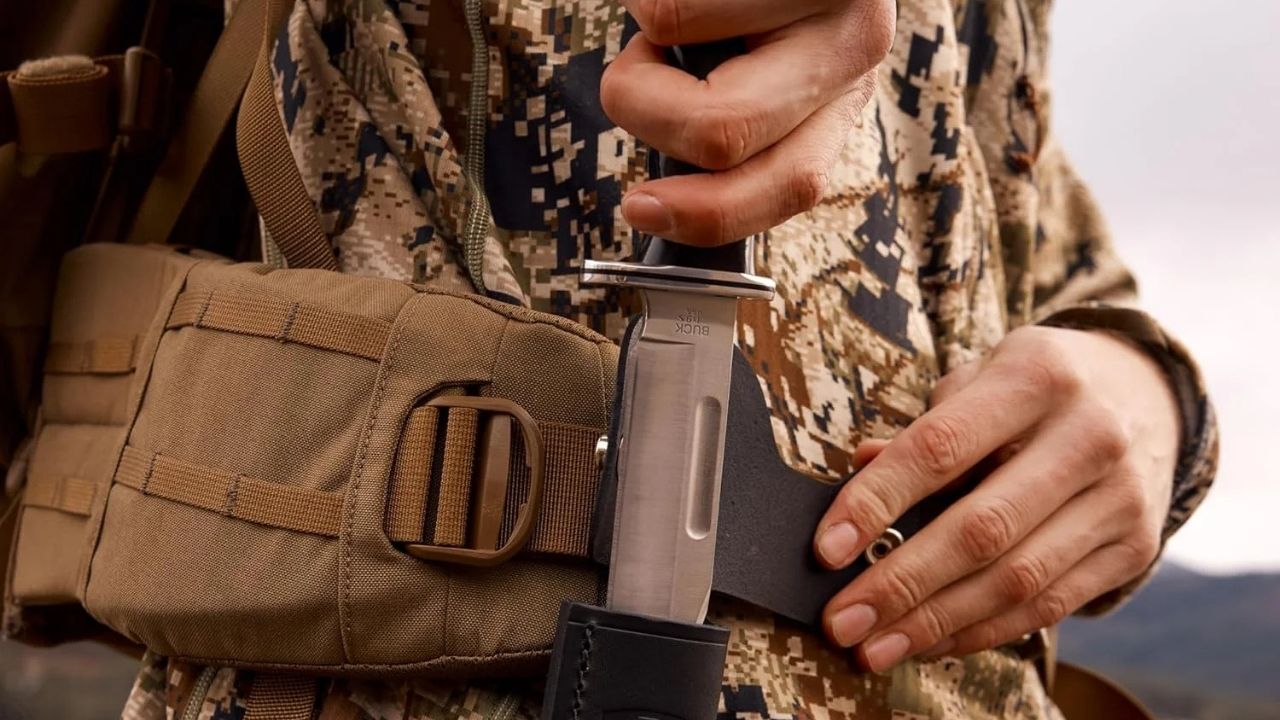
Photo credit: Buck/Amazon
A gutting knife doesn’t need to be huge. It needs to be controllable, easy to clean, and shaped in a way that lets you work around ribs and pelvis without your hand sliding forward or your knuckles getting chewed up. The handle is a bigger deal than most people admit. If it’s too slick, too blocky, or shaped wrong, you end up choking up in weird ways, gripping too hard, and fighting hot spots while you’re trying to do clean, careful work. That’s how you get slow, messy, and tired.
These picks lean toward proven hunters’ knives: neutral grips, good traction when wet, and blade shapes that actually make field dressing easier. Not all of them are “premium,” but every one of them is the kind of tool you can use all season without cussing it every time you open an animal.
Buck 110 Folding Hunter

People call it old-school, but the Buck 110 still guts clean because it gives you control and a handle that doesn’t punish your hand. The traditional shape fills the palm without weird corners, and the lockup feels trustworthy when you’re working inside a body cavity. The blade is long enough to do real work but not so long that it feels clumsy.
The downside is weight, and it isn’t the easiest knife to clean compared to a fixed blade. But if you’re talking pure “does the handle fight me,” the 110 is better than a lot of modern hunting folders. It’s a steady, predictable grip, and that matters when your hands are slick and you’re trying not to poke gut.
Buck 119 Special

The Buck 119 is a classic for a reason: the handle shape is comfortable, the guard gives you confidence, and it’s easy to control for a medium-size fixed blade. For gutting, it rides that line between “enough blade to work” and “not so much blade I’m constantly worried about punching through something I don’t want to.” The handle has a natural, familiar feel that a lot of hands just agree with.
Where it shines is being easy to hold in multiple grips. You can choke up, you can pinch grip near the guard, and the knife still tracks straight. It’s also easy to clean. If you want a simple fixed blade that doesn’t create hand drama, this one’s still a safe bet.
ESEE Izula-II

The Izula-II looks small until you use it on an animal, then you get it. Small blades let you do precise work without accidental deep stabs. The handle is the difference here. The Izula-II gives you more real grip than the original, and it stays locked into your hand even when things are wet. It’s a “control first” knife.
It’s not the knife for splitting pelvis bones or doing heavy camp chores. But for clean gutting, caping on smaller game, and general field work, it’s one of those knives that punches above its size. You aren’t fighting the handle because it’s simple and secure, which is exactly what you want.
Morakniv Companion (or Companion HD)

Mora handles are comfortable in a way that surprises people. They’re light, grippy, and shaped to keep you from doing that death-grip thing when your hands are cold. The Companion is easy to control for gutting because the handle stays put, and the blade geometry slices clean without requiring you to muscle it.
Moras also clean up fast, and that matters when you’re trying to avoid cross-contamination or you just want your knife back in service quickly. The only real caution is don’t treat a Mora like a pry bar. Used like a cutting tool, it’s a great gutting knife for the money.
Benchmade Steep Country

The Steep Country is built around control and comfort. It has a compact fixed-blade format, a handle that fills the hand without hot edges, and a blade shape that works well for opening and working through hide cleanly. Benchmade’s rubbery handle material gives you traction without being abrasive, which is a big deal when you’re wet and cold.
It’s one of those knives that feels “right” immediately because the ergonomics are the focus. If you gut a couple animals in a weekend, you appreciate a handle that doesn’t make your palm sore. It’s not flashy. It’s practical, and that’s what makes it a good field-dressing tool.
Bark River Bravo 1.25

Bark River’s handle shaping is where they earn their reputation. The Bravo 1.25 gives you a comfortable, rounded grip that doesn’t create pressure points, and the blade size is in that sweet spot where you can do controlled work but still have enough knife for general camp tasks. For gutting, the handle keeps your grip relaxed, which keeps your cuts cleaner.
This is a higher-dollar option, but it’s also a “buy once, cry once” kind of tool if you actually use your knives hard. It’s the sort of knife you can hold for a long time without getting that cramped hand feeling. If you’ve ever fought a bad handle on a big animal, you’ll understand why this matters.
Havalon Piranta (replaceable blade)

Some folks don’t like replaceable blades for everything, but for gutting and skinning, the Havalon system is hard to argue with. The handle is light and shaped to give control, and the blades are scary sharp. That means you can do precise cuts without pushing hard, and less pushing means less chance of slipping or punching too deep.
The tradeoff is durability. You’re not batoning wood or twisting through joints with a Havalon. But for clean, controlled cutting, it’s one of the easiest “no fighting the handle” solutions because the knife basically does the slicing for you.
Outdoor Edge RazorLite (replaceable blade)

Outdoor Edge is another replaceable-blade system, and the RazorLite handle tends to be more glove-friendly for a lot of people than the ultra-slim scalpel-style tools. That matters when you’re cold and you want a grip you can trust. The blades are sharp, and the whole setup encourages controlled cutting instead of brute force.
It’s a really solid option for guys who want a practical field kit: spare blades, safe blade changes, and a handle that’s easier to control than you’d expect. If your main goal is clean gutting without a handle that makes you squeeze too hard, this one does the job.
Victorinox Hunter Pro

Victorinox doesn’t get enough credit outside of kitchen knives and Swiss Army tools. The Hunter Pro folder has a comfortable, well-shaped handle with good traction, and the blade is designed for controlled cutting. It feels stable in hand, and the grip doesn’t force your wrist into awkward angles when you’re working inside an animal.
It’s also built with that Swiss “fit and finish” mindset, so you’re not dealing with sharp edges on the scales or weird hotspots. It’s not a tactical folder and it’s not trying to be. It’s a hunting tool, and the handle shows that.
Cold Steel Pendleton Hunter

This knife has been around forever because it’s simple and it works. The Pendleton Hunter has a compact blade and a handle shape that locks into the palm. It’s easy to control for gutting and skinning, and the grip stays consistent when wet. It’s the kind of knife you can hand to someone and they’ll figure it out quickly.
Cold Steel’s handle materials and shaping here are the point. It’s not a fancy knife, but it’s functional. If you’ve ever used a knife with a slick, uncomfortable handle on a deer, you’ll appreciate how much better this feels.
Spyderco Bow River

Spyderco’s Bow River is a sleeper. It has a friendly handle, a blade shape that slices well, and a size that works for game without feeling like you’re carrying a machete. The handle gives you a comfortable, natural grip, and the knife is easy to control when you’re doing the first opening cuts and working around delicate areas.
The Bow River also cleans up easily, which is a big deal in the field. It’s one of those knives that doesn’t look “hardcore,” but it performs like a hunting knife should. Comfortable handle, good slicing geometry, no drama.
Gerber Vital (replaceable blade)

Gerber’s Vital is another replaceable-blade option, but it’s built with a handle that’s more substantial than a lot of scalpel-style tools. That helps with control and comfort. The blade does the slicing, the handle keeps your hand stable, and you don’t have to push hard to get clean cuts.
Like the other replaceable blade systems, you use it for what it’s good at: field dressing, skinning, and precision cuts. If you try to pry or twist through joints, you’re using the wrong tool. But for gutting clean without fighting the handle, it earns its place.
Case XX Hunter (fixed or folding patterns)

Case isn’t “modern tactical,” but their traditional hunting patterns have handle shapes that actually make sense for long use. The contours are usually comfortable, and they don’t create those sharp pressure points that cheap knives do. A good Case hunter pattern fits the hand in a natural way, which helps you stay precise when you’re tired.
The tradeoff is that you’re not getting super-steel edge retention. But for gutting, the handle comfort can matter more than steel bragging rights. A knife that stays stable in your hand is safer and more effective than a “high-end steel” knife you can’t control.
TOPS Fieldcraft

TOPS tends to build knives for hard use, but the Fieldcraft is one of the more practical models for real field work. The handle has a solid, hand-filling shape, and it stays put even when wet. The blade shape is versatile enough for game and camp chores without feeling overly thick or clumsy.
This is a knife that feels good when you’re wearing gloves and when you’re barehanded. That’s not always true in the tactical-leaning knife world. If you want a more rugged fixed blade that still handles gutting cleanly, this is one to look at.
Bradford Guardian 3
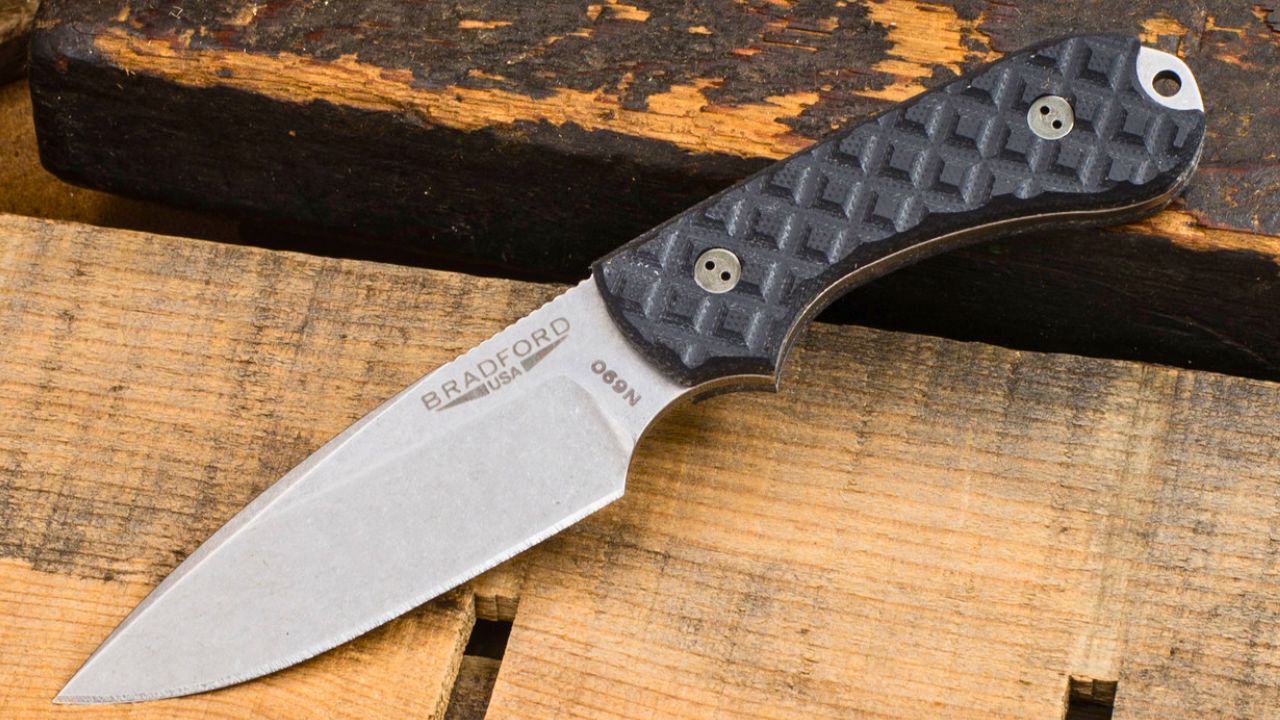
The Guardian 3 is a near-perfect “size for control” hunting fixed blade. The handle ergonomics are excellent, the knife stays planted in the hand, and the blade size encourages careful, precise work. It’s big enough to do the job, small enough to avoid the “oops, that went too deep” problem.
It also carries well and cleans easily. If you’re a guy who wants one fixed blade that can dress an animal, do camp tasks, and still feel comfortable during long use, the Guardian 3 is hard to beat. The handle is a big part of why people stick with it.
Like The Avid Outdoorsman’s content? Subscribe to our newsletter so you never miss an article.
Here’s more from us:


