Photo credit: Explorer's Workbench/YouTube
The Ruger 10/22 is one of those rifles that gets treated like it was always just “that handy little .22 everybody has.” That sells it short. The 10/22 was introduced in 1964, and over the decades it turned into one of the most successful rimfire rifles ever built. Ruger said in 2003 that more than 4 million had been produced by the rifle’s 40th anniversary, and later NRA coverage said sales had passed 6 million.
What makes the 10/22 interesting is that its success was not just about being cheap or familiar. The rifle won because several design ideas came together in a way that was unusually smart for a mass-market rimfire: the rotary magazine, the barrel attachment system, and the bolt setup all helped make it compact, reliable, and easy to build. American Rifleman flat-out says the “magic” of the 10/22 comes from three creative innovations: the barrel block, the rotary magazine, and the anti-bounce bolt.
1. It was introduced in 1964 as Ruger’s first .22 rifle

A lot of people assume the 10/22 was just another early Ruger rifle in a long line of rimfires, but Ruger’s own anniversary release said the 10/22 was the company’s first .22 caliber rifle. It hit the market in 1964, which means it arrived well after Ruger had already made its name with handguns and other products.
That matters because the 10/22 was not just a throwaway entry into the rimfire market. Ruger treated it like a major statement gun from the beginning. The company’s own early ad language called it “no ordinary rifle” and pitched it as something that had to be better than the competition.
2. It was originally marketed as a companion to the .44 Magnum Carbine

This is one of the coolest little details in the 10/22 story. American Rifleman says the rifle was initially positioned as a “same-sized companion” to Ruger’s .44 Magnum Carbine. So the 10/22 was not originally just “the classic .22 everybody should own.” It was also meant to visually and physically pair with another Ruger long gun.
That explains a lot about the rifle’s proportions and styling. The 10/22 did not come out looking like a toyish rimfire. It came out looking like a real carbine, which is part of why so many shooters took to it quickly.
3. The rotary magazine is the rifle’s biggest design trick

Everybody knows the 10/22 uses a 10-round rotary magazine, but not everybody realizes how central that is to the rifle’s identity. American Rifleman says the rotary magazine is one of the three big design innovations that made the rifle what it is, and another NRA piece explains that it helped keep the rifle trim because it did not hang down below the stock like a protruding box magazine.
That is a huge reason the 10/22 feels the way it does. A lot of .22 rifles are handy enough until the magazine starts poking into your hand, your carry position, or the balance point. The 10/22 kept the underside of the rifle clean and compact, and that made the whole gun easier to carry and easier to live with.
4. The rotary magazine was likely inspired by older European and lever-gun ideas
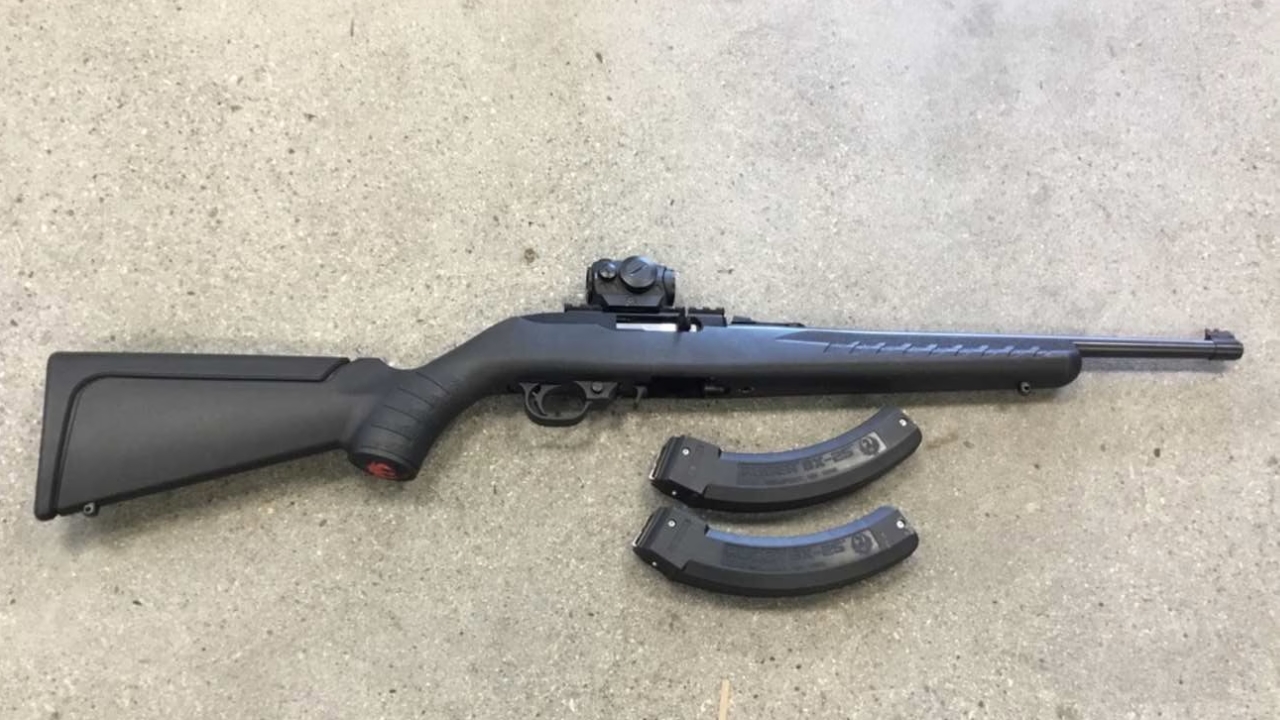
The 10/22’s rotary magazine was not invented out of thin air. American Rifleman says the design was likely inspired by Bill Ruger’s appreciation for the Mannlicher-Schoenauer and the Savage 99, both of which used rotary-magazine concepts in earlier rifles. Another NRA piece similarly says the 10-round rotary magazine was based on ideas earlier used by Otto Schoenauer and Arthur Savage.
That is part of what makes the 10/22 such a smart design. It took an older magazine idea and dropped it into a modern semi-auto rimfire in a way that worked beautifully for ordinary shooters. It felt new while still borrowing from proven thinking.
5. The barrel is attached with a barrel block, not the setup many shooters expect

American Rifleman says the barrel block is one of the rifle’s three defining innovations. That sounds like a small mechanical detail, but it is actually a big part of why the 10/22 became such a builder’s rifle later on.
The barrel-block system helped make the rifle simpler to manufacture and easier to service or reconfigure than a lot of casual owners ever think about. That mechanical choice quietly helped the 10/22 become one of the most aftermarket-friendly rifles in the country. Even if a shooter never changes a barrel, the design made that whole ecosystem possible.
6. It has an anti-bounce bolt feature most owners never think about

The average 10/22 owner probably never says “anti-bounce bolt” out loud, but American Rifleman specifically lists it as one of the rifle’s key innovations. That tells you it was not just a throw-in engineering detail. It was part of what made the rifle’s semi-automatic system work as well as it did.
That is one of those things that separates famous guns from merely popular ones. The 10/22 is full of little mechanical decisions most owners never notice because the rifle just works. That hidden engineering is a big part of the story.
7. Early reviewers were already praising the action in 1964

A lot of people talk like the 10/22 only gained its reputation after decades of use, but American Rifleman’s reprint of the original September 1964 review shows the rifle was impressing people right away. The review explained the blowback action and noted that hammer pressure against the rear of the bolt helped retard breech opening.
That matters because it shows the rifle was not a slow-burn cult favorite that later got rediscovered. It landed as a well-thought-out design from the start, and informed reviewers saw that immediately.
8. Its shape borrowed some of the appeal of the M1 Carbine
American Rifleman’s exploded-view coverage says the original 10/22 retained the sleek outline of Ruger’s earlier Model 44 and had a profile “not unlike that of the M1 carbine,” combining Western and World War II flair.
That is one reason the rifle clicked so well with American shooters. It did not look like a bargain-bin plinker. It looked like a real little carbine. Even people who did not know the design details could feel that it had more style and purpose than a lot of competing rimfires.
9. It became a phenomenon on its own, not just a useful sidekick rifle

American Rifleman says the 10/22 was originally the understudy to the .44 Magnum Carbine but “emerged as a phenomenon all its own” long before the .44 disappeared in 1985.
That is an important part of the rifle’s history. Plenty of guns are launched to fill a niche and stay there. The 10/22 broke out of its original lane and became one of the defining rimfires in the country, not just a handy companion gun in a catalog.
10. The 25-round factory magazine came much later than many people assume
A lot of younger shooters assume the BX-25 was always part of the 10/22 story. It was not. American Rifleman’s 50-year retrospective says Ruger did not roll out a 25-round rotary magazine until 2011.
That is a surprisingly late date if you think about how common bigger-capacity 10/22 magazines feel now. For decades, the little 10-round rotary magazine was the defining magazine setup, and that is a big reason the classic 10/22 identity stayed so clean and compact for so long.
11. It became huge partly because it was easy for ordinary people to afford
American Rifleman’s 2014 retrospective says Ruger managed to wrap an ingenious design in a classic form, make it function well, and manufacture it economically so it was available to people of ordinary means. That is a big part of why the rifle exploded.
This is one of those points people skip because it is not glamorous. But guns that become national standards usually do not get there on clever engineering alone. They get there by being reachable. The 10/22 did not stay a legend just because it was smart. It stayed a legend because huge numbers of normal shooters could actually own one.
12. It became one of the biggest aftermarket rifles in America

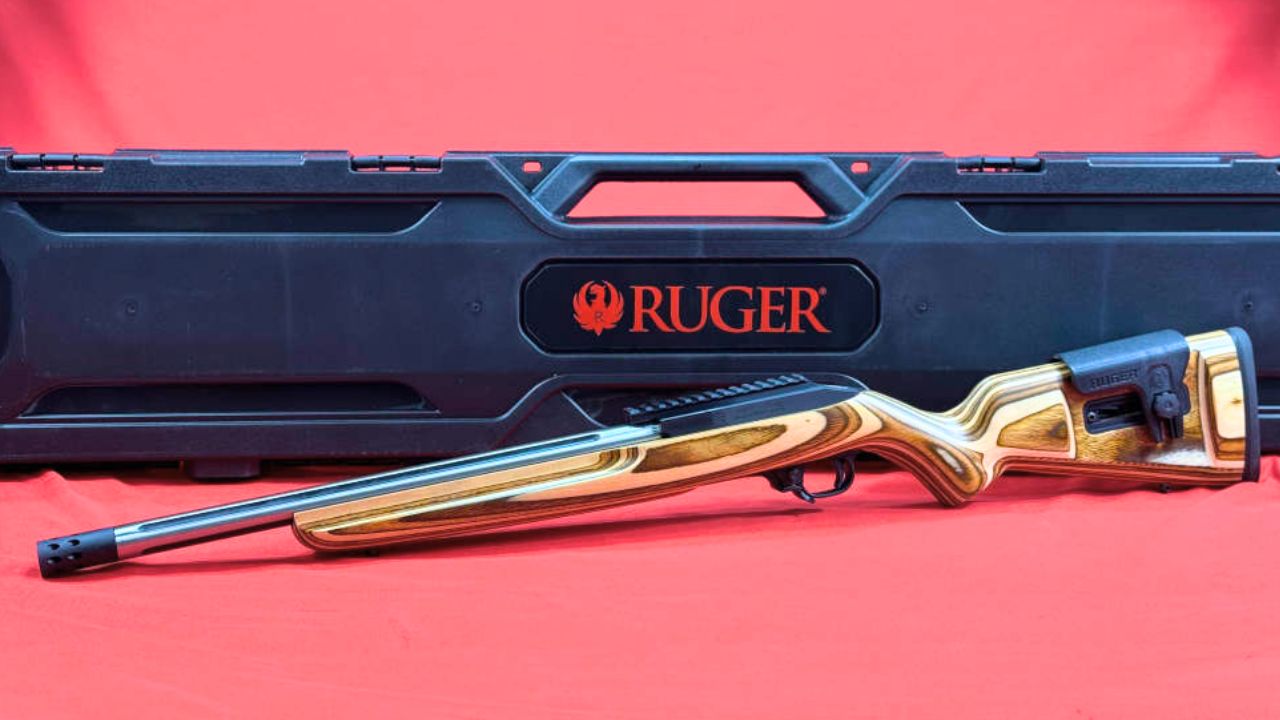
American Rifleman’s 2013 Hybrid Target Rifle coverage said that nearly 50 years after launch and more than 5 million rifles later, the 10/22’s popularity had inspired several clones and a plethora of aftermarket parts.
That is one of the biggest little-known truths about the rifle’s staying power. The 10/22 is not just a rifle anymore. It is a platform people rebuild, customize, upgrade, and completely reinvent. That kind of ecosystem only forms around guns that have truly settled into American shooting culture.
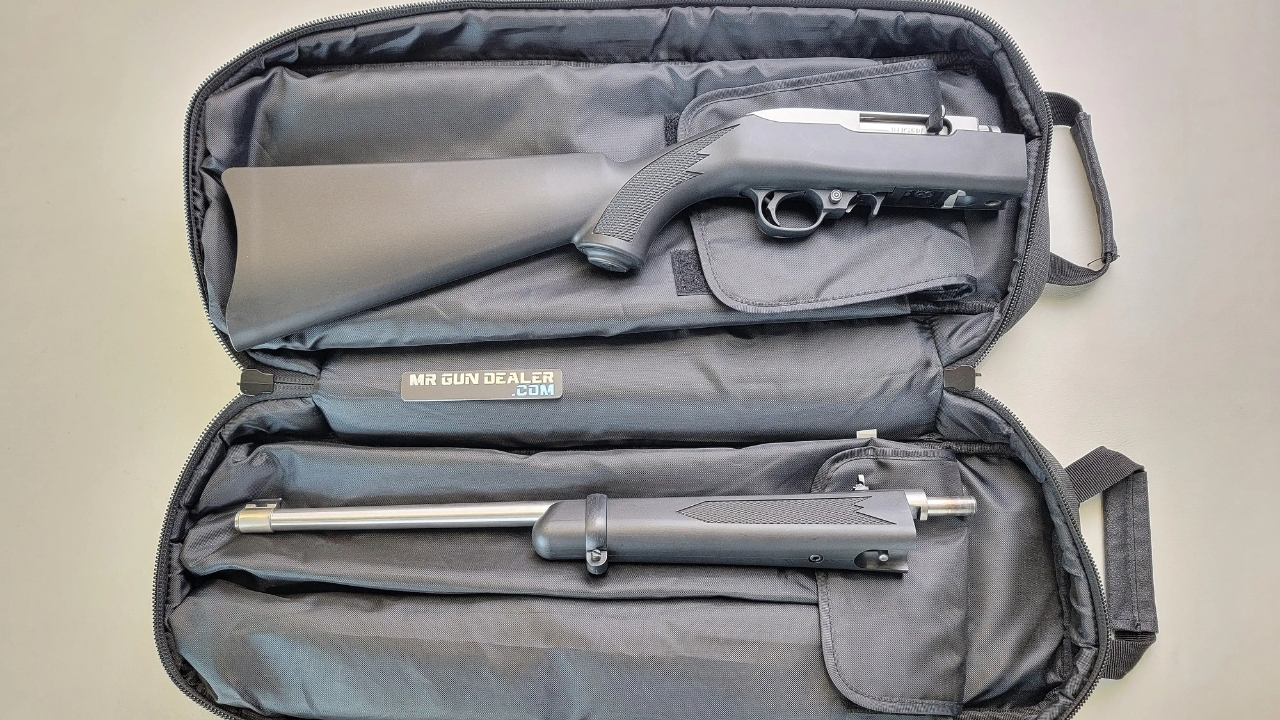
13. The Takedown version changed how people thought about the rifle

The 10/22 had already been around for decades before Ruger introduced the Takedown line, but that variant gave the rifle a fresh kind of usefulness. Shooting Illustrated’s coverage of the 10/22 Takedown notes the rifle breaks apart and still feeds from the classic 10-round rotary magazine while staying light and compact.
That matters because it shows the 10/22 did not stay alive by sitting still. Ruger kept finding ways to update the rifle’s practical appeal without abandoning the identity that made it famous in the first place.
14. New 10/22 variants are still rolling out more than 60 years later

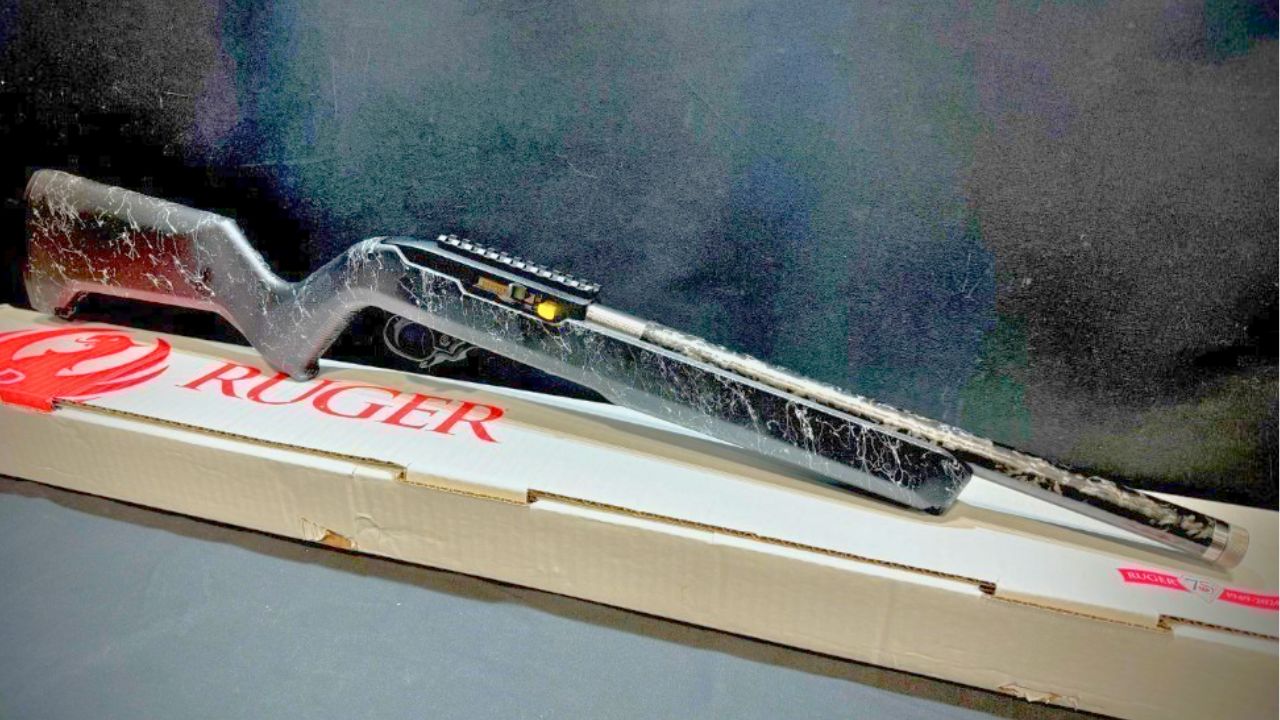
A lot of old rimfires survive as nostalgia pieces. The 10/22 keeps getting genuinely new versions. Shooting Illustrated’s 2025 coverage of the 10/22 Carbon Fiber says the rifle was originally launched in 1964 and has since been used for everything from hunting and plinking to competition shooting.
That kind of long life is rare. It means the rifle is not just historically important. It is still commercially alive enough that Ruger sees value in pushing new materials, trims, and configurations into the market even now.
15. The real surprise is how much of its success comes from hidden engineering, not just nostalgia

People love the 10/22 because it is familiar, handy, and fun. But the deeper reason it lasted is that the underlying design was smarter than it looked. American Rifleman’s history piece keeps coming back to the same three innovations—the barrel block, the rotary magazine, and the anti-bounce bolt—because those mechanical choices are the real foundation of the rifle’s reputation.
That is probably the biggest little-known fact of all. The 10/22 did not become iconic just because everybody’s dad had one. It became iconic because the design really was that good. The nostalgia came later. The engineering got there first.
Like The Avid Outdoorsman’s content? Subscribe to our newsletter so you never miss an article.
Here’s more from us: