Photo credit: Lucky Gunner Ammo/YouTube
Some calibers are everywhere for a reason. They’re common, they’re affordable enough to keep factories running, and they fit a lot of guns that sell in big numbers. The problem is that “easy to find” doesn’t mean “easy to live with.” Plenty of shooters end up with a caliber they bought because it was on the shelf, then slowly realize they don’t enjoy practicing with it, don’t shoot it as well as they expected, or don’t like what it does to their gun’s behavior over time. That’s where the love falls apart—usually not in one dramatic moment, but in a long string of little annoyances that make you reach for a different pistol or rifle when it’s time to actually train.
A caliber becomes hard to love when it adds friction. Maybe it’s a recoil impulse that feels snappy and distracting. Maybe the performance is fine but the platforms it lives in tend to be compromised—too small, too light, too picky, or too rough on parts. Maybe it does one thing well but forces you into tradeoffs you didn’t expect, like shortened recoil spring life, harsher blast indoors, or a training cost that’s low enough to buy but unpleasant enough to shoot that you still don’t practice. The calibers below are common, not obscure, and they can absolutely be used well. But they’re the ones I see people quietly drift away from because they’re easy to buy and harder to bond with.
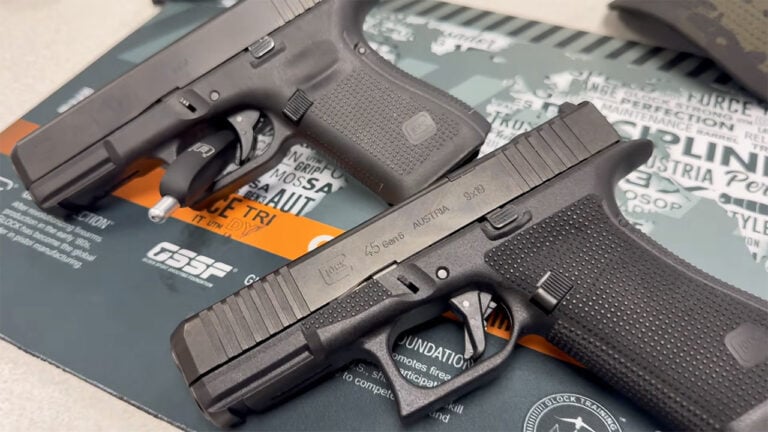
.40 S&W is common because it was adopted, but its recoil impulse wears people out
.40 is still easy to find in a lot of places because there are piles of guns and ammo in circulation, and it lives in a category that had serious institutional momentum for years. The problem is that many shooters simply don’t enjoy how it feels, especially in duty-size or compact pistols that were originally built around 9mm dimensions. The recoil isn’t just “more.” It tends to be sharper and quicker, and that sharpness makes it harder for many people to track the sights and break clean shots at speed. If you’re trying to run controlled pairs at 7–15 yards and keep them accountable, that impulse can pull your attention away from the front sight or dot and into managing the gun. When your brain is busy managing the gun, your shooting becomes less consistent, and inconsistency is what makes people quietly stop practicing.
Mechanically, .40 can also accelerate wear in some platforms because it drives higher slide velocities and harsher cycling, especially if springs aren’t kept fresh. That shows up as battered locking surfaces over long round counts, more stress on extractors, and recoil springs that need replacement sooner than casual shooters expect. None of that means .40 is “bad,” but it does mean it can become a maintenance and training tax. A caliber you can’t shoot comfortably and consistently is a caliber you’re going to stop loving, no matter how many boxes are stacked at the store.
.357 SIG is easy to find in pockets of the market, and it’s loud enough to make people regret it
.357 SIG has always had a reputation for speed and flat shooting, and it can deliver that in a service pistol. The reason it’s hard to love is that it’s a sensory assault in the guns people actually carry. The blast is sharp, the muzzle report is punishing, and in indoor ranges it can feel like you’re getting slapped in the face with every shot. That matters more than people admit, because discomfort changes behavior. You start flinching. You start rushing. You start shooting less. And once a shooter starts avoiding practice, the caliber’s “performance” becomes irrelevant because the shooter isn’t building skill with it.
There’s also a practical maintenance and logistics layer. Bottleneck pistol cartridges can be reliable feeders, but they also introduce different case geometry considerations, and not every shooter wants to live in a caliber that’s less common than 9mm and .45 when it comes to load variety and consistent availability. You can usually find it if you look, but you’re not always going to find the exact defensive load you prefer in every random small-town shop. That creates the “I’ll just shoot something else” drift. A caliber that’s loud, snappy, and a little fussy in availability becomes a caliber that lives in a drawer while the 9mm gets all the range time.
.45 ACP is easy to find, but many shooters don’t love what it does in smaller modern carry guns
.45 ACP is everywhere because it’s a classic, and it’s still a viable defensive cartridge. The problem is that a lot of people try to carry it in guns that are too small and too light for them to actually enjoy. In a full-size pistol, .45 can feel like a controllable push. In a compact or subcompact, that push turns into muzzle flip that’s harder to manage, and the wider grip and thicker slide profile can make concealment less comfortable. Those two factors—shootability and comfort—are exactly what decide whether a gun gets carried and practiced with. If the gun is thick and the recoil is unpleasant, you’re going to find reasons to leave it home or to “just take the 9” instead.
The other love-killer is capacity and training rhythm. People buy a .45 because they like the idea of a big bullet, then they start training seriously and realize their gun holds fewer rounds and costs more to practice with. That doesn’t mean you can’t train with it; it means the path of least resistance points to 9mm for most shooters. Over time, the .45 becomes the gun you admire and occasionally shoot, while the gun you actually build skill with is something else. That’s how a common caliber becomes emotionally difficult to love—because it asks more from you to get the same confidence and repetition.
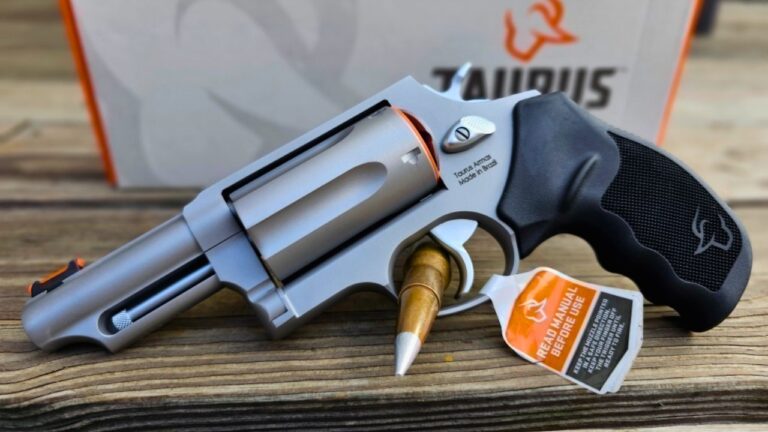
.38 Special is common, but it can disappoint people who expect “easy shooting” out of small revolvers
.38 Special is absolutely everywhere, and it’s a staple for a reason. The love problem shows up when people buy a small revolver thinking it will be simple and soft-shooting, then reality hits them. A lightweight snub revolver with .38 +P can be surprisingly sharp, and the grip shape and short sight radius make it harder to shoot accurately under speed than most new shooters expect. That combination—harder recoil than anticipated and harder accuracy than anticipated—turns “simple” into “I don’t enjoy this,” and then practice dries up. A revolver also demands a different kind of skill set: a long, consistent trigger press, firm grip, and a willingness to accept slower reloads unless you truly train them.
There’s also the performance expectation gap. People hear “.38” and assume it’s plenty, then they choose the wrong loads or never verify function and point of impact in their specific gun. Snub revolvers can be picky about how certain loads shoot, and short barrels can rob velocity in ways that change expansion performance. If a shooter doesn’t want to think about load selection, sight regulation, and honest practice with that long trigger, the caliber becomes a frustration. They keep buying .38 because it’s easy to find, but they stop loving the platform that usually comes with it.
12 gauge is everywhere, but it’s hard to love if you don’t build the body mechanics for it
If we’re talking common calibers in the broader sense, 12 gauge belongs here. It’s one of the easiest “defensive” and “hunting” solutions to buy, and it can be brutally effective. The love problem is recoil and user fit. A lot of shooters buy a lightweight pump gun with a stock that doesn’t fit them, then touch off buckshot or slugs and immediately decide they hate shotguns. That’s not weakness, that’s physics plus poor setup. A shotgun with bad fit and aggressive loads can beat you up, and getting beat up makes people avoid training. Then the shotgun becomes a closet gun instead of a tool the owner can run confidently under stress.
Mechanically, shotguns can also be “hard to love” because they punish sloppy technique. Pump guns especially demand a firm, complete cycle under recoil, and user-induced short-stroking is a real failure point when the shooter is cold, tired, or rushed. Semi-auto shotguns can be reliable, but they also have ammo sensitivity if the gas system, recoil spring, or lubrication state isn’t right, and they need periodic cleaning to stay boring. So you end up with a platform that’s widely available but only truly lovable when it’s fitted, practiced, and maintained like it matters.
The common thread is that “available” calibers get bought for convenience, then judged by emotion
These calibers are common because they solve real market needs, and plenty of skilled shooters run them extremely well. The reason they’re hard to love is that they often demand something the average buyer didn’t plan on giving: more practice, more maintenance attention, better gun fit, or more honest acceptance of recoil and blast. When the shooter’s reality doesn’t match the caliber’s demands, the relationship turns into resentment. The ammo stays on the shelf, the gun stays in the safe, and the shooter quietly reaches for something that feels easier to live with.
If you want to avoid that trap, the move is to match caliber to your actual behavior, not your ideal self. If you don’t love recoil, don’t buy recoil. If you won’t maintain springs and mags, don’t run a setup that punishes neglected maintenance. If you want simplicity, choose a platform you’ll truly practice with, not one you think you “should” like. The calibers that are easy to find and hard to love are usually telling you the same thing: availability is not the same as suitability, and suitability is what keeps you training instead of just collecting.
Like The Avid Outdoorsman’s content? Subscribe to our newsletter so you never miss an article.
Here’s more from us: