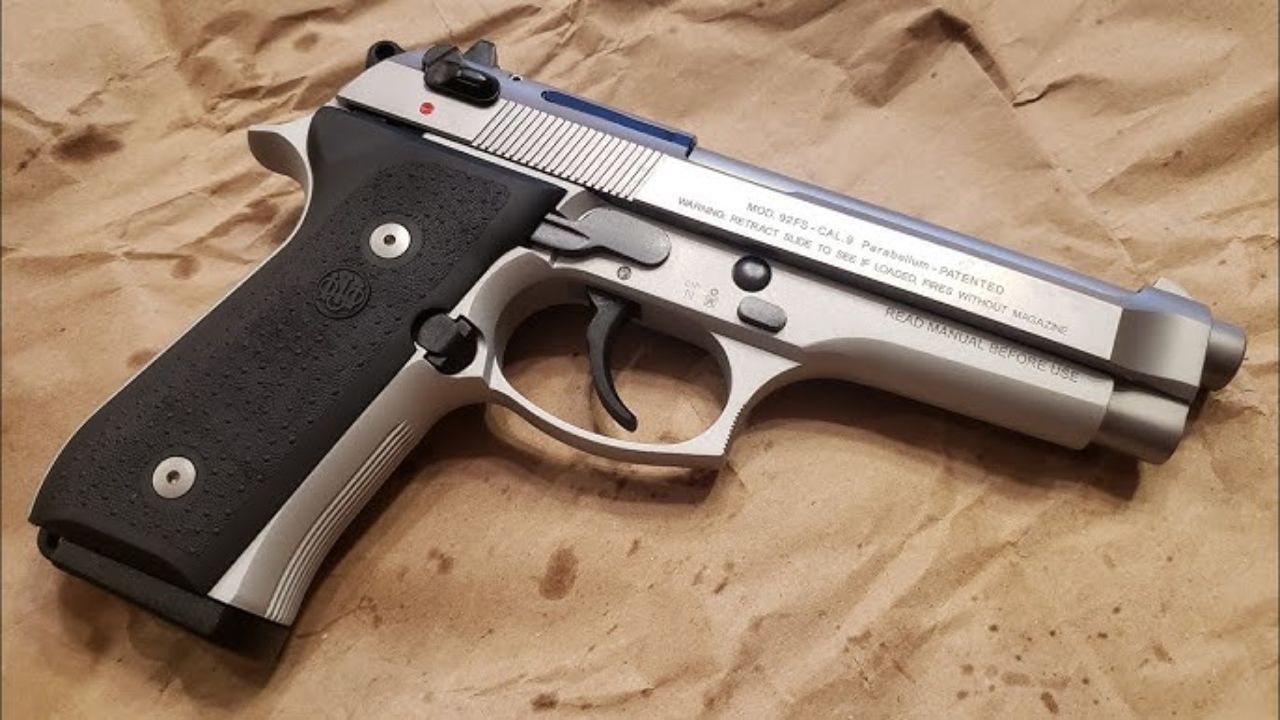
Photo credit: Shazarad/YouTube
The Beretta 92FS is one of those pistols that almost everybody recognizes, but a lot of shooters only know the broad version of the story: big alloy-frame 9 mm, slide-mounted safety, military connection. The fuller story is a lot more interesting. The Beretta 92 line debuted in 1976, and the 92FS became the safety-updated version after Beretta addressed rare slide-separation concerns discovered during later U.S. trials. American Rifleman says that enlarged hammer pin change is exactly what created the 92FS, and that this was the version ultimately adopted by the U.S. as the M9 in 1985.
What makes the 92FS especially important is that it was not just a popular commercial pistol. It became one of the defining full-size service pistols of the late 20th century. Its open-top slide, locking-block system, DA/SA action, and 15-round double-stack magazine helped make it stand out when it first appeared, and those same traits still define the gun now.
1. The Beretta 92 line started in 1976
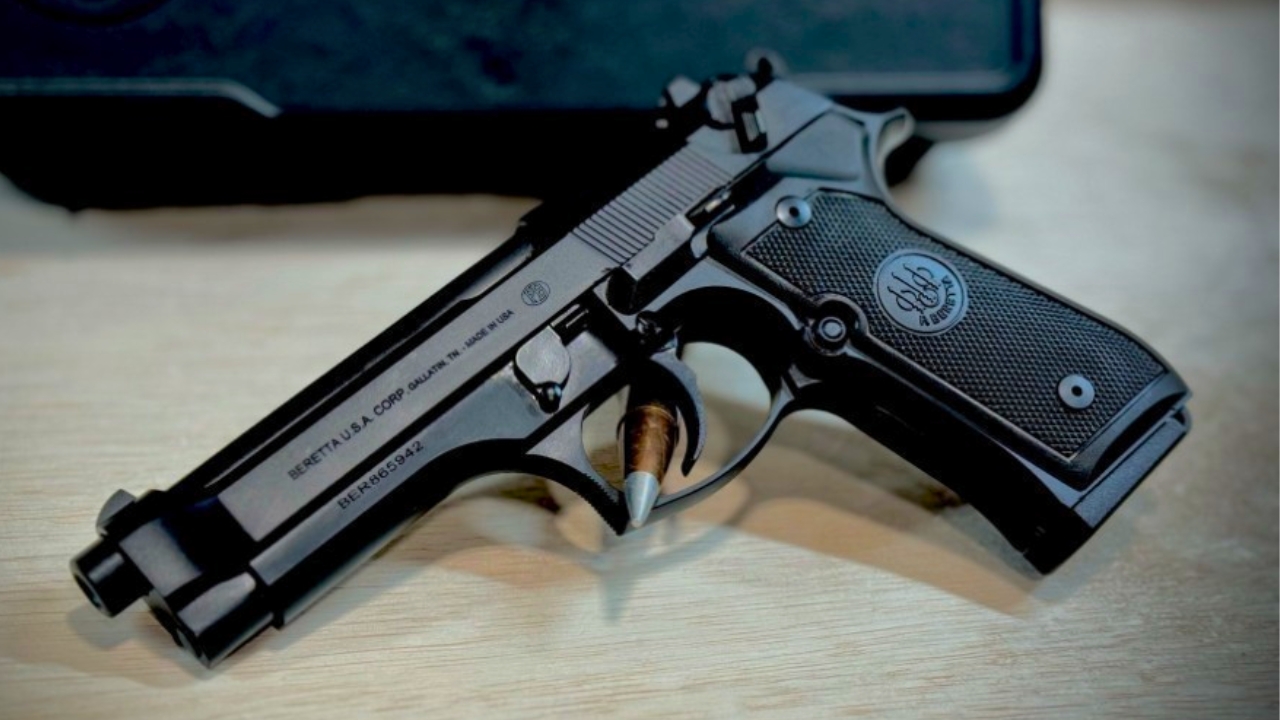
A lot of shooters mentally place the 92FS itself at the beginning of the story, but the broader Beretta 92 family goes back to 1976. American Rifleman says Beretta introduced the original Model 92 that year as a double-action 9×19 mm pistol with a 15-round capacity.
That matters because the 92FS was not a first draft. It was the product of several early iterations inside the 92 family before the final military-famous version emerged.
2. The original 92 had a frame-mounted safety, not a slide-mounted one

One of the easiest details to miss is that the earliest 92 did not look exactly like the later 92FS. American Rifleman says the original 1976 Beretta 92 had a frame-mounted safety.
That means the control layout most people now associate with the gun was not there from the beginning. The familiar slide-mounted safety/decocker came later.
3. The slide-mounted safety arrived in 1979

According to American Rifleman, Beretta moved the safety to the slide in 1979 on the 92S1, which also had an ambidextrous safety/decocker and a reversible magazine catch.
That change is a big part of how the pistol became the gun most shooters now recognize. The 92FS’s control layout really traces back to that 1979 shift.
4. The 92FS exists because Beretta changed the design after slide failures were discovered
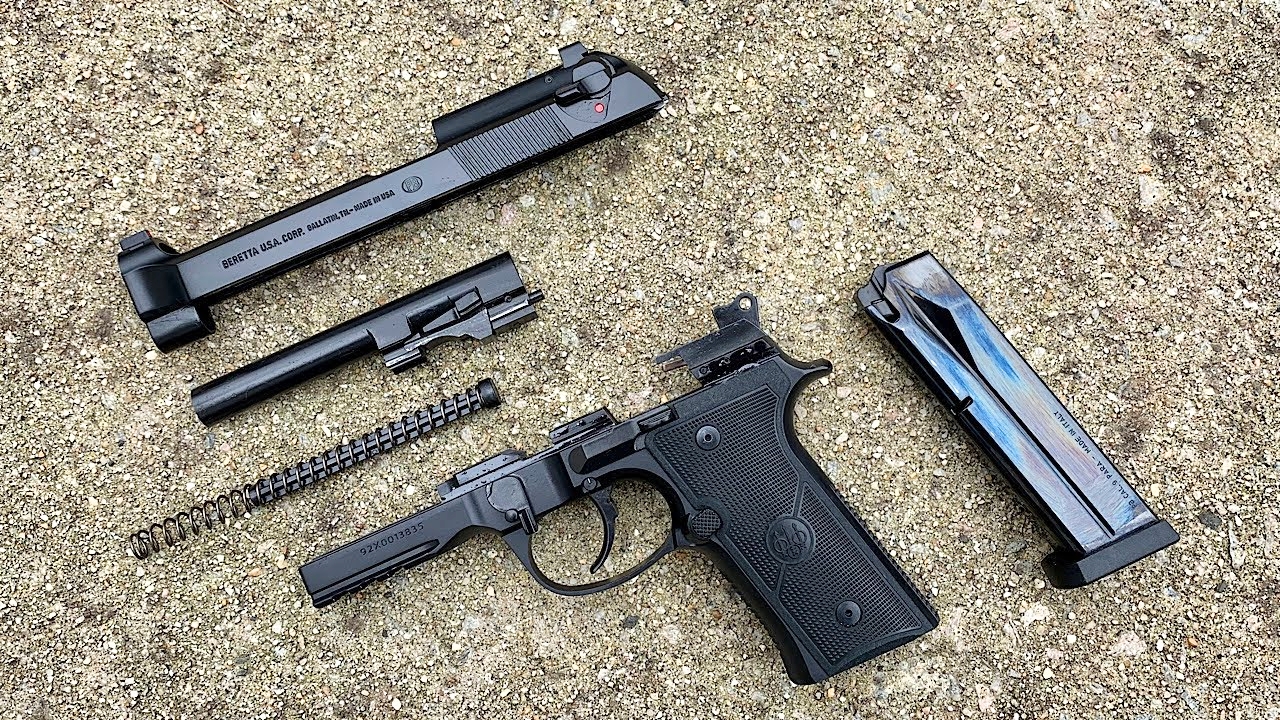
This is probably the most important “why” behind the model name. American Rifleman says an issue was discovered during later U.S. trials where some 92F slides were falling off, and Beretta corrected this with an enlarged hammer pin, creating the 92FS. Shooting Illustrated says the oversize hammer pin rides in a groove on the underside of the slide and physically prevents the slide from moving farther back if the slide fails.
That means the “FS” is not just random product-code language. It marks a real safety-related engineering change that became central to the model’s identity.
5. The enlarged hammer pin is one of the pistol’s most important hidden features

The 92FS’s enlarged hammer pin is easy to overlook unless someone points it out. Shooting Illustrated says the modification adds a larger-diameter hammer-pin head and a groove in the slide so the pin can stop rearward slide travel if a break occurs.
That is one of those features that many owners never think about, but it is one of the biggest reasons the 92FS became the standard version people trusted.
6. The 92FS and the M9 are closely related, but they are not always identical in every detail

A lot of people use “M9” and “92FS” like they mean exactly the same thing. American Rifleman says the 92FS design was the one adopted as the M9 in 1985, but Shooting Illustrated’s 2024 comparison makes clear there are model-specific differences when you compare commercial 92FS pistols and military-marked M9s directly.
That means the easiest safe summary is this: the M9 comes out of the 92FS pattern, but the names are not always perfectly interchangeable in collector or feature-detail conversations.
7. It was adopted by the U.S. military in 1985

This is one of the biggest facts behind the 92FS’s reputation. American Rifleman says the corrected 92FS design was ultimately adopted by the U.S. as the M9 in 1985.
That adoption is a huge reason the pistol became so famous in America. A lot of shooters first knew the gun because of military exposure, not because they encountered a commercial 92FS in a store case. That second sentence is an inference grounded in the military-adoption milestone.
8. The open-top slide is one of the line’s defining design traits

American Rifleman says the 1976 Model 92 used an open-top slide and barrel arrangement. That basic silhouette carried through the family and remains one of the quickest visual clues that you are looking at a Beretta 92-type pistol.
That design is not just cosmetic. It became one of the most recognizable Beretta pistol traits of the modern era.
9. The locking system has roots in the Walther P.38

American Rifleman’s M9 history says the Beretta 92 uses a falling locking block arrangement reminiscent of the Walther P.38, rather than the Browning-style tilting-barrel system many shooters expect in modern pistols.
That matters because it helps explain why the 92FS feels and cycles a little differently from many other service pistols. It is mechanically part of a different branch of pistol design.
10. The original 92’s 15-round magazine was a major selling point in its era

American Rifleman says the original Model 92 launched with a 15-round capacity. In the late 1970s and early 1980s, that was a serious service-pistol advantage.
That capacity is a big reason the pistol looked so modern when it arrived. The 92FS did not become important only because of its military contract; it already had a very competitive feature set.
11. The pistol’s military reputation helped define Beretta in the U.S.

The Beretta M9’s long service life gave the 92FS pattern a level of visibility most full-size pistols never get. American Rifleman’s 2009 “25 Years of Service” piece treats the M9/92FS family as one of the core U.S. military sidearm stories of the modern era.
That visibility did a lot for Beretta’s U.S. identity. For many American shooters, the 92FS was Beretta. That second sentence is an inference grounded in the M9’s long military prominence.
12. The 92FS is one of the clearest examples of a classic DA/SA service pistol

American Rifleman says the 92FS is a locked-breech, double-action/single-action pistol with a slide-mounted safety lever.
That matters because the 92FS now represents a whole style of service pistol that has become less dominant in the striker-fired era. It is one of the best-known survivors of that DA/SA duty-gun philosophy. That broader point is an inference grounded in the pistol’s long-standing action layout and historical role.
13. A lot of complaints about the 92 trigger are tied to the hammer spring, not the whole design

American Rifleman’s 2018 upgrade piece says shooters often complain about the heavy double-action pull because they are compressing a needlessly heavy hammer spring, and that changing springs can transform the feel.
That is useful because it shows some of the pistol’s “bad trigger” reputation is more nuanced than people make it sound. The platform itself is not necessarily the whole problem.
14. The 92FS’s reputation comes from both design and endurance
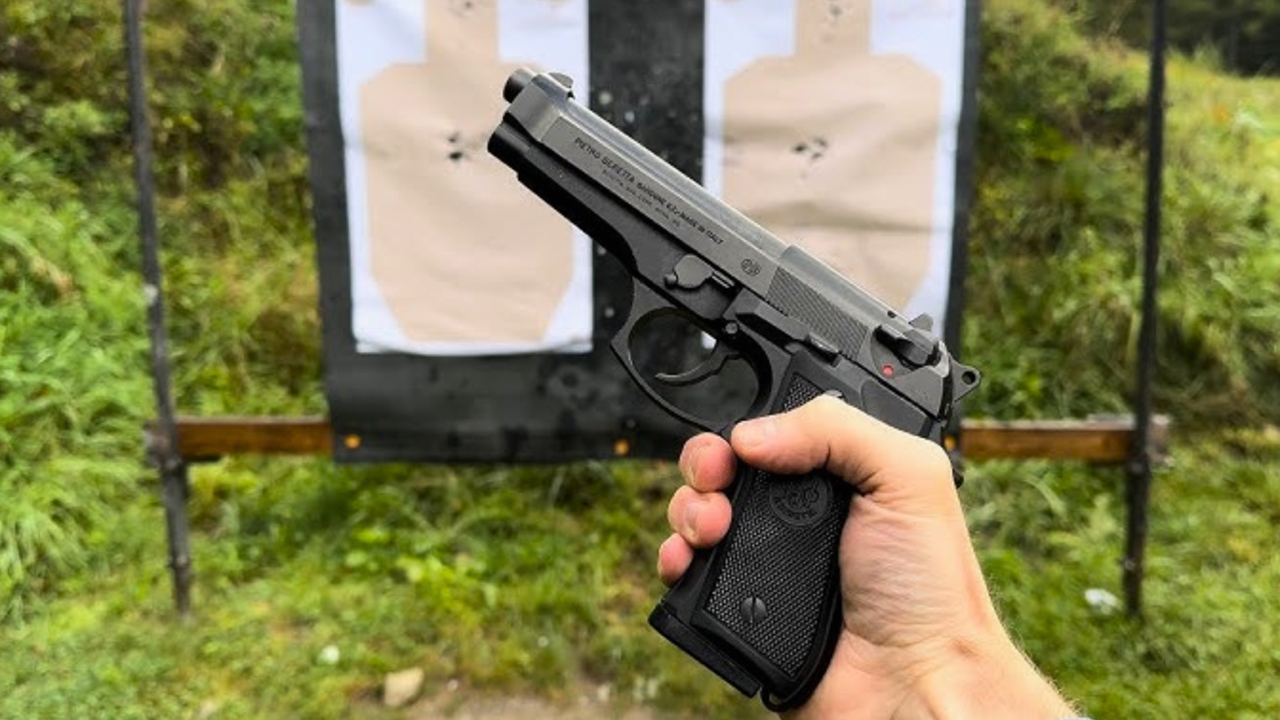
The Beretta 92 line brought together a high-capacity magazine, open-top slide, non-tilting locking-block system, DA/SA operation, and later the FS slide-retention fix. Then the M9 adoption gave that package decades of institutional visibility.
That combination is why the 92FS still matters. It was not just a successful commercial pistol and not just a military sidearm. It was both at once. That conclusion is an inference from the overlapping commercial and military history in the cited sources.
15. The “FS” in 92FS marks the version that locked in the pistol’s legacy

The original 92 started the story, the 92S shifted the controls, and the U.S. trials put the design under enormous pressure. But it was the 92FS—with the enlarged hammer pin and slide-groove safety change—that became the enduring version most people mean when they talk about the classic Beretta service pistol.
That is why the 92FS still matters so much. It is not just “the Beretta 92.” It is the version that turned the line into a permanent handgun landmark.
Like The Avid Outdoorsman’s content? Subscribe to our newsletter so you never miss an article.
Here’s more from us: