Photo credit: seeetz/Unsplash.com
A concealed carrier said he was fueling up at a 7-Eleven when a quick stop turned into the kind of parking lot encounter that makes a person rethink how they handle strangers walking up on them.
In a Reddit post, he said an aggressive man in the parking lot asked him for change. The poster did what a lot of people do in that situation: he kept walking. He did not stop, argue, or engage. He had learned to avoid escalating situations by refusing to get pulled into a back-and-forth.
But the man did not let it go.
After the poster kept moving, the stranger started yelling insults at him. He said the man swore loudly and called him names, including “little bitch” and “pussy.” Then the stranger’s voice started getting closer behind him.
That was the moment the situation got uncomfortable.
The poster said he assumed the man had followed him for maybe 20 feet or so. He kept heading back toward his truck so he could leave. Later, he clarified that he did not sprint or look panicked. He said he kept walking directly to the truck at a normal pace and did not think he looked like an easy target. He also clarified that the man was not charging him aggressively, but more stumbling in his direction while still yelling.
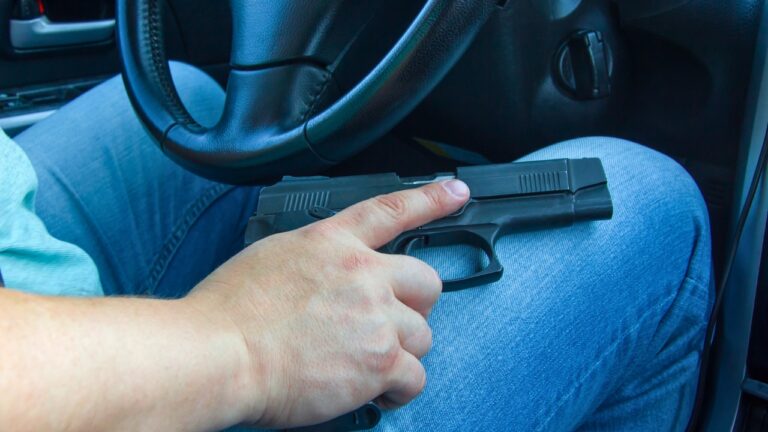
Even with that clarification, the concern was real. The poster had his back turned to someone who was angry, loud, and moving in his direction. He was also carrying a firearm, which made every decision feel heavier.
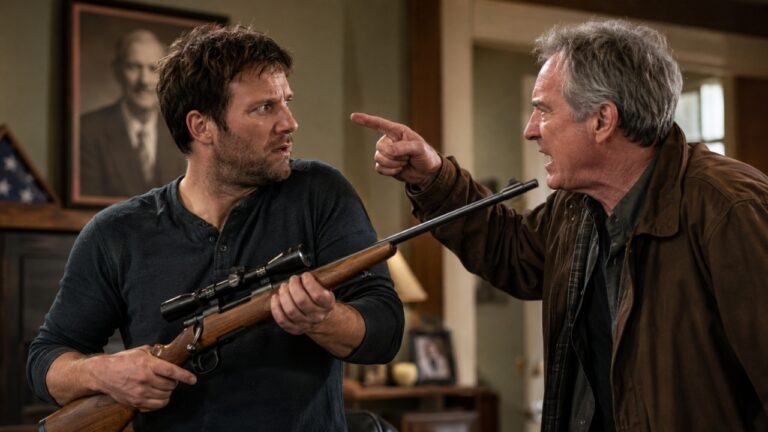
That was the part he was struggling with. As a concealed carrier, he did not want to turn around and escalate the encounter. In his mind, the moment he acknowledged the man or confronted him, he would be adding fuel to a situation he had knowingly entered while armed. If the man then pulled a knife or rushed him, the poster worried the aftermath could look more complicated in court because he had turned and engaged.
So he stuck with the rule he had been following: do not stop walking, do not confront, do not feed the interaction.
But that rule created its own problem. If he never turned around, he could not fully track what the man was doing. His back was to the person making threats. He did not know for sure if the man had a weapon. He did not know if anyone else was nearby. He could not watch the stranger’s hands, posture, or distance. He was trying to avoid escalation, but he was giving up awareness to do it.
That was why he brought the question to Reddit. He wanted to know how he could maintain awareness and have a plan for either lethal or non-lethal defense while still avoiding engagement.
The post was less about one parking lot argument and more about the gray area concealed carriers talk about all the time. It is easy to say “avoid trouble.” It is harder when trouble is behind you, talking loud, closing distance, and waiting to see how you react.
The poster later explained that he believed the stranger was trying to get a rise out of him. He felt that turning around and responding might have accomplished exactly what the man wanted. He did not want ego to make the decision. He did not want to snap back, posture, or invite more conflict. He just wanted to leave.
At the same time, he admitted the situation sat close to the line where ignoring someone may stop being smart. If a person is only yelling, leaving may be the right answer. If that same person starts closing the gap, reaching into a pocket, circling toward a blind side, or blocking the path to the vehicle, the situation changes fast.
And that was the exact line he was trying to understand.
A few details made the setup harder. His truck was at the pump. The stranger was near the store entrance. To walk back to the truck, he naturally had to move with his back partly turned. He said he was not going to walk backward or sideways through a gas station lot and risk tripping or getting hit by a car. But stopping to face the man, in his mind, might have invited more interaction.
That is what made the encounter stick with him. He got away clean. Nothing physical happened. No gun came out. No fight started. But he left feeling like he had handled the avoidance part and lost too much of the awareness part.
For anyone who carries, that is not a small concern. A gun does not make a parking lot encounter simpler. It makes restraint more important, but it also makes awareness more important. You do not want to provoke someone, but you also do not want to let an aggressive stranger walk up behind you unseen.
The poster seemed to understand both sides. He did not want to be the guy who turns every insult into a confrontation. He also did not want to be the guy who gets blindsided because he was so committed to ignoring trouble that he stopped watching it.
Commenters pushed back hard on the idea that turning around is automatically escalation. Several said there is a difference between provoking someone and simply keeping eyes on a possible threat.
One commenter told him to look the person in the eye and say he had no money to give. Their point was that if the person does not accept a clear “no,” then they may not be asking for change anymore. They may be sizing him up.
Others said walking away with his back turned was dangerous. They argued that a concealed carrier should not be so afraid of “escalating” that he gives up basic awareness. Watching someone’s hands, posture, and distance is not the same as challenging him to a fight.
Some commenters still agreed that leaving was the right move, especially because the stranger never fully rushed him or blocked him. They gave him credit for not taking the bait and not letting insults drag him into a useless argument.
A few people offered practical alternatives. One suggested changing his path to the truck so he could keep the man in his side vision instead of walking straight away. Others recommended a firm, brief response like “No, I don’t have anything for you” while continuing to move.
The common advice was that carrying a gun does not mean a person has to become silent and passive in every uncomfortable encounter. It means the response has to stay controlled. Keep distance, keep watching, do not trade insults, and leave when you can. But do not turn your back on someone who is angry and closing distance just because you are trying to be polite.