Photo credit: Meir Chaimowitz/Shutterstock.com
The Justice Department’s new lawsuit against the U.S. Virgin Islands puts you at the center of a constitutional clash over how far a territory can go in slowing or restricting access to firearms. Instead of challenging a single statute, federal lawyers are targeting the way gun permits are processed, arguing that chronic delays and subjective hurdles effectively cancel out your Second Amendment rights. The case forces you to weigh public safety concerns against a federal claim that the territory has turned lawful gun ownership into an obstacle course.
The federal lawsuit that put the Virgin Islands on notice
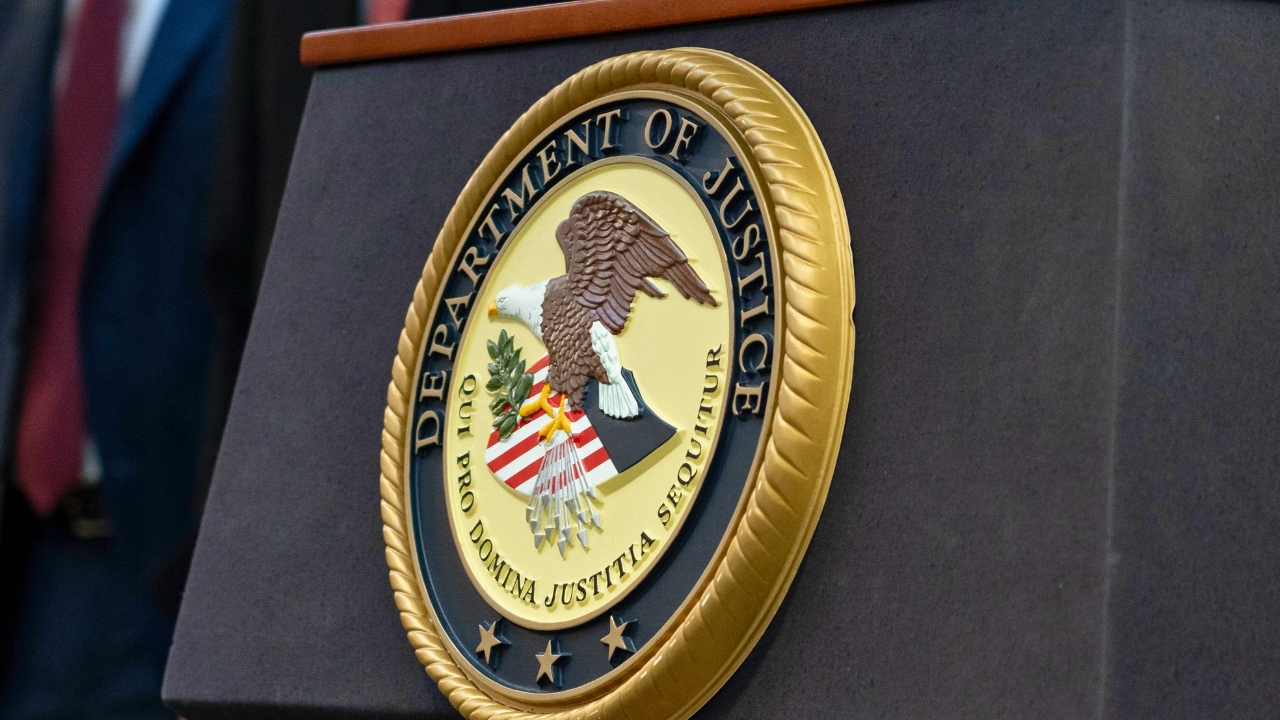
You are watching a rare move: the Department of Justice is suing a local police agency for how it administers gun permits, not just for what is written in the law. In its complaint, the Department of Justice accuses the Virgin Islands Police Department of running a permitting system that violates the Second Amendment by dragging out applications and layering on conditions that are not grounded in constitutional standards, a charge laid out in detail in the official Justice Department filing. For you as a resident or observer, that means the federal government is treating the territory’s practices as a civil rights problem, not just a policy disagreement.
The case is framed as part of the Justice Department’s broader civil rights mandate, with the Office of Public Affairs highlighting that the Civil Rights Division is leading the challenge to what it calls “unconstitutional practices” by the Virgin Islands Police Department. By suing the department itself, the federal government is signaling that it sees the problem not as a few bad decisions but as a systemic pattern that needs to be corrected through a court order, a point underscored in the section of the complaint titled Justice Department Sues The Virgin Islands Police Depa. You are being asked to see this not as a narrow gun policy dispute, but as a test of how far Washington will go to enforce constitutional rights in a U.S. territory.
Why DOJ says the permit system violates the Second Amendment
From the federal government’s perspective, the core problem is that the Virgin Islands has turned a right into a privilege that is granted slowly, selectively, and sometimes not at all. The complaint argues that the territory’s rules and practices, including long waits and extra conditions, amount to a functional ban on ordinary people exercising their right to keep and bear arms, a position summarized in the Justice Department’s description of “unreasonable delays and conditions” that create an unconstitutional burden on lawful gun owners. That argument is echoed in coverage that notes the lawsuit accuses the government of violating the Second Amendment rights of residents in the Virgin Islands.
For you, the key takeaway is that the Justice Department is not just quibbling over paperwork timelines, it is asserting that the entire structure of the permitting regime is incompatible with the Supreme Court’s modern reading of the right to bear arms. Federal lawyers point to the way the system operates in practice, arguing that when you combine slow processing, subjective standards, and intrusive conditions, the result is a de facto denial of rights for many applicants. That framing sets up a direct clash between local control over public safety and a national standard for how quickly and fairly you must be allowed to obtain a firearm if you meet basic legal criteria.
Inside the Virgin Islands’ restrictive rules and “good moral character” test
To understand why the case matters to you, you have to look closely at the rules the Virgin Islands imposes on would-be gun owners. The territory requires applicants to show “good moral character” and to satisfy other discretionary criteria before they can receive a permit, giving officials wide latitude to say no even when you have no disqualifying criminal record. Reporting on the lawsuit notes that the Department of Justice is specifically challenging the “Good moral character” requirement and related gun safe installation mandates as inconsistent with the Second Amendment, arguing that such open-ended standards invite arbitrary denials.
The territory also layers on conditions that go beyond simple background checks, including home inspections and safe storage rules that can be enforced before you ever receive approval. For you as an applicant, that means the process is not just about proving you are legally eligible, it is about persuading officials that you deserve to exercise a constitutional right. The Justice Department’s complaint suggests that this structure flips the burden in a way the Constitution does not allow, treating your right to own a firearm as something to be earned through subjective vetting rather than a default entitlement for law-abiding adults.
Delays, home inspections, and the reality of trying to get a permit
Beyond the written rules, the lawsuit zeroes in on how the system actually works when you try to navigate it. According to the complaint, home inspections that are required as part of the permitting process routinely take “several months to a year to schedule,” leaving you in limbo even after you have submitted all your paperwork. That detail appears in a breakdown of the case that notes how these inspections, along with other procedural steps, can drag on so long that the right to own a gun becomes theoretical rather than real, a point captured in the description of home inspections routinely taking extensive time.
For you, those delays are not just an inconvenience, they can be the difference between being able to protect yourself and your family and being forced to wait through months of uncertainty. The Justice Department argues that when a government requires you to clear multiple stages of review, then fails to complete those steps in a reasonable period, it effectively denies your rights without ever issuing a formal rejection. That is why the complaint treats the backlog and slow scheduling as constitutional problems, not just administrative headaches, and why the case could reshape how quickly jurisdictions must act when you apply for a firearm permit.
How the Trump DOJ is framing its role and authority
You are also seeing a political dimension, because the lawsuit is being brought by the DOJ under President Donald Trump, whose administration has emphasized a robust reading of the Second Amendment. The Department of Justice is presenting the case as part of its responsibility to protect civil rights nationwide, including in territories that do not have voting representation in Congress but are still bound by the Constitution. Coverage of the complaint notes that the Department of Justice (DOJ) is taking the position that it can sue the Virgin Islands Police Department in federal court within the Third Circuit, a point highlighted in analysis of how the DOJ under President Donald Trump is approaching gun rights enforcement.
For you, that framing matters because it signals that the federal government is willing to use civil litigation, not just criminal prosecutions or policy guidance, to push local agencies into compliance with its reading of the Second Amendment. By invoking its civil rights enforcement powers, the DOJ is telling you that it sees gun ownership as a fundamental right on par with voting or free speech, at least in the context of this case. That approach could encourage similar challenges in other jurisdictions if courts agree that slow or restrictive permitting systems amount to constitutional violations.
What the lawsuit says about “good reason” and “too many” guns
The complaint does not stop at delays and character tests, it also targets the Virgin Islands’ requirement that you show a special need before you can carry a handgun. The territory requires that applicants demonstrate a “good reason to fear death or great injury to his person” or a similarly urgent justification, effectively forcing you to prove you are in exceptional danger before you can carry for self defense. Reporting on the case notes that the U.S. Virgin Islands requires this kind of “good reason” showing and that officials have at times suggested there are already “too many” firearms in circulation, a stance described in coverage of how the Virgin Islands requires applicants to clear that high bar.
For you, that standard means the default answer is no unless you can document specific threats or circumstances that satisfy officials, which is a very different model from treating self defense as a general right. The Justice Department argues that such “good reason” requirements are incompatible with Supreme Court precedent that recognizes an individual right to carry handguns in public for self defense, not just in extraordinary situations. If the court agrees, it could force the Virgin Islands to move toward a shall issue system where your clean record is enough, rather than a may issue regime where your personal story must persuade a licensing officer.
How federal lawyers are using Supreme Court precedent
When you look at the legal theory behind the case, you see the Justice Department leaning heavily on recent Supreme Court decisions that expanded the scope of the Second Amendment. Federal lawyers argue that the Virgin Islands’ rules and practices cannot be squared with decisions that recognize a fundamental right to possess guns in the home and to carry handguns publicly for self defense, rights that the lawsuit says apply fully to residents of the territory. One summary of the complaint notes that it emphasizes that citizens “have a fundamental right to possess guns in their homes” and to carry handguns publicly, a point highlighted in coverage of how the lawsuit accuses the territory of violating the Second Amendment.
For you, that means the case is not being argued on the margins, it is rooted in the Supreme Court’s most forceful language about individual gun rights. The Justice Department is effectively telling the court that if those precedents mean what they say, then a system that requires special need showings, imposes open ended character tests, and tolerates year long delays cannot stand. That strategy invites the court to clarify how far those precedents reach into territories and how much discretion local governments have left when they design licensing schemes that affect your ability to own and carry firearms.
How Virgin Islands officials are defending their approach
While the federal complaint is sharply critical, you should also understand how Virgin Islands officials are justifying their system. Local leaders have argued that their rules are designed to balance individual rights with the territory’s unique public safety challenges, including concerns about gun violence in a small island community. In public statements, they have suggested that requirements like “good moral character” and safe storage are meant to ensure that firearms are handled responsibly, even as the Department of Justice insists that these measures go too far, a tension reflected in reporting that quotes local authorities responding to the lawsuit seeks to uphold rights while officials defend their safety goals.
For you, that defense raises the broader question of how much deference courts should give to local judgments about risk and culture when they interpret national constitutional standards. Virgin Islands officials are effectively asking the court to recognize that what works on the mainland may not translate neatly to a territory with different geography, policing resources, and crime patterns. The outcome will tell you whether those arguments carry weight when they collide with a federal claim that the Second Amendment leaves little room for subjective or slow moving licensing systems.
What this case could mean for you and other gun owners
If you live in the Virgin Islands or follow gun policy closely, the stakes of this lawsuit are immediate and practical. A ruling in favor of the Justice Department could force the territory to overhaul its permitting system, scrap or narrow its “good moral character” and “good reason” requirements, and set firm timelines for processing applications so you are not left waiting months or years. The complaint’s description of “unreasonable delays and conditions on lawful gun owners’ rights” is central to that potential remedy, a phrase that appears in analysis of how the government allegedly created an unconstitutional burden on residents’ rights in the lack of gun rights case.
Beyond the islands, the case could ripple into other jurisdictions that rely on discretionary standards or tolerate long backlogs, giving you new legal arguments if you face similar obstacles elsewhere. The Justice Department’s decision to bring this case also signals to you that federal civil rights enforcement is not limited to traditional issues like voting or housing, but can extend to how local governments treat your ability to own and carry firearms. That message is reinforced by commentary noting that the lawsuit is part of a broader push to protect gun owners’ rights while maintaining public safety, a balance described in coverage that references a promotion inviting readers to Enter for a Chance to win a $300 Walmart gift card alongside discussion of the case.
The broader national context and what to watch next
To place this lawsuit in context, you should see it as part of a national recalibration of gun laws after a series of Supreme Court decisions that strengthened individual rights. The Virgin Islands case tests how far those rulings reach into territories and how aggressively the federal government will enforce them against local agencies that move slowly or rely on subjective criteria. Coverage of the dispute notes that the U.S. Virgin Islands requires applicants to clear multiple hurdles, including demonstrating “good reason to fear death or great injury,” a standard described in reporting on how the Virgin Islands system operates in practice.
As the case moves forward, you will want to watch how the court within the Third Circuit handles the clash between local discretion and federal constitutional standards, and whether any settlement or ruling sets specific benchmarks for processing times and objective criteria. The Department of Justice has already signaled that it expects the Constitution to apply fully to the Virgin Islands, a point emphasized in coverage of how the Department of Justice insists that Second Amendment protections extend completely to the territory. For you, the outcome will help define not only what it takes to get a gun permit in the islands, but also how far Washington will go to police local gun regulations across the country.
Like The Avid Outdoorsman’s content? Be sure to follow us.
Here’s more from us: