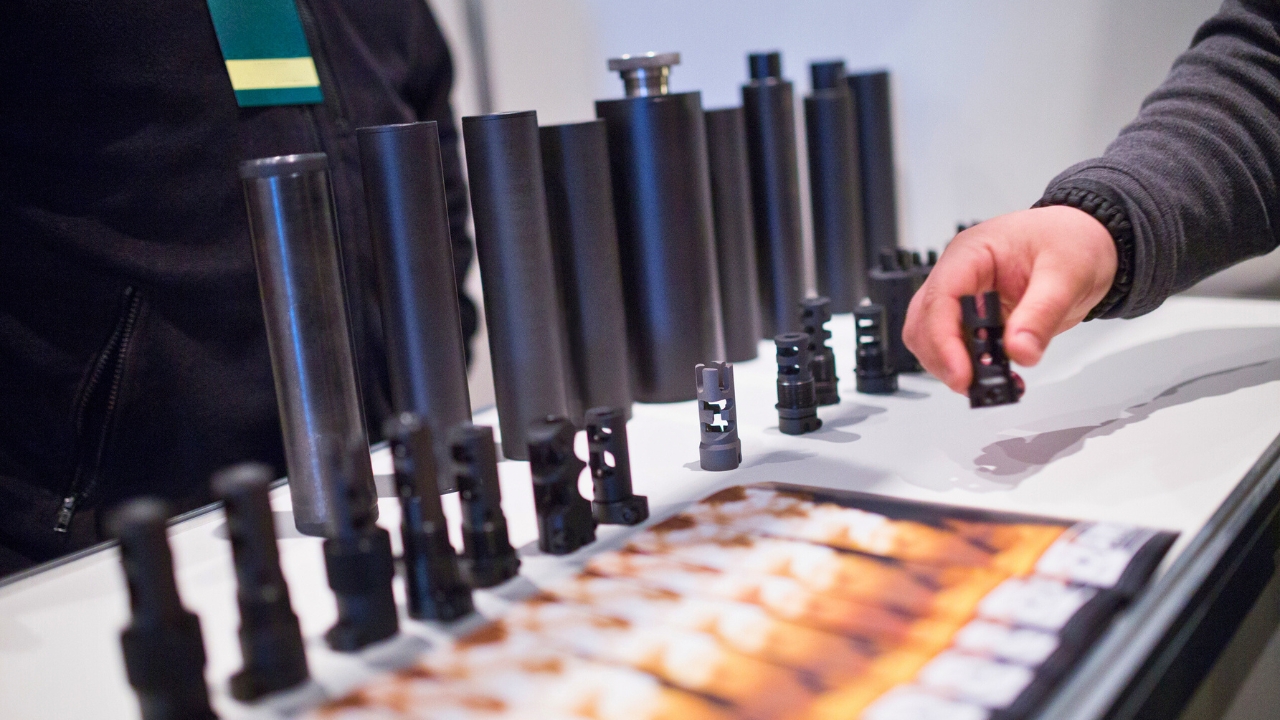
Photo credit: Sodel Vladyslav/Shutterstock.com
When you send an NFA application to the federal government, you are not just buying a suppressor or short‑barreled rifle, you are buying time. The single most common paperwork mistake that burns that time is bad identifying data, especially mismatched or incomplete personal information that forces the ATF to stop your file and ask basic questions you should have answered correctly the first time. If you want your approval in months instead of an open‑ended wait, you need to treat every line of the form as if a typo could cost you a season of shooting, because in practice it often does.
The good news is that the errors that cause the longest delays are predictable and avoidable once you understand how the system works. By focusing on the way your name, address, serial number, and fingerprints flow through the NFA pipeline, and by borrowing habits from other high‑stakes paperwork worlds, you can dramatically cut the odds that your application gets kicked back to the bottom of the pile.
The real bottleneck: inaccurate data that stops the process cold
The mistake that derails more NFA applications than any other is not forgetting a tax stamp or even a missing fingerprint card, it is inaccurate or inconsistent data that prevents examiners from matching you and your firearm to federal records. When your name, address, or serial number does not line up with what the system expects, your file effectively hits a red light, because the ATF cannot move forward until the discrepancy is resolved. In a training presentation on how to Error‑Proof Your ATF Forms, the agency’s own guidance notes that “ATF has stated that 40 percent of all Form 4 applications submitted to the NFA Division contain errors,” and that processing “stops if data is inaccurate,” which is as blunt a warning as you will ever get from a bureaucracy.
That figure, 40 percent, tells you the real story behind long wait times: nearly half of the stack is not ready for prime time when it hits an examiner’s desk. Every time someone transposes a digit in a serial number, abbreviates a trust name differently from one document to the next, or leaves a date field blank, the file becomes a problem case instead of a routine approval. The ATF’s own list of Common Errors runs from missing signatures and incorrect dates to mis‑entered serial numbers, and every one of those issues can force your application into a manual back‑and‑forth. If you want to avoid the most damaging delay of all, your first priority is to make sure every character of identifying information is complete, consistent, and legible.
How the modern NFA pipeline works, and where errors bite you
To understand why a single typo can cost you months, you need to see how your application moves through the system. Whether you file on paper or electronically, your Form 4 or Form 1 is routed into the NFA Division’s workflow, where examiners rely on automated checks to match your data against internal records and the background check system. When those checks pass, your file can move quickly, which is how the ATF was able to cut average suppressor approval times by a reported “5000%” after it shifted volume into a more efficient process and focused on Historically ATF choke points. When those checks fail because your information does not match, your file stops being a candidate for fast‑track handling and becomes a troubleshooting project.
That is why the agency and industry partners keep hammering on the same theme: the system can be fast when it is not spending its time cleaning up your mistakes. A compliance briefing that focuses on Form 4 accuracy makes it clear that examiners are not just checking boxes, they are verifying that every field lines up with what is in the NFRTR and other databases. If your application forces them to hunt for a missing digit or reconcile two different spellings of your name, you have just volunteered to sit in the slow lane while they work through cleaner files first.
Paper versus eForms: why the platform matters less than your inputs
There is a lot of energy spent arguing about whether paper Form 4s or electronic submissions are faster, but the underlying truth is that both systems punish bad data. Paper Form 4s have historically taken longer, and recent guidance notes that Paper Form 4s have the slowest turnaround, in part because someone has to manually key in what you wrote. Every time your handwriting is unclear or a box is half‑filled, you increase the odds that a clerk misreads a character and introduces a new error on top of your own.
The electronic system is not magic, but it does give you tools to avoid the worst mistakes. When you create an account on the ATF’s official eForms portal, you are feeding your information directly into the same databases examiners use, which reduces the risk of transcription errors and missing fields. Industry guides that walk you through how to Register For Your ATF account emphasize that your first name, last name, and email must match exactly between your eForms profile and any dealer or kiosk system you use. If those identifiers do not line up, the supposed advantages of electronic filing evaporate, because the system cannot reliably tie your biometric data, trust documents, and payment to the same person.
The most common, fixable mistakes that drag out approvals
Once you accept that inaccurate data is the main culprit, the next step is to identify the specific errors that keep showing up. Dealers who live in this world every day point to a familiar list: missing or unreadable fingerprint cards, incorrect serial numbers, and incomplete personal information. A breakdown of Avoiding ATF Form delays highlights “Missing or unreadable fingerprint cards” and “Incorrect serial number” as two of the most common causes of delay, along with other documentation gaps. Every one of those issues is within your control, yet they continue to clog the pipeline because applicants rush through the forms or assume the dealer will catch everything.
The ATF’s own list of Common Errors associated with NFA forms reads like a checklist of preventable problems. It includes missing transferee signatures and dates, incorrect model or caliber entries, and failure to properly complete necessary paperwork, all of which can result in an application being denied or returned for correction. When your file is sent back for something as basic as a missing date next to your signature, you are not just fixing a small oversight, you are effectively re‑entering the line behind thousands of other applicants who managed to sign their names correctly the first time.
Trusts, multiple responsible persons, and the extra room for error
If you are filing through a trust, you are adding complexity that can either protect you legally or slow you down administratively, depending on how carefully you handle the paperwork. Every responsible person listed in the trust has to submit their own Form 23, photo, and fingerprints, and any mismatch between those documents and the core Form 4 multiplies the chances of a delay. Users in the NFA community have noticed that Trusts have been noted to not be much faster than before, in part because each responsible person adds another set of eyes and another set of data that has to be checked.
That does not mean you should avoid trusts, but it does mean you need to treat them as a coordinated project rather than a casual add‑on. Every trustee must use the same spelling of the trust name, the same address, and the same dates across all documents, and you should verify that each Form 23 is complete before your dealer submits the packet. Training materials that focus on Error‑Proof Your ATF Forms emphasize that responsible person forms are a frequent source of mismatched data, which is why a trust that is sloppily managed can easily become the slowest path to approval instead of the flexible tool it is meant to be.
Background checks, NICS delays, and how they interact with paperwork errors
Even when your forms are perfect, the background check can introduce its own delays, especially if your information triggers a closer look in the NICS system. One NFA buyer described being told that ATF told them they were delayed in NICS for their Form 4, despite having “Purchased numerous firearms and have CCW,” and summed up the experience with “Guess now I’m part of the even…” longer wait club. That kind of delay is frustrating precisely because it feels out of your hands, but your paperwork still matters, because any inconsistency in your identifying data can make it harder for NICS to distinguish you from someone with a similar name or history.
The key is to give the system as clean a target as possible. Use your full legal name exactly as it appears on your government ID, avoid nicknames or abbreviations, and make sure your address matches what is on file with your state and your dealer. When you do that, you reduce the risk that the NICS check gets bogged down in false positives or conflicting records. If you are filing electronically, double‑check that your eForms profile mirrors your driver’s license and your dealer’s 4473, so the background check is working from a single, consistent identity instead of three slightly different versions of you.
External shocks: shutdowns, funding fights, and why clean files recover faster
Not every delay is your fault. When the federal government shuts down or funding fights freeze hiring, even flawless applications can sit untouched. During the 2025 budget standoff, the United States government shutdown raised major concerns for gun owners waiting on NFA items, with warnings that applications would stack up in a backlog that would only start moving again once operations resumed. Earlier shutdowns produced similar outcomes, with reports that The ATF has stopped processing all NFA paperwork until the shutdown is lifted, leaving applicants in limbo regardless of how carefully they had filled out their forms.
What you can control is how your application fares once the lights come back on. When Congress passed a funding bill to allow government operations to fully resume and provided funding through 1/30/2026, the NFA Division had to triage a mountain of pending work. In that environment, clean, complete files are the easiest to move first, because examiners can approve them without extra correspondence. If your application is riddled with the same errors that already slow things down in normal times, a shutdown or hiring freeze simply magnifies the penalty, because you are now competing with an even larger pool of applicants for limited attention.
Borrowing best practices from other high‑stakes paperwork worlds
If you want a model for how seriously to treat your NFA forms, look at how other fields handle complex, unforgiving documents. Retirement specialists who help federal employees navigate benefit elections warn that even experienced professionals struggle to get everything right on the first try. In one advisory, But Pierce and Campbell caution that these are very difficult documents to get right the first time and that paperwork errors are common, which is why they urge clients to slow down and verify every field. The stakes there are your pension instead of your suppressor, but the lesson is identical: complex forms punish haste.
Financial compliance offers another useful analogy. In one set of standards, firms that try to file a required notice but enter slightly different identifying information are told, “We could not find a match in our records. The information you enter must match the information provided when this firm” last filed, and are reminded that the data must align with what was included in the last filing. That is exactly how the NFA system behaves when your trust name, address, or serial number does not match prior records. If you would not casually guess at your firm’s legal name on a regulatory form, you should not guess at the spelling of your trust or the configuration of your SBR on a Form 4 either.
Using industry tools and dealer expertise to bulletproof your submission
You do not have to navigate this alone. Dealers and service providers have built entire businesses around helping you avoid the mistakes that cause the worst delays, especially for first‑time suppressor buyers. One overview of why certain platforms work well for newcomers notes that Why Silencer Shop Works So Well for First time buyers is that suppressor laws are complex and intimidating, and having a single place that understands the process reduces the odds that you miss a step. Those systems are not perfect, but they are designed to standardize data entry, pre‑fill known information, and flag missing documents before your packet ever reaches the ATF.
Even with that help, you still need to own the final review. Make sure the information in your dealer’s kiosk or online portal matches your Account on the ATF eForms site, and verify that every responsible person in a trust has completed their part. Community discussions about changing approval speeds, including threads where users ask Does the new process apply to trusts too or not, all circle back to the same point: the system can be fast, but only if your submission is clean enough to move through the automated path. By treating your NFA paperwork with the same discipline you would bring to a mortgage closing or a business filing, you give yourself the best chance of staying out of the 40 percent error bucket that causes the longest, most avoidable delays.
Like The Avid Outdoorsman’s content? Be sure to follow us.
Here’s more from us: