Photo credit: Magpul
You asked for actual rests — not ideas, not improvisation, but real pieces of gear that will steady your rifle and make borderline shots responsible. That’s smart. The right rest turns a shaky, questionable opportunity into a controlled, ethical shot by reducing human error, stabilizing the barrel, and letting you follow through cleanly. Below I’ve picked widely used, field-proven models across categories: bipods, shooting sticks, tripods, bags and portable cradles. Each entry explains when to carry it, how it helps in the field, and the practical trade-offs. You’ll get grounded advice — the sort you can use when packing for a hunt or deciding whether to trust a shot at the edge of your range. Read them, pick the ones that match your terrain and style, and practice with them so you know exactly how much confidence they add when it counts.
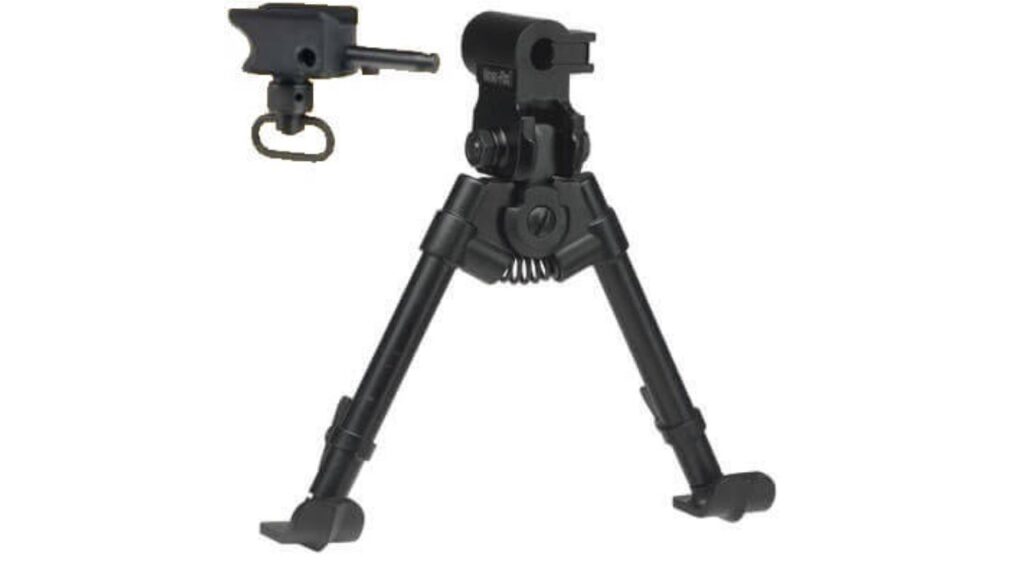
Harris S-BRM Bipod (fixed / swivel)
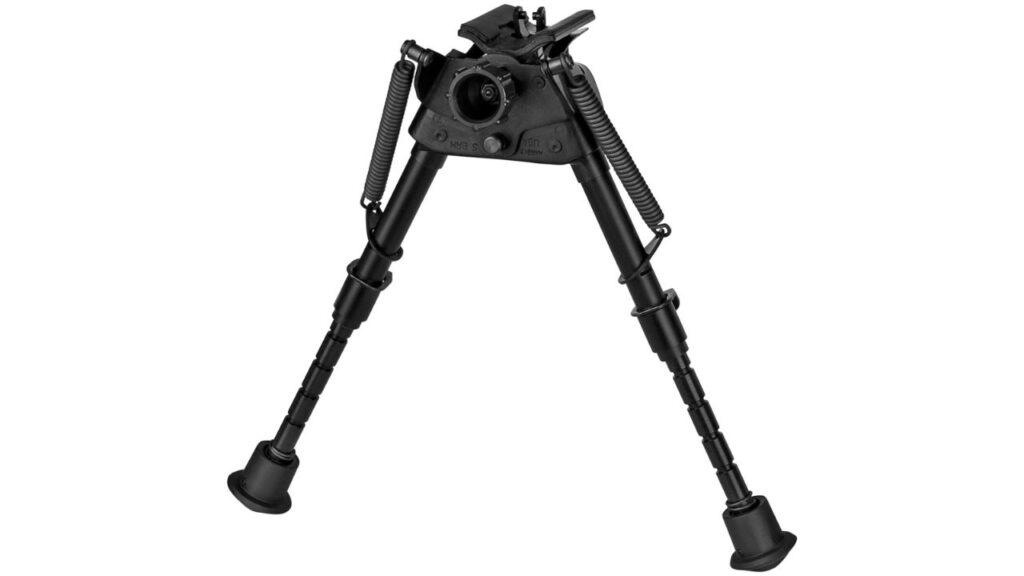
The Harris S-BRM series is the classic hunting bipod for a reason: it’s simple, rugged, and fast to deploy. Mount it on your swivel stud and you’re set for prone or seated shots where you need a steady front rest. The spring-loaded legs and sturdy construction soak up recoil and keep the muzzle from wandering during the shot — which is exactly what you want when a deer hesitates at the edge of range.
For field use, Harris bipods shine because they’re lightweight, easy to adjust, and don’t require constant fiddling. The trade-off is that they tether the front of your rifle to the ground: quick positional changes are slower than shooting sticks, and extremely rough terrain can limit leg placement. Still, if your hunting involves glassing from a ridge, a field edge, or setting up prone on a slope, a Harris will make marginal shots ethical by giving you repeatable, solid support every time.
Atlas BT10 (Accu-Shot) bipod
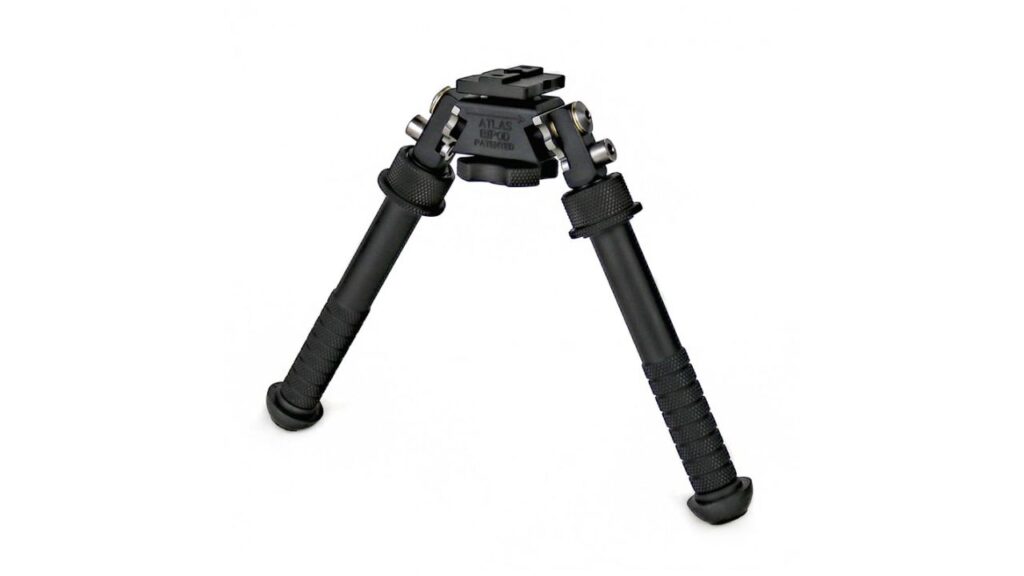
The Atlas BT10 from Accu-Shot is the go-to choice when you want rock-solid platform stability with adjustable cant and precision leg settings. Built heavier than most hunting bipods, the Atlas locks up like a miniature tripod and delivers a planted feel that helps you send rounds with surgical control. For long-range field shots or situations where you need the confidence of a bench-rest-style platform, the Atlas makes marginal shots much more sure.
In the field you’ll appreciate the rapid leg deployment and the ability to dial in exact height and cant without wobble. The downside is weight — it’s bulkier than lightweight hunting bipods — but for mountain glassing, backcountry elk, or any hunt where you expect a long, deliberate shot, that extra mass pays off. Pair it with a front bag or sand sock under the fore-end and you’ve essentially got a portable rest that keeps marginal shots ethical.
Primos Trigger Stick GEN 3 (Pro or Hunter series)
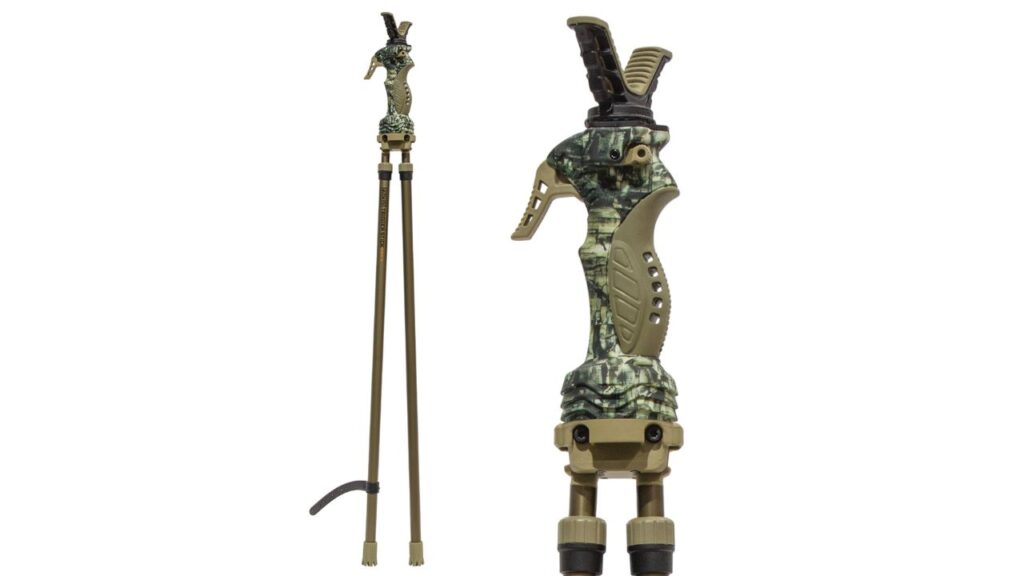
If mobility is a priority, the Primos Trigger Stick (Gen 3) family is one of the most field-friendly shooting sticks out there. They’re quick to deploy, offer multiple height settings from kneeling to standing, and can be carried without fuss. In real hunts, you rarely have time to set up a tripod — Trigger Sticks give you instant, repeatable support for shots that would otherwise be too wobbly.
The Trigger Stick’s advantage is speed: you can drop, extend, and settle in under a second. They’re stable enough for ethical shots out to moderate ranges, and they’re small and light enough to carry all day. For open-country deer or coyote hunting where shots pop up fast, a good pair of Trigger Sticks is the difference between a rushed miss and a controlled hit. Practice transitions and learn the limits of the height setting you prefer, and you’ll be amazed how many “iffy” opportunities become clean shots.
Bog DeathGrip Shooting Stick (two- and three-leg)

The Bog DeathGrip is a favorite among hunters who need a rugged, quick stick that holds well in uneven terrain. It clamps onto your forend or can be used freehand, providing that angled forward support that stabilizes the barrel for standing, kneeling, or sitting shots. The three-leg models give extra stability, while the lighter two-leg versions are a great compromise for weight-conscious hunters.
In the field, DeathGrips are especially handy in brushy or timbered country where a bipod won’t fit and tripods are impractical. The clamp-style hold reduces rotation and gives a consistent rest point shot after shot. They’re not as rock-solid as a top-tier bipod for long-range work, but for ethical medium-distance shots across variable terrain, you’ll be surprised how much confidence one of these adds to your trigger finger.
Caldwell DeadShot FieldPod Gen3 (tripod + rifle cradle)
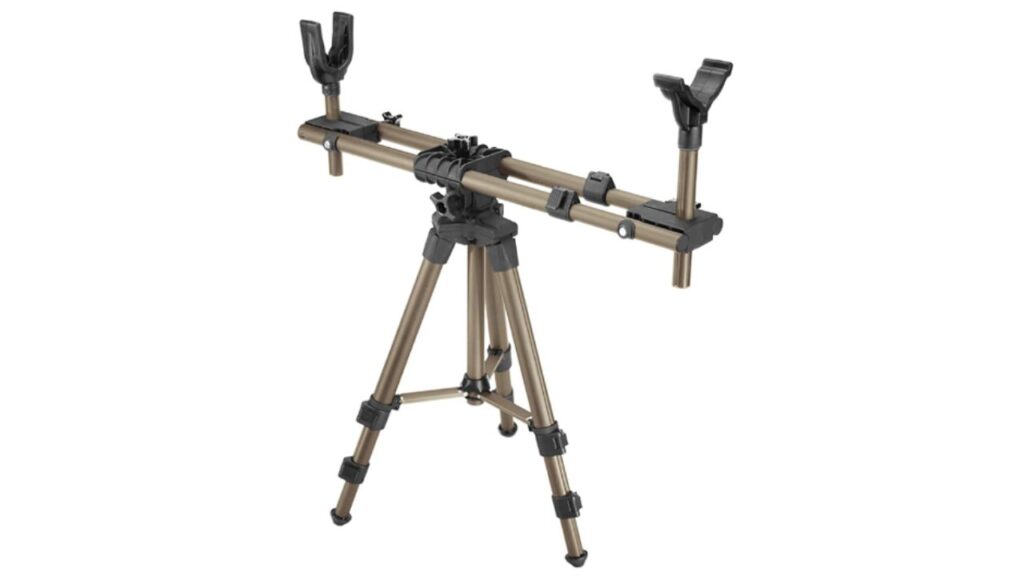
The Caldwell DeadShot FieldPod Gen3 bridges the gap between a scope tripod and a true rifle rest. It’s designed specifically to hold rifles: the padded cradle and tripod head let you lock the rifle in place for precise, repeatable aiming. Height and cant adjustments are smooth and quick, making it ideal when you’re glassing from a vantage and want a dead-steady platform for long shots.
This rest is bulkier than sticks or a simple bipod, but the payoff is an accuracy step-up you’ll notice immediately. Use it when your hunt involves lots of glassing and you want to convert a distant glimpse into a safe, ethical shot. It’s a favorite for high-country hunts where you have time to set up and the extra stability makes the difference between guessing and knowing your shot will do the job.
Magpul Bipod (M-LOK / QD models)
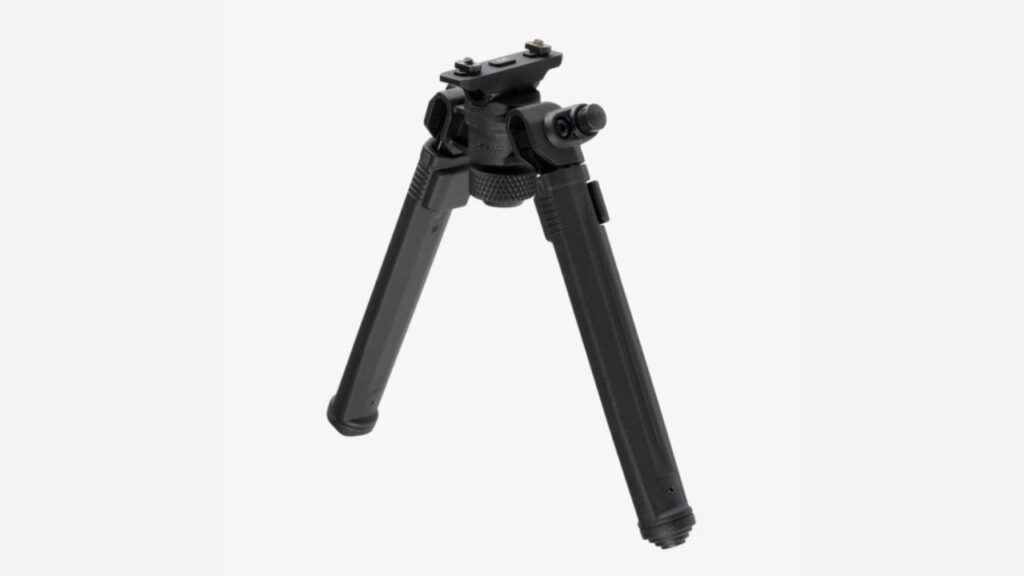
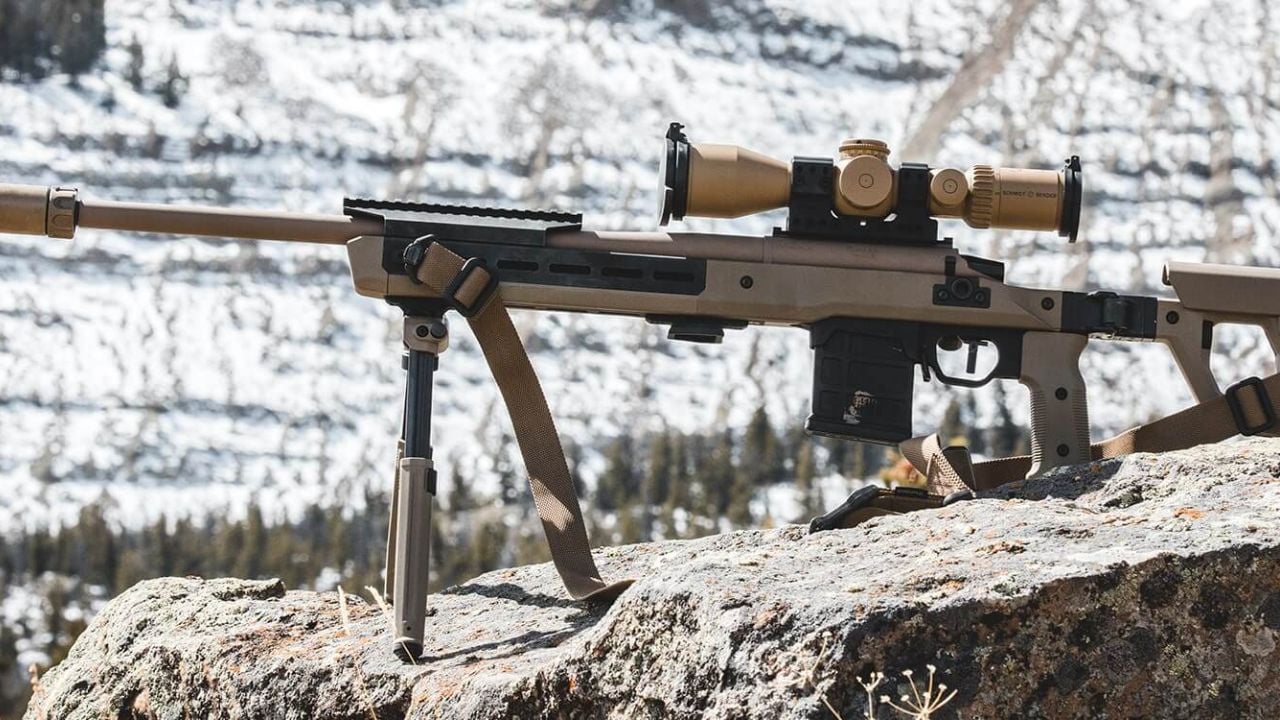
Magpul’s bipod offerings are practical, lightweight, and modern — well-suited for hunters who want dependable support without fuss. Their models that attach to M-LOK or swivel studs give you quick deployment and durable, low-profile carry. Magpul focuses on user-friendly features: reliable leg locking, compact storage position, and a solid, no-nonsense interface with your rifle.
In the field the Magpul bipod is a solid middle-ground: stiffer and steadier than improvised rests, lighter and faster than heavy precision bipods. If you hunt varied terrain and want a bipod that won’t add much bulk, this is a sensible choice. It stabilizes shots enough to cleanly make ethical hits at common hunting ranges while staying unobtrusive when you’re moving through cover.
Caldwell Rock BR Rear Bag (and front bag partners)
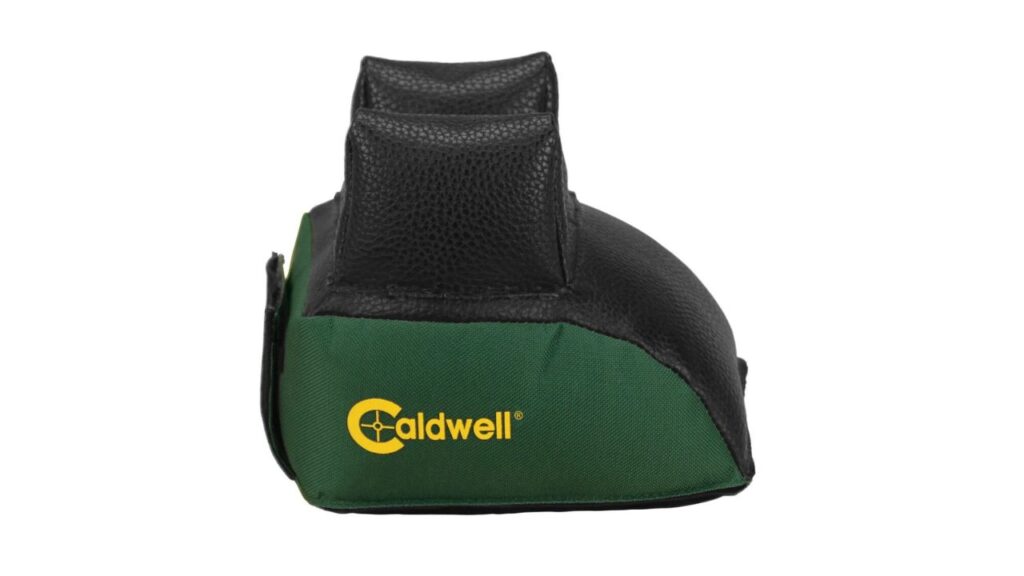
A pair of quality shooting bags — a rear bag like the Caldwell Rock BR and a front bag or sand sock — will stabilize your rifle without mechanical complexity. Bags conform to odd surfaces, protect your barrel and finish, and let you tune elevation and lateral movement by squeezing or shifting the bag. For hunters who set up on rocks, fence posts, or low walls, a rear bag plus a front bag gives a bench-rest-level steadiness in the field.
Their advantage is simplicity and universality: they work with any rifle and any surface. They’re also light and easy to carry. While they don’t offer the rigid lock-up of a bipod + bag combo, bags are unbeatable for improvised rests on irregular terrain, making marginal shots ethical by giving you precise, gentle control over the rifle’s point of aim.
Vanguard Alta Pro (camera tripod + rifle adapter)
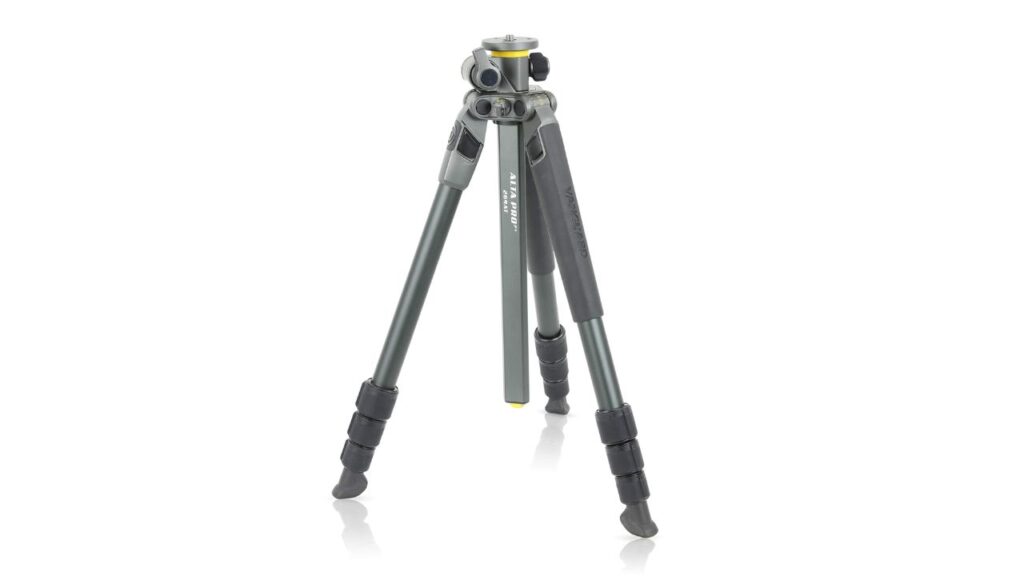
Using a camera tripod like the Vanguard Alta Pro with a rifle saddle or clamp is a stealthy way to get precision stability without the weight of dedicated shooting tripods. The Alta Pro’s adjustable legs and fluid head let you fine-tune aim and lock in for a careful, controlled shot — perfect for long-range field work when you’re carrying optics and gear anyway.
Tripods excel when you can take a moment to set up: they remove shooter-induced movement and convert an iffy opportunity into a deliberate one. The trade-off is speed and bulk. If your hunt allows glassing from a vantage point and you’re carrying a tripod for spotting or glassing, adding a rifle saddle turns that gear into a precision rest that makes marginal shots ethical.
Kestrel or Primos Versa-Pod (multi-position monopod / rifle rest)
Monopods like the Primos Versa-Pod or rugged Kestrel-style shooting monopods give you a compact, quick rest that’s more stable than unsupported shooting but lighter than a tripod. Sling them up quickly behind a tree or on a pack and they offer a single-point anchor that dramatically reduces muzzle movement for kneeling or standing shots.
Monopods are great for brushy, uneven country where a bipod legs won’t find purchase and a tripod is overkill. They won’t provide the pinned stability of a bipod on solid ground, but they consistently convert marginal, shaky shots into ethical hits by giving you the extra contact point needed to control the rifle. Lightweight, easy to carry, and fast to use — they’re an excellent field tool.
*This article was developed with AI-powered tools and has been carefully reviewed by our editors.