Photo credit: GunBroker
The Taurus Judge is one of those revolvers that people tend to have an opinion on right away. Some see it as a smart defensive tool for very specific situations. Some see it as a niche gun with a strange concept. Either way, it definitely made an impression. That is probably because the Judge did something most mainstream revolvers were not doing when it hit the market in 2006: it brought a shotshell-capable revolver back into the spotlight in a big way. American Rifleman notes that Taurus reintroduced the concept to the modern market with a revolver chambered for both .45 Colt and .410 bore.
What made the Judge stand out was not just the cartridge combination. It was the fact that Taurus turned it into a whole family of guns and built a serious identity around it. Taurus still describes it as the original five-shot game changer, and the company now lists multiple Judge variants, including the standard Judge, the Judge Magnum, the Public Defender, the Home Defender and more.
1. It brought an old idea back to the mainstream

A lot of shooters think Taurus invented the whole “revolver that fires shotshells” concept from scratch, but that is not quite right. American Rifleman points out that shotshell-capable revolver ideas existed long before the Judge, including earlier specialty guns. What Taurus did in 2006 was bring that concept back in a way that actually caught fire with regular buyers.
That is a big distinction. The Judge was not the first firearm ever to mix revolver and shotshell ideas, but it was the one that shoved the concept into the modern gun conversation. Once Taurus launched it, the Judge became widely recognized and helped create a whole new wave of interest in defensive and field-use handguns chambered for .410 shotshells.
2. It has been around since 2006

The Judge feels like one of those guns that has “always been there,” but it is actually a modern design compared to a lot of revolvers people talk about in the same breath. Taurus Judge production dates are commonly listed from 2006 to the present, and Taurus recently marked the platform’s 20th anniversary with a commemorative model in 2026.
That is pretty telling. You do not usually get an anniversary model unless a gun has built real staying power. The Judge did not just show up, get talked about for a year, and disappear. It stuck around long enough to become one of the defining Taurus revolvers of the modern era.
3. The name came from real-world courtroom carry stories

The name “Judge” sounds like pure marketing, but there is an actual story behind it. Reference histories say Taurus executive Bob Morrison heard that judges in high-crime parts of Miami were buying the revolver for courtroom defense, and that story helped inspire the “Judge” name.
That backstory explains why the name landed so well. It gave the gun a clear identity right away. Even people who had never handled one understood what Taurus was trying to communicate: this was supposed to be a close-range defensive revolver with authority. Whether somebody loves the branding or rolls their eyes at it, the name absolutely stuck.
4. It is still legally a revolver, not a shotgun

This is one of the biggest things casual shooters get wrong. Because it can fire .410 shotshells, some people assume the Judge is basically a short shotgun. It is not. American Rifleman explains that despite the elongated cylinder and shotshell capability, the Judge remains a revolver because it has a rifled barrel and is also chambered for .45 Colt.
That legal and technical distinction matters a lot. The Judge was built to sit in the handgun category, not the shotgun category, and that shaped everything from how it is sold to how it is regulated. It may throw shot, but it is still a revolver in design and classification.
5. The original Judge was a five-shot revolver
A lot of people think every Judge holds the same amount, but the classic version Taurus built its reputation on was a five-shot gun. Taurus still calls it the original five-shot game changer, and its current standard Judge pages continue to emphasize that five-round layout.
That five-shot setup became part of the gun’s identity. It was not trying to be a high-capacity wonder. It was a big-bore revolver built around versatility, not volume. That is one reason it feels more substantial in the hand than a lot of small-frame defensive revolvers.
6. Some versions can fire more than just .45 Colt and .410
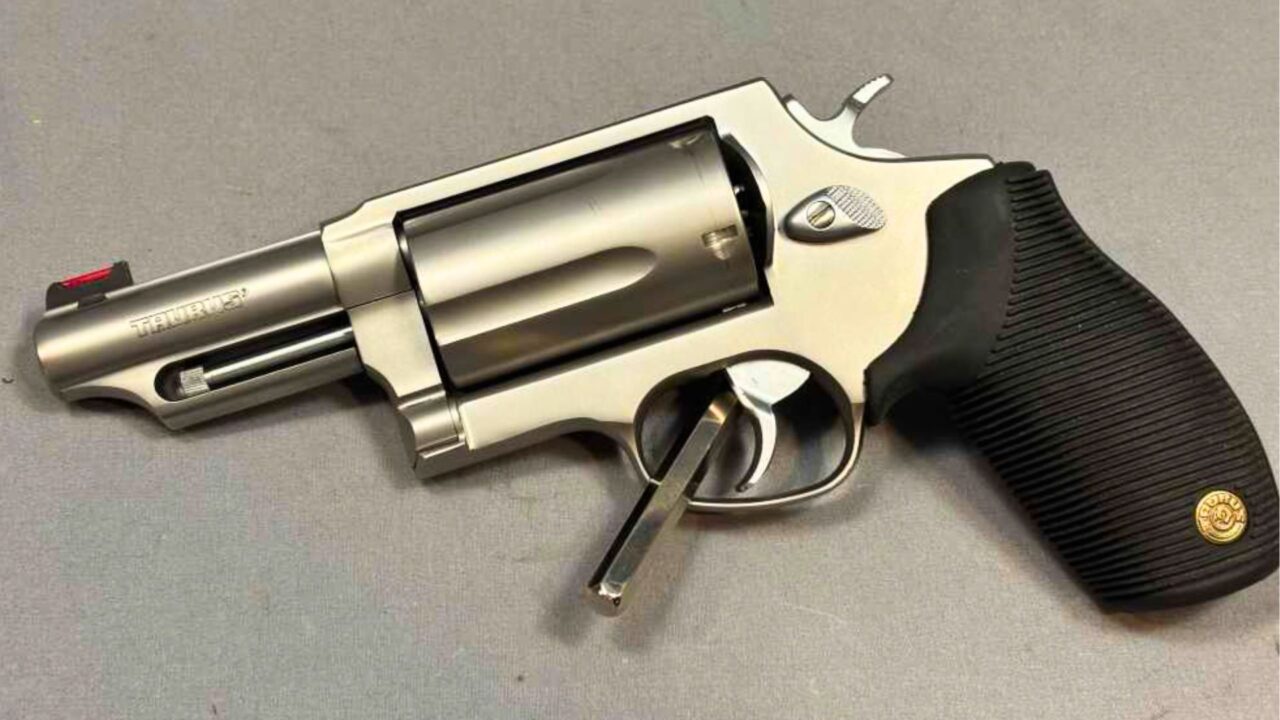
A lot of shooters think every Judge is only a .45 Colt/.410 gun. That is true for the core model, but Taurus pushed the platform further than that. The company’s current Judge family includes the Raging Judge, which Taurus says can also chamber .454 Casull in addition to .45 Colt and .410 bore.
That is a pretty wild jump in capability. Once Taurus added .454 Casull into the mix on the Raging Judge side, the platform stopped being just an oddball defensive revolver and started brushing up against serious hunting and hard-hitting field-gun territory. It shows Taurus was willing to stretch the concept way beyond the original formula.
7. The barrel rifling was deliberately altered for the gun’s mission

The Judge’s rifling is one of the more interesting parts of the design. American Rifleman and reference histories note that the gun uses shallow, slow-twist rifling. That setup was chosen to let the revolver handle .45 Colt bullets while also keeping .410 shot patterns from spreading even more wildly than they otherwise would out of a rifled handgun barrel.
That is one of the clearest signs the Judge was not just some random cylinder stretch job. Taurus was actively trying to make two very different ammunition types work decently in one gun. It is still a compromise, sure, but it was a purposeful compromise, not an accident.
8. It helped spark ammo built specifically for it

One of the Judge’s most interesting ripple effects is what it did to the ammunition market. American Rifleman said in a 2024 review that the Judge really spawned a wave of .410 defensive loads designed specifically around this platform and its short barrel.
That is a bigger deal than it sounds. Most guns adapt to existing ammo. The Judge was influential enough that ammunition makers started tuning loads around the gun itself. Once that happens, you know a firearm has pushed past novelty and turned into a category driver.
9. Taurus built far more than one Judge model

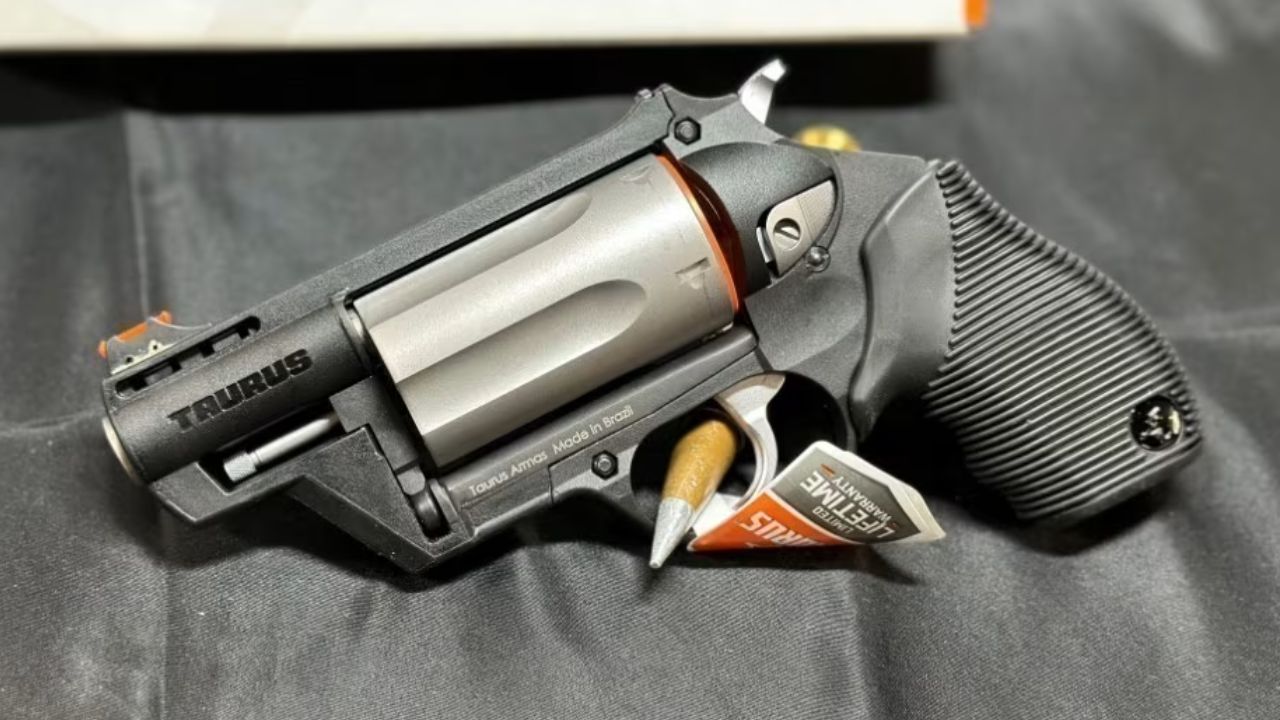
People talk about “the Judge” like it is one specific revolver, but Taurus turned it into a pretty broad lineup. Taurus currently lists multiple branches under the Judge family, including the Public Defender, Public Defender Poly, Judge Magnum, Raging Judge, Executive Grade and Home Defender.
That tells you something important about the platform’s commercial success. Taurus would not keep expanding the family if the concept had not connected with buyers. The Judge was popular enough to become a full ecosystem rather than a one-off oddity.
10. There is even a Home Defender with a 13-inch barrel
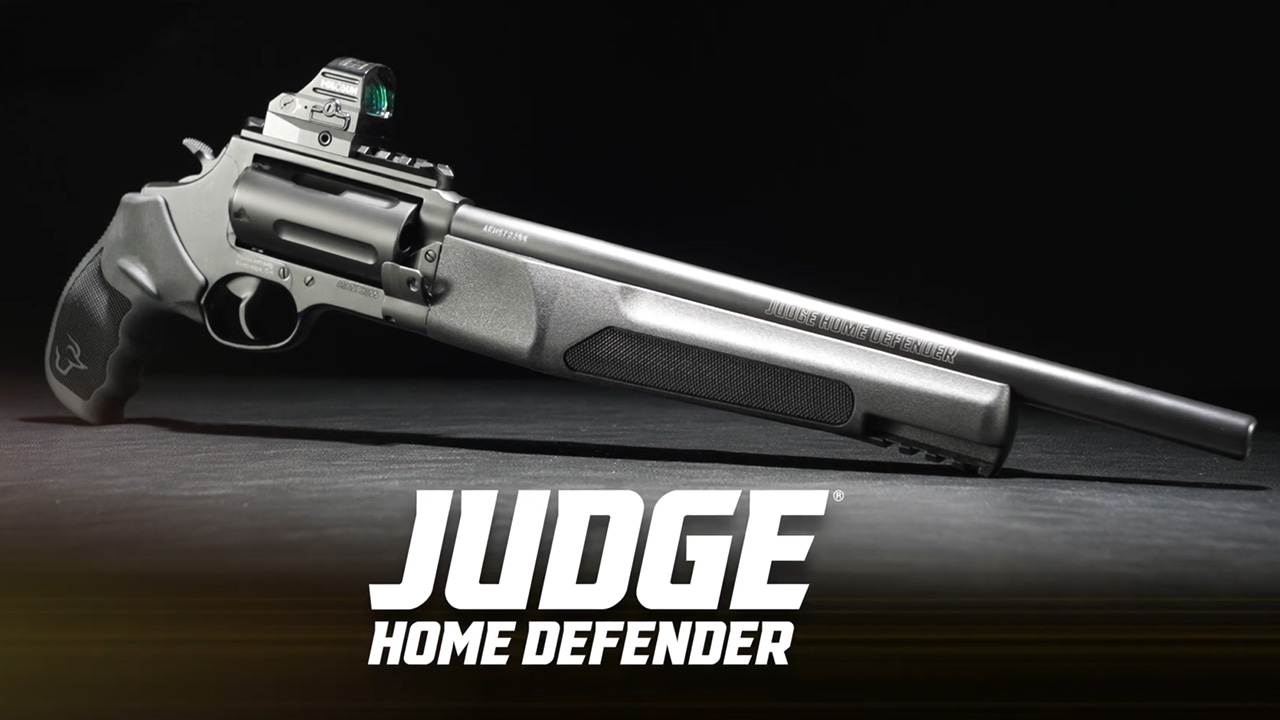
This is one of those facts that catches people off guard because it sounds almost made up. Taurus currently offers the Judge Home Defender with a 13-inch barrel and five-round capacity. That is a very different animal from the more familiar 3-inch-barreled versions people picture first.
That longer version makes it clear Taurus never saw the Judge as strictly a belly gun or glovebox revolver. The company was willing to push the concept toward dedicated home or field use too. Whether somebody loves that idea or not, it shows how much room Taurus believed the Judge platform had to branch out.
11. The standard Judge usually takes 2.5-inch .410 shells, not all .410 shells
A lot of newer buyers assume that if a gun says .410, all .410 shells are fair game. That is not always true. Taurus’s current standard Judge listing specifies .45 Colt/.410 Bore 2.5 inch, and the 20th Anniversary version also accepts up to 2.5-inch shells.
That detail matters because shell length changes what the revolver can safely use. Some Judge variants, like the Magnum models, broaden that range, but the base gun is not a one-size-fits-all answer for every .410 shell on the shelf. It is one of those practical facts that buyers really need to know before assuming all Judge models do the same thing.
12. Magnum versions expanded the concept even further
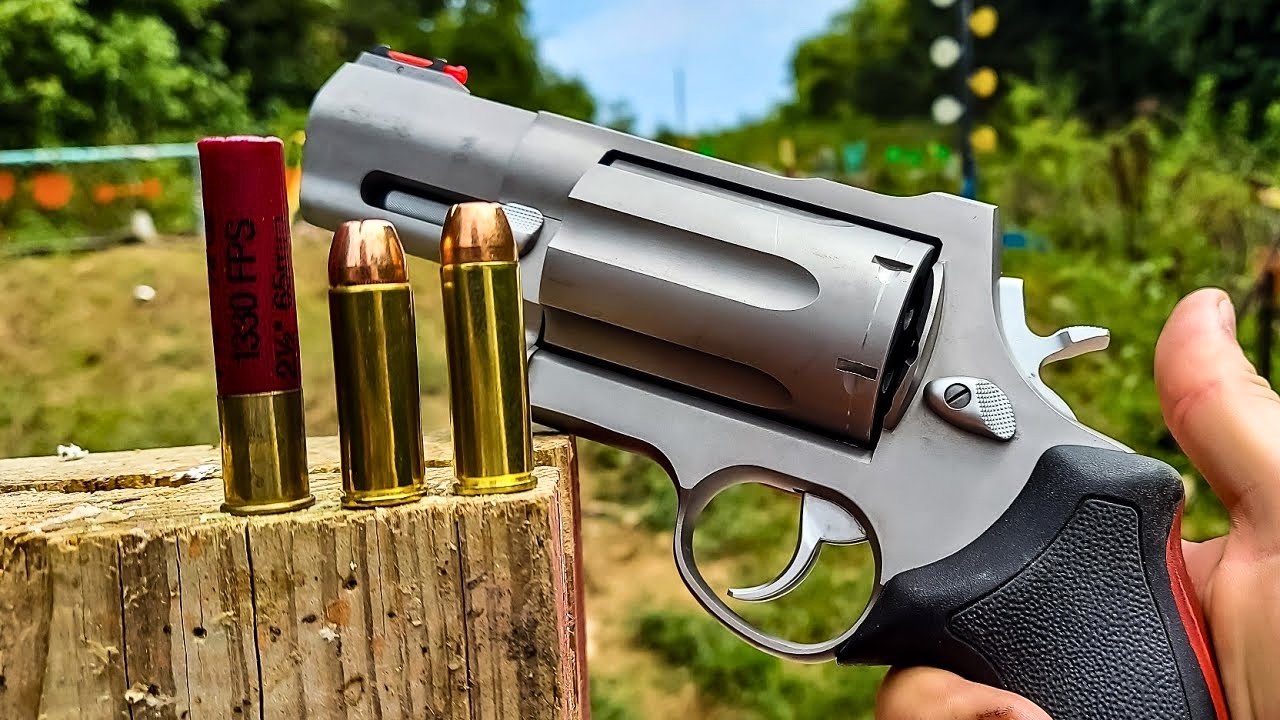
Taurus did not leave the original formula alone for long. Reference histories note that the Judge Magnum was introduced in 2008, expanding the system to handle 3-inch .410 shells in addition to standard 2.5-inch loads.
That was a pretty important step because it made the Judge more appealing to buyers who wanted more shot payload and more flexibility out of the platform. It also reinforced the gun’s reputation as something Taurus was actively developing rather than just coasting on early buzz.
13. It became one of Taurus’s biggest hits

The Judge was not just talked about a lot. It sold. Reference histories say Taurus reported in 2009 that the Judge was its top-selling firearm. Even if you leave aside any brand-loyalty arguments, that tells you this was not some tiny niche curiosity.
That level of success helps explain why Taurus kept investing in the family. Guns that flop do not get spin-offs, anniversary editions, or a bunch of derivatives. The Judge got all of that because enough shooters saw some real use for it, whether that was pest control, close-range defense, trail carry, or just wanting something different that still had a practical angle.
14. It works as both a defensive revolver and a field gun
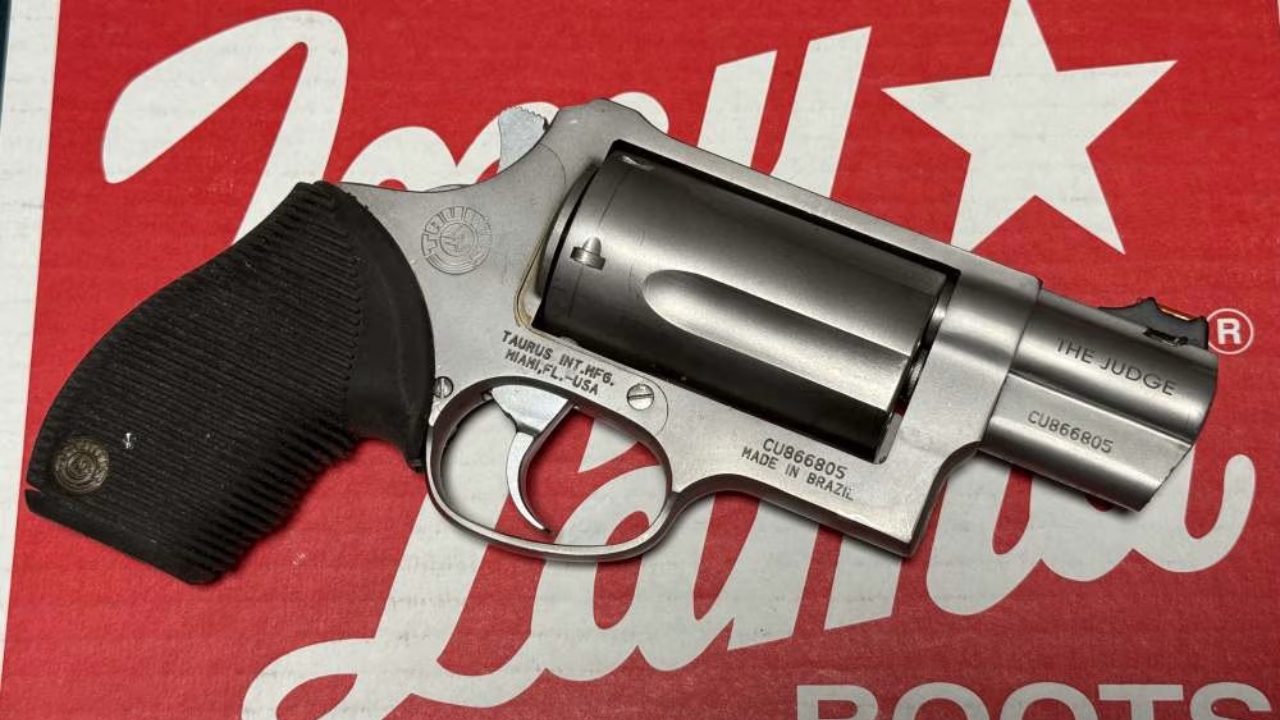
The Judge usually gets discussed as a defensive handgun, and Taurus has absolutely marketed it that way. But American Rifleman also pointed out that with .410 shotshells, it can serve in multiple other roles, including as a varmint gun, a survival gun, or a small-game option in certain situations.
That broader usefulness is a big part of why the Judge survived. If it had only worked in one narrow defensive lane, it probably would have faded faster. Instead, it appealed to people who wanted a gun that could ride in a truck, go out on the property, deal with pests, and still serve a defensive role if needed.
15. The Judge’s biggest surprise is that it turned a weird idea into a lasting product line
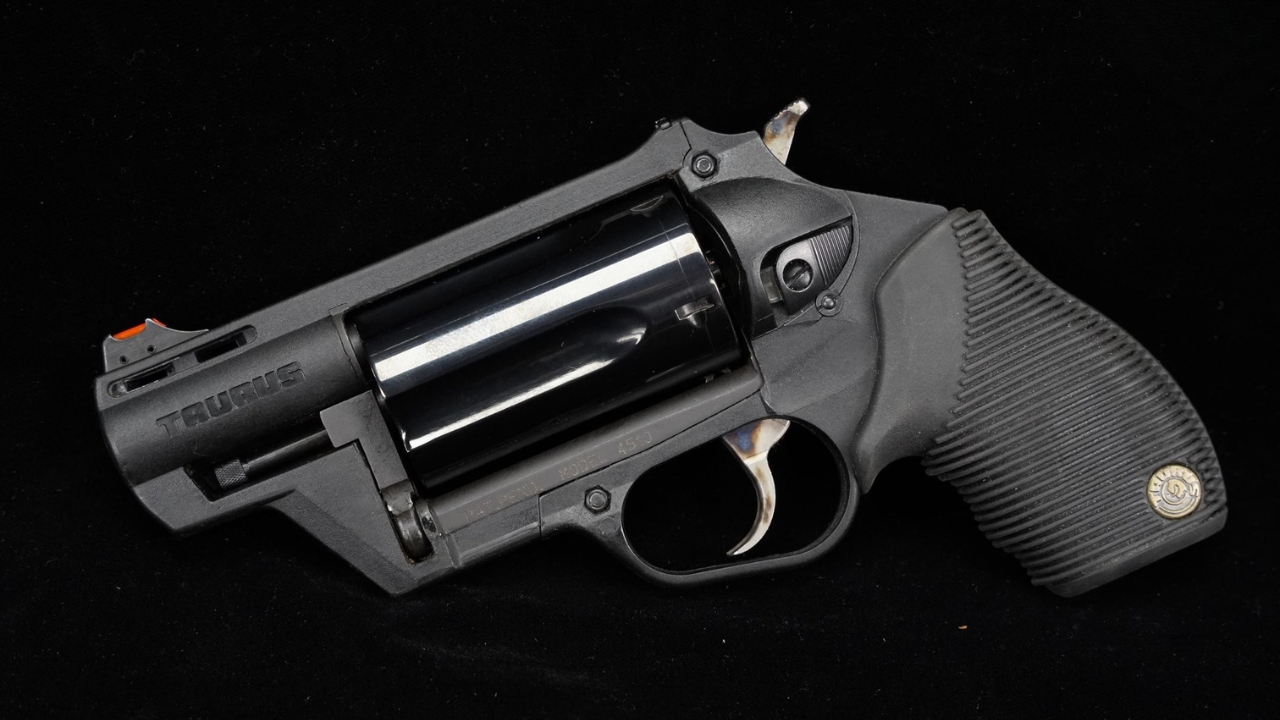
On paper, the Judge sounds like the kind of idea that should have come and gone fast. A revolver that fires both .45 Colt and .410 shotshells sounds like exactly the sort of thing people talk about at the gun counter for six months and then forget. But that is not what happened. Taurus kept the line alive, expanded it, and is still celebrating it 20 years later.
That is probably the most surprising fact about the Judge. No matter what someone thinks about its role or effectiveness, the gun clearly struck a nerve in the market. It moved from curiosity to recognizable brand pillar, and not many modern revolvers can say that.
Like The Avid Outdoorsman’s content? Subscribe to our newsletter so you never miss an article.
Here’s more from us: