Photo credit: ShotCity/YouTube
When you’re miles from the nearest road, the last thing you want is a firearm that acts up when you need it most. The backcountry isn’t the place for guns that demand constant cleaning, babying, or boutique ammo. You want reliability, simplicity, and toughness. Some guns just aren’t built for that. They might be great on the range or in competition—but out in the wild, they can be more of a liability than a tool.
Here are 12 firearms that just don’t cut it for serious backcountry use.
Desert Eagle

It’s massive, heavy, and way too picky about ammo. If you’re trying to carry one through rough terrain, you’re basically hauling a brick.
The Desert Eagle also tends to jam if it’s not kept spotless. That’s a big issue if you’re dealing with dust, rain, or cold weather. It’s fun to shoot, sure—but it doesn’t belong in a survival scenario.
FN Five-seveN
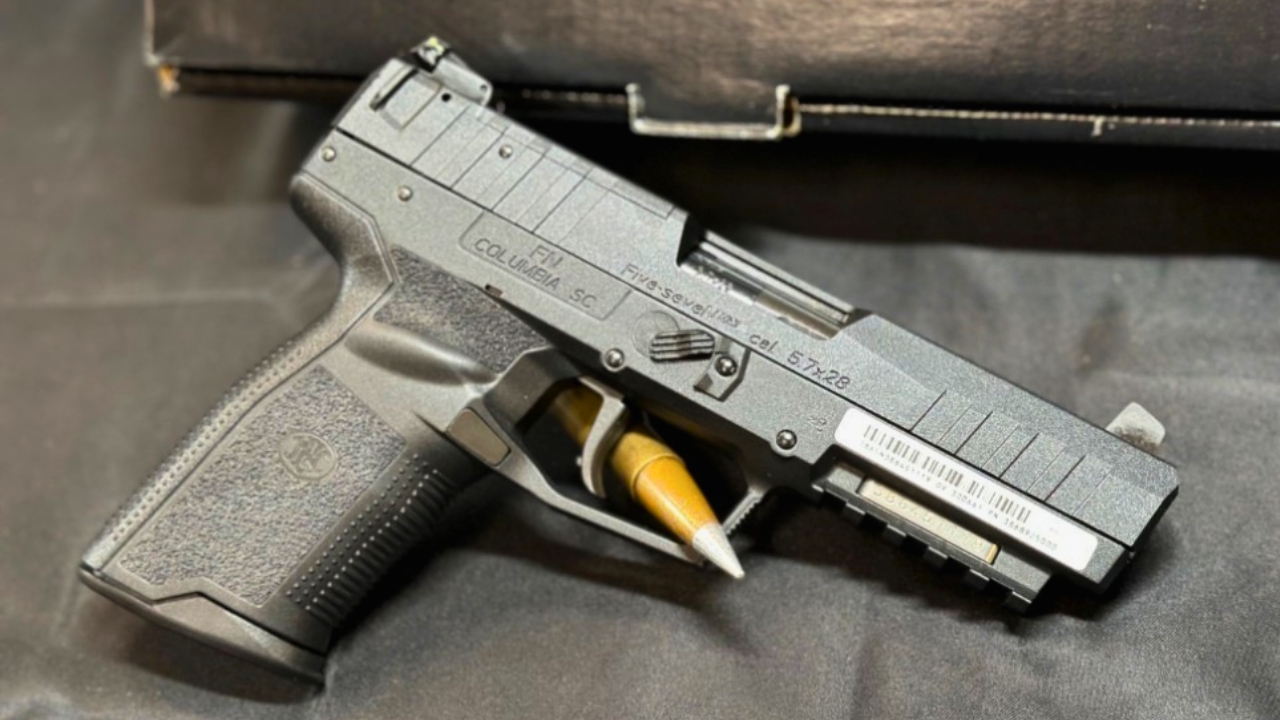
The FN Five-seveN is lightweight and accurate, but it relies on 5.7x28mm ammo, which isn’t exactly easy to find in the middle of nowhere.
Add in its sensitivity to dirt and carbon buildup, and it’s just not the kind of pistol you want to trust deep in the woods. If it goes down, you’re stuck with a gun that nobody can feed or fix without a trip to town.
Hi-Point Carbines

They’re cheap and can be fun, but Hi-Point carbines don’t have the best track record when it comes to reliability. Feeding issues and broken parts aren’t uncommon.
In the backcountry, a broken firing pin or jammed bolt can ruin your whole trip—or worse. It’s a gamble that’s just not worth taking when you need something you can count on.
Kimber 1911s

Some Kimbers are beautifully made, but many are extremely tight-fitting and need a break-in period—and that’s not ideal when you’re in the backcountry.
They can get picky about ammo and prone to malfunctions if they’re even slightly dirty. Unless you plan to field-strip and lube it daily, it’s not the best choice for rugged conditions.
AR Pistols in .300 Blackout

While .300 Blackout is a solid caliber for many uses, AR pistols in this chambering are often finicky. Gas settings, buffer weights, and ammo all play a part in whether it runs right.
Unless you’ve tuned it perfectly and keep it clean, it can become a headache fast. Not to mention the parts aren’t exactly easy to service in the field.
Taurus Judge

It’s a cool concept, but the Judge isn’t exactly built for backcountry grit. It’s bulky, the accuracy isn’t great, and it can be unpredictable with .410 loads.
If you’re planning to rely on it for defense or dispatching game, you might find it lets you down. A quality revolver in .357 would serve you better when you’re off the beaten path.
KelTec Sub2000

Folding rifles are great in theory, and the Sub2000 has a solid fan base. But it’s not known for durability or high round counts without issues popping up.
From plastic parts wearing out to inconsistent accuracy, it’s not something you want to lean on for real-world survival. It’s more of a pack novelty than a serious tool.
Remington R51

The R51 had a rough launch—and even after tweaks, it never really earned a reputation for reliability. It’s known for cycling issues, awkward ergonomics, and feeding problems.
In a situation where you need your firearm to go bang every time, this one’s just too unpredictable. It might be compact, but it’s not cut out for rough backcountry carry.
SIG P320 with Aftermarket Parts

Out of the box, many P320s run just fine. But once folks start adding aftermarket triggers, slides, or barrels, things can get weird fast.
If you’re in the woods, you want a gun that hasn’t been “tuned” into unreliability. A heavily modified P320 can turn into a jam machine at the worst time—especially in harsh weather.
Chiappa Rhino

The Chiappa Rhino looks futuristic and has a loyal following, but it’s got a reputation for being high-maintenance. Its internals aren’t simple, and repairs aren’t DIY-friendly.
If something goes wrong, good luck fixing it outside a shop. It’s also not particularly tolerant of dirt or neglect, which can be a problem once you’re deep into a multi-day trek.
Beretta 92FS

It’s a classic, and in clean conditions, it works well. But the open-slide design can attract dirt and debris easily. Out in the elements, that can mean stoppages you don’t want to deal with.
It’s also on the heavier side and doesn’t conceal or carry as easily as more compact options. In remote areas, simpler guns tend to win out.
Any Rimfire Semi-Auto

We’re talking Ruger 10/22s, Walther P22s, and even the Browning Buckmark. While fun and useful in some cases, rimfire semi-autos are picky about ammo and don’t handle dirt well.
A few bad rounds or a little grit in the action can bring them to a halt. For backcountry use, a bolt-action .22 or a revolver is a much safer bet if you need a small-caliber option.
*This article was developed with AI-powered tools and has been carefully reviewed by our editors.