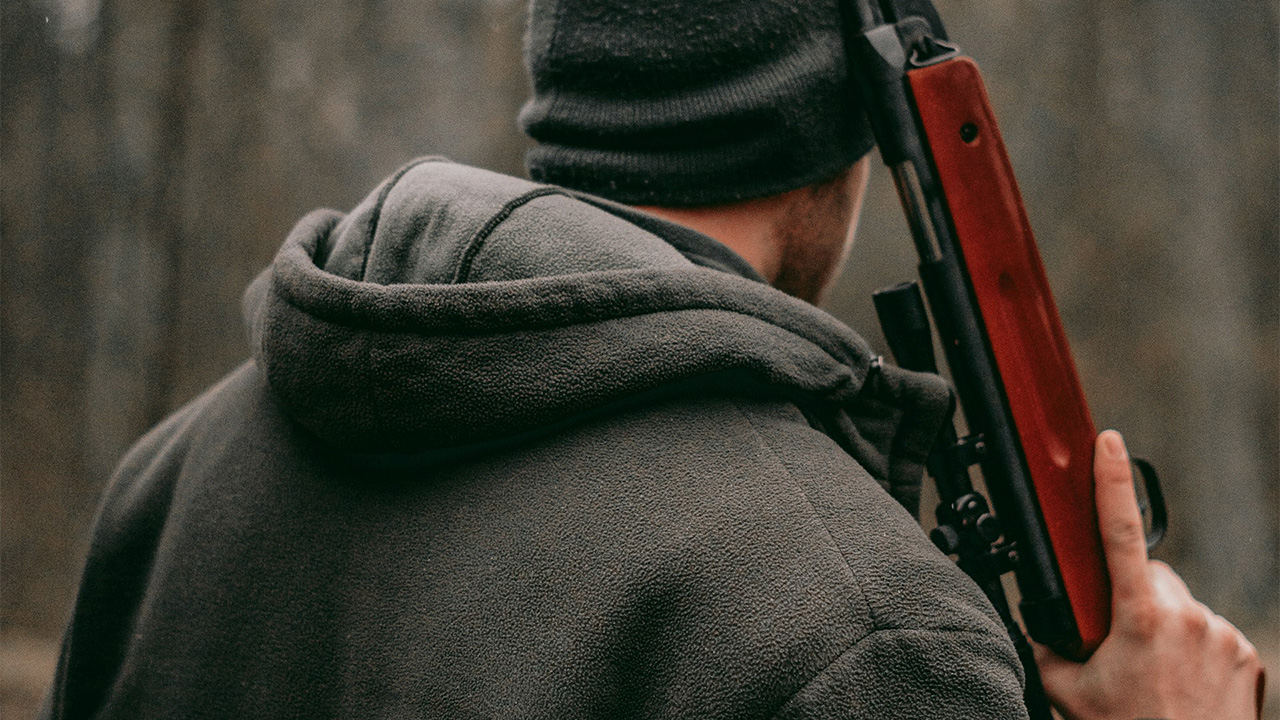
Photo credit: Sebastian Pociecha/Unsplash.com
He was new to hunting, which already makes every sound in the woods feel a little bigger than it probably is.
When you are a first-year hunter, you are still learning what normal sounds like. Squirrels sound like deer. Deer sound like ghosts. Acorns dropping through leaves can make you turn your head like something is sneaking up on you. Every snap, shuffle, and rustle has your attention because you are trying to do everything right and not miss something important.
Then he heard real footsteps behind him.
The story came up in a Reddit thread where hunters were sharing the scariest things they had ever seen in the woods. One commenter said he was in his first year of hunting and sitting on public land when he heard someone coming up behind him.
That alone can make you tense.
Public land means other people may be around, so footsteps are not automatically suspicious. Another hunter might be walking to his own spot. A hiker might have wandered in. Someone could be tracking a deer, looking for a lost dog, or cutting through without realizing where you are sitting. But when you are alone, tucked into the woods, and you hear a person before you see him, your brain starts sorting through every possible explanation.
Then the man came into view.
The hunter described him as rough-looking and carrying a rifle.
That detail changed the whole feeling. It is one thing to run into another hunter at the parking area, where trucks are nearby and everyone is standing in open daylight. It is another thing to have someone with a rifle walk up behind you while you are sitting alone in the woods, especially when you are still new enough that you do not fully trust your own instincts yet.
The commenter did not describe some dramatic attack or a long confrontation. That is part of what makes the story believable. A lot of uncomfortable encounters outdoors are not movie scenes. They are short, tense moments where nothing technically happens, but your body knows something is off.
The stranger was armed. The hunter was alone. They were on public land. And for a first-year hunter, that is enough to make the woods feel very different.
You can imagine the little calculations happening in his head. Is this guy supposed to be here? Did he see me? Does he know I am hunting? Is he angry that I am in “his” spot? Is he safe with that rifle? Does he think I am a deer? Is he just passing through, or is he walking toward me for a reason?
Those thoughts hit fast because there is not much room for error in the woods when firearms are involved.
Public land has a strange way of making you feel both free and exposed. You have every right to be there, but so does everybody else who follows the rules. You do not get to choose who parks at the same access point. You do not know their skill level, their mood, their patience, or how carefully they handle a gun. Most people are fine. Some are careless. A few are the kind of folks you would rather not meet alone under the trees.
That uncertainty is what makes a stranger walking up from behind feel so unsettling.
A veteran hunter may have shrugged it off faster. He might have called out, waved, made sure the stranger saw his orange, and let the moment pass. But a new hunter has not had enough normal encounters to know which ones are harmless. Everything is still being filed away as a lesson.
And this lesson was not about deer movement or wind direction. It was about people.
That is one of the less romantic parts of hunting that beginners learn quickly. The woods are not only full of animals. They are full of other humans making their own choices. Some will be friendly. Some will ruin your sit. Some will walk too close. Some will shoot too soon. Some will make you pack up and leave because the whole area no longer feels right.
The commenter’s story seemed to live in that last category. He did not have to say the stranger threatened him for the encounter to be scary. He heard footsteps, turned, and found an armed man behind him in a place where nobody had announced themselves. That is enough to make any first-year hunter’s pulse jump.
It is also the kind of moment that teaches you to think differently about public-land setups. You start choosing trees and ridges not only for deer movement, but for visibility. You think about who could approach from behind. You keep a light handy. You wear orange. You make yourself visible to humans, not just hidden from deer. You learn to say something early if you hear footsteps too close.
Because in that moment, the scariest thing in the woods was not a bear, cat, or strange noise.
It was a man with a rifle walking up behind him.
The thread had plenty of creepy woods stories, but the human ones always seem to land differently.
Several hunters agreed that strangers on public land can be more unsettling than wildlife. An animal usually acts like an animal. A person is harder to read. You do not know if he is friendly, lost, careless, angry, drunk, or trying to prove something. Add a rifle to that uncertainty, and the whole situation gets sharper.
Some commenters talked about how new hunters often underestimate the people factor. They spend time learning deer sign, gear, seasons, and shot placement, but the first few public-land hunts also teach them how to share space with strangers. Sometimes that means a polite wave and a quiet conversation. Sometimes it means packing up because someone nearby makes you uncomfortable.
A few hunters said calling out in a normal voice can help in those moments. If you hear someone coming from behind, saying “hunter here” or “I’m sitting over here” makes your location clear and lowers the chance of surprising each other. It may ruin a deer sit, but it is better than letting someone with a firearm stumble close without knowing exactly where you are.
Others said this is why they avoid certain public parcels during busy firearm seasons. They would rather hunt harder-to-reach areas, go on weekdays, or sit where visibility is better than deal with unknown hunters moving around in thick cover.
There was also a practical safety thread running through the comments: wear orange, use a light in low light, know where other hunters are likely to enter, and do not be shy about making yourself known if someone gets close. Deer are not worth staying silent when a person with a rifle is walking into your setup.
For the first-year hunter, the encounter was probably one of those early lessons that sticks. Not because anything exploded into a confrontation, but because it showed him how quickly public land can go from peaceful to uncomfortable when another person appears where you did not expect him.