Photo credit: Savage Arms
Across the Midwest, chronic wasting disease is no longer a distant wildlife problem that you hear about once a year at the check station. It is reshaping how you buy tags, where you can move carcasses, and even whether your favorite late-season hunt still exists. As state agencies pivot to more aggressive and more flexible strategies, you will feel those decisions first in the woods, at the registration trailer, and in your freezer plans.
Why CWD policy is suddenly moving faster
You are hunting in a moment when chronic wasting disease, or CWD, has shifted from a slow burn to a driving force behind nearly every major deer regulation in the region. Wildlife agencies are no longer treating it as a static problem, and instead are rewriting rules on short timelines, adjusting zones, and layering on special seasons that can change from one year to the next. That pace means you cannot assume last year’s playbook still applies, even if you are hunting the same farm with the same crew.
States are also acknowledging that CWD management is not just about biology, it is about keeping you engaged as a partner rather than a bystander. Planning documents in Illinois, Iowa, Missouri, Wisconsin and Minnesota now talk explicitly about maintaining hunting traditions while still cutting disease risk, a balance that requires constant recalibration of bag limits, sampling expectations and carcass rules. As you navigate those changes, the common thread is that agencies are asking you to help find and remove infected deer before CWD can quietly reshape the herd for good.
Illinois: from pilot projects to mandatory check-ins
If you hunt Illinois, you are already seeing how quickly CWD strategy can evolve from a pilot idea to a statewide expectation. The state has laid out new CWD management goals that emphasize “Protecting and maintaining” healthy deer herds while still giving hunters meaningful opportunity, and those goals are driving a more targeted approach to surveillance and removals. In practice, that means you are more likely to encounter focused sharpshooting in hot spots, tighter carcass transport rules, and a stronger push to get your deer tested in counties where the disease has taken hold.
Those goals are spelled out in an update that frames CWD as a long-term challenge and commits Illinois to several responsible management objectives, including protecting herd health and keeping public support for control work high, in a document titled “Thus, CWD, Protecting and” that you can find in the state’s CWD program updates. On the ground, you see that philosophy in requirements such as the rule that hunters who harvest deer in Marshall and Putnam counties during the 2025 gun season must register those deer and take them to designated stations, a step detailed in Illinois guidance that begins, “In the interim, hunters who” and continues through specific CWD surveillance instructions. You also have access to a dedicated 2025–2026 special CWD season, with its own permit structure and boundaries, laid out in the state’s official special CWD season information, which spells out where and when you can use that extra opportunity to help knock back disease clusters.
Missouri: tearing up the old map of CWD zones
Missouri is in the middle of one of the most dramatic rewrites of CWD policy in the Midwest, and if you hunt there you are watching the ground rules change in real time. For years, the state relied on a Chronic Wasting Disease Management Zone that pulled in any county with a confirmed case or within a set distance of one, a structure that dictated where you had to check deer and how you could move carcasses. Now, the Missouri Conservation Commission is moving toward a simpler, more statewide framework that still targets disease but reduces the patchwork of overlapping rules that left many hunters confused.
Earlier regulatory language spelled out that “Missouri’s CWD Management Zone consists” of counties with a confirmed case or within 10 miles of a detection, a definition that shaped where you had to follow special rules, as described in the state’s CWD Management Zone description. A recent package of changes, introduced by The Missouri Conservation Commission in JEFFERSON CITY in Dec, is pitched as a way to simplify regulations for hunters and help maintain deer populations, with officials noting in a section labeled “Caption” that the goal is to reduce both disease risk and the complexity of rules, as laid out in the announcement on deer-hunting regulations. At the same time, online discussions have highlighted the “Removal of CWD Management Zones Any” county that had a confirmed case or was within 10 miles of one, a phrase used in a detailed breakdown of how the old CWD structure is being dismantled and replaced with more uniform statewide rules, captured in a discussion of big changes that many hunters are now parsing as they plan their next season.
Missouri’s long game: surveillance, communication, and your role
Behind those headline changes, Missouri has been quietly building a long-term CWD strategy that depends heavily on what you do with every deer you tag. The state’s surveillance and management plan lays out a series of numbered strategies, including a specific commitment to “Strategy 3.2. 3: Disseminate results of CWD surveillance and management efforts to department staff, partners, and the public,” which signals that you are expected to see and use the data that comes out of every sample. That kind of transparency is meant to help you understand why certain counties get extra attention and why some regulations tighten while others relax.
For you, that means more than just dropping a head at a collection site and walking away. When the plan talks about “Strategy” and the need to “Disseminate” information about CWD, it is inviting you to track how disease clusters move and how management responses change, all within a formal CWD Surveillance and Management Plan that spells out those responsibilities. The same philosophy shows up in operational rules that require you to take deer harvested in the CWD Management Zone to a check station on specific days, such as the requirement that “During Nov. 14–15, hunters who harvest a deer in the CWD Management Zone must take it” to a designated site, a directive that appears in a statewide notice about CWD Management Zone check-ins. Together, those pieces make clear that Missouri expects you to be both a data source and a consumer of CWD information, not just a passive participant.
Iowa: a new response plan built around flexible sampling
Iowa is taking a different tack, building a new chronic wasting disease response plan that leans heavily on flexible sampling and risk-based surveillance. If you hunt there, you are stepping into a system that adjusts how many deer need to be tested in your county based on what is happening not just inside state lines but also across the border. That means your obligations can change from one year to the next as new positives show up in neighboring states or as local prevalence rises or falls.
The state’s CWD response document explains that “As other neighboring states reported positive samples near borders, sampling quotas increased for those counties including southeastern” areas, and that Iowa will continue to adjust each county’s quota based on “dynamic risks,” a phrase that underscores how fluid the situation is, as laid out in the CWD response plan’s sampling strategy. That same plan, covering 2025 through 2030, details how the state will use targeted “sampling” to detect new outbreaks early and then respond with focused removals rather than blanket restrictions, a framework you can read in full in the Iowa DNR Chronic Wasting Disease Response Plan. When state leaders rolled out this strategy, they emphasized that the plan was introduced ahead of Iowa’s gun season for deer hunting, which begins on a Saturday, and that it is aimed at “mitigating its spread and managing its impacts,” a description captured in a report on Iowa’s new strategy that underscores how central your participation is to making the numbers work.
Minnesota and Wisconsin: late hunts and long timelines
To your north, Minnesota and Wisconsin are showing how different tools can serve the same CWD goal. Minnesota is leaning on tightly focused late-season hunts in disease areas, giving you extra days in the field but with strings attached. In select areas, the state has scheduled a late-season deer hunt to manage CWD from Dec. 19–21, with rules that specify that Bonus permits and early antlerless tags can only be used to tag antlerless deer and that the bag limit is five deer, details spelled out in a notice about the late-season deer hunt. For you, that means more opportunity if you are willing to focus on does and submit samples, but also a clear signal that the state expects hunters to help thin out potential carriers in known hot spots.
Wisconsin, by contrast, is working on a long horizon, with an “Updated CWD Response Plan” that runs for 15 years and is set to expire in 2025. The DNR has already started a process to develop a new plan, with The DNR explaining that the current CWD Response Plan will be replaced after review by the Natural Resources Board in 2025, as outlined in the state’s Updated CWD Response Plan. For you as a Wisconsin hunter, that means the next set of rules is likely to be shaped by what has and has not worked over the past decade and a half, and your feedback on carcass movement, baiting, and testing could influence how aggressive the next Response Plan becomes.
How special seasons and bag limits are being used as scalpels
Across these states, special seasons and adjusted bag limits are becoming surgical tools rather than blunt instruments, and you are the one wielding them. Illinois’ special CWD season, Minnesota’s late hunts, and Missouri’s evolving antlerless opportunities are all designed to remove specific segments of the herd in specific places, usually adult deer in areas where CWD has been detected. When you decide whether to buy an extra tag or hunt a bonus weekend, you are effectively voting on how aggressive your state can be in cutting down infection rates.
Illinois has formalized that approach in its 2025–2026 special CWD season, which lays out where you can use extra permits and how those hunts fit into the broader management calendar, all detailed in the state’s special CWD season hunting information. Minnesota’s rules that Bonus permits and early antlerless tags can only be used on antlerless deer during the Dec. 19–21 CWD hunt show the same logic, pushing you to take does and young deer that are more likely to spread prions through social contact, as spelled out in the late-season hunt announcement. In Missouri, the shift away from a rigid CWD Management Zone toward more flexible statewide rules is paired with changes in antlerless opportunities that are meant to keep deer numbers in check where disease risk is highest, a balance that is described in the state’s chronic wasting disease regulations and in the broader regulation changes that aim to simplify your choices while still hitting management targets.
Carcass movement, check stations, and the new logistics of a deer camp
One of the most immediate ways you feel CWD policy is in the logistics of getting a deer from the field to your table. Rules about carcass movement, mandatory check stations, and testing expectations can now vary not just by state but by county and even by specific dates. If you are used to hauling whole deer across county or state lines, you are increasingly being told to quarter and debone them first, then leave high-risk parts like the head and spine behind at approved disposal sites.
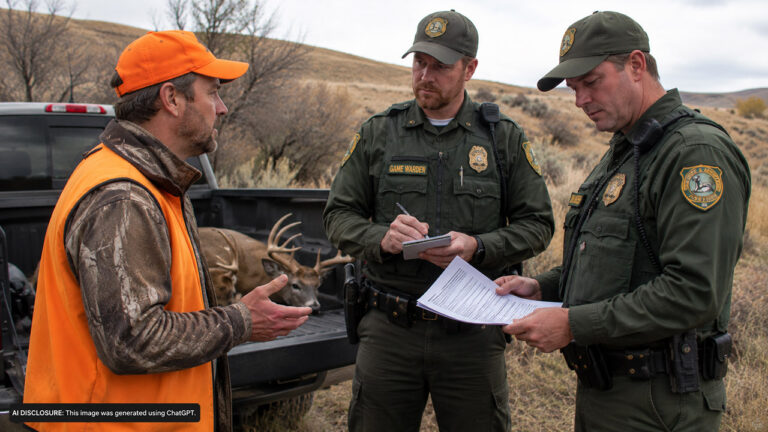
Illinois’ requirement that hunters in Marshall and Putnam counties must register their deer and take them to designated stations during the 2025 gun season is a clear example of how targeted those rules can be, as spelled out in the guidance that begins “In the interim, hunters who” and continues through a list of check station locations. Missouri’s long-standing requirement that deer harvested in the CWD Management Zone be taken to a check station on specific days, such as the directive that “During Nov. 14–15, hunters who harvest a deer in the CWD Management Zone must take it” to a designated site, adds another layer of planning to your hunt, as detailed in the statewide notice. Even in Iowa, where the focus is on flexible sampling quotas, the CWD response plan makes clear that you may be asked to submit heads or lymph nodes at drop-off sites as part of the state’s CWD Response Plan, turning your post-hunt routine into a key part of disease surveillance.
What “adaptive management” really means for your next season
All of these moving pieces add up to a single concept that you will hear more often in agency language: adaptive management. In plain terms, it means your state is going to keep changing the rules as new data comes in, and you will need to adapt with it. That might look like a new late-season hunt popping up in a county that just recorded its first CWD case, a sudden expansion of mandatory testing, or a shift in where you can use antlerless tags, all based on the latest surveillance results.
Illinois, Iowa and Missouri are already living in that world, a reality captured in a year-end assessment titled “Year one of Illinois CWD pilot ends; Iowa and Missouri adjust plans,” which notes that Year one of the Illinois CWD pilot has wrapped up while Iowa and Missouri adjust plans in response to what they are learning, a sequence summarized in a report that references “Year,” “Illinois CWD,” and “Iowa and Missouri” alongside the byline of Ralph Loos and a focus on how Illinois is refining its approach, all detailed in coverage of shifting CWD plans. Wisconsin’s decision to replace its expiring 15-year CWD Response Plan with a new framework, and Iowa’s commitment to adjust sampling quotas based on “dynamic risks,” show that no state expects to set CWD policy once and walk away, as seen in the Updated CWD Response Plan and Iowa’s dynamic sampling quotas. For you, the takeaway is simple: staying effective as a hunter now means staying informed, because the rules that shape your season are going to keep changing as fast as the disease they are trying to control.
Like The Avid Outdoorsman’s content? Subscribe to our newsletter so you never miss an article.
Here’s more from us: