Photo credit: The Avid Outdoorsman
A concealed carrier in Reddit’s r/CCW described the kind of workplace mistake that does not end with one awkward conversation. It keeps unfolding after you go home. In his post, he said he had been carrying at work for more than two years without a single incident. Then one day, somehow, somebody noticed. He still did not know exactly how. He said management would not tell him whether he was printing, whether his shirt rode up, or exactly who saw what because they claimed they were worried about retaliation. What he did know was that one person on the factory floor spotted the gun, panicked, and reported him. The original thread is here: https://www.reddit.com/r/CCW/comments/33vzed/got_spotted_and_called_out_at_work_now_its_a/. (reddit.com)
The way he told it, the public handling of the whole thing was what really got under his skin. About half an hour into his shift, one of the office-side administrative employees came out onto the floor, walked up to his desk, and asked whether he had a firearm on him. He answered yes and even offered to show his concealed-carry permit. That did not matter. The man escorted him out of the building and to his car, where he was required to lock the gun away in the glovebox while, as he put it, pretty much everyone on his shift could see what was happening. He did not focus on the legality of the gun at that exact moment so much as the humiliation of being marched out in front of his coworkers like he had been caught doing something far worse than quietly carrying on the job.
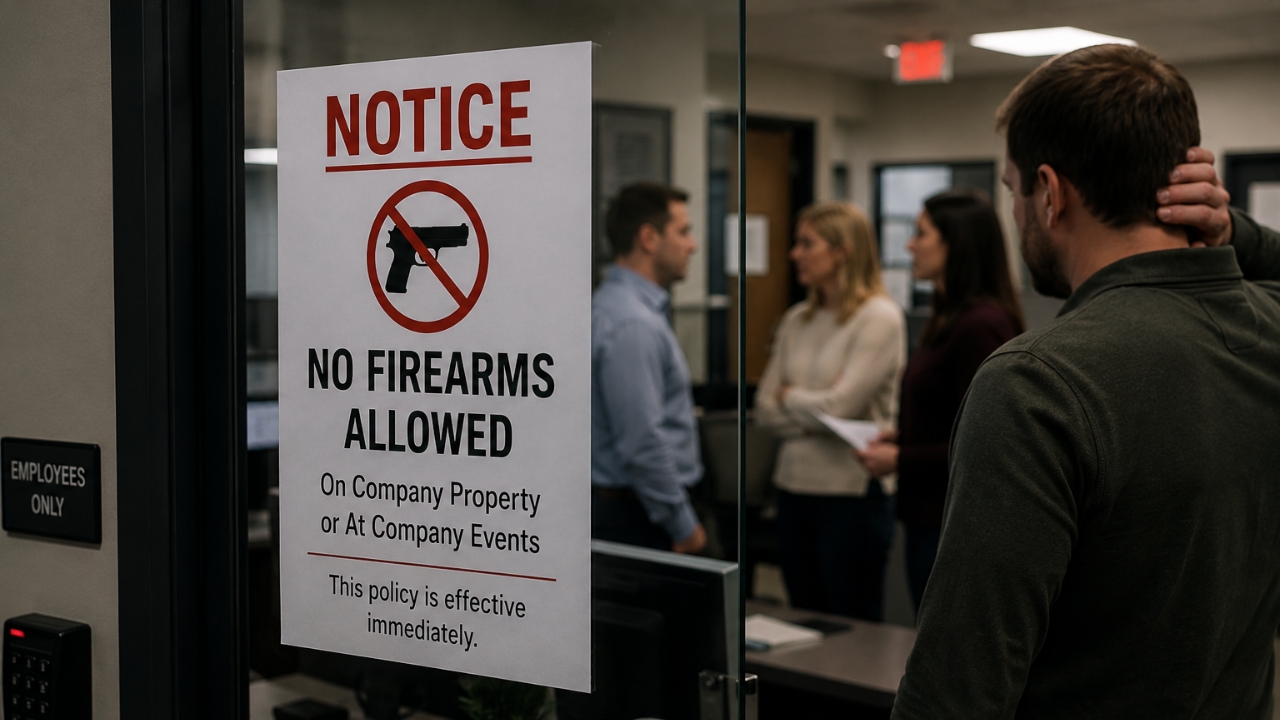
Then the next day came, and the situation got bigger. He showed up for work and found that every single door used by the factory-floor employees now had a new no-carry sign posted, one that he said complied with Ohio’s signage standards. What stood out to him was that the front office entrance did not get the same treatment. The workers on the floor, the regular “grunts” in his words, now had big fresh signage on their entrances, while the office side did not. That detail shaped the whole tone of the post. It was no longer only about one man getting spotted with a concealed handgun. It was about a workplace that had reacted fast, visibly, and in a way that made him feel like the burden fell publicly on him and people like him.
He gave some background that makes the whole thing feel even more frustrating. He had worked there for around four years. He had held his permit for a little over two. The building had not been posted until this happened. There was no no-carry signage before, and, according to him, nothing in the handbook had addressed it clearly either. He said he started carrying at work within a couple of months of getting his permit and had been doing it almost every day for over two years without incident. That history is what made the policy shift feel so abrupt. From his point of view, the building had quietly tolerated what he was doing until the moment it became visible enough to alarm the wrong person. Then, almost overnight, tolerance disappeared and signs went up everywhere.
He sounded embarrassed, but also angry in a way that went beyond simple self-pity. He admitted that if he printed or otherwise gave himself away, that part was on him. He called it his own failure of concealment. But he drew a hard line at how the company chose to respond. He said he was now fairly sure most people on the floor would see him as a psycho or a would-be rampage shooter because of how publicly the whole thing had been handled. That fear probably explains why the post felt so raw. He was not only dealing with a new policy. He was dealing with the idea that one moment of being spotted had just rewritten the way dozens of coworkers would view him from then on.
That sense of powerlessness runs through almost every line of what he wrote. He complained that his “rights” had been stripped away and even suggested that the rights of everyone else on the floor had been affected too, but he also knew enough to recognize he was stuck. He needed the job. He could not afford to get righteous and dramatic if it meant losing the roof over his head. So instead he vented online, where he could say what he really thought without blowing up his paycheck. That part made the whole thing feel more grounded. This was not a man preparing some noble showdown with management. It was a man swallowing a humiliating lesson because rent still exists.
The comments responded from several different angles. One of the strongest early replies agreed that the situation sucked, but pushed back on the poster’s language about rights. That commenter argued that in an at-will employment state, on privately owned corporate property, the company had every legal right to set the conditions of entry and employment. The reply even pointed out that the company had shown a degree of grace by letting him go lock the gun in the car instead of firing him on the spot. The original poster answered that point without much fight. He admitted “permission to exercise a right” would have been more accurate than saying the right itself was stripped away, and acknowledged that the company’s property rights were now overriding his wishes.
Other commenters focused less on the property-rights argument and more on how badly the company handled the public side of the incident. One reply said the way management marched him out and exposed the situation to the whole floor would almost guarantee people started whispering about him as a possible nutcase. Another pointed out a different practical problem: now everyone knew which employee had a gun in his vehicle, which effectively turned that car into a target for theft. That comment gave the story another layer. The company may have believed it was reducing risk by forcing him to lock the gun in the glovebox, but from the poster’s point of view it had also publicly advertised exactly where the gun was.
Some replies tried to turn the discussion toward what he could still do. A few suggested talking to higher management, not necessarily to fight the new policy but to complain about how the situation had been handled. Others encouraged him to look for new work, especially if he already felt alienated there. He answered one of those comments by saying he had been looking for better work for most of his time there anyway, which gives the thread a more resigned feel. This was not a man devastated because his dream job betrayed him. It was a guy already trying to get out, now saddled with one more reason to want out faster.
The legal side of the signage also came up. Some people discussed whether the company needed posted signs or just handbook language in Ohio, and whether parking-lot storage would remain protected if the company pushed harder. A few commenters from Ohio or with knowledge of state law chimed in that Ohio only requires conspicuous notice, not the more elaborate signage standards some states use. Others noted that parking lot storage can be a separate issue from carrying inside the building. That part of the thread did not really soften the poster’s mood, but it did make one thing clear: once the signs were up, this was no longer some unofficial gray area that only existed because nobody had forced the issue. The place was now formally posted, and everyone knew why.
One of the more cynical comments in the thread may have been the most honest about why businesses respond this way. That commenter argued that it is often an insurance and liability calculation more than anything else. In that line of thinking, companies would rather forbid guns and accept the risk of unarmed employees than accept the financial and legal exposure that comes with openly allowing workplace carry. Whether or not the poster liked that logic, it fit the speed of the company’s reaction. Once somebody got scared enough to complain, management appears to have decided it was easier to post the whole facility than to keep trusting quiet discretion ever again.
By the end of the thread, the original poster was left in a pretty bitter place. He had not been fired. He had not been written up, at least not according to what was visible in the discussion. But he had been publicly singled out, marched to his car, and then watched the entire factory floor turn into a posted no-carry zone almost overnight. For him, that meant the damage was not only the new signage. It was the feeling that one moment of being spotted had changed how management saw him, how coworkers likely talked about him, and how the workplace itself would now be structured. The gun never had to come out for the fallout to become very real.