Photo credit: The Avid Outdoorsman
The fisherman thought he was doing everything right.
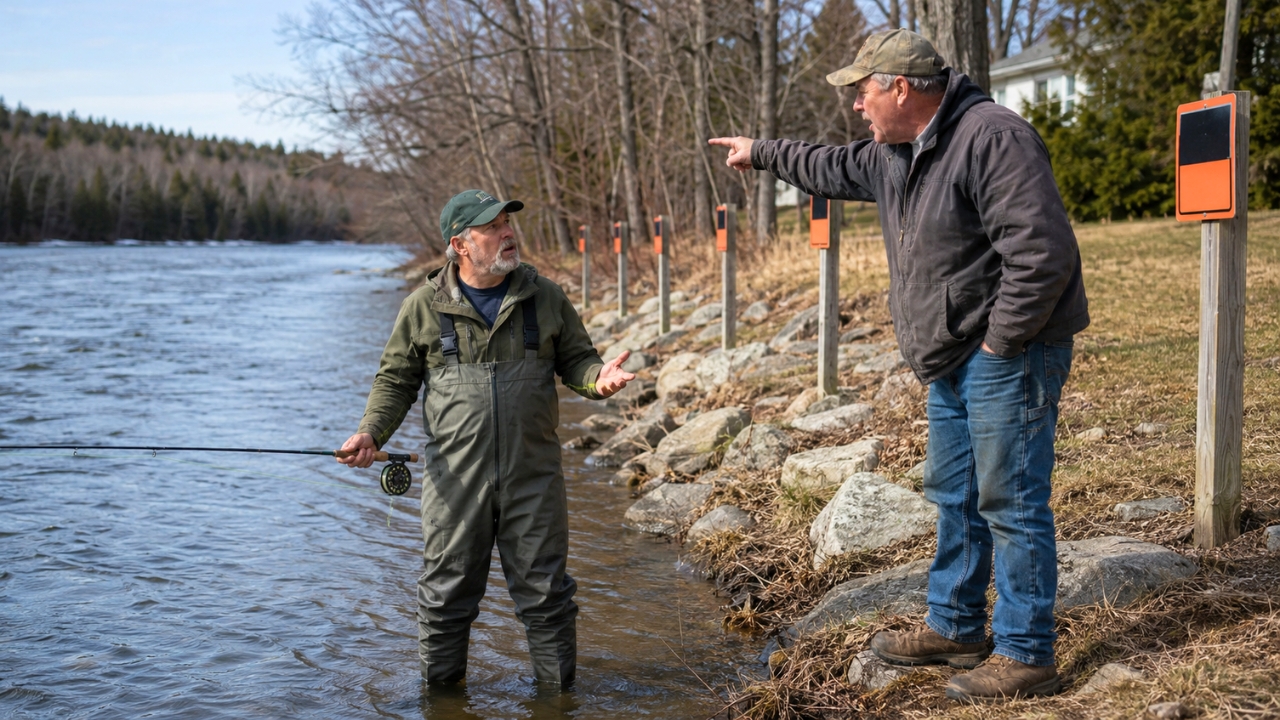
He was fishing a stretch of river he believed was public. He was staying in the water, not walking through someone’s yard, not dragging gear across a lawn, not climbing over a fence, and not acting like private property did not matter. From his side, he was using public water the way anglers have done for years.
Then he started running into signs.
In a Reddit post, the fisherman said a business owner had put up private property signs along a river in a way that made it seem like fishing there was not allowed. The problem, according to the poster, was that the river itself was public and legally fishable.
That is one of those outdoor fights that gets messy fast because both sides may feel like they are defending something important. The angler is defending public access. The property owner is defending his land. But when signs start making public water look off-limits, fishermen get understandably irritated.
Because access matters.
A lot of anglers do not have private ponds, family land, or a boat sitting in the driveway. They rely on public rivers, public rights-of-way, bridges, ramps, easements, and legal access points. When a private owner puts up signs that scare people away from water they are allowed to fish, it can feel like somebody is quietly stealing public access one sign at a time.
The fisherman seemed especially frustrated because the business owner apparently would not accept that the water was public. From the angler’s side, he was not asking to use the man’s parking lot, patio, dock, or shoreline. He was talking about fishing the river itself.
That distinction matters.
In many places, ownership can get complicated around rivers. A person may own the bank, the bottom, or land to the ordinary high-water mark, depending on the state and the specific waterway. Some waters are navigable and public. Some are not. Some allow wading. Some only allow floating. Some places let you fish as long as you stay below a certain line. Other states have rules that are different enough to make your head hurt.
That confusion is exactly why these disputes get heated.
A landowner may see a fisherman near his business and think, “That’s my property.” The fisherman may see the river and think, “This is public water.” Both may be partly right depending on where the angler is standing, how he got there, and what state law says. But if the angler is truly within his rights, a homemade private sign does not magically change that.
The poster’s question was basically how other people deal with this kind of thing. Do you ignore the signs? Call Fish and Game? Talk to the owner? Print out the law? Keep fishing and let the business owner call someone if he wants?
None of those options are perfect.
Ignoring the signs may be legally fine if the water is public, but it can still lead to an ugly confrontation. Talking to the owner might clear things up, or it might turn into a shouting match with someone who has already decided the river is his. Calling authorities may be the cleanest route, but even that depends on whether they know the access law well enough to explain it.
The fisherman seemed like he wanted to avoid a pointless fight, but also did not want to let someone bully him off public water. That is a very real tension for anglers. Most fishermen do not want drama. They want to cast, catch, release or keep within the rules, and go home. But if they leave every time someone puts up a questionable sign, those “public” spots disappear in practice even if they still exist on paper.
That is the bigger issue behind a post like this. It is not only about one stretch of river. It is about the way access gets chipped away. One sign here. One angry landowner there. One fisherman decides it is not worth the headache. Another tells his buddy not to bother. Eventually, a legal spot starts feeling private because nobody wants the confrontation.
And that is exactly why some anglers push back.
Not by trespassing. Not by being loud or obnoxious. But by knowing the law, documenting the access point, and refusing to let a sign do more than it is legally allowed to do.
The fisherman’s situation sounded like one of those cases where the best answer is probably boring: confirm the waterway rules, stay clearly within the public area, do not touch private land, take photos of the signs, and call the right agency if the owner keeps interfering.
It is not as satisfying as a big showdown. But it is safer, and it gives the angler something more solid than a bank-side argument.
Because at the end of the day, public water only stays usable when people know their rights and respect the boundaries. The fisherman still has to respect private property. The business owner still has to respect legal public access. The trouble starts when one side acts like only his rights matter.
Commenters had a familiar mix of legal advice, frustration, and “know your local rules before you get yourself in trouble.”
Several people told the poster to check the exact law for his state before assuming the signs were meaningless. Public access rules vary a lot, and what is legal in one state can get you cited in another. Some places allow anglers to float through but not touch the bottom. Some allow wading below the high-water mark. Some treat certain rivers differently depending on navigability.
That was the practical advice: do not argue from vibes. Know the statute, know the access point, and know exactly where you are allowed to stand.
Other commenters said if the river is truly public, then the business owner cannot just claim it with signs. They told the poster to call Fish and Game, the local conservation officer, or whatever agency handles fishing access in that state. If the signs are misleading or blocking lawful access, an official can explain that better than a random angler can during a confrontation.
A few anglers said they keep screenshots, maps, or printed regulations with them when fishing spots where landowners like to argue. Not because they want to fight, but because it helps to have something clear to point to if someone says they are trespassing.
Others warned the poster not to step onto the business owner’s land to prove a point. That was the line commenters kept coming back to. Public water does not always mean public banks. If the fisherman crosses private property to reach the river, parks where he should not, or stands above the legal public boundary, he may hand the owner a real complaint even if the water itself is fishable.
There were also plenty of comments from anglers who have dealt with the same thing. People talked about landowners putting up questionable signs, yelling from porches, calling police, or insisting no one could fish “their” stretch of river. The common frustration was that public access often depends on ordinary people being willing to deal with uncomfortable conversations.
The better advice was to stay calm and let authorities settle it if needed. Do not yell back. Do not tear down signs. Do not trespass onto the bank. Fish legally, document the issue, and report interference if it continues.
For the fisherman, the fight was not about being difficult. It was about a public river being treated like private water. And for a lot of anglers, that is worth pushing back on — carefully, legally, and with enough proof that the argument does not happen only at the water’s edge.