Photo credit: GreyShooter/Youtube
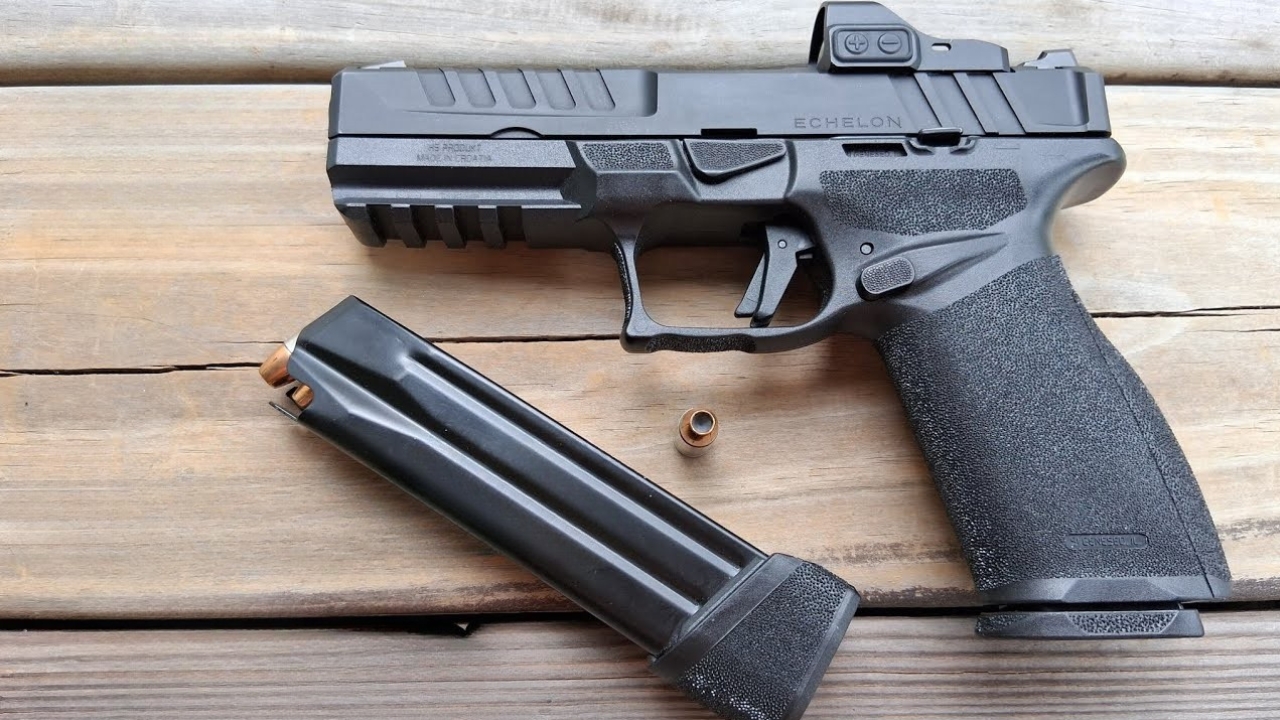
The Springfield Echelon is still newer than a lot of the pistols in this series, so it does not have decades of worn-out range guns, old magazines, and long-term service history behind it yet. It came in as Springfield’s modern duty-size striker-fired pistol, with a removable Central Operating Group, aggressive grip texture, ambidextrous controls, and the Variable Interface System for mounting optics directly to the slide.
For the most part, the Echelon has a good reputation so far. A lot of owners report strong reliability, especially with the gun kept stock and fed decent ammo. But the complaints that do show up tend to fall into a few familiar categories: failure to feed, failure to eject, failure to return fully to battery, magazine-related issues, optic screw problems, slide-lock complaints, and reliability problems after aftermarket parts get added. The Echelon may be modern, but it still has to feed, fire, extract, eject, and cycle like any other pistol.
Failure to Feed
Failure to feed is one of the main Echelon complaints to watch for. The slide moves forward, but the next round does not chamber cleanly. The bullet may nose-dive into the feed ramp, hang partway into the chamber, or stop the slide before it fully closes. On a pistol that is meant to compete in the duty-size striker-fired category, that kind of stoppage gets noticed fast.
Some reported feeding issues involve pistols that have already been modified with aftermarket triggers, springs, guide rods, magwells, or optics. That matters because once the factory recoil system or trigger parts are changed, it gets harder to blame the gun by itself. In one owner report, the pistol had several aftermarket parts installed and was having failures to feed every few rounds with 115-grain Blazer ammo. The discussion quickly turned toward recoil spring weight, ammo choice, and returning parts to stock for testing. That is the right way to approach it. If the problem starts after modifications, the stock setup needs to be the control test.
Failure to Return Fully to Battery
The Echelon can also fail to return fully to battery. The round starts into the chamber, the slide moves most of the way forward, but the pistol stops just short of being completely closed. Sometimes this shows up when someone slowly rides the slide forward by hand. Other times it happens during live fire, which is a much bigger concern.
Slow-racking complaints are not always true malfunctions. One Echelon owner discussion pointed out that slowly easing the slide forward can leave the pistol short of battery because the slide does not have the same energy it would during live fire. That is not unusual for striker-fired pistols. But if the gun stops short while firing normally, then the chamber, recoil spring, ammo, slide rails, extractor, and any aftermarket parts need to be checked. A pistol that almost closes is still not ready to fire.
Failure to Eject
Failure to eject is another complaint that shows up with the Echelon. The pistol fires, but the empty case does not clear the ejection port. It may stovepipe, get caught by the slide, or interfere with the next round feeding. This can come from weak ammo, extractor issues, ejector problems, recoil spring changes, dirty internals, or something interfering with the extractor system.
Optic mounting deserves special attention here. The Echelon’s Variable Interface System is one of its big selling points because many optics can mount directly to the slide without a traditional adapter plate. Springfield says the Echelon uses a patent-pending red-dot mounting system, and outside reviews of the system note that it uses specific pin sets and screw setups depending on the optic. If the wrong screw is used or a screw is too long, it can create problems inside the slide. Some owner discussions of Echelon ejection issues specifically warn that an optic screw can put pressure on the extractor plunger or spring if it protrudes too far.
Stovepipes
A stovepipe is a specific kind of ejection failure where the empty case gets caught upright in the ejection port. It is usually easy to clear, but it still means the pistol failed to complete its cycle. On the Echelon, stovepipes can come from weak ammunition, grip issues, extractor tension, ejector problems, recoil spring setup, or optic screws interfering with slide internals.
This is one of those malfunctions where the pattern matters. If the pistol stovepipes once with soft range ammo, that is not the same thing as repeated stoppages across several loads. If the gun starts stovepiping after an optic install, check the mounting hardware before chasing more complicated problems. If it starts after a recoil spring or guide rod swap, put the factory parts back in and test again. The Echelon’s stock setup has a pretty solid reputation, so the timing of the malfunction matters.
Failure to Extract
Failure to extract is less common than a simple failure to eject, but it is more serious. The fired case stays in the chamber instead of being pulled out by the extractor. The slide may stop, or it may try to feed the next round into a chamber that still has empty brass sitting in it.
Extraction trouble can come from a dirty chamber, rough brass, weak slide movement, a damaged extractor, or something interfering with the extractor assembly. One early owner report described an Echelon that would not go fully into battery because the extractor was not moving correctly, and the owner said a small part fell out during disassembly before the gun was sent back. That kind of issue is not something to diagnose with more ammo at the range. If the extractor is not moving freely or the pistol repeatedly fails to extract, it needs proper inspection.
Magazine-Related Problems
The Echelon uses steel magazines, typically in 17- and 20-round configurations depending on the package and state restrictions. Magazine problems can show up as failures to feed, failures to lock back, nose-dives, or the magazine not seating cleanly. Like any duty-size pistol, the gun is only as dependable as the magazine feeding it.
The Echelon manual’s magazine reassembly instructions stress correct orientation of the spring, follower, and floor plate in the magazine tube. That sounds basic, but it matters. A backwards spring, dragging follower, dirty mag tube, damaged feed lips, or weak spring can all make a good pistol act unreliable. If one magazine causes stoppages and another runs cleanly, mark the bad mag and stop using it for serious carry or duty work.
Slide Failing to Lock Back
The slide failing to lock back after the last round is another issue that can show up with the Echelon. Sometimes the magazine follower or spring is not lifting the slide stop correctly. Sometimes the shooter’s grip is riding the slide stop and preventing it from engaging. Since the Echelon has ambidextrous controls, grip pressure on either side of the pistol can matter depending on hand size and shooting style.
This is not always a gun problem. If the slide locks back for one shooter but not another, grip is probably involved. If it only fails with one magazine, that magazine deserves the blame. If it fails with several magazines and multiple shooters, then the slide stop, follower contact, and internal parts need inspection. A duty-style pistol should lock open consistently with good magazines.
Optic-Mounting Problems
The Echelon’s optic system is one of its biggest advantages, but it is also one of the places where owners can create reliability problems. Springfield’s Variable Interface System lets many popular optics mount directly to the slide without a separate plate, using specific pin and screw combinations. That is a smart system, but it still has to be installed correctly.
Wrong screws, screws that are too long, mismatched pins, loose hardware, or improper torque can all create problems. At best, the optic loses zero. At worst, the screw can interfere with internal slide parts and cause ejection or extraction issues. If an Echelon runs fine with irons and starts malfunctioning after the dot goes on, the optic install should be checked immediately. This is not the place to guess. Use the correct pins, correct screws, and proper torque, then test the pistol with live fire.
Light Primer Strikes
Light primer strikes are not one of the more common Echelon complaints, but they are worth watching for. The trigger breaks, the striker moves forward, and the round does not fire. When the round is cleared, the primer may show only a shallow mark. That can come from hard primers, cheap ammo, a dirty striker channel, weak striker energy, or aftermarket trigger and spring changes.
This becomes more likely when people start modifying the pistol. Trigger kits, spring kits, and other internal parts can change how the striker system behaves. A better-feeling trigger is not worth much if the pistol stops lighting primers consistently. If light strikes appear after parts have been changed, those parts should be questioned first. If they happen with the factory setup and quality ammo, the gun needs attention before it gets trusted.
Aftermarket Parts Causing Reliability Problems
The Echelon is already building an aftermarket, and that usually means some owners will start changing parts before the pistol has even proven itself stock. Triggers, recoil springs, guide rods, magwells, optics, baseplates, and other parts can all affect reliability. Some upgrades are fine. Some combinations create problems the factory gun did not have.
A heavier recoil spring can cause failures to feed or weak ejection with lighter ammo. A trigger or spring kit can affect ignition or reset. A magwell can interfere with magazine seating. An optic install can interfere with the extractor system if the hardware is wrong. If an Echelon starts malfunctioning after modifications, the cleanest troubleshooting step is to return it to factory configuration and test with quality ammo and factory magazines. A stock pistol that runs well should not be blamed for a parts combination that does not.
Like The Avid Outdoorsman’s content? Be sure to follow us.
Here’s more from us: