Photo credit: Guns & Ammo/Youtube
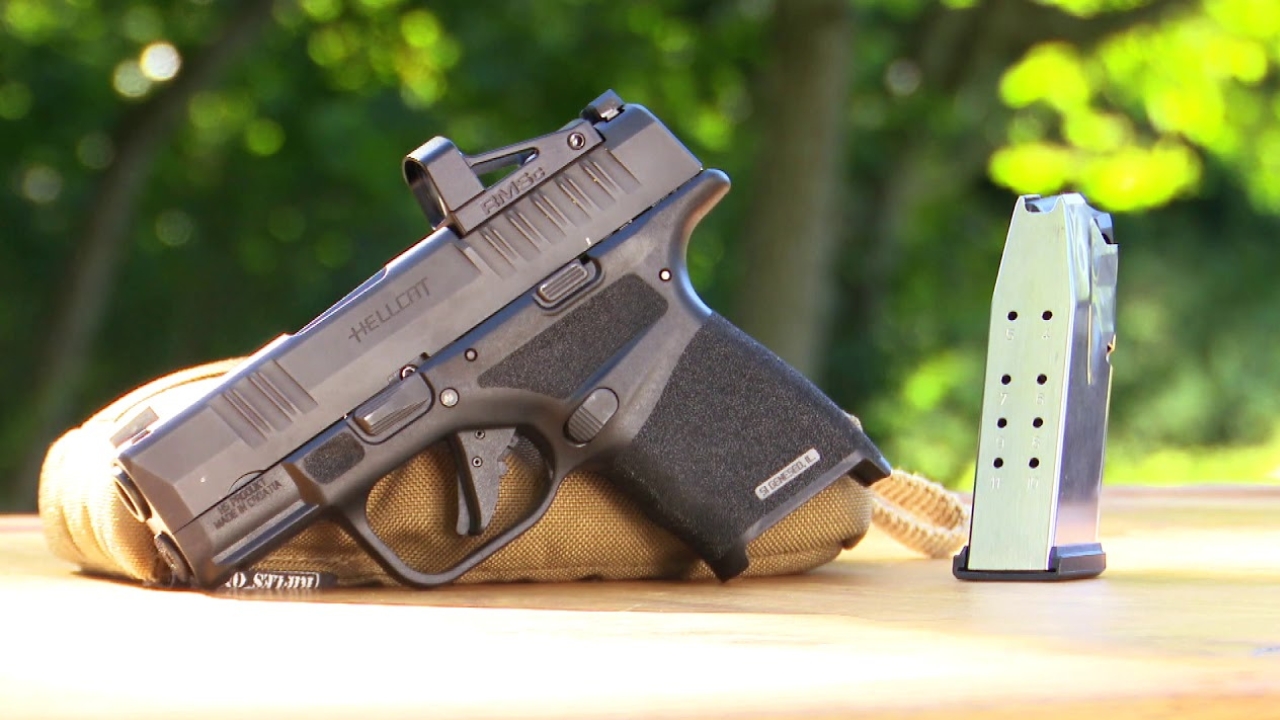
The Springfield Hellcat made a lot of noise when it showed up because it packed serious capacity into a tiny carry gun. It gave shooters a micro-compact 9mm with a usable grip, good sights, and enough rounds on board to compete hard with the SIG P365. For people who wanted a small pistol that did not feel completely stripped down, the Hellcat made sense fast.
But the Hellcat is still a very small 9mm pistol. That matters. Micro-compacts are less forgiving than bigger handguns because they have less slide mass, less grip area, short recoil systems, and tight timing. Most Hellcat complaints tend to involve feeding issues, ejection problems, failure to return fully to battery, slide-lock trouble, magazine seating, and occasional light-strike complaints. Springfield’s own manual tells users to push the magazine firmly enough to confirm it is properly seated with a distinct click, which is worth remembering because a lot of small-pistol problems start with the magazine.
Failure to Feed
Failure to feed is one of the more common Hellcat complaints. The slide cycles, but the next round does not chamber cleanly. The bullet may nose-dive into the feed ramp, hang partway into the chamber, or leave the slide sitting slightly out of battery. On a pistol this small, a stiff magazine, weak grip, rough ammo, or tight new recoil system can show up quickly.
Some new Hellcat owners report early misfeeds during the first range trip, and the usual advice is to test different ammunition, mark the magazines, and give the pistol a proper break-in before making a final judgment. That does not mean every feeding problem is normal. It means you need to look for a pattern. If the issue follows one magazine, that magazine is suspect. If it follows one ammo type, the load may be the issue. If it happens with several loads and several magazines, the pistol needs a closer look.
Magazine Seating Problems
Magazine seating is another common Hellcat trouble spot, especially with full magazines. A magazine may feel like it is locked in but not actually be seated all the way. When that happens, the pistol can fail to feed, close on an empty chamber, or act like the magazine is bad when the real issue is that it was not fully clicked into place.
This matters more on small high-capacity pistols because the magazine spring can be stiff, especially when new and fully loaded. The Hellcat manual specifically tells users to push firmly on the bottom of the magazine to make sure it is properly seated and to listen for that click. Some Hellcat Pro owners have also described feed issues that were eventually traced back to magazines not quite locking in place. For a carry pistol, every magazine should be tested from full capacity with the slide closed.
Failure to Eject
Failure to eject happens when the pistol fires, but the empty case does not clear the ejection port. It may stovepipe, get trapped under the slide, or interfere with the next round feeding. With the Hellcat, this can come from weak ammo, a loose grip, extractor or ejector issues, recoil spring problems, or a dirty chamber.
The Hellcat is a micro-compact, so grip matters more than it does on a full-size pistol. If the shooter lets the frame move too much under recoil, the slide may not cycle with full authority. Soft range ammo can make that worse. If the pistol only struggles with one weak practice load, the ammo may be the issue. If ejection problems happen across multiple loads and shooters, the extractor, ejector, chamber, and recoil spring need attention.
Stovepipes
A stovepipe is a specific failure to eject where the empty case gets caught upright in the ejection port. It is usually quick to clear, but it still means the pistol did not finish its cycle. On the Hellcat, stovepipes usually come from weak ammunition, limp-wristing, a dirty gun, extractor tension, or recoil spring issues.
This is one of those malfunctions where the pattern matters. A single stovepipe with cheap practice ammo does not tell you the same thing as repeated stovepipes with defensive ammo. If the same Hellcat runs cleanly for one shooter and stovepipes for another, grip is probably involved. If it stovepipes with several shooters and several loads, then it is time to inspect the gun instead of blaming technique.
Failure to Return Fully to Battery
Failure to return fully to battery is another complaint that can show up with the Hellcat. The round starts into the chamber, the slide moves forward, but it stops just short of being fully closed. Sometimes the shooter can tap the back of the slide and finish the cycle. Other times, the round has to be cleared.
This can happen because of a dirty chamber, rough ammo, a weak or overly stiff recoil spring, carbon buildup, dry rails, or friction in the slide assembly. General pistol troubleshooting points to out-of-spec ammunition, weak recoil springs, and carbon or debris in the chamber as common causes of return-to-battery problems. One Hellcat review also reported a failure to return to battery during testing, which is a good reminder that even a generally reliable micro-compact should be proven with the exact ammo you plan to carry.
Slide Locking Back With Rounds Still in the Magazine
One frustrating Hellcat complaint is the slide locking back before the magazine is empty. The shooter fires, the slide locks open, and it looks like the gun is empty. Then they check the magazine and realize there are still rounds left. That is different from a normal failure to feed because the slide stop is engaging early.
This can happen if the shooter’s thumb bumps the slide stop under recoil, if the slide stop is moving too freely, or if ammunition and recoil are causing the gun to behave in a way that nudges the stop upward. Some Hellcat owners have reported the slide locking back with several rounds still in the magazine, even after trying different ammunition. If the problem happens only with one shooter, grip is the first suspect. If it happens across shooters and magazines, the slide stop and related parts need inspection.
Slide Failing to Lock Back
The opposite problem can happen too: the slide fails to lock back after the last round. Sometimes that comes from the magazine follower or spring not lifting the slide stop properly. Sometimes the shooter is riding the slide stop and preventing it from engaging. On a small pistol like the Hellcat, there is not much extra room for your thumbs, so grip-related slide-lock issues are pretty easy to create.
One Hellcat review reported that the flush-fit magazine failed to lock the slide open several times, even though the pistol only had one firing malfunction during the test. That is exactly why magazines need to be tested individually. If one magazine locks back and another does not, mark the problem mag and pull it from carry use. If the slide never locks back for one shooter but works for another, grip is probably the answer.
Stiff Slide Release or Slide Stop
A stiff slide release is another common Hellcat complaint, especially when the pistol is new. Some owners find the lever hard to press with an empty magazine inserted. That can feel like something is wrong, but sometimes it is simply the magazine follower pushing upward on the slide stop the way it is supposed to.
Hellcat owners have reported that the slide release can be difficult to operate when new and may loosen up after several hundred rounds. This is not always a malfunction. If the slide stop is hard to press on an empty magazine but the pistol functions normally during live fire, it may just be stiff. If it behaves inconsistently during shooting, locks open early, or fails to lock open with good magazines, then it deserves a closer look.
Light Primer Strikes
Light primer strikes are not the most common Hellcat problem, but they do show up. The trigger breaks, the striker hits the primer, and the round does not fire. When the round is cleared, the primer may show a shallow mark. That can come from hard primers, cheap ammunition, a dirty striker channel, weak striker spring, or aftermarket trigger parts.
Owner discussions around Hellcat light strikes often point to the usual possibilities: firing pin energy, primer hardness, dirt, or parts changes. This matters more on a carry pistol than a range toy. If light strikes start after a trigger upgrade, striker work, or spring change, the modification should be questioned first. If they happen with factory parts and quality defensive ammo, the pistol needs attention before it is trusted.
Optic or Aftermarket-Part Problems
Many Hellcat models are optic-ready, and plenty of owners add dots, triggers, springs, magazine extensions, and other parts. Those upgrades can be useful, but they can also create problems the stock pistol did not have. A tiny carry gun has less margin for bad tuning than a bigger pistol.
An optic install can create problems if screws are too long, loose, or improperly torqued. A trigger kit can affect ignition reliability. Magazine extensions can change spring tension and feeding. A recoil spring change can affect ejection or return to battery. None of that means the Hellcat should never be modified, but every change needs to be tested hard with the exact magazines and ammo that will be carried. A carry pistol is not reliable because the parts look right. It is reliable because it runs.
Like The Avid Outdoorsman’s content? Be sure to follow us.
Here’s more from us: