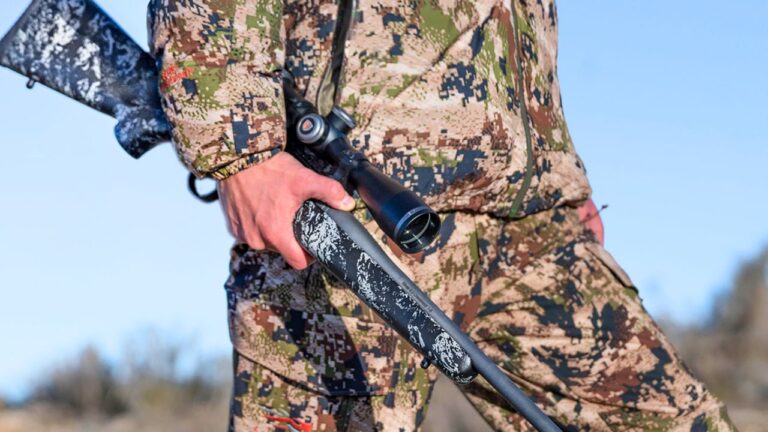
Every seasoned shooter’s had that sinking feeling—the rifle slips off the truck bed or tips over at the range, and you hear that sharp clank you’ll never forget. You pick it up, brush it off, and tell yourself it’s fine. Then, the next time you line up a shot, your group’s blown wide open. Some guns shrug off a fall like it never happened. Others? They hold grudges. Whether it’s fragile optics mounting, soft bedding, or loose tolerances that don’t forgive impact, certain rifles never shoot the same again after taking a tumble. Here are the ones that remind you gravity always wins.
Ruger American Predator

The Ruger American Predator has great accuracy for its price, but that lightweight synthetic stock can shift if the rifle takes a hard fall. The recoil lug bedding isn’t steel-to-steel, so even a small impact can change the pressure points and alter your point of impact.
If your rifle lands scope-first or hits the stock at an angle, you’ll likely find your zero wandering by inches. It’s not that the gun’s fragile—it’s that its budget materials flex more than you’d think. It’ll still shoot, but expect a trip back to the bench before it groups again.
Tikka T3x Superlite

The Tikka T3x Superlite is impressively accurate, but its thin barrel and featherweight stock make it extremely sensitive to impact. A single fall can tweak the stock’s bedding or slightly torque the action, and suddenly your zero’s gone. The same lightness that makes it easy to carry makes it easy to knock off alignment.
The scope mounts don’t always hold steady after a bump either, especially if you’re using ultralight rings. It’s not an issue you’ll see right away—you’ll notice it after three or four flyers at the range. Treat it rough once, and you’ll be chasing your zero for hours.
Weatherby Vanguard Synthetic

The Weatherby Vanguard Synthetic can take recoil all day but doesn’t handle shock well. Its synthetic stock, while durable, doesn’t always return to form after a hard impact. Drop it on uneven ground, and you might twist the action bedding or stress the fore-end enough to shift barrel contact.
Even small shifts can open groups by an inch or more at 100 yards. The rifle might still feel tight, but the bedding blocks don’t always line up the same after impact. If it hits the ground, plan on checking torque and running a few rounds before trusting it again.
Savage 110 Ultralite

Savage’s 110 Ultralite is a shooter’s dream—until it takes a hit. The carbon-fiber-wrapped barrel and skeletonized action save weight but don’t love impacts. A hard fall can tweak the barrel channel or shift the AccuFit stock ever so slightly, which is all it takes to change your zero.
You might not see visible damage, but your groups will tell the story. It’s accurate and light, but not a rifle you want rolling around in the back of a side-by-side. One good knock, and you’ll be back at the bench wishing you’d carried something heavier.
Christensen Arms Ridgeline

The Christensen Arms Ridgeline is known for its precision—and for needing kid-glove care. The carbon-fiber barrel and composite stock perform beautifully until you drop it. Impacts can alter barrel tension or chip the bedding, especially near the recoil lug, leading to a wandering zero.
Even a small shift in barrel contact can turn sub-MOA groups into shotgun patterns. The rifle’s accuracy comes from tight tolerances, and that precision doesn’t forgive a knock. You can get it back on target, but you’ll be re-torquing and re-zeroing before the next hunt.
Browning X-Bolt Medallion

The X-Bolt Medallion is as elegant as it is accurate, but that high-gloss walnut stock isn’t built for impacts. Drop it on its side or ding it against a rock, and the bedding can compress or crack microscopically. Once that happens, your barrel harmonics change—and so does your point of impact.
Even the scope bases on some older models can shift slightly after a sharp bump. It’s not catastrophic, but enough to make you question every shot until you re-zero. The X-Bolt’s fit and finish are its strengths, but they’re also what make it unforgiving when gravity gets involved.
Kimber Mountain Ascent

The Kimber Mountain Ascent is a backcountry hunter’s dream—until it takes a fall. Its lightweight carbon-fiber stock and slim barrel don’t handle impacts well. A single drop can cause a bedding shift or tweak the free-floating clearance just enough to ruin accuracy.
Because everything on the rifle is so light, even the scope mounts can move under shock. The rifle will still shoot fine, but “fine” for a Kimber means an inch or two of shift you’ll chase all day. It’s made for mountain hunts, not tumbles down the hill.
Winchester XPR

The Winchester XPR is a solid budget rifle, but it’s not built to shrug off abuse. The injection-molded stock can flex or twist if it hits hard ground, changing how the barrel floats. That usually means you’ll be re-sighting before your next hunt.
The rifle’s action screws also tend to loosen slightly from vibration or impact, which doesn’t help. It’s not a bad rifle—it’s just sensitive. A small drop can make it shoot like a different gun until you take it apart, retorque it, and start over.
Ruger Precision Rifle

The Ruger Precision Rifle is built like a tank in many ways, but it has one weakness: modularity. A fall can tweak its folding stock hinge, bend the handguard slightly, or shift your optics if you’re running heavier glass. Even minor changes can throw your alignment off noticeably at distance.
Once the geometry’s disturbed, accuracy suffers until everything’s reset. The RPR’s design makes field repair possible—but you’ll be spending time with a torque wrench and bubble level instead of shooting. It’s durable, but not immune to a bad fall.
Remington 783

The Remington 783’s problem isn’t toughness—it’s consistency. A hard impact can cause the synthetic stock to warp slightly, changing barrel pressure points and throwing off your zero. The trigger guard and magazine housing don’t always line up perfectly afterward, either.
Once it’s hit the ground, your groups start wandering, and you won’t always know why. The rifle’s core components are solid, but the fit between them doesn’t always bounce back. A quick re-torque might fix it, but sometimes you have to re-bed or re-sight entirely.
Mossberg Patriot

The Mossberg Patriot’s affordability is its strength—and its weakness. The lightweight synthetic stock is prone to flexing after impact, which can change how the barrel sits in the channel. Drop it once, and you might spend hours trying to get your tight groups back.
The action screws also loosen easier than you’d expect from a hunting rifle. It’s fine for casual range time, but if it takes a spill in rocky terrain, expect your first few shots afterward to wander. It’s one of those rifles that shoots great—until it doesn’t.
Sako A7 Roughtech

The Sako A7 Roughtech feels tough, but its precision bedding and tight tolerances don’t forgive impacts. Drop it, and the recoil lug bedding or barrel alignment can shift slightly, throwing your groups wide. Even the polymer stock can flex more than you’d think under stress.
You’ll likely still hit paper, but your zero will drift. The A7’s performance depends on that perfect interface between barrel, stock, and action, and any change there shows up immediately on target. It’s a fine rifle—so long as it stays upright.
Like The Avid Outdoorsman’s content? Be sure to follow us.
Here’s more from us:
The worst deer rifles money can buy
Sidearms That Belong in the Safe — Not Your Belt
*This article was developed with AI-powered tools and has been carefully reviewed by our editors.